Source Vacuum Sealable Recyclable Zipper Pouch for Food, Medical, and Cosmetic Uses
Compare 30 listings of Vacuum Sealable Recyclable Zipper Pouch designed for food, medical, and cosmetic applications. These options feature customizable dimensions, water-resistant properties, and various sealing methods to meet diverse packaging needs.
Key considerations
Products List


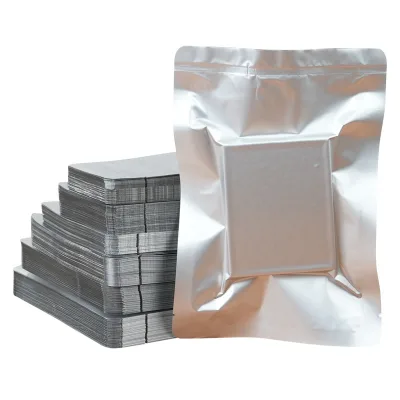


Food Fresh Plastic Pouch Clear Vacuum Seal Bag Packaging Vacuum Pouches
$0.03 - $0.05
MOQ: 40000 Pieces

Meat Storage Seal Plastic Packaging Pouch Bags Food Vacuum Retort Pouch
$0.03 - $0.05
MOQ: 40000 Pieces


Comprehensive Sourcing Guide
Strategic Sourcing Guide for Vacuum Sealable Recyclable Zipper Pouches
Navigating the global market for vacuum sealable recyclable zipper pouches requires a disciplined approach to technical verification and supplier evaluation. These packaging solutions are critical for industries ranging from food preservation to chemical storage, where barrier properties and structural integrity are paramount. The procurement landscape is defined by a diverse array of material compositions, processing techniques, and customization capabilities. Buyers must distinguish between general-purpose packaging and specialized vacuum-sealable units that offer specific performance characteristics. This guide synthesizes available product attributes and industry standards to provide a framework for making informed purchasing decisions without relying on unverified claims or specific supplier endorsements.
Technical Specifications and Material Architecture
The foundation of a successful procurement strategy lies in understanding the technical specifications of the target product. Vacuum sealable zipper pouches are not monolithic; they vary significantly in material structure, thickness, and sealing mechanisms. The supplied data indicates a wide spectrum of materials, including Low-Density Polyethylene (LDPE), Polyethylene (PE), High-Density Polyethylene (HDPE), and multi-layer structures such as PET/AL/PE (Polyethylene Terephthalate/Aluminum/Polyethylene). The presence of Aluminum (AL) in the material structure is particularly significant for vacuum applications, as it provides an essential oxygen and light barrier that single-layer plastics often cannot achieve.
Thickness is another critical variable. Observed specifications list thickness ranges of 0.18mm to 0.19mm, with options for customized dimensions. This range suggests a balance between flexibility and durability, suitable for vacuum compression without rupturing. The processing type is predominantly blow molding or plastic packaging bag manufacturing, which influences the final product's flexibility and seal strength. Furthermore, the sealing method is consistently identified as a zipper closure, specifically a "Zipper Top" design, which allows for reusability and secure sealing. Buyers must verify that the zipper mechanism is compatible with vacuum sealing equipment, as standard zippers may not withstand the negative pressure required for effective vacuum packing.
| Attribute Category | Observed Specifications | Procurement Verification Point |
|---|---|---|
| Material Composition | LDPE, PE, PET/AL/PE, PA+PE | Verify layer structure for oxygen barrier requirements. |
| Thickness | 0.18mm, 0.19mm, Customized | Confirm thickness tolerance to prevent leakage under vacuum. |
| Sealing Mechanism | Zipper Top, Zipper Closure | Test zipper lock strength and resealability. |
| Processing Type | Blow Molding, Plastic Packaging | Assess production line capability for custom sizes. |
| Transparency | Transparent | Ensure clarity is required for product visibility. |
Compliance, Certification, and Environmental Standards
Environmental compliance is a primary driver in the selection of recyclable zipper pouches. The product attributes highlight several "Material Features" including Biodegradable, Recycled, and Food Grade options. However, buyers must exercise caution in interpreting these terms. While the data lists "Biodegradable" and "Recycled" as features, the specific certification status or the percentage of recycled content is not quantified in the provided facts. Similarly, "Food Grade" is mentioned, but the specific regulatory standard (such as FDA, EU 10/2011, or GB standards) is not explicitly defined.
To ensure compliance, procurement teams must request documentation verifying that the materials meet the food contact regulations of the destination market. The "Flexible" standard and "Customize" standard noted in the data suggest that suppliers may adhere to varying industry norms rather than a single rigid specification. The H.S. Code 39232100 identifies the product as plastic sacks and bags, which is useful for logistics and tariff classification but does not guarantee environmental certification. Buyers should explicitly ask suppliers for third-party test reports regarding the recyclability of the specific material structure, such as PET/AL/PE, as multi-layer laminates can be challenging to recycle depending on the separation technology available in the buyer's region.
Cost Drivers and Economic Factors
The cost of vacuum sealable recyclable zipper pouches is influenced by a complex interplay of material costs, customization levels, and order volume. The observed price range spans from $0.01 to $4,000, a vast disparity that reflects the difference between single-unit samples and bulk industrial orders. The Minimum Order Quantity (MOQ) ranges from 2 to 50,000 units, indicating that suppliers cater to both prototyping needs and large-scale manufacturing.
Material composition is a primary cost driver. Multi-layer structures like PET/AL/PE are generally more expensive than single-layer LDPE due to the inclusion of aluminum and the complexity of the lamination process. Customization also significantly impacts pricing. The data confirms that customization is available for shape, size, and printing, including "Customized Logo" and "Gravure printing." These value-added services require setup costs and longer lead times. The lead time observed is between 15 and 40 days, which buyers must factor into their inventory planning. Additionally, the packing method, described as "Brown Carton" or "Packed in Cartons by Air and by Sea," affects shipping costs. Air freight is faster but more expensive, while sea freight is cost-effective for large volumes but requires longer lead times.
Typical Applications and Usage Scenarios
The versatility of vacuum sealable zipper pouches is evident in their diverse application list. The data specifies usage in Shopping Bags, Packaging Bags, Gift Bags, and Promotion Bags, but also extends to more specialized industrial uses. Key application areas include Food, Chemical, Apparel, Household, and Stationery Packaging. The "Food" application is particularly prominent, with mentions of Food Packaging, Medical Packaging, and Cosmetic Packaging. This suggests that these pouches are suitable for preserving perishables, protecting sensitive medical devices, and packaging high-value cosmetics.
The "Vacuum bag" model number and the "Vacuum sealable" nature of the core keyword imply a specific use case: extending shelf life by removing air. This is critical for the food industry to prevent oxidation and bacterial growth. The "Water Soluble" and "Moisture Proof" features listed in the attributes further expand the potential applications to include laundry pods, chemical detergents, or agricultural products that require protection from humidity. The "Environment-Friendly" and "Recyclable" features align with the growing demand for sustainable packaging in the apparel and gift sectors, where brands are increasingly scrutinizing their supply chains for environmental impact.
Supplier Evaluation and Operational Due Diligence
Evaluating suppliers for vacuum sealable pouches requires a focus on their manufacturing capabilities and logistical reliability. The data indicates that the place of origin is primarily China, with specific mentions of Hebei as a production hub. While this provides a geographical context, buyers should not assume uniform quality across all suppliers in the region. The "Brand Name" Yunrui Yunrui packing is mentioned, but this should be treated as an observation of one listed entity rather than a recommendation.
Key evaluation criteria should include the supplier's ability to handle "Custom Order" requests and their proficiency in "Gravure printing." The acceptance of "Customized Logo" and "Customized Designs" indicates a high level of flexibility, but buyers must verify the supplier's quality control processes for these custom elements. The "Sample" policy, which offers free samples for stock items, is a valuable tool for initial vetting. Buyers should utilize this to test the physical properties of the pouch, such as the strength of the zipper and the integrity of the vacuum seal. Furthermore, the "Product Logistics Attributes" being listed as "General Goods" simplifies shipping but does not account for hazardous materials if the pouches are intended for chemical use.
Quality Control and Performance Verification
Quality control for vacuum sealable pouches must address both structural integrity and barrier performance. The "Hardness" is listed as "Soft," which is typical for flexible packaging, but the "Waterproof Performance" is explicitly noted as "Waterproof." This distinction is crucial; a bag can be soft yet still provide a complete moisture barrier. Buyers should verify the "Moisture Proof" claim through independent testing, especially for applications involving food or chemicals.
The "Special Feature" of being "Waterproof" and "Environment-Friendly" must be validated against actual performance data. Since the data does not provide specific test results, buyers should request evidence of leak testing, tensile strength testing, and oxygen transmission rate (OTR) measurements. The "Shape" is described as "Plastic Bags" and "Stand up Bag," indicating that the pouches can maintain their form. For vacuum applications, the ability to withstand negative pressure without collapsing or leaking is the ultimate quality metric. The "Standard" being listed as "Flexible" or "Customize" suggests that quality benchmarks may vary, making it essential to define clear acceptance criteria in the purchase order.
Long-Term Procurement and Supply Chain Resilience
Long-term procurement strategies for these pouches should prioritize supply chain resilience and adaptability. The "Lead Time" of 15-40 days offers a window for planning, but buyers should account for potential delays in raw material supply, particularly for specialized materials like aluminum laminates. The "Customization" availability is a double-edged sword; while it allows for product differentiation, it can also introduce complexity and risk if the supplier's capacity is strained.
Buyers should consider the "Recyclable" aspect as a long-term value proposition. As global regulations on single-use plastics tighten, sourcing pouches that are genuinely recyclable or biodegradable can future-proof the supply chain. However, the "Material Feature" of "Biodegradable" and "Recycled" requires ongoing verification to ensure that the materials remain compliant with evolving environmental standards. Establishing a relationship with a supplier who offers "Customized Logo" and "Customized Designs" can also help in building brand loyalty, provided the quality remains consistent. Finally, the "Packed in Cartons by Air and by Sea" option allows for flexibility in logistics, enabling buyers to adjust shipping methods based on urgency and cost constraints. By focusing on these strategic elements, buyers can secure a reliable supply of high-quality vacuum sealable recyclable zipper pouches that meet both current operational needs and future sustainability goals.
FAQs
What materials are used for vacuum sealable recyclable zipper pouches?
These pouches are commonly made from LDPE, PE, HDPE, or multi-layer structures like PET/AL/PE. The inclusion of aluminum layers provides essential oxygen barriers for vacuum applications, while options exist for biodegradable and recycled content.
Can I customize the size and printing on these pouches?
Yes, customization is available for thickness, size, and printing designs including custom logos. Specifications allow for thicknesses around 0.18mm to 0.19mm, and gravure printing is a standard process for applying custom graphics.
What is the typical lead time for manufacturing orders?
The standard lead time ranges from 15 to 40 days depending on order volume and customization. This timeframe accounts for production, quality checks, and packing in cartons for either air or sea freight shipping.
Which sealing method is used for these vacuum bags?
The primary sealing method is a zipper closure, specifically designed as a Zipper Top for reusability. This mechanism allows for secure sealing and is compatible with vacuum sealing equipment to remove air effectively.
Are these pouches suitable for food packaging applications?
Yes, they are explicitly designed for food, medical, and cosmetic packaging applications. The materials often include food-grade options, and the waterproof and moisture-proof features ensure product safety and preservation.
What is the minimum order quantity for these bags?
The minimum order quantity varies from 2 to 50,000 units based on the supplier and customization needs. Small prototyping orders can start with very low quantities, while bulk industrial orders require higher volumes.