Source Vacuum Sausage Making Machine for meat, poultry, and seafood processing
Compare 30 Vacuum Sausage Making Machine listings with varying capacities, power sources, and stainless steel grades. Buyers can evaluate options ranging from 7.5kw to 136.8kw electric units or gas-powered models for diverse production needs.
Key considerations
Products List


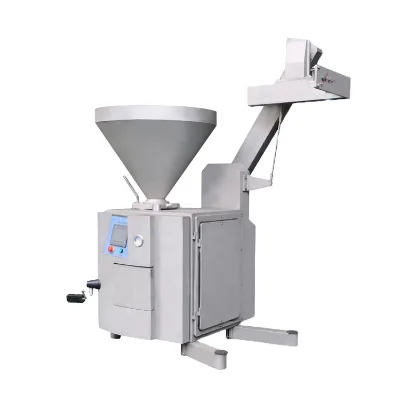

Meat Processing Machinery Sausage Making Machine Sausage Twisting Machine Sausage Stuffer
$2000.00 - $15000.00
MOQ: 1 Pieces


Sausage Production Line Vacuum Sausage Making Machine with Twisting Function
$2000.00 - $13000.00
MOQ: 1 Sets

Comprehensive Sourcing Guide
Strategic Sourcing Guide for Vacuum Sausage Making Machines
Procuring industrial vacuum sausage making machinery requires a disciplined approach that balances technical performance with supply chain reliability. The market for these machines is characterized by a wide variance in specifications, ranging from compact units to high-capacity automated lines. Buyers must navigate a landscape where product attributes are often presented as observations rather than universal guarantees. This guide provides a structured framework for evaluating vacuum sausage making machines based on verified data points, ensuring that procurement decisions are grounded in factual evidence rather than marketing assertions.
Technical Specifications and Operational Capabilities
The foundation of any successful procurement lies in a precise understanding of the machine's technical specifications. In the current market, vacuum sausage making machines are not monolithic; they vary significantly in power, capacity, and material construction. A critical observation from available product data indicates that power sources can differ, with some units operating on electric power (such as 7.5kw or 136.8kw models) while others may utilize gas power sources. This distinction is vital for facility planning, as it dictates the necessary utility infrastructure.
Capacity is another primary differentiator. Data shows a wide range in processing capabilities, with some models rated for 3500kg/h and others for 500-1000kg/h. This variance directly impacts the throughput of the production line. Furthermore, the filling speed is a crucial metric for efficiency, with observed ranges spanning from 0 to 500 times per minute. Buyers must align these figures with their actual production targets to avoid bottlenecks or over-investment in unnecessary capacity.
Material construction is equally paramount for food safety and durability. The supplied facts highlight the prevalence of Stainless Steel (SS) as the primary material, specifically Food Grade Stainless Steel 304, with some models offering Ss304 or Ss316 options. The standard for stainless steel is often cited as SUS304 or SS 304, ensuring resistance to corrosion and ease of cleaning. However, buyers should verify the specific grade for each unit, as the presence of "SS" in a general description does not automatically confirm the 304 or 316 grade required for specific food applications.
| Attribute | Observed Range/Value | Procurement Consideration |
|---|---|---|
| Power Source | Electric (7.5kw, 136.8kw), Gas | Verify utility requirements and energy efficiency. |
| Capacity | 500-1000kg/h to 3500kg/h | Match to daily production volume targets. |
| Filling Speed | 0-500 times/min | Assess impact on line throughput and labor. |
| Material | SS, SS 304, Ss304, Ss316, SUS304 | Confirm food-grade certification and corrosion resistance. |
| Weight | 780kg to 2320kg | Ensure floor loading capacity and foundation requirements. |
| Voltage | 220V, 380V | Match to local electrical grid standards. |
Compliance, Certification, and Safety Standards
In the food processing industry, compliance with international standards is non-negotiable. The procurement process must rigorously verify that the machinery meets the necessary safety and hygiene certifications. Available data points indicate that reputable suppliers often provide certifications such as CE, SGS, ISO, and BV. Specific standards like ISO9001 and ISO9001:2008 are frequently cited, alongside CE marking, which is essential for market access in many regions.
However, buyers must treat these certifications as specific to the model and batch rather than universal attributes of all listed products. The presence of a "CE" label in a general product description does not guarantee that every unit in a supplier's catalog is certified. It is imperative to request the specific certificate documents for the exact model number being purchased. Additionally, the working principle of the machine, often pneumatic in these applications, must be evaluated for its ability to maintain a vacuum seal without compromising food integrity.
The standard for the machine's construction is often listed as "Stainless steel" or specific grades like "SS 304." While these are strong indicators of quality, the buyer should verify that the standard applies to all food-contact surfaces. The H.S. Code 8438500000 is a relevant classification for these machines, which can assist in customs clearance and tariff determination, but it does not substitute for safety compliance checks.
Cost Drivers and Pricing Structures
Understanding the cost drivers for vacuum sausage making machines is essential for budgeting and ROI analysis. The observed price range in the market is vast, spanning from 1 USD to 120,000 USD. This extreme variance is not indicative of a single product type but rather reflects differences in capacity, automation level, material quality, and included features. A unit priced at the lower end of the spectrum may be a semi-automatic or smaller capacity model, while the higher end likely represents fully automated, high-throughput lines with advanced control systems.
Material costs are a significant driver, particularly the choice between SS 304 and SS 316. The latter is more expensive but offers superior corrosion resistance, which may be necessary for specific salting or curing processes. Power consumption is another factor; a machine with a 136.8kw motor will have different operational costs compared to a 7.5kw unit. Furthermore, the customization options available, such as specific filling speeds or hopper capacities (ranging from 220L to larger volumes), will influence the final price.
Buyers should be wary of pricing that seems too low, as it may indicate compromises in material quality or a lack of necessary certifications. Conversely, the highest prices do not always guarantee the best fit for a specific production need. The Minimum Order Quantity (MOQ) also plays a role in the total cost of ownership, with observed ranges from 1 to 100 units. For small to medium enterprises, a lower MOQ allows for more flexible capital deployment, whereas large-scale operations may benefit from bulk purchasing discounts.
Typical Applications and Process Integration
Vacuum sausage making machines are designed for a variety of applications within the meat processing sector. The primary function involves the mixing, stuffing, and vacuum packaging of sausages to ensure consistent texture and extended shelf life. The observed "Process" attributes, such as "Mild Processing" and "Thermal Processing," suggest that these machines can be integrated into different stages of the production line, from raw material preparation to final packaging.
The "Automatic Grade" of these machines, often listed as "Automatic," indicates a high level of integration with existing production lines. This automation reduces labor costs and minimizes human error, which is critical for maintaining product consistency. The working principle, typically pneumatic, allows for precise control over the vacuum level and stuffing pressure, which is essential for producing high-quality sausages with uniform density.
Applications extend beyond simple sausage production to include other meat-based products that require vacuum filling. The capacity of the machine, whether 500kg/h or 3500kg/h, determines its suitability for different production scales. Small batch producers may opt for lower capacity units, while large industrial facilities require high-capacity models to meet demand. The hopper capacity, observed at 220L in some models, is a key factor in determining the frequency of refilling and the overall efficiency of the operation.
Supplier Evaluation and After-Sales Support
Selecting the right supplier is as critical as selecting the right machine. The data indicates that suppliers often provide after-sales services, including engineers available for overseas service. This is a crucial factor for international buyers, as technical support and maintenance are essential for minimizing downtime. The warranty period is another key metric, with some suppliers offering a 3-year warranty. However, buyers must verify the specific terms of the warranty, as coverage may vary by region and model.
The origin of the machinery is also a consideration. Many products are listed as originating from Henan, China (Mainland) or simply "China." While this provides insight into the manufacturing hub, it does not guarantee quality on its own. Buyers should evaluate the supplier's track record, the specific model's reputation, and the availability of spare parts. The packaging, often described as "Fumigation-Free Wooden Case" or "in Wooden Box," is designed to protect the machine during transit, but the buyer should verify that the packaging meets international shipping standards.
Customization is a significant advantage offered by many suppliers. The "Customization" attribute is listed as "Available" or "Customized," indicating that buyers can request modifications to fit their specific production needs. This could include changes to the voltage, power source, or machine dimensions. However, customization often extends lead times and may increase costs, so these factors must be weighed against the benefits of a tailored solution.
Quality Control and Long-Term Procurement Considerations
Implementing a robust quality control (QC) protocol is essential for ensuring that the purchased machinery meets the required standards. Buyers should conduct pre-shipment inspections to verify that the machine's material, dimensions, and performance align with the specifications. The standard dimensions, such as 180012001850mm, should be confirmed to ensure the machine fits the intended production space.
Long-term procurement considerations include the availability of spare parts and the longevity of the machine. The weight of the machine, ranging from 780kg to 2320kg, suggests a heavy-duty construction, but the actual lifespan depends on maintenance and usage. Buyers should inquire about the recommended maintenance schedule and the availability of replacement parts for critical components like pumps and seals.
The "prod_packing" and "prod_standard" details provide insight into the manufacturer's attention to detail. A "Fumigation-Free Wooden Case" is preferable for international shipping to avoid customs delays, while a standard "Stainless steel" construction ensures durability. Buyers should also consider the energy efficiency of the machine, as operational costs over the machine's lifespan can be significant.
In conclusion, sourcing a Vacuum Sausage Making Machine requires a meticulous approach that prioritizes verified specifications, compliance, and supplier reliability. By focusing on the factual data available and avoiding assumptions about unverified claims, buyers can make informed decisions that align with their production goals and budget constraints. The complexity of the market demands a thorough evaluation of each component, from the material grade to the after-sales support, to ensure a successful procurement outcome.
FAQs
What power sources are available for vacuum sausage making machines?
Vacuum sausage making machines typically operate on electric power sources, with observed ratings of 7.5kw or 136.8kw. Some models may utilize gas power sources, so buyers must verify the specific utility requirements before installation to ensure facility compatibility.
Which material grades are used for food contact surfaces?
The primary material is Food Grade Stainless Steel 304, with some models offering Ss304 or Ss316 options. Specific standards like SUS304 or SS 304 are cited to ensure corrosion resistance, but buyers should verify the exact grade for each unit to confirm food safety compliance.
How is the production capacity measured for these machines?
Production capacity varies significantly, with observed ranges from 500-1000kg/h up to 3500kg/h depending on the model. Buyers must align these figures with their actual daily production targets to avoid bottlenecks or over-investment in unnecessary high-throughput capabilities.
What certifications are commonly provided for these machines?
Reputable suppliers often provide certifications such as CE, SGS, ISO, and BV, with specific standards like ISO9001 or ISO9001:2008. Buyers must request specific certificate documents for the exact model number being purchased rather than assuming all units in a catalog share these certifications.
Can buyers customize the machine specifications for their needs?
Customization is available for attributes like voltage, power source, and machine dimensions to fit specific production needs. However, customization often extends lead times and may increase costs, so buyers should weigh these factors against the benefits of a tailored solution before ordering.
What after-sales support is typically offered by suppliers?
Suppliers often provide engineers available for overseas service machinery to assist with technical support and maintenance. A warranty period of 3 years is common, but buyers must verify the specific terms of the warranty as coverage may vary by region and specific model.