Source Vintage Butterfly Amethyst Pendant for jewelry, gifts, and decor
Compare 30 listings for the Vintage Butterfly Amethyst Pendant, featuring options in stainless steel and alloy with gold plating. Buyers can evaluate customization services, shapes, and sizes suitable for female, male, and children markets.
Key considerations
Products List


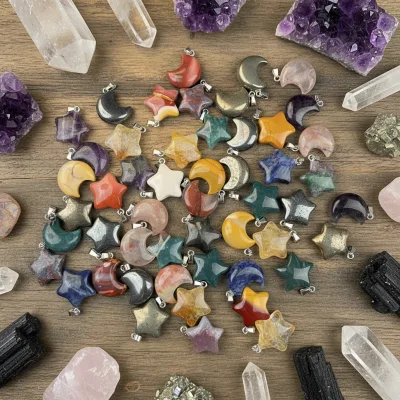
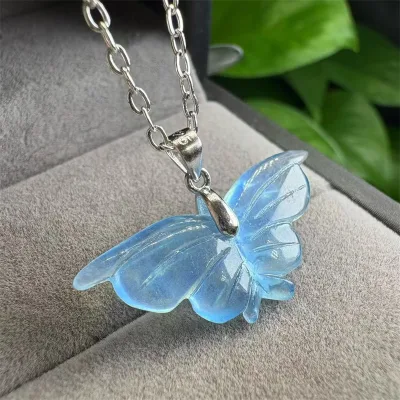


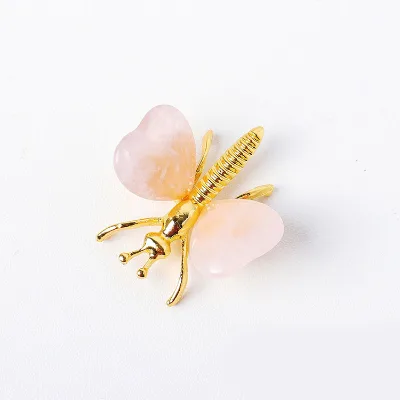
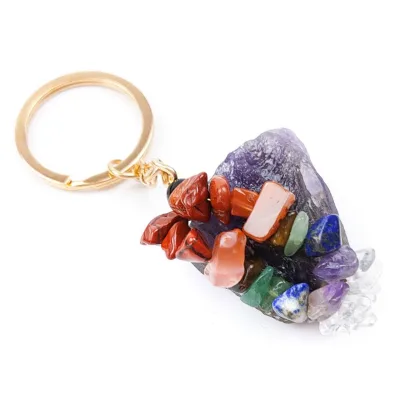
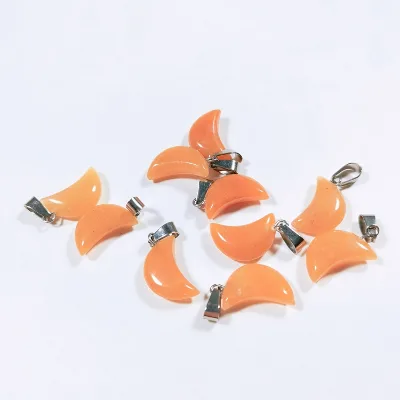

New Diamond Butterfly Love Necklace Open I Love You Heart-Pendant Necklace
$0.79 - $0.85
MOQ: 100 Pieces


Comprehensive Sourcing Guide
Strategic Sourcing Guide for Vintage Butterfly Amethyst Pendants
Understanding Product Attributes and Design Variability
When sourcing a Vintage Butterfly Amethyst Pendant, buyers must first reconcile the specific aesthetic requirements with the actual manufacturing capabilities observed in the current market. The term "vintage" often implies a specific design language characterized by intricate detailing, aged finishes, or classic silhouettes, while "butterfly" defines the primary shape. In the current supply landscape, butterfly-shaped pendants are a confirmed available attribute, often paired with fashion or luxury styles. However, the specific material composition of "amethyst" requires careful verification, as the supplied product data indicates a prevalence of stainless steel, alloy, and copper plating rather than natural gemstone settings.
The observed market data reveals that while butterfly shapes are available, the material profile often leans towards metals like stainless steel and alloy, with finishes such as gold plating, silver plating, or copper plating. A "vintage" look in this context is frequently achieved through casting and polishing crafts rather than the use of raw gemstones. Buyers should note that the "amethyst" descriptor in a search query might refer to a purple hue achieved through plating or enamel work on metal, rather than a genuine stone, unless explicitly verified with the supplier. The product attributes show that customization is available, allowing for specific shape adjustments, though the core butterfly motif remains a standard offering.
Furthermore, the color palette observed includes silver and gold, which are standard for metal jewelry. If a buyer requires a specific purple tone to match the "amethyst" keyword, they must confirm if the plating process (such as gold or silver plating) can be adapted to include purple enamels or if the "amethyst" reference is purely stylistic. The supply chain data indicates that products are often packed in OPP or PP bags, suggesting a focus on cost-effective logistics for B2B transactions. The origin of these goods is consistently noted as China, which is a primary hub for alloy and stainless steel jewelry manufacturing.
Technical Specifications and Material Composition
The technical specifications for butterfly pendants vary significantly based on the intended price point and target demographic. The data indicates that models such as P68956, P30852B, and P31178A exist within the market, each potentially carrying different dimensional constraints. For instance, one observed standard dimension is 578mm, while another specification lists a size of 30*27mm. These discrepancies highlight the necessity for buyers to define precise dimensional requirements before engaging with suppliers. The length of associated chains or necklaces, if included, can range from 40cm to 60cm, with specific models offering 45cm or 18-inch options.
Material selection is a critical technical decision. The observed inventory includes stainless steel, which offers high durability and resistance to tarnish, and alloy, which provides a lower-cost alternative but may require specific plating to prevent oxidation. The "Craft" attribute frequently lists "Casting" and "Polishing," indicating that the butterfly shapes are likely die-cast or sand-cast and then manually or mechanically polished to achieve a smooth finish. Some products feature gold plating, while others utilize copper plating or a combination of gold and silver plating.
For a buyer seeking an "amethyst" aesthetic, the technical verification must extend to the plating quality. The data shows that plating options include copper, gold, and silver. If the goal is a purple hue, the buyer must inquire if the supplier offers specific colored plating or enamel application over the base metal. The "Allergic?" attribute in the data is marked as "No," which is a positive indicator for hypoallergenic properties, particularly if stainless steel is the base material. However, for alloy products, the thickness and quality of the plating are paramount to ensure that the underlying metal does not cause skin irritation. The "Standard" attribute also lists dimensions like 578cm in some contexts, which may refer to packaging or a different product category, necessitating a clear distinction between pendant size and packaging size during specification review.
Compliance, Certification, and Safety Verification
In the B2B jewelry sector, compliance is not merely a formality but a critical risk management strategy. While the supplied data does not explicitly list specific certification bodies (such as ISO or SGS), the presence of "No" under the "Allergic?" attribute suggests that the products are designed to meet basic skin safety standards. However, buyers must not assume compliance based on this single data point. The international market, particularly in North America and the European Union, has strict regulations regarding heavy metals like lead, cadmium, and nickel in jewelry.
Buyers should verify that the supplier can provide test reports confirming that the alloy or stainless steel used meets REACH (Registration, Evaluation, Authorization and Restriction of Chemicals) standards in the EU or California Proposition 65 requirements in the US. The "Craft" of casting and polishing can introduce surface imperfections or residual chemicals if not properly cleaned, making post-production testing essential. Additionally, the "Logo Service" and "OEM Service" being offered imply that the supplier engages in customization, which may involve the application of inks, glues, or additional plating layers that could introduce new compliance risks.
The "Standard" attribute mentioning "578cm" or "578mm" likely refers to physical dimensions rather than a safety standard. Buyers must clarify if the supplier adheres to any specific industry standards for jewelry manufacturing. The "Factory: Yes" attribute confirms a direct manufacturing source, which is advantageous for compliance audits, as it allows for on-site verification of production processes. However, without explicit mention of certifications in the provided data, the buyer must treat the compliance status as unverified until specific test reports are requested and validated. The "Delivery: Fast" and "Lead Time: 7-15 days" attributes suggest a responsive supply chain, but compliance documentation should not be expedited at the cost of thoroughness.
Cost Drivers and Pricing Dynamics
The pricing for vintage butterfly amethyst pendants is influenced by a complex interplay of material costs, craftsmanship, and order volume. The observed price range in the market spans from $0.10 to $10.68 USD, a wide spectrum that reflects the diversity from simple alloy pieces to more elaborate stainless steel or plated luxury items. The lower end of this range typically corresponds to alloy products with basic plating and standard packaging (OPP or PP bags). The higher end likely involves stainless steel, multi-layer plating (gold and silver), and more intricate casting or polishing techniques.
The Minimum Order Quantity (MOQ) is another significant cost driver, with observed ranges between 2 and 1000 units. A lower MOQ of 2 units may be available for sample orders or highly customized items, but this often comes with a higher unit cost. Conversely, bulk orders approaching 1000 units can leverage economies of scale to reduce the per-unit price significantly. The "Customization" and "Customized" attributes being available indicate that bespoke designs will incur additional tooling or setup costs, which can impact the final price.
Plating thickness is a hidden cost factor. Thicker plating (e.g., 18k gold plating over copper) costs more but offers better durability and a richer appearance. The "Style" attribute, ranging from "Fashion" to "Luxury," also correlates with price; luxury items often feature higher-quality materials and more detailed finishes. The "Usage" of the product, whether for decoration, religious purposes, or as a gift, can also influence the perceived value and pricing strategy. Buyers should request a detailed breakdown of costs, including material, labor, plating, and packaging, to understand the value proposition at different price points.
Supplier Evaluation and Manufacturing Capabilities
Evaluating a supplier for vintage butterfly amethyst pendants requires a focus on their manufacturing capabilities and flexibility. The data confirms that suppliers offer "Factory: Yes," indicating direct production rather than trading, which is a positive sign for quality control and cost management. The availability of "OEM Service" and "Logo Service" suggests that the supplier can accommodate branding needs, which is crucial for B2B buyers looking to build their own brand identity.
The "Suitable for" attribute lists Female, Children, Male, and Elderly, indicating a versatile product line that can cater to various demographics. This versatility is a strength, as it allows buyers to source a single supplier for multiple product lines. However, the "Craft" of casting and polishing requires skilled labor; buyers should assess the supplier's capacity to maintain consistency in these manual processes. The "Delivery: Fast" and "Lead Time: 7-15 days" attributes suggest a responsive supply chain, but buyers must verify if these lead times are consistent during peak seasons or for customized orders.
The "Lording Port: Ningbo" is a specific logistical detail that can impact shipping costs and timelines. Ningbo is a major port in China, known for efficient export operations, but buyers should confirm if the supplier can handle shipping from alternative ports if necessary. The "Product Origin: China" is a standard fact, but buyers should ensure that the supplier has a robust quality assurance system in place to maintain the "Luxury" or "Fashion" style standards expected in international markets. The "Packing" options of OPP or PP bags are standard, but buyers may require custom packaging for a luxury presentation, which would need to be discussed as an additional service.
Quality Control and Long-Term Procurement Strategy
Quality control (QC) is paramount when sourcing jewelry, especially items with plating and casting. The "Craft" attributes of "Casting" and "Polishing" introduce potential points of failure, such as air bubbles in the casting or uneven polishing. Buyers should implement a rigorous QC protocol that includes visual inspection for surface defects, measurement checks against the specified dimensions (e.g., 3027mm or 57*8mm), and plating adhesion tests. The "Allergic?: No" attribute is a starting point, but independent third-party testing for nickel and lead content is recommended for long-term procurement.
For long-term success, buyers should establish a clear communication channel with the supplier regarding the "Customization" and "Customized" options. The ability to adjust the "Shape" (e.g., Butterfly) and "Style" (e.g., Vintage, Luxury) allows for product differentiation. The "Usage" of the product for "Decoration" or "Religious" purposes may require specific design tweaks, which the supplier's OEM service should accommodate. The "Lead Time" of 7-15 days is a baseline, but buyers should negotiate a buffer for customized orders to avoid stockouts.
The "Price Range" of $0.10 to $10.68 offers flexibility, but buyers should aim for a consistent price point that aligns with their brand positioning. Regular audits of the supplier's production line can ensure that the "Luxury" style is maintained over time. The "Standard" dimensions and "Size" specifications should be locked in the purchase agreement to prevent variations. Finally, the "Logo Service" and "OEM Service" should be integrated into the long-term strategy to build brand equity, ensuring that the Vintage Butterfly Amethyst Pendant becomes a signature product for the buyer's catalog.
Comparison of Key Product Attributes
To facilitate decision-making, the following table summarizes the key attributes observed in the market for butterfly pendants, highlighting the variability buyers must navigate.
| Attribute Category | Observed Options | Strategic Consideration |
|---|---|---|
| Material | Stainless Steel, Alloy | Stainless Steel offers better durability; Alloy is cost-effective but requires plating. |
| Shape | Butterfly, Heart, Square | Butterfly is the core keyword; verify if "amethyst" refers to color or stone. |
| Craft | Casting, Polishing | Manual polishing affects finish quality; casting determines shape complexity. |
| Plating | Gold, Silver, Copper | Plating type and thickness impact cost and longevity; verify for skin safety. |
| Style | Luxury, Fashion, Cute | Align style with target demographic (Female, Children, Elderly). |
| MOQ | 2 - 1000 | Lower MOQ for samples; higher MOQ for bulk cost reduction. |
| Lead Time | 7-15 Days | Fast delivery noted; confirm for customized orders. |
| Origin | China | Direct factory source; verify port (Ningbo) and logistics. |
| Packaging | OPP Bag, PP Bag | Standard packaging; consider custom options for luxury positioning. |
| Customization | Available, Offered, Accepted | High flexibility for logos, shapes, and plating; verify costs. |
This structured approach ensures that buyers can effectively navigate the complexities of sourcing vintage butterfly amethyst pendants, balancing aesthetic desires with technical realities and supply chain constraints. By focusing on verified attributes and maintaining rigorous quality standards, buyers can build a sustainable and profitable procurement strategy.
FAQs
What materials are used for vintage butterfly amethyst pendants?
These pendants are typically made from stainless steel or alloy. The observed inventory includes these metals with finishes like gold plating, silver plating, or copper plating to achieve the desired aesthetic.
Can I customize the shape and logo on these pendants?
Yes, customization is available for shape and logo services. Buyers can request specific designs such as butterfly shapes, and the supplier offers logo services and OEM customization to meet unique branding needs.
What is the typical lead time for these jewelry items?
The standard lead time ranges from 7 to 15 days for production. Fast delivery options are noted in the supply chain data, though specific timelines may vary based on order volume and customization requirements.
Which certifications ensure these pendants are safe for skin contact?
While the data indicates the products are marked as non-allergic, explicit certification documents are not listed. Buyers should request test reports for heavy metals to ensure compliance with international safety standards like REACH.
How does the price range vary for these pendants?
The observed price range spans from 0.10 to 10.68 USD per unit. Lower prices typically correspond to alloy materials with basic plating, while higher prices reflect stainless steel and luxury finishes.
What are the standard packaging options for these products?
Products are commonly packed in OPP bags or PP bags for cost-effective logistics. Custom packaging may be available as an additional service, but standard B2B transactions usually utilize these protective plastic bags.