Source Vintage Knitted Crop Tank Top for Summer, Spring, Casual Wear
Find 30 options for the Vintage Knitted Crop Tank Top from suppliers in China. Buyers can compare features like breathability, customization, and delivery times to select the right product for summer or spring casual styles.
Key considerations
Products List
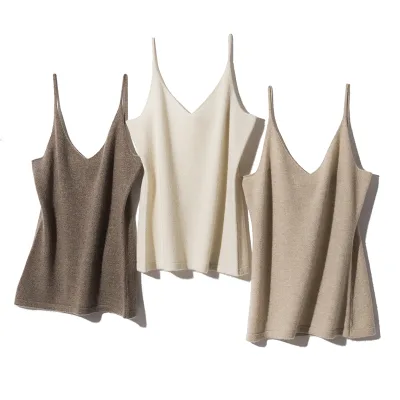


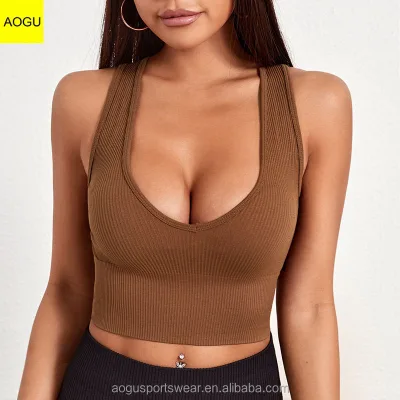


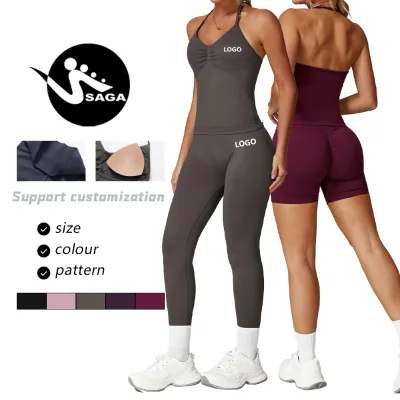
Custom Logo Rib Women Sport Tank Top Sleeveless Vest Halter Back Tank Crop Top
$15.32 - $16.34
MOQ: 50 pieces
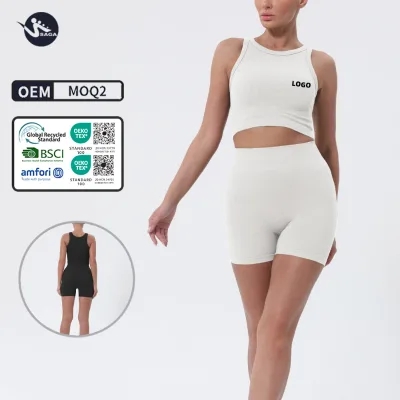
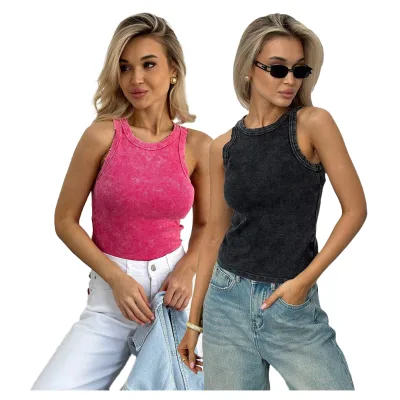


Custom Cute Crop Vest Comfortable Sweet Style Women's Sexy Tank Top for Summer
$13.00 - $17.00
MOQ: 2 pieces


100% Cotton Rib Knitting Vest Customizated Tank Top for Women in Summer.
$14.00 - $24.00
MOQ: 2 pieces


Comprehensive Sourcing Guide
Strategic Sourcing Guide for Vintage Knitted Crop Tank Tops
Understanding Product Specifications and Technical Attributes
When sourcing a Vintage Knitted Crop Tank Top, buyers must first establish a precise understanding of the technical specifications that define the product category. The core item is a sleeveless garment, typically categorized under tank tops, designed with a specific silhouette that distinguishes it from standard tops. The "vintage" descriptor in this context often implies a specific aesthetic or fabric treatment, but the technical reality relies on the knitting method. The supply chain data indicates that the primary weaving method for these items is knitted, which provides the necessary stretch and drape associated with casual wear.
The construction of the tank top involves specific structural elements. The neckline is a critical variable, with options ranging from V-neck, round neck, square neck, to low neck styles. This versatility allows buyers to target different market segments, from casual daily wear to fashion-forward leisure styles. The sleeve style is consistently sleeveless, confirming the tank top classification. Regarding fit, the clothing length is a defining feature; while some variations exist, the "crop" designation implies a shorter cut, often aligning with regular or medium-length specifications depending on the specific model number, such as TOP5003 or TOP5011.
Fabric composition is another pivotal specification. The material profile suggests a blend of Nylon and Cotton, a combination that balances durability with comfort. This blend supports features such as being breathable, quick-drying, and anti-shrink. The fabric weight is noted as customizable, allowing suppliers to adjust the GSM (grams per square meter) to meet specific seasonal or stylistic requirements. The pattern style is generally plain, though some listings indicate printed options, suggesting that the base garment can be customized with various designs. The size specification is often listed as "One Size" or "Both Codes," indicating a flexible sizing strategy that may rely on stretch rather than a rigid size chart.
Customization Capabilities and Production Flexibility
A significant advantage in sourcing this category is the high degree of customization available. Suppliers explicitly support the ability to customize items, including the addition of buyer-specific logos. This service is often facilitated through various printing and embroidery techniques. The technical data highlights methods such as 3D embroidery and nail bead embroidery, which can add a premium, textured element to the vintage aesthetic. Additionally, standard printing methods are available, allowing for graphic designs that align with current fashion trends.
The customization process involves specific logistical steps. Buyers should anticipate a sampling phase, with a typical sampling time of 7-10 days. During this phase, a sample charge is usually applied, often calculated as double the unit price of the final product. This fee is standard industry practice to cover material and labor costs for the prototype. Once the sample is approved, the production lead time for the bulk order typically ranges from 25 to 35 days. This timeline is crucial for supply chain planning, especially for seasonal collections where timing is critical.
Payment terms are generally structured around T/T (Telegraphic Transfer), a standard method in international trade that offers security for both parties. The minimum order quantity (MOQ) for in-stock items is often set at 10 pieces per style, providing a low barrier to entry for smaller buyers testing the market. However, for custom orders, the MOQ may vary, and buyers must verify the specific requirements with the supplier. The supply type is defined as OEM (Original Equipment Manufacturer) service, meaning the supplier manufactures goods according to the buyer's specifications, branding, and design requirements.
Compliance, Standards, and Material Verification
Navigating the compliance landscape for textile products requires careful verification of standards and certifications. While the supply data mentions OEKO-TEX as a potential standard, it is categorized as low-confidence background information. Therefore, buyers cannot assume a specific product holds this certification without direct verification from the supplier. Instead, the procurement strategy must focus on requesting valid, current test reports for the specific batch of goods.
The material composition, specifically the Nylon/Cotton blend, raises questions regarding sustainability and chemical safety. Buyers should verify that the dyes and finishes used in the production process meet international safety standards. The product attributes list features such as "Eco-Friendly," "Anti-Shrink," and "Anti-Pilling." These are performance claims that must be substantiated by test results. For instance, the "Anti-Shrink" claim requires verification through shrinkage tests after washing, while "Anti-Pilling" requires abrasion testing to ensure the fabric surface remains smooth over time.
Packaging standards also play a role in compliance and logistics. The standard transport packaging is described as "1PC in a Polybag," which is a basic protective measure. However, for export to markets with strict environmental regulations, buyers may need to request biodegradable or recycled polybags. The product standard is listed as customizable, which implies that the physical dimensions and tolerances can be adjusted to meet specific buyer requirements. The origin of the goods is primarily China, with specific mentions of Sichuan as a production hub. Buyers should be aware that regional variations in labor and environmental regulations may exist within the country.
Cost Drivers and Financial Considerations
The pricing structure for vintage knitted crop tank tops is influenced by several key variables. The observed price range in the market is between $2.59 and $30.00 USD. This wide range reflects differences in material quality, complexity of customization, order volume, and the specific supplier's overhead costs. The lower end of the spectrum likely corresponds to basic, in-stock items with minimal customization, while the higher end reflects complex embroidery, premium fabric blends, or smaller order quantities that do not benefit from economies of scale.
The MOQ is a primary cost driver. While in-stock items may be available with an MOQ of 10 pieces, custom orders often require higher volumes to justify the setup costs for embroidery or printing. The sample charge, typically double the unit price, adds an initial cost that must be factored into the total budget. Additionally, the choice of shipping method significantly impacts the landed cost. Options include FedEx and UPS for air freight, as well as sea freight. Air freight offers speed but at a higher cost, whereas sea freight is more economical for large volumes but requires longer lead times.
Payment terms, specifically T/T, require buyers to manage cash flow effectively. A common structure involves a deposit before production begins and the balance before shipment. Buyers should negotiate these terms to align with their financial cycles. The customization of fabric weight is another variable that affects cost; heavier fabrics or specialized blends will naturally increase the unit price. Buyers must balance the desire for high-quality features like "Quick Dry" and "Breathable" with the budget constraints of their target market.
Supplier Evaluation and Quality Assurance Protocols
Selecting the right supplier is critical for ensuring product consistency and reliability. The supply data indicates multiple model numbers, such as NSBX001, NSBX008, NSBX009, and NSBX002, suggesting that different suppliers or production lines may be handling different SKUs. Buyers should evaluate suppliers based on their ability to meet the specific technical requirements, such as the weaving method and embroidery techniques. The presence of "OEM service" indicates that the supplier is equipped to handle custom branding, but the depth of their capability should be verified.
Quality control (QC) is essential for maintaining brand reputation. Given the features listed, such as "Anti-Pilling" and "Anti-Shrink," buyers should implement a rigorous QC plan. This includes inspecting the fabric for defects, verifying the accuracy of the embroidery or printing, and checking the stitching quality. The "One Size" specification requires particular attention to ensure that the garment fits a wide range of body types without compromising comfort. Buyers should request pre-shipment inspections to catch any issues before the goods leave the factory.
The production origin, specifically Sichuan, China, offers insights into the supply chain dynamics. Buyers should verify the supplier's capacity to handle the required volume within the 25-35 day lead time. Communication is key; suppliers should be responsive and transparent about any potential delays. The ability to support a 7-day sample order lead time is a positive indicator of operational efficiency. However, buyers must remain vigilant about the "low-confidence" nature of certain claims, such as the OEKO-TEX standard, and insist on documented proof of compliance.
Long-Term Procurement and Market Strategy
Sourcing vintage knitted crop tank tops is not just a one-time transaction but a strategic decision that impacts long-term business growth. The versatility of the product, with options for various necklines, styles (Casual, Fashion, Leisure), and customization, makes it suitable for a wide range of applications. From daily wear to fashion-forward collections, the product can be adapted to meet changing consumer trends.
Buyers should consider the scalability of their supply chain. As demand grows, the ability to maintain consistent quality and lead times becomes paramount. The customizable nature of the product allows for continuous innovation, such as introducing new fabric blends or embroidery techniques. However, this flexibility requires a strong partnership with the supplier to ensure that changes are implemented smoothly without disrupting production schedules.
Sustainability is an increasingly important factor in the fashion industry. While the "Eco-Friendly" feature is listed, buyers should proactively seek out suppliers who are committed to sustainable practices. This includes using recycled materials, reducing water usage in dyeing processes, and ensuring fair labor practices. The "Nylon / Cotton" blend offers a balance, but buyers should explore options for organic cotton or recycled nylon to align with modern consumer values.
In conclusion, sourcing vintage knitted crop tank tops requires a balanced approach that combines technical precision, strategic customization, and rigorous quality control. By understanding the specifications, verifying compliance, managing costs, and building strong supplier relationships, buyers can successfully navigate the market and deliver high-quality products to their customers. The wide range of options available, from fabric weight to embroidery techniques, provides ample opportunity for differentiation and brand building in a competitive landscape.
FAQs
What customization options are available for vintage knitted crop tank tops?
Suppliers support customizing your own items and logos for these products. You can choose from embroidery or printing methods like 3D embroidery. The sampling time is typically 7 to 10 days before bulk production begins.
How long does delivery take for custom orders of this garment?
The standard delivery date for bulk orders is 25 to 35 days after sample approval. This timeline applies to the OEM service provided by manufacturers in China. Expedited shipping options like air freight may be available via FedEx or UPS.
Can I order a small quantity of vintage knitted crop tank tops?
Yes, the minimum order quantity for in-stock items is 10 pieces per style. For custom orders, the MOQ may vary based on the specific supplier and design complexity. You can also request samples with a charge of double the unit price.
Which materials are used to make these knitted tank tops?
The fabric composition typically includes a blend of Nylon and Cotton. This material combination offers features like being breathable, quick dry, and anti-shrink. The fabric weight is also customizable to meet specific seasonal or stylistic requirements.
What payment terms are accepted for sourcing these tank tops?
The standard payment term is T/T, which stands for Telegraphic Transfer. This method is commonly used for international trade transactions with suppliers in China. Buyers should confirm the specific deposit and balance schedule before production starts.
How are the vintage knitted crop tank tops packaged for shipment?
Each unit is packed individually in a polybag for standard transport. Some suppliers may offer customizable packaging standards to meet specific buyer requirements. This basic packaging protects the garment during transit via sea or air freight.
What necklines are available for these sleeveless tank tops?
Buyers can choose from V-neck, round neck, square neck, or low neck styles. The product is designed as a sleeveless tank top suitable for summer or spring seasons. These variations allow for casual, fashion, or daily wear applications.