Source Viscose Blend Women Blazer for Office, Events, and Travel
Find 30 Viscose Blend Women Blazer options from Chinese manufacturers. Compare polyester, cotton, and linen styles with custom logos, various sizes, and seasonal fits for professional sourcing needs. Explore OEM/ODM services and detailed specifications to streamline your procurement process effectively.
Key considerations
Products List


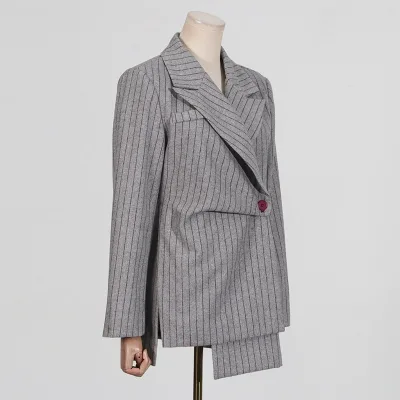
Women's Casual Suit 2 Piece Solid Color Open Front Blazer with Pockets and Trousers
$21.23 - $35.32
MOQ: 100 Pieces




Comprehensive Sourcing Guide
Viscose Blend Women Blazer Sourcing Guide
Sourcing viscose blend women blazers requires a nuanced understanding of fabric behavior and manufacturing capabilities, as the material offers a distinct drape and breathability that differs significantly from pure wool or synthetic alternatives. Buyers must recognize that viscose, derived from cellulose, provides a luxurious hand feel and excellent moisture absorption, making it ideal for spring and autumn collections where temperature regulation is key. However, this natural fiber characteristic also introduces challenges regarding shrinkage and wrinkle resistance, necessitating careful supplier selection and clear communication regarding finish treatments. The observed market data indicates a wide range of customization options, from pure color schemes to patterned designs, allowing brands to tailor the aesthetic to specific seasonal trends while maintaining structural integrity.
The procurement landscape for these garments is characterized by significant variability in production origins, with major hubs in Qingdao and Guangzhou offering distinct advantages in terms of supply chain efficiency and textile expertise. Buyers should note that while the core keyword specifies viscose blends, the observed listings include polyester, cotton, and linen compositions, highlighting the importance of precise material verification during the sampling phase. This diversity in material sourcing means that a single supplier may offer multiple fabric options, but the buyer must ensure that the final product matches the specified blend ratio to achieve the desired performance and aesthetic outcomes. Understanding these material distinctions is critical for avoiding discrepancies between the ordered sample and the bulk production run.
Product Scope and Observed Listing Signals
The current market signals indicate a strong emphasis on customization, with many suppliers offering OEM and ODM services that allow brands to develop unique silhouettes and branding elements. Observed listings frequently highlight customizable logo designs, labels, and tags, suggesting that buyers have significant control over the final product’s identity and presentation. This level of customization extends to the pattern and cut, with options ranging from notch lapels to various piece configurations, including two-piece and three-piece suits. Buyers should leverage these signals to identify suppliers who are not only capable of manufacturing but also willing to collaborate on design iterations, ensuring that the final blazer aligns with the brand’s specific vision and quality standards.
Seasonal relevance is another key signal, with products explicitly categorized for spring, autumn, and winter wear, indicating that viscose blends are versatile enough for multiple seasons depending on the weight and lining used. The observed size ranges, from standard S to XXXL and free sizes, suggest that suppliers are catering to a broad demographic, including adult consumers seeking formal or semi-formal attire. Buyers should pay close attention to the listed production models and standards, such as specific GSM weights or packing dimensions, as these details often reflect the supplier’s focus on particular market segments. Understanding these scope signals helps buyers narrow down their search to suppliers who specialize in the specific type of blazer they intend to source.
Technical Specifications to Verify
Verifying technical specifications is paramount when sourcing viscose blend blazers, as the material’s properties can vary significantly based on the blend ratio and manufacturing process. Buyers must confirm the exact percentage of viscose in the blend, as higher viscose content typically enhances drape and softness but may increase the risk of wrinkling and shrinkage. It is essential to request detailed fabric swatches and test reports that confirm the weight, tensile strength, and colorfastness of the material. Additionally, buyers should verify the construction details, such as the type of placket, button quality, and lining material, as these elements contribute to the overall durability and comfort of the garment.
The observed listings provide various model numbers and standard sizes, which serve as reference points for buyers to ensure consistency across orders. However, buyers should not rely solely on these identifiers and must conduct thorough fit testing on multiple sizes to account for potential variations in pattern grading. It is also crucial to verify the packing specifications, such as bagged or carton packaging, to ensure that the garments are protected during transit and that the packaging aligns with the brand’s retail requirements. By meticulously verifying these technical details, buyers can mitigate the risk of receiving products that do not meet their quality expectations or functional requirements.
Compliance and Safety Documentation
Compliance and safety documentation are non-negotiable aspects of sourcing viscose blend blazers, particularly when targeting international markets with strict regulatory standards. Buyers must ensure that suppliers provide relevant certifications and test reports that confirm the safety of the dyes, finishes, and fibers used in the production process. This includes verifying compliance with chemical restrictions, such as REACH in Europe or CPSIA in the United States, to ensure that the garments are free from harmful substances. Additionally, buyers should request documentation related to labor practices and ethical manufacturing, as these factors are increasingly important to consumers and regulatory bodies alike.
The observed listings do not explicitly mention specific certifications, which underscores the need for buyers to proactively request this information during the supplier qualification phase. Buyers should establish clear requirements for compliance documentation in their purchase agreements and conduct regular audits to ensure ongoing adherence. It is also important to verify that the suppliers have robust quality control systems in place to maintain consistency in compliance across all production batches. By prioritizing compliance and safety, buyers can protect their brand reputation and avoid potential legal issues associated with non-compliant products.
Cost Drivers and Commercial Terms
Cost drivers for viscose blend blazers include the price of raw materials, labor costs, and the complexity of the design and customization options. Buyers should be aware that the observed price range of $6.15 to $280 USD reflects significant variability based on factors such as fabric quality, construction details, and order volume. MOQs ranging from 1 to 500 pieces indicate that suppliers are flexible in their order requirements, but buyers should negotiate terms that align with their inventory strategy and cash flow constraints. It is essential to clarify all commercial terms, including payment methods, shipping responsibilities, and return policies, to avoid unexpected costs or disputes.
The observed production dates of 20-45 days and sample dates of 3-7 days provide a baseline for planning, but buyers should confirm these timelines with their specific supplier, as they may vary based on order complexity and capacity. Buyers should also consider the impact of currency fluctuations and shipping costs on the final landed cost of the products. By understanding the key cost drivers and negotiating favorable commercial terms, buyers can optimize their procurement strategy and achieve better margins. Clear communication regarding costs and terms is essential for building a sustainable and profitable sourcing relationship.
Supplier Qualification and Quality Control
Supplier qualification is a critical step in ensuring the successful sourcing of viscose blend blazers, as it directly impacts product quality and delivery reliability. Buyers should conduct thorough due diligence on potential suppliers, including verifying their business licenses, production capacity, and past performance records. The observed monthly capacity of 60,000 pieces suggests that some suppliers have significant scale, but buyers should assess whether this capacity aligns with their order volume and quality expectations. It is also important to evaluate the supplier’s quality control processes, including their inspection protocols and defect management systems, to ensure that they can consistently deliver high-quality products.
Quality control should be integrated into every stage of the production process, from raw material inspection to final product verification. Buyers should consider hiring third-party inspection services to conduct pre-shipment inspections, ensuring that the products meet their specified requirements before they are shipped. Additionally, buyers should establish clear communication channels with their suppliers to address any issues that arise during production. By prioritizing supplier qualification and rigorous quality control, buyers can minimize the risk of receiving substandard products and maintain a positive brand image.
Long-Term Procurement Checks
Long-term procurement checks are essential for maintaining a stable and efficient supply chain for viscose blend blazers. Buyers should regularly review their supplier performance metrics, including on-time delivery rates, product quality, and responsiveness to issues. This ongoing evaluation helps identify potential risks and opportunities for improvement, allowing buyers to make informed decisions about their sourcing strategy. It is also important to stay updated on market trends and regulatory changes that may impact the sourcing of viscose blend fabrics, ensuring that the products remain compliant and competitive.
Building strong relationships with suppliers through consistent communication and fair treatment can lead to better pricing, priority production, and collaborative innovation. Buyers should consider developing long-term contracts with key suppliers to secure capacity and pricing stability, while also maintaining a diversified supplier base to mitigate risk. By implementing robust long-term procurement checks, buyers can ensure that their sourcing operations remain resilient and adaptable to changing market conditions. This proactive approach supports sustainable growth and enhances the overall value of the procurement function.
FAQs
What customization options are available for the blazer?
Customization is available for logo design, labels, and tags. Buyers can request specific patterns including pure colors or logos. The product supports OEM and ODM services to meet unique branding requirements for formal occasions.
Which materials are used for the women's blazer?
The blazer is constructed from polyester, cotton, and linen materials. These fabrics are selected to ensure durability and comfort for spring, autumn, and winter seasons. The specific material depends on the chosen model and style requirements.
Can I order samples before placing a bulk order?
Samples are provided after negotiation with the supplier. The sample date typically ranges from three to seven days. This allows buyers to verify quality and fit before committing to larger production runs with defined lead times.
What sizes are offered for the suit models?
Sizes range from XS to XXXL including standard M, L, XL, and 2XL options. Some models offer free size or specific model codes like S M L XL 2XL. The loose fit is moderate to ensure a professional appearance.
How long does production take for custom orders?
Production dates generally span twenty to forty-five days. This timeline applies to custom orders requiring specific logos or packaging. Buyers should plan accordingly as capacity reaches sixty thousand units per month for large volume requests.
Where are the blazers manufactured and shipped from?
Products originate from Qingdao and Guangzhou in China. Shipping is handled via bagged or carton packaging depending on the order. The location ensures efficient logistics for international buyers seeking formal suit components.
What is the minimum order quantity for these suits?
The minimum order quantity ranges from one to five hundred units. This flexibility allows small businesses to test the market while supporting larger retailers. Specific MOQs may vary based on the selected model and customization level.