Source W5W LED Auto Head Lamp for Cars, Trucks, and Bikes
Compare 30 verified W5W LED Auto Head Lamp options from China. Evaluate 12V models with E-mark and CE certifications, shock-resistant designs, and 1-year warranties for automotive front position applications; compare the available evidence and request quotations based on your requirements.
Key considerations
Products List


LED Auto Light Headlamp Car Lamp Headlight for Mercedes Benz C300 W205
$114.00 - $152.00
MOQ: 10 Pieces

Car Auto High Quality Headlight Head Lamp for Benz C-Class W206 2022-2024
$142.80 - $173.40
MOQ: 10 Pieces


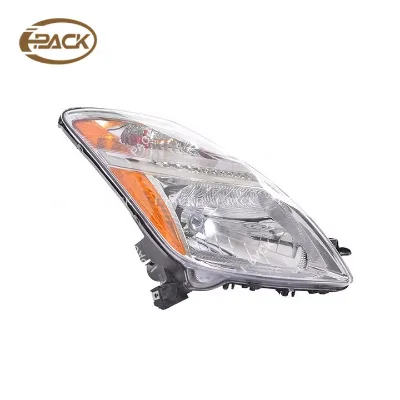


LED Auto Head Lamp for Mazda 6 2017 Car Headlight Gw2h51040f Gw2h51030f
$151.78 - $153.98
MOQ: 100 Pieces


Comprehensive Sourcing Guide
W5W LED Auto Head Lamp Sourcing Guide
The global market for w5w LED auto head lamps has evolved to prioritize high-efficiency illumination for front-position applications, particularly within the automotive retrofit sector. Buyers must distinguish between generic LED light bars and specific w5w bulb replacements designed for precise vehicle fitment, such as those compatible with Mercedes-Benz C-Class models from 2015 to 2024. Understanding this distinction is critical, as the supply chain offers both universal light bars and model-specific units with unique part numbers like A2059067703.
Procurement decisions should focus on verifying the exact application context, whether for a front position lamp or a primary headlight upgrade. The observed product data indicates a strong presence of units tailored for specific car makes, including Benz, with defined year ranges that dictate compatibility. Sourcing strategies must account for these variations to ensure that the purchased components integrate seamlessly with existing vehicle electrical systems without requiring complex modifications or risking fitment issues.
Product Scope and Observed Listing Signals
Current listings reveal a diverse range of product attributes, including voltage specifications of 12V and light colors predominantly in white, which are standard for automotive front lighting. Buyers should note the presence of various model identifiers, such as 9005-018Z5050 and CT-020W3050, alongside specific base types like W21W and H7. These identifiers signal distinct product lines that may serve different functions, from general illumination to specialized front position lamps, requiring careful matching against vehicle requirements.
The observed market signals also highlight significant variations in packaging and physical dimensions, with options ranging from anti-static bags to color boxes and cartons. Dimensions such as 1009872mm suggest compact designs suitable for tight headlamp housings, while others may be larger light bars. Procurement teams must verify that the physical footprint and packaging type align with logistics needs and installation constraints, ensuring that the selected units can be stored and handled efficiently throughout the supply chain.
Technical Specifications to Verify
Technical due diligence must center on the LED count and luminous output, as observed listings specify configurations like 20PCS LEDs with operating lumens reaching 4200lm. Buyers should confirm that the actual output matches the claimed specifications to ensure adequate visibility and safety compliance on the road. The lifespan is another critical metric, with data indicating a potential duration of 30,000+ working hours, which significantly impacts the total cost of ownership and replacement frequency for fleet operators.
Resistance properties are equally vital, with observed products boasting shock-resistant and waterproof capabilities essential for automotive environments. The view angle, often specified as spot, determines the beam pattern and must be verified to ensure it meets local road safety regulations without causing glare to oncoming traffic. Additionally, the absence of UV or IR radiation is a key technical advantage that protects vehicle components from heat damage, a feature that should be explicitly confirmed in technical datasheets before finalizing any purchase order.
Compliance and Safety Documentation
Regulatory compliance is a non-negotiable aspect of sourcing automotive lighting, with observed certifications including E-mark, CE, RoHS, and CCC. These marks indicate adherence to international safety and environmental standards, which are mandatory for selling vehicles in many jurisdictions. Buyers must ensure that the specific batch of w5w LED lamps carries the correct certification for their target market, as the absence of an E-mark, for instance, could lead to customs seizures or legal liabilities in European markets.
Beyond basic certifications, the supply chain often references additional standards such as ISO and SONCAP, which are crucial for specific regional entry requirements. Documentation should also verify that the products meet export standards and local safety norms, particularly for markets requiring PVOC or SONCAP validation. Procurement teams should request valid certificates of conformity for each shipment to maintain a clear audit trail and ensure that the lighting components do not violate any import regulations or safety mandates.
Cost Drivers and Commercial Terms
Pricing in the w5w LED market is influenced by a wide range of factors, with observed listing prices spanning from $0.72 to $1000 depending on the complexity and volume of the order. The minimum order quantity (MOQ) typically ranges from 5 to 1000 pieces, with specific listings showing an MOQ of 100PCS for certain models. Buyers must balance unit cost against volume requirements, as higher volumes often unlock better pricing tiers but require significant upfront capital and storage capacity.
Commercial terms such as EXW, FOB, and CIF define the responsibility for shipping and insurance, directly impacting the landed cost of the goods. The origin of the products, frequently listed as Dongguan, China, suggests a mature manufacturing hub with established logistics networks, yet buyers should verify lead times and production capacity to avoid delays. Understanding these trade terms is essential for accurate budgeting, as the choice between EXW and CIF can significantly alter the final cost structure and risk allocation between the buyer and the supplier.
Supplier Qualification and Quality Control
Supplier qualification should prioritize manufacturers that demonstrate a commitment to quality assurance, evidenced by claims of 100% tested products and guaranteed performance under normal use conditions. The observed guarantee period of 12 months or one year in normal use condition provides a baseline for warranty expectations, but buyers must clarify the specific terms and conditions that apply to defects or premature failures. A robust quality control process is essential to minimize the risk of receiving non-conforming goods that could compromise vehicle safety.
Verification of the supplier's production capabilities and origin is also necessary, with many listings indicating origins in China and specific locations like Dongguan. Buyers should assess the supplier's ability to handle customization requests, as the market data confirms that customization is available for many products. Establishing a clear communication channel for quality feedback and ensuring that the supplier can provide detailed production reports will help maintain consistency and reliability in the supply of w5w LED auto head lamps.
Long-Term Procurement Checks
Sustainable procurement requires ongoing monitoring of product performance and supplier reliability over the lifecycle of the partnership. Buyers should implement a system to track warranty claims and return rates, using this data to evaluate whether the 30,000+ hour lifespan and 12-month guarantee are being consistently met in real-world applications. Regular audits of the supply chain can help identify potential issues with material quality or manufacturing consistency before they escalate into larger problems.
Future-proofing the procurement strategy involves staying informed about evolving standards and certification requirements, such as updates to CE or RoHS regulations. As vehicle models evolve, compatibility with new car makes and models like the Mercedes Benz C-Class W206 will become increasingly important. Buyers should maintain a flexible sourcing strategy that allows for quick adaptation to new product specifications and ensures a continuous supply of high-quality w5w LED auto head lamps that meet the changing demands of the automotive market.
FAQs
What certifications do the LED lights have?
The LED lights hold E-mark, CE, RoHS, CCC, SONCAP, and PVOC certifications. These standards ensure compliance with international safety and environmental regulations for automotive applications, providing verified quality assurance for buyers sourcing from Dongguan, China.
Can I request customization for these LED products?
Yes, customization is available for these LED products. Buyers can request specific modifications to meet unique requirements while maintaining the core specifications like 12V voltage and shock-resistant design, ensuring the final product fits the intended vehicle application perfectly.
What is the minimum order quantity for these lights?
The minimum order quantity is 100 pieces for standard orders. Some listings indicate a range starting from 5 pieces, but the confirmed high-confidence fact specifies 100 pieces as the baseline requirement for securing supply from the Dongguan, China manufacturing sources.
How long is the warranty period for these lights?
The warranty period is 12 months or one year under normal use conditions. This guarantee covers the product lifespan of over 30,000 working hours, ensuring reliability for front position lamps and other automotive lighting applications specified in the product details.
Which car models are compatible with these LED lights?
These lights are compatible with Mercedes Benz C-Class models, specifically the W205 and W206 series. They fit vehicles manufactured between 2015 and 2024, with specific part numbers like A2059067703 ensuring precise fitment for front position lamp applications on these luxury vehicles.
What is the operating lumen output of the LED bar?
The operating lumen output is 4200 lumens for the LED light bar. This high brightness level, combined with a spot view angle and white light color, ensures optimal visibility for automotive applications while maintaining the 12V voltage requirement for standard vehicle electrical systems.