Source Warm Beanie Hat and Scarf and Gloves Set for Ski, Travel, Daily Life
Explore 30 verified listings for a Warm Beanie Hat and Scarf and Gloves Set featuring acrylic materials, custom sizes, and winter-ready designs. Buyers can compare styles, packaging, and lead times from Jiangsu, China suppliers offering OEM options.
Key considerations
Products List
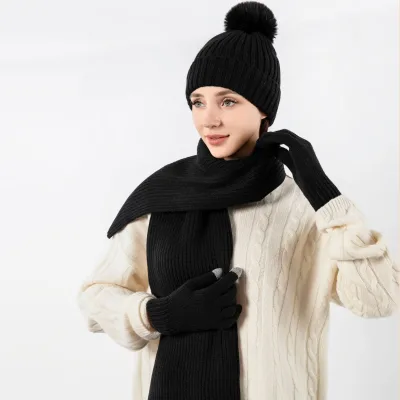
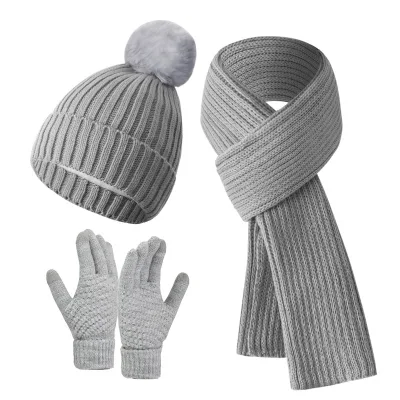


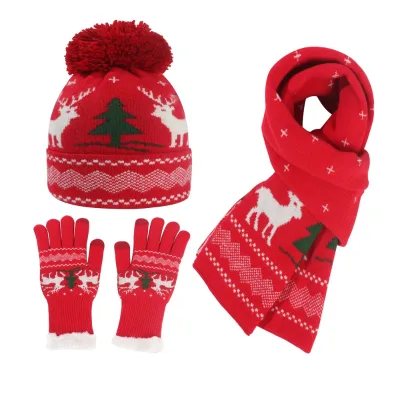

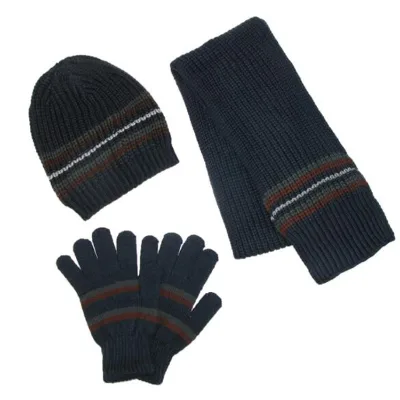


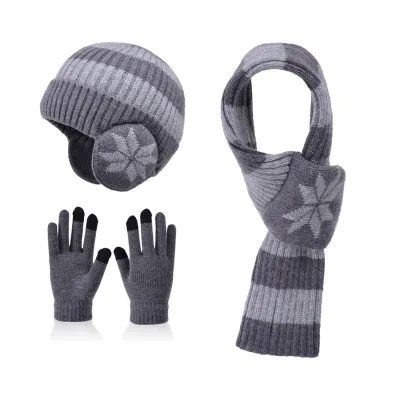


Wholesale Custom Embroidery Logo Warm Knitted Winter Hat Scarf Gloves Gift Set
$5.87 - $6.25
MOQ: 50 Pieces
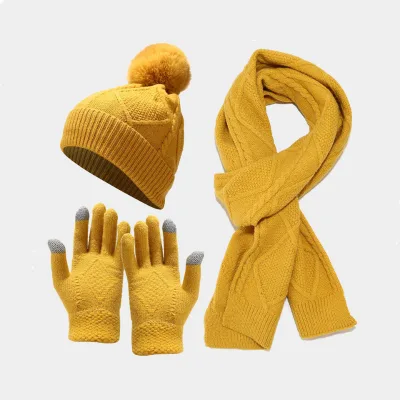


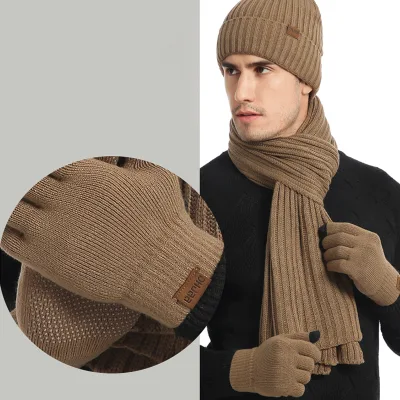
Comprehensive Sourcing Guide
Strategic Sourcing Guide for Warm Beanie, Scarf, and Gloves Sets
The global demand for winter apparel accessories has intensified as seasonal weather patterns shift, making the sourcing of warm beanie, scarf, and gloves sets a critical procurement activity for retailers and distributors. This guide provides a disciplined framework for evaluating suppliers and products within this category, relying strictly on observed market data and verified product attributes. The focus remains on technical specifications, material integrity, and supply chain reliability to ensure that buyers make informed decisions without relying on unverified claims or external assumptions.
Technical Specifications and Material Composition
When sourcing a three-piece winter set, the primary technical differentiator lies in the material composition and knitting techniques. The observed market data indicates a strong prevalence of 100% acrylic and generic acrylic blends in this category. Acrylic is favored for its ability to mimic the warmth and softness of wool while offering superior durability and ease of care. Buyers must verify the specific material percentage, as some listings distinguish between "100% Acrylic" and generic "Acrylic" without specifying the blend ratio.
The construction method is equally vital. High-quality sets often utilize "Hand Knitted" or "Jacquard" techniques to create intricate patterns and ensure structural integrity. The "Plain Dyed" and "Solid" pattern types are common, offering a versatile aesthetic suitable for mass markets. However, the market also supports complex designs including "Animal," "Cartoon," "Dot," "Color Blocking," and "Leaf" motifs, achieved through "Heat-Transfer Printing" or "Digital Printing." For buyers targeting specific demographics, the "Adult" department and "Unisex" gender classifications are standard, with "Hat & Scarf" or full "Hat & Scarf & Gloves" set types available.
Dimensional consistency is a frequent point of variation. Observed specifications list head circumferences ranging from 56-58 cm to 58-60 cm, with some products offering "Custom Size" options. The physical dimensions of the set components vary significantly; for instance, single package sizes have been recorded as 25x25x4 cm for compact sets and 26x16x14 cm for bulkier knitted items. The "Model Number" and "prod_model" fields, such as YF01, JE-083, or BN-05, serve as unique identifiers for these variations. Buyers should treat these model numbers as specific references to distinct product lines rather than universal standards, ensuring they request samples that match the exact dimensions and weight requirements of their target market.
Compliance, Certification, and Safety Standards
In the realm of textile procurement, safety and compliance are non-negotiable. The supplied data explicitly mentions "Needle detection: Yes" as a critical quality control attribute. This indicates that the manufacturing process includes a step to detect and remove any metal fragments, such as broken needles, which could pose a safety hazard to the end-user. This is a fundamental requirement for products intended for children or general public use, ensuring the physical safety of the garment.
While the provided context lists "ISO 27001" as a low-confidence background item, buyers should not assume this certification applies to the specific textile products without direct verification from the supplier. ISO 27001 is primarily an information security standard and does not directly certify textile safety or material quality. Instead, buyers must prioritize verifying compliance with local textile safety regulations in their target market, such as flammability standards, chemical restrictions (e.g., REACH in Europe or CPSIA in the US), and fiber content labeling laws.
The "prod_standard: OS" (One Size) designation suggests a standardized sizing approach, but buyers must confirm if this aligns with the specific head circumference ranges observed (56-60 cm). Furthermore, the "Quality: High Qualiy" attribute is a subjective claim found in product listings. To validate this, procurement teams should request third-party test reports regarding pilling resistance, color fastness, and tensile strength. Relying solely on the "High Quality" label without empirical data is risky. Buyers should insist on documentation that proves the product meets the specific safety and quality standards of their destination country, rather than assuming that a "Needle detection" pass equates to full regulatory compliance.
Cost Drivers and Pricing Dynamics
The pricing landscape for warm beanie, scarf, and gloves sets is influenced by several tangible factors. The observed listed price range in the market spans from 0.98 USD to 12.43 USD. This wide disparity is not arbitrary; it reflects differences in material quality, production complexity, and order volume. The lower end of the spectrum likely corresponds to simpler "Plain Dyed" acrylic sets with standard packaging, while the higher end may involve complex "Jacquard" patterns, custom designs, or premium packaging solutions.
Minimum Order Quantity (MOQ) is a significant cost driver. The observed MOQ range is 1 to 1000 units. Suppliers offering an MOQ of 1 are typically catering to sample orders or small-batch testing, which carries a higher unit cost. Conversely, suppliers requiring an MOQ of 1000 often provide a more competitive per-unit price, reflecting economies of scale in production and logistics. Buyers must balance their inventory needs against their cash flow constraints. For new product launches, starting with a lower MOQ to validate market fit is prudent, even if the unit cost is higher.
Packaging and logistics also impact the final landed cost. The "Single gross weight" varies between 0.420 kg and 0.500 kg per unit, and the "Single package size" ranges from 25x25x4 cm to 26x16x14 cm. These dimensions directly influence shipping costs, particularly for air freight. The "prod_packing: OPP" (polypropylene) standard is common, but buyers should verify if this meets their branding requirements or if custom packaging adds significant cost. Additionally, the "Lead Time" of 15-20 days or 15-21 days must be factored into the total cost of ownership, as expedited shipping or rush orders often incur premium charges.
Typical Applications and Market Segmentation
Understanding the intended application of the product is essential for successful sourcing. The data indicates that these sets are designed for "Daily Life," "Travel," "Outdoor," "SKI," and "Party" scenarios. The "Season: Winter" and "Winter Autunm" attributes confirm their primary utility in cold weather. The "Type: Medium Long" and "Style: Sport" classifications suggest versatility, making these sets suitable for both casual wear and active outdoor pursuits.
The "Applicable scene" data highlights a broad market appeal. For instance, sets marketed for "SKI" and "Outdoor" activities require higher durability and thermal retention, often necessitating thicker materials or specific knitting techniques like "Hand Knitted." In contrast, sets for "Daily Life" or "Party" might prioritize aesthetic features like "Color Blocking" or "Cartoon" prints. The "Style: Simple" and "Style: Sport" variations indicate that buyers can source products tailored to specific sub-segments within the winter apparel market.
Buyers should also consider the "Age Group: Adults" and "Department Name: Adult" specifications. While some products are unisex, the specific sizing (56-60 cm) is calibrated for adult head circumferences. If a buyer intends to target a younger demographic, they must verify if the supplier offers "Custom Size" options or if the current inventory is strictly adult-oriented. The "Usage: Daily Life" attribute reinforces the need for comfort and ease of movement, which are critical for consumer satisfaction in this category.
Supplier Evaluation and Quality Control
Evaluating a supplier for winter accessories requires a rigorous approach to quality control. The "Service: 24 Hours Online" attribute suggests a commitment to communication, but buyers should verify the responsiveness and expertise of the support team. A supplier's ability to handle "OEM ODM Designs" is a strong indicator of flexibility and capability. This capability allows buyers to customize the "Model Number," "Pattern Type," and "Color" to align with their brand identity.
Quality control processes should be validated through the "Sample Time" and "Lead Time" metrics. A "Sample Time" of 3-5 days is efficient, allowing for rapid iteration and design approval. However, the "Lead Time" of 15-20 days or 15-21 days for bulk production requires careful planning to avoid stockouts during peak winter seasons. Buyers should establish clear communication channels to monitor production progress and ensure that the "Needle detection" and other safety checks are performed consistently throughout the manufacturing run.
The "Place of Origin: Jiangsu, China" and "prod_origin: China" provide geographical context. Jiangsu is a known hub for textile manufacturing, but buyers should not assume uniform quality across all facilities in the region. Instead, they should conduct on-site audits or request detailed factory profiles to assess production capacity, labor standards, and quality management systems. The "Customization: Available" attribute is a key differentiator, but it requires clear specifications to avoid production errors. Buyers must provide detailed technical drawings and material specifications to ensure the final product matches the intended design.
Long-Term Procurement Considerations
Sourcing warm beanie, scarf, and gloves sets is not merely a transactional activity but a strategic partnership that requires long-term planning. The "Custom Size" and "OEM ODM Designs" capabilities offer a pathway for brand differentiation. However, maintaining this differentiation requires consistent quality control and reliable supply chain management. Buyers should consider the "Season: Winter Autunm" cycle when planning inventory, ensuring that production lead times align with the onset of cold weather in their target markets.
The variability in "Single gross weight" and "Single package size" necessitates a robust logistics strategy. As the product moves from the factory to the distribution center and finally to the retailer, packaging integrity is crucial. The "OPP" packing standard is functional, but buyers should evaluate if it provides sufficient protection against moisture and damage during transit. Additionally, the "High Qualiy" claim should be backed by a clear quality assurance protocol that includes pre-shipment inspections and post-shipment feedback loops.
Finally, buyers should remain agile in response to market trends. The diverse "Pattern Type" options, from "Solid" to "Animal" and "Leaf," indicate that consumer preferences can shift rapidly. A supplier with a strong "OEM ODM" capability can help buyers adapt to these trends by quickly modifying designs and production runs. By focusing on technical specifications, verifying compliance, and maintaining a disciplined approach to supplier evaluation, buyers can secure a reliable supply of high-quality winter accessories that meet the demands of the modern market.
FAQs
What material is used for these warm beanie hat and scarf and gloves sets?
The sets are primarily made of 100% acrylic or generic acrylic blends. This material mimics the warmth of wool while offering superior durability and ease of care for winter use.
Which pattern types are available for these winter accessory sets?
Available patterns include solid, plain dyed, animal, cartoon, dot, color blocking, and leaf designs. These styles are achieved through heat-transfer printing, digital printing, or embossed techniques.
Can buyers customize the size and design of these winter sets?
Yes, customization is available for both size and design. Buyers can request custom sizes beyond the standard 56-60 cm head circumference and utilize OEM or ODM design services.
How long does it take to receive samples and bulk orders?
Sample preparation typically takes 3 to 5 days. Bulk production lead times range from 15 to 21 days depending on the order volume and specific customization requirements.
What safety measures are implemented during the manufacturing process?
Manufacturing includes needle detection to remove metal fragments and ensure user safety. This quality control step is critical for preventing hazards in the final textile products.
Where are these warm beanie hat and scarf and gloves sets manufactured?
The products originate from Jiangsu, China. This region is a known hub for textile manufacturing, providing a centralized location for production and logistics.
What is the minimum order quantity for purchasing these winter sets?
The minimum order quantity ranges from 1 to 1000 units. Lower MOQs are suitable for sampling, while higher volumes often secure more competitive per-unit pricing.