Source Water-Cooled 4-Cylinder Diesel Engine for Power Generation, Construction, Marine
Find and compare 30 water-cooled 4-cylinder diesel engine options from verified suppliers. Buyers can evaluate specifications, prices, and customization features for power generation, construction machinery, and marine applications.
Key considerations
Products List


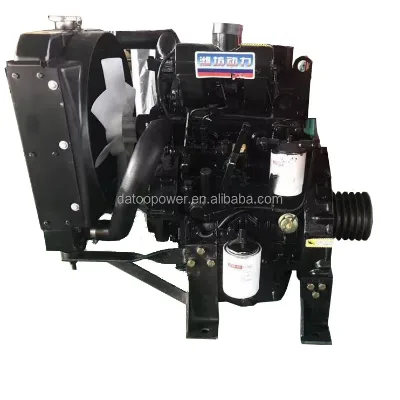


6 Cylinders Water Cooled Diesel Engine for Generator Diesel Generator Engine
$1900.00 - $2800.00
MOQ: 1 Pieces


China Low Speed Water Cooling Diesel Engine for Engineering Machinery
$5600.00 - $8000.00
MOQ: 1 Pieces


Diesel Engine 2021 Custom Design Water Cooled 22HP 4 Cylinders Diesel Engine
$3000.00 - $5000.00
MOQ: 5 Pieces


Comprehensive Sourcing Guide
Strategic Sourcing Guide for Water-Cooled 4-Cylinder Diesel Engines
Procuring industrial power units requires a disciplined approach to verifying technical alignment, supply chain reliability, and long-term operational viability. For buyers targeting a water-cooled 4-cylinder diesel engine, the market presents a diverse array of configurations ranging from naturally aspirated to supercharged variants. The following guide outlines the critical evaluation criteria necessary to navigate this complex B2B landscape without relying on unverified marketing claims.
Technical Architecture and Configuration Analysis
The fundamental architecture of a water-cooled 4-cylinder diesel engine dictates its suitability for specific industrial applications. Buyers must first distinguish between the two primary combustion architectures observed in the current market: naturally aspirated and supercharged intake pressure impulse systems. The naturally aspirated variant relies on atmospheric pressure for air intake, often characterized by a simpler design and lower initial cost, whereas the supercharged configuration utilizes forced induction to increase power density and efficiency under load.
A critical observation in the current product catalog is the variation in cylinder arrangement. While many units utilize a standard inline configuration, specific models are documented with an "L" cylinder arrangement form, which may imply a unique mounting footprint or cooling channel design. The piston movement is consistently reciprocating across the observed range, driven by a direct injection burning method that ensures precise fuel atomization. The ignition mode is universally electric, requiring a compatible starting system, typically an electric starter, to initiate the combustion cycle.
Speed characteristics are another pivotal differentiator. The observed calibration speeds for these engines vary significantly, with some models operating within a range of 1500rpm to 2200rpm, while others extend up to 3000rpm. This variance directly impacts the engine's application profile; lower speeds are generally preferred for heavy-duty, continuous load applications such as power generation, while higher speeds may be optimized for mobile or construction machinery where rapid response is necessary. The bore and stroke dimensions, such as the observed 110mm by 117mm configuration, further define the displacement and torque curve, with specific models noting a displacement of approximately 2.224 liters for 2-cylinder variants, though 4-cylinder counterparts will possess proportionally larger displacement volumes.
Operational Applications and Use Case Alignment
Selecting the correct engine requires a precise match between the engine's rated capabilities and the intended use place. The market data indicates a clear segmentation of applications. Power generation is a primary use case, where the engine must deliver stable output at a specific rated power, such as the 40hp observed in certain stationary engine models. In this context, the engine often functions as a prime mover for generators, requiring consistent calibration speeds to maintain frequency stability.
Construction machinery represents another significant sector. Engines designated for this use must withstand high vibration, variable loads, and harsh environmental conditions. The distinction between stationary engines and mobile applications is vital; a unit designed for a stationary generator may lack the ruggedization required for a construction vehicle. Furthermore, marine applications demand specific corrosion resistance and cooling system adaptations to handle saltwater environments. The "Use Place" attribute serves as a primary filter, ensuring that the selected engine is not only mechanically capable but also legally and technically compliant with the operational environment.
Performance Specifications and Dimensional Constraints
When evaluating the physical and performance specifications, buyers must scrutinize the dimensional standards and weight metrics. The physical footprint of the engine is often constrained by the available installation space. Observed standard dimensions include configurations such as 1016mm by 585mm by 880mm, while other models may measure 1050mm by 590mm by 880mm. These variations, though seemingly minor, can determine compatibility with existing machinery frames or generator enclosures.
Weight is another critical factor for logistics and mounting. The weight multiple for these units varies, with observations ranging from 360kg to 410kg depending on the specific model and cooling system intensity. A heavier engine may offer greater durability and heat mass but requires a more robust mounting structure. The "Weight Multiple" attribute should be treated as an observation of the specific unit's mass rather than a universal standard for all 4-cylinder engines.
The calibration speed range is equally important for performance matching. Engines calibrated between 1500rpm and 2200rpm are often optimized for continuous duty cycles, while those reaching 3000rpm may be designed for intermittent or high-speed applications. Buyers should verify the rated power and torque curves against their specific load requirements, ensuring that the engine does not operate at a sustained overload condition which could compromise the warranty, often cited as 1000 hours for new units.
Compliance, Certification, and Standard Verification
In the realm of industrial procurement, compliance and certification are non-negotiable, yet often ambiguous in product listings. While background knowledge suggests the existence of standards like CE and ISO9001, these should not be assumed as facts for any specific supplier without direct verification. Buyers must explicitly request current certification documents from the supplier to confirm that the engine meets the regulatory requirements of the destination market.
The product standard, often listed as a set of dimensions or a specific code, must be cross-referenced with the buyer's technical specifications. For instance, a standard listed as "1016585880" refers to the physical dimensions of the unit, not a safety or performance standard. Buyers should look for explicit references to international or regional safety standards, emission regulations, and noise limits. The absence of a specific certification claim in a product listing does not imply non-compliance, but it does necessitate a rigorous due diligence process to obtain proof of conformity before placing an order.
Cost Drivers and Procurement Parameters
Understanding the cost structure of water-cooled 4-cylinder diesel engines is essential for budgeting and negotiation. The observed price range in the market spans from 10 USD to 10,000 USD, a vast disparity that reflects differences in brand, build quality, output power, and included accessories. This wide range indicates that price alone is a poor indicator of quality; a lower price point may correspond to a basic model with fewer features, while a higher price may include advanced control systems or extended warranties.
The Minimum Order Quantity (MOQ) is another key procurement parameter. Data indicates an MOQ range of 1 to 10 units, with some suppliers offering a single set as the minimum order. This flexibility is advantageous for buyers testing the market or those with small-scale deployment needs. However, buyers should be aware that unit pricing often decreases as the order volume increases. The selling units are typically listed as single items, but bulk purchasing agreements may offer better terms.
Packaging is also a cost driver. The standard packaging for these engines is a wooden case, which provides robust protection during international shipping but adds to the overall weight and volume of the shipment. Buyers should factor in the cost of this packaging and the potential need for returnable or recyclable alternatives if sustainability is a corporate goal.
Supplier Evaluation and Quality Assurance
Evaluating suppliers requires a focus on origin, condition, and customization capabilities. The primary origin for these engines is identified as Shandong Weifang, China, a region known for its concentration of diesel engine manufacturing. While the location is a fact, buyers should verify the specific factory's capacity and history. The condition of the engine is typically listed as "New," but buyers must confirm the manufacturing date and storage conditions to ensure the unit has not degraded during transit or warehousing.
Customization is a significant value-add in this sector. The availability of customization allows buyers to tailor the engine to specific mounting requirements, exhaust configurations, or control interfaces. However, customization often extends lead times and may affect the warranty terms. Buyers should clearly define their customization needs in the initial inquiry to avoid misunderstandings.
Quality control is paramount. The warranty period, often cited as 1000 hours, serves as a baseline for the manufacturer's confidence in the product. Buyers should investigate the supplier's quality control processes, including factory audits and pre-shipment testing protocols. The engine code and model number, such as ZH4102 or 2110, serve as unique identifiers that should be used to track the specific production batch and verify the authenticity of the components.
Long-Term Procurement and Lifecycle Management
Long-term procurement considerations extend beyond the initial purchase price to include maintenance, spare parts availability, and lifecycle costs. The fuel type, consistently diesel, and the ignition mode, electric, are standard, but the efficiency of the direct injection system will impact long-term fuel costs. Buyers should request fuel consumption data for their specific application to calculate the total cost of ownership.
The "Use Place" dictates the maintenance schedule. Engines used in power generation may require different maintenance intervals compared to those in construction machinery. The warranty of 1000 hours provides a clear benchmark for the initial operational period, but buyers should inquire about the availability of spare parts beyond this period. The brand name, such as "weifang," should be verified for its reputation in the aftermarket support network.
In conclusion, sourcing a water-cooled 4-cylinder diesel engine requires a meticulous approach to technical verification, compliance checks, and supplier evaluation. By focusing on the specific attributes observed in the market, such as cylinder arrangement, speed calibration, and dimensional standards, buyers can make informed decisions that align with their operational needs. The wide range of prices and configurations necessitates a tailored selection process, ensuring that the chosen engine delivers reliable performance throughout its intended lifecycle.
FAQs
What are the standard dimensions for this engine?
Standard dimensions vary by model, with observed sizes including 1016 by 585 by 880 millimeters and 1050 by 590 by 880 millimeters. Buyers must verify the specific product standard code against their installation space requirements before ordering.
Can I customize the engine for specific applications?
Customization is available for this engine to meet specific mounting or operational needs. Buyers should define their requirements early, as customization may extend lead times and affect warranty terms for the final unit.
What is the typical weight of a 4-cylinder unit?
The weight multiple for these units ranges from 360 kilograms to 410 kilograms depending on the specific model. Heavier units may offer greater durability but require a more robust mounting structure for installation.
Which intake pressure impulse systems are available?
Both naturally aspirated and supercharged intake pressure impulse systems are observed in the current product catalog. The supercharged configuration typically offers higher power density, while the naturally aspirated variant features a simpler design.
How does calibration speed affect engine application?
Calibration speeds vary between 1500rpm and 3000rpm, influencing the engine's suitability for different tasks. Lower speeds like 1500rpm to 2200rpm are often preferred for power generation, while higher speeds suit construction machinery.
What is the minimum order quantity for these engines?
The minimum order quantity ranges from 1 set to 10 units depending on the supplier. Some vendors offer single items for testing, while bulk purchasing agreements may provide better pricing terms for larger orders.