Source Water-Cooled 4 Stroke Diesel Engine for Trucks, Ships, and Engineering
Compare 30 listings of water-cooled 4 stroke diesel engines from verified Chinese suppliers. Buyers can evaluate models like NTA855 and KTA19 based on cylinder count, aspiration type, and horsepower for truck, bus, and ship applications.
Key considerations
Products List


China Low Speed Water Cooling Diesel Engine for Engineering Machinery
$5600.00 - $8000.00
MOQ: 1 Pieces

$5000.00 - $10000.00
MOQ: 1 Pieces

6 Cylinders Water Cooled Diesel Engine for Generator Diesel Generator Engine
$1900.00 - $2800.00
MOQ: 1 Pieces
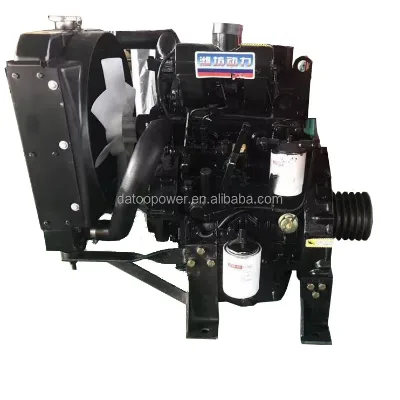

Diesel Engine 2021 Custom Design Water Cooled 22HP 4 Cylinders Diesel Engine
$3000.00 - $5000.00
MOQ: 5 Pieces


Comprehensive Sourcing Guide
Sourcing Guide for Water-Cooled 4-Stroke Diesel Engines
Understanding Core Technical Specifications
When sourcing a water-cooled 4-stroke diesel engine, buyers must first establish a precise understanding of the fundamental technical architecture that defines the product. The core keyword implies a specific thermodynamic cycle and cooling methodology. In the current market, observed data indicates that these engines frequently utilize a compression-ignition mode, where fuel is ignited by the heat generated during the compression of air within the cylinder. This distinguishes them from spark-ignition gasoline engines. The piston movement is a critical differentiator; while some legacy or specialized designs may feature rotary movement, the standard for high-performance and heavy-duty applications is a reciprocating piston system. This reciprocating motion converts the linear energy of combustion into rotational torque.
The cylinder arrangement is another vital specification to verify. Market listings show a prevalence of "L" arrangement forms, where cylinders are aligned in a single vertical line, often referred to as in-line configurations. This design is common for engines categorized as vertical in-liner types. The number of cylinders varies significantly based on the intended power output and displacement requirements. Buyers will encounter configurations ranging from double-cylinder and four-cylinder setups to multi-cylinder arrangements. Specific model observations include the NTA855, KTA19, and KTA38 series, which are often associated with robust industrial applications. Other models, such as the 4D22, may feature a 2.2L displacement with an 84mm bore, while others like the B125 33 represent different power classes.
Aspiration methods also play a crucial role in performance. While naturally aspirated versions exist, the majority of high-speed diesel engines in this category are turbocharged. Some advanced configurations combine turbocharging with charge air cooling to maximize efficiency and power density. The cooling system itself is explicitly water-cooled, utilizing a liquid coolant to dissipate heat from the cylinder block and head, ensuring stable operating temperatures under load. The fuel type is consistently diesel, supporting direct injection combustion types which offer improved fuel economy and power delivery compared to older indirect injection systems.
Compliance, Certification, and Standards Verification
Navigating the regulatory landscape is essential for ensuring that a sourced engine meets the legal and safety requirements of the target market. Buyers must verify that the engine complies with international quality management standards. Observed data confirms that many suppliers adhere to ISO standards, specifically ISO 9001, which validates the manufacturer's quality management system. Additionally, third-party certifications such as SGS are frequently cited, indicating that independent bodies have verified product attributes or manufacturing processes.
Emissions compliance is a critical area of scrutiny. The discharge standard for diesel engines is strictly regulated in most jurisdictions. Market observations indicate that some engines meet Euro III standards, which govern the permissible levels of nitrogen oxides, particulate matter, and other pollutants. However, buyers must not assume all listed engines meet this specific threshold without verification. It is imperative to request the specific emission certificate for the exact model being procured, as standards vary by region and application. For instance, engines intended for export to Europe or North America may require compliance with Euro IV, V, or EPA standards, which are stricter than Euro III.
The origin of the product is another factor in compliance. A significant portion of the available supply chain originates from China, with specific manufacturing hubs noted in locations such as Shanghai and Beijing. While this does not inherently dictate quality, it influences the regulatory framework under which the engine was produced. Buyers should ensure that the supplier provides documentation proving the engine was manufactured in compliance with the standards claimed, rather than relying solely on marketing assertions. The "prod_standard" field often lists "iso" or "stander size," but these terms require clarification. Buyers should ask for the specific ISO document number or the exact national standard code (e.g., GB standards for China) to ensure accurate verification.
Cost Drivers and Pricing Structure Analysis
The pricing of water-cooled 4-stroke diesel engines is influenced by a complex interplay of technical specifications, materials, and market dynamics. The observed price range in the market is exceptionally broad, spanning from 10 USD to 10,000 USD. This wide variance is not indicative of a single product category but rather reflects the diversity of engine sizes, power outputs, and complexity levels. A small, low-speed double-cylinder engine will naturally command a lower price point compared to a high-speed, multi-cylinder, turbocharged unit like the KTA38 series.
Material composition is a primary cost driver. The body material of the engine block is often cast iron, which provides durability and heat resistance but adds weight and cost. The choice of materials for internal components, such as pistons, rings, and cylinder liners, also impacts the final price. Engines designed for high-speed applications may utilize more expensive alloys to withstand higher thermal and mechanical stresses. Furthermore, the level of customization available can significantly alter the cost. While customization is listed as available, the extent of this customization—whether it involves specific mounting flanges, shaft extensions, or custom control interfaces—will directly affect the unit price.
Minimum Order Quantity (MOQ) is another factor influencing the effective cost per unit. The observed MOQ range is between 1 and 5 units. This flexibility allows small buyers to procure single units, which is advantageous for prototyping or replacement needs. However, larger orders often benefit from economies of scale, potentially reducing the per-unit cost. Buyers should be aware that the "1 Pic" MOQ mentioned in some listings suggests that single-unit purchases are feasible, but the unit price for a single item may be higher than the bulk price for five or more units. Packaging requirements, such as plywood packages or wooden boxes, also add to the logistics cost, particularly for international shipping.
Typical Applications and Operational Context
Water-cooled 4-stroke diesel engines are versatile power sources deployed across a wide spectrum of industries. The primary application areas identified in the market data include trucks, buses, ships, and engineering machinery. This broad applicability stems from the engine's ability to deliver high torque at various speeds and its robust construction. For the trucking and bus sectors, these engines provide the necessary reliability for long-haul operations and frequent stop-start cycles. The high-speed variants are particularly suited for lighter commercial vehicles where weight and size are critical constraints.
In the marine sector, the water-cooled design is a fundamental requirement, as the engine's cooling system can often be integrated with the vessel's seawater cooling loop or a dedicated freshwater closed loop. The compression-ignition nature of these engines makes them ideal for marine propulsion, where fuel efficiency and durability are paramount. Engineering machinery, such as excavators, loaders, and generators, also relies heavily on these engines. The ability to operate in harsh environments, combined with the direct injection combustion type, ensures consistent power delivery for heavy-duty tasks.
The specific model chosen often dictates the application. For example, the 4bt engine, noted in the data, is frequently associated with light to medium-duty applications due to its compact size and reliability. In contrast, larger displacement engines like the NTA855 or KTA38 are typically found in heavy-duty trucks, large construction equipment, and industrial power generation sets. The warranty terms, often cited as 6 months or 1000 hours, provide a baseline for expected operational life, though actual service life can vary significantly based on maintenance and operating conditions. Buyers should match the engine's power rating, such as the 90 horsepower observed in some listings, to the specific load requirements of their application to avoid under-sizing or over-sizing the power unit.
Supplier Evaluation and Quality Assurance
Evaluating suppliers for diesel engines requires a rigorous approach that goes beyond simple price comparison. Buyers should prioritize suppliers who can demonstrate a clear track record of quality and consistency. The presence of certifications like ISO 9001 and SGS is a positive indicator, but it should be verified through direct contact with the certifying bodies or by requesting valid, up-to-date certificates. A supplier's ability to provide detailed technical documentation, including blueprints, maintenance manuals, and performance curves, is a strong signal of professionalism.
Quality assurance processes should be a central part of the supplier evaluation. Buyers should inquire about the testing procedures used before shipment. While specific test results are not always publicly listed, a reputable supplier will have a documented process for checking compression, leakage, and performance under load. The "Quality: Guaranteed" attribute found in listings is a common marketing claim; however, buyers must seek concrete evidence of this guarantee, such as a detailed warranty policy that outlines coverage for specific components like the cylinder block, crankshaft, and turbocharger.
The origin of the engine is a relevant factor in supplier evaluation. With a significant number of manufacturers located in China, specifically in Shanghai and Beijing, buyers should be aware of the logistical implications. Shipping from these locations may involve longer lead times compared to domestic suppliers, but it also offers access to a vast supply chain and competitive pricing. Buyers should verify the supplier's ability to handle export documentation and customs clearance to ensure a smooth procurement process. Additionally, the availability of spare parts and after-sales support is critical. A supplier that offers a comprehensive support network, including technical assistance and parts availability, adds significant value to the procurement decision.
Long-Term Procurement and Maintenance Considerations
Sourcing a diesel engine is not a one-time transaction but the beginning of a long-term operational relationship. Buyers must consider the total cost of ownership, which includes maintenance, fuel consumption, and potential downtime. The warranty terms, such as the 6-month or 1000-hour coverage, provide an initial safety net, but buyers should plan for maintenance beyond this period. Regular maintenance schedules should be established to ensure the engine operates at peak efficiency and longevity.
Fuel efficiency is a key long-term consideration. Engines with direct injection and turbocharging capabilities generally offer better fuel economy than naturally aspirated or indirect injection models. However, the actual fuel consumption will depend on the specific application and operating conditions. Buyers should request fuel consumption data for the specific engine model to accurately calculate operational costs. The cooling system, being water-cooled, requires regular monitoring of coolant levels and quality to prevent overheating and corrosion. The use of high-quality coolant and regular flushing of the system are essential maintenance tasks.
Customization options should be evaluated with a long-term view. If the engine requires specific modifications for integration into existing machinery, the supplier should be able to provide these customizations reliably. The availability of customization is noted as a feature, but buyers should confirm the lead time and cost implications for these modifications. Furthermore, the packaging method, whether plywood or wooden box, should be suitable for the shipping environment to prevent damage during transit. Ensuring that the engine arrives in pristine condition is the first step in a successful long-term operation.
Summary of Key Procurement Factors
To summarize, sourcing a water-cooled 4-stroke diesel engine requires a balanced approach that considers technical specifications, regulatory compliance, cost factors, and supplier reliability. The market offers a diverse range of options, from small double-cylinder units to large multi-cylinder industrial engines. Buyers must carefully verify the engine's aspiration method, cylinder arrangement, and power output to ensure it matches their application needs. Compliance with standards like ISO 9001 and Euro III is essential, but specific verification is required for each model.
The wide price range and flexible MOQs provide opportunities for buyers of all sizes, but the total cost of ownership should be the primary decision metric. Evaluating suppliers based on their certification status, quality assurance processes, and after-sales support is crucial for mitigating risk. By focusing on these key factors, buyers can make informed decisions that ensure the procurement of high-quality, reliable diesel engines that meet their operational requirements. The diversity of the market, with engines originating from various locations in China and meeting different standards, offers a robust selection for global procurement strategies.
FAQs
What ignition mode do these engines use?
These engines use compression-ignition mode, where fuel ignites from heat generated during air compression. This distinguishes them from spark-ignition gasoline engines and is standard for diesel applications.
Which piston movement types are available?
The primary piston movement is reciprocating, converting linear combustion energy into rotational torque. Some specialized or legacy designs may feature rotary movement, but reciprocating is standard for high-performance units.
Can I find engines with ISO certification?
Yes, many suppliers offer engines with ISO 9001 certification and SGS verification. These certifications validate the manufacturer's quality management system and independent product attribute verification.
What is the typical MOQ for purchase?
The minimum order quantity ranges from 1 to 5 units, allowing for single-unit prototyping or small batch procurement. Bulk orders may benefit from economies of scale, but single purchases are feasible.
Which aspiration methods are commonly used?
Most high-speed diesel engines are turbocharged, often combined with charge air cooling for efficiency. Naturally aspirated versions also exist but are less common in high-performance industrial applications.
What warranty terms are typically offered?
Standard warranty terms are often 6 months or 1000 hours of operation. This provides an initial safety net, though actual service life depends heavily on maintenance and specific operating conditions.