Find Water Filling Machine for Beverage, Chemical, and Industrial Profiles
Source 30 Water Filling Machine units with capacities ranging from 2500 to 28000 bottles per hour. Buyers can compare linear and rotary models featuring vacuum or atmospheric pressure filling principles for diverse industrial applications.
Key considerations
Products List


Comprehensive Sourcing Guide
Strategic Sourcing Guide for Water Filling Machines
Selecting the appropriate Water Filling Machine is a critical decision that directly impacts production efficiency, product quality, and long-term operational costs. For procurement professionals in the beverage and industrial sectors, the market presents a diverse array of technologies, ranging from linear systems to complex rotary configurations. This guide synthesizes available product attributes and industry standards to provide a structured framework for evaluating potential suppliers and machinery. The objective is to ensure that the selected equipment aligns with specific production requirements while adhering to rigorous safety and quality benchmarks.
Technical Configuration and Filling Principles
The foundation of any Water Filling Machine lies in its filling principle and mechanical structure. The market offers distinct technologies, each suited to different product viscosities and container types. One observed configuration utilizes a Vacuum filling principle, which is often preferred for delicate liquids to prevent oxidation or foaming. In contrast, other systems operate on Atmospheric Pressure, relying on gravity and pressure differentials to fill containers. Buyers must verify which principle aligns with their specific water quality and container integrity requirements.
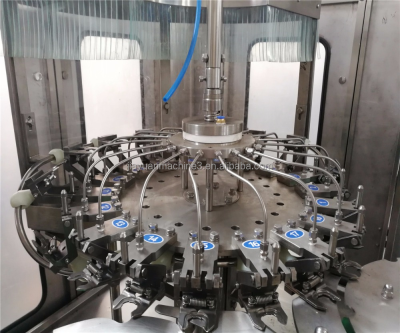
The mechanical structure of the machine is equally significant. Two primary structural types are prevalent: Linear and Rotary. Linear machines typically feature a straight-line arrangement of stations, which can simplify maintenance and allow for easier integration into existing production lines. Rotary machines, characterized by a circular arrangement, often offer higher throughput capabilities and are common in high-volume applications. The choice between these structures depends heavily on the required production speed and the available floor space.
Furthermore, the Dosing Device technology varies across models. Some units employ a Capacity Cup system, which measures liquid volume precisely before dispensing. Others utilize a Plunger mechanism, offering robust performance for specific filling ranges. A third variant uses a Surface Type dosing device, which may be designed to minimize turbulence during the filling process. The Feed Cylinder Structure also differs, with options ranging from Single-Room Feeding to Multi-Room Feeding. Multi-room systems generally support higher speeds and more complex bottle handling, while single-room systems may be more compact.
Capacity, Speed, and Operational Parameters
Production capacity is a primary driver in the selection process. Available data indicates a wide spectrum of throughput capabilities. Some configurations are rated for 2500 bottles per hour (bph) for a 500ml container, while others scale significantly higher, offering ranges between 2000 and 28,000 bph. Another observed range spans from 2000 to 16,000 bph. These figures suggest that capacity is not a static attribute but a variable dependent on the specific machine model and the size of the container being processed.
The Filling Range is another critical parameter. Systems are available that accommodate volumes from 250ml up to 2000ml. This flexibility allows a single machine to handle various product sizes, from small personal water bottles to larger family-sized containers. The Packaging Container Lifting Structure also plays a role in efficiency. Pneumatic lifting mechanisms, including Chute Pneumatic Combination Lifting, ensure smooth handling of bottles, reducing the risk of damage during the transfer process.
Automation levels are generally high in modern equipment. Most observed systems are classified as Full Automatic and Automatic Grade, driven by Electric motors. Control systems often feature PLC Control with Siemens touch screens, providing an intuitive interface for operators. The integration of Autonics switches and sensors further enhances reliability and process monitoring. Buyers should confirm that the automation level matches their labor strategy and desired level of human intervention.
Material Construction and Hygiene Standards
For water filling applications, material selection is paramount to ensure product safety and machine longevity. The primary material observed is Stainless Steel, with specific grades including Food Grade Stainless Steel 304 and 316. The use of SS316 is particularly important for applications requiring higher corrosion resistance or stricter hygiene protocols. The structural integrity of the machine is often described by standards such as SS304 or SS316, ensuring that all product-contact surfaces meet food safety requirements.
The Packaging Material for the machine itself is often Plastic for non-structural components, while the main body is constructed from metal. The final product packaging is typically Bottle based, and the machine is designed to handle Plastic or Crown Caps. The Used for application is frequently listed as Industrial Profiles, indicating suitability for large-scale manufacturing environments.
Hygiene is further supported by the Filing System design. Some advanced models feature an All-Closed Micro-Pressure Filling system, which minimizes exposure to the external environment and reduces the risk of contamination. This closed system is essential for maintaining the purity of the water product. The Weight of these machines can be substantial, with some units reaching 1800kg, reflecting the robust construction required for high-speed, high-volume operations.
Compliance, Certification, and Standards
Navigating the regulatory landscape is a vital step in the procurement process. Buyers must verify that the machinery complies with international safety and quality standards. Observed certifications include CE certification and ISO 9000: 9001. These certifications indicate that the manufacturer adheres to specific quality management systems and safety directives. However, buyers should not assume all listed products automatically possess these certifications; verification with the supplier is mandatory.
The physical dimensions of the machines also vary, with some standards listing dimensions such as 132016001650MM. These figures are crucial for facility planning and ensuring the machine fits within the designated production area. The prod_packing method is typically Standard Export Package or Wooden Packages, designed to protect the equipment during international shipping. The prod_origin is frequently cited as China, with specific manufacturing hubs like Zhangjiagang City, Jiangsu Province being noted locations. While this provides context, buyers should always confirm the specific origin and logistics capabilities of the supplier.
Cost Drivers and Procurement Economics
The pricing for water filling machines is influenced by several factors, including capacity, automation level, and material quality. The observed price range in the market spans from 2000 to 200,000 USD. This wide disparity reflects the difference between basic linear units and high-end, fully automated rotary systems with advanced PLC controls. The Minimum Order Quantity (MOQ) for these machines is typically 1, allowing for single-unit purchases which is standard for capital equipment.
Cost drivers include the complexity of the Filling Valve Head, with Multi-Head configurations generally commanding higher prices due to increased throughput. The inclusion of premium brand components, such as Siemens PLCs and Autonics sensors, also adds to the cost but offers superior reliability. Additionally, the Guarantee period, often cited as 12 Months, is a factor in the total cost of ownership. Buyers should evaluate whether the initial purchase price includes comprehensive after-sales support, as the After Sale Service may involve Engineers Available to Service Overseas, which can be a significant value-add.
Supplier Evaluation and Quality Assurance
When evaluating suppliers, buyers should look beyond the basic product specifications. The Brand reputation, such as King Machine, can be an indicator of market presence, but it should not be the sole criterion. A robust supplier evaluation process must include a review of the Standard Export Packing quality and the prod_standard documentation. Buyers should request detailed technical drawings and verify the Material Type, ensuring it matches the Liquid application requirements.
Quality control should be integrated into the procurement lifecycle. This involves verifying the Automatic Grade and ensuring the Driven Type is consistent with the factory's power infrastructure. The Structure of the machine, whether Linear or Rotary, should be validated against the factory's layout. Furthermore, the Capacity claims must be tested under actual operating conditions to ensure they meet the 2000~28000bph or other observed ranges.
Long-Term Procurement and Operational Sustainability
Long-term success with water filling machinery depends on maintenance and support. The Guarantee period is a starting point, but buyers should inquire about the availability of spare parts and the responsiveness of the After Sale Service. The presence of Engineers Available to Service Overseas is a critical factor for international buyers, ensuring that technical issues can be resolved quickly to minimize downtime.
The Automation level, specifically the PLC Control and Touch Screen interface, dictates the ease of operation and future scalability. Systems with Siemens controls often offer better integration capabilities with other factory systems. Buyers should also consider the Filling Principle and Dosing Device longevity; mechanisms like the Plunger or Capacity Cup may require different maintenance schedules.
Finally, the Packaging of the final product, whether Bottle or other forms, must be compatible with the machine's Suitable Cap options, such as Plastic or Crown Cap. Ensuring this compatibility prevents bottlenecks in the packaging line. By carefully analyzing these technical, economic, and operational factors, buyers can make informed decisions that secure a reliable and efficient water filling solution for their industrial profiles.
FAQs
What filling principles are available for water filling machines?
Water filling machines utilize either vacuum or atmospheric pressure filling principles. Vacuum systems prevent oxidation for delicate liquids, while atmospheric systems rely on gravity and pressure differentials to fill containers efficiently.
Which machine structure offers higher throughput for industrial profiles?
Rotary structures generally offer higher throughput capabilities compared to linear arrangements. Linear machines simplify maintenance, but rotary systems are common in high-volume applications requiring speeds up to 28,000 bottles per hour.
Can the machine handle different bottle sizes and cap types?
Yes, these machines accommodate filling ranges from 250ml to 2000ml and handle plastic or crown caps. The capacity varies by model, supporting volumes like 500ml at 2500 bottles per hour or scaling up significantly.
What materials ensure hygiene and corrosion resistance in construction?
Machines are constructed from Food Grade Stainless Steel 304 or 316 to ensure product safety. These materials meet food safety requirements and provide the necessary corrosion resistance for long-term industrial operation.
How is the automation and control system configured in these units?
The units feature full automatic operation driven by electric motors with PLC control. Control interfaces often include Siemens touch screens and Autonics switches to ensure reliable process monitoring and intuitive operation.
What certifications verify compliance with international safety standards?
Machines typically carry CE certification and ISO 9000: 9001 standards to verify compliance. Buyers should verify these certifications with suppliers as they indicate adherence to specific quality management and safety directives.
What is the typical price range and minimum order quantity?
The observed price range spans from 2000 to 200,000 USD depending on capacity and automation. The minimum order quantity is typically one unit, allowing for single purchases of capital equipment.