Source Waterproof Breathable Skateboard Shoes for Urban Commuting, Street Skating, and Daily Wear
Explore 30 listings of Waterproof Breathable Skateboard Shoes featuring mesh linings, rubber insoles, and anti-slip patterns. Buyers can compare models like 24225 and ZS0315-01, which offer round toes, lace-up closures, and OEM options for male and female sizes.
Key considerations
Products List


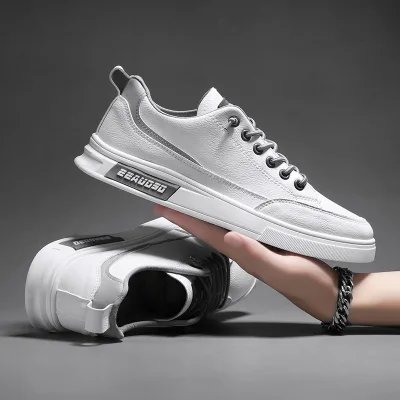


Fashionable Men's Skateboarding Shoes - Comfortable and Anti-Slip Sports Shoes
$38.00 - $45.00
MOQ: 1 Pieces


Comprehensive Sourcing Guide
Strategic Sourcing Guide for Waterproof Breathable Skateboard Shoes
The procurement of specialized footwear, specifically targeting the intersection of waterproofing, breathability, and skateboarding functionality, requires a rigorous approach to supplier evaluation and technical verification. While the market term "Waterproof Breathable Skateboard Shoes" suggests a specific set of high-performance attributes, the actual supply landscape presents a complex array of materials and design configurations. Buyers must navigate the distinction between marketed features and verified product specifications to ensure that the sourced items meet the operational demands of the end-user. This guide outlines the critical factors for sourcing these products, focusing on material integrity, compliance verification, and supply chain reliability based on current market data.
Technical Specifications and Material Composition
The foundation of any footwear procurement strategy lies in a detailed understanding of the material composition and construction methods. In the context of skateboard shoes, the upper material is a primary determinant of durability and flexibility. Current market observations indicate a prevalence of Polyurethane (PU) and Canvas as the dominant upper materials. PU offers a balance of water resistance and structural integrity, while Canvas provides the necessary breathability and flexibility required for board feel. However, a critical discrepancy exists in the classification of waterproof capabilities. While the search term emphasizes waterproofing, specific product data points indicate that many available models are explicitly "Not Waterproof." This necessitates a strict verification process where buyers must confirm the specific coating or membrane technology used, if any, rather than relying on general category assumptions.
The insole and outsole materials are equally critical for performance. The insole material is frequently observed as Rubber, which provides the necessary cushioning and shock absorption. For skateboarding, the outsole material often varies between Polyvinyl Chloride (PVC) and Thermoplastic Rubber (TPR). TPR is generally preferred for its superior grip and abrasion resistance, essential for maintaining traction on skateboard grip tape. The presence of an "Anti-slip Pattern" is a standard feature, but the specific geometry of this pattern must be evaluated against the intended riding style. Furthermore, the insole construction often incorporates a "Shock Absorption Spring" mechanism, which is vital for mitigating impact forces during landings. Buyers should verify that the "Round" toe design, a common observation, aligns with the specific aesthetic and functional requirements of the target demographic, whether male or female.
Compliance Verification and Certification Standards
Navigating the regulatory landscape for footwear involves more than just checking for a generic "Made in China" label. The origin of the products is frequently listed as Fujian, China, or China (Mainland), regions known for significant manufacturing output. However, the absence of specific certification data in general product listings requires proactive inquiry. Buyers must demand evidence of compliance with international safety and quality standards relevant to the destination market. For instance, if the product is intended for export to the European Union, verification of REACH compliance regarding chemical substances is mandatory. Similarly, for markets in North America, adherence to ASTM or CPSIA standards for footwear is essential.
The provided data includes a standard dimension of "32X24X12CM" for packaging, which serves as a logistical specification rather than a safety standard. This highlights the importance of distinguishing between packaging standards and product safety certifications. Buyers should not assume that a product's origin implies automatic compliance with destination regulations. Instead, the procurement process must include a request for third-party test reports. These reports should specifically address the "Breathable" and "Anti-microbial" features claimed in the product attributes. The "Feature" attribute lists "Resilient, Breathable, Anti-microbial," but without a specific test standard cited, these claims remain observations. The buyer must verify the methodology used to test breathability (e.g., moisture vapor transmission rate) and the efficacy of the anti-microbial treatment against recognized pathogens.
Cost Drivers and Pricing Dynamics
The pricing structure for specialized footwear is influenced by a complex interplay of material costs, customization requirements, and order volume. The observed price range in the market spans from 3 to 55 USD, a significant variance that reflects differences in material quality, brand positioning, and production complexity. The lower end of this spectrum typically corresponds to basic Canvas or PVC constructions with minimal customization, while the higher end reflects advanced PU uppers, TPR soles, and integrated shock absorption technologies.
A primary cost driver is the level of customization. The "Customization" attribute is marked as "Available," and the "Logo" can be "Printed/Embroideryed/as OEM." OEM (Original Equipment Manufacturer) services allow buyers to brand the product, but this incurs additional costs for mold creation, sample development, and setup fees. The "OEM" attribute is explicitly "Accepted," indicating flexibility, but the cost implications must be factored into the total landed cost. Additionally, the "Payment Term" of "Tt or L/C" suggests that larger orders may require financial instruments that carry their own administrative costs. Buyers should also consider the "MOQ" (Minimum Order Quantity), which ranges from 1 to 1500 pairs. High MOQs, such as the 1000 pairs observed for certain models, can impact cash flow and inventory risk, potentially justifying a higher unit price through economies of scale. Conversely, lower MOQs allow for smaller, more frequent orders but often come with a premium per unit.
Typical Applications and Market Segmentation
Understanding the intended application of the footwear is crucial for aligning product specifications with market needs. The "Gender" attribute indicates availability for both "Male" and "Female" segments, while the "Season" attribute covers "Summer, Winter, Autumn, Spring," suggesting a year-round product line. However, the "Not Waterproof" observation for specific models creates a limitation for winter applications in wet climates. This discrepancy suggests that the "Waterproof" keyword in the search term may be aspirational or dependent on specific, unlisted product variants.
The "Type" attribute lists "Skateboards," confirming the primary use case. However, the "Size" range varies significantly, with observations of "36-41" for some models and "41-46" for others. This indicates that suppliers may specialize in different size runs, requiring buyers to aggregate multiple SKUs to cover a full market range. The "Close Pattern" of "Lace-up" is standard, but the specific lacing system must be evaluated for durability under the stress of skateboarding. The "Feature" of "Resilient" implies a need for high flex life, which is critical for the repetitive impact of skateboarding. Buyers should map these specifications to specific user profiles, such as professional skaters requiring maximum durability versus casual users prioritizing comfort and style.
Supplier Evaluation and Quality Control Protocols
Evaluating suppliers requires a multi-faceted approach that goes beyond surface-level product descriptions. The "Sample" lead time varies from 5 to 21 days, indicating differences in supplier responsiveness and production capacity. A shorter sample time, such as 5-10 days, suggests a more agile operation, while longer times of 15-21 days may indicate a more complex customization process or a backlog. The "Delivery Date" of 45 days for production is a critical metric for supply chain planning. Buyers must verify if this lead time is consistent or if it fluctuates based on order volume or material availability.
Quality control protocols must be established before production begins. Given the "Anti-microbial" and "Breathable" claims, buyers should implement a pre-shipment inspection that includes functional testing. This involves verifying the integrity of the "Shock Absorption Spring" and the effectiveness of the "Anti-slip Pattern" under load. The "Packing" method, described as "Box or Polybag" or "1pair Per Each Box, 12pairs Per Cartons," must be verified to ensure that the packaging protects the product during transit. The "prod_packing" standard of "Carton Box" with dimensions "32X24X12CM" provides a baseline for logistics planning, but the actual packing density and protective materials must be confirmed.
Long-Term Procurement Considerations
Sourcing for the long term requires a focus on supply chain resilience and scalability. The "MOQ" of 500 or 1000 pairs for certain models may pose a challenge for startups or brands testing new markets. Buyers should negotiate flexible MOQ terms or explore suppliers who can accommodate smaller initial orders with the understanding of higher unit costs. The "Payment Term" of "L/C or Tt" offers financial security but requires a robust banking relationship.
Furthermore, the "prod_model" numbers, such as "24225," "ZS0315-01," and "SKATE-YRYQ-002-02W," serve as unique identifiers for specific product lines. Maintaining a database of these model numbers is essential for tracking product evolution and ensuring consistency in future orders. Buyers should also monitor the "prod_origin" to ensure that manufacturing locations remain stable, as shifts in production geography can impact quality and compliance. Finally, the "Feature" of "Resilient" and "Breathable" must be maintained over time, requiring a commitment to regular quality audits and supplier performance reviews to ensure that the product continues to meet the evolving demands of the skateboard market.
FAQs
How can I verify the waterproof claims for these shoes?
Many listed models are explicitly not waterproof despite the search term. You must request specific test reports for any coating or membrane technology used rather than relying on general category assumptions to ensure actual water resistance.
What upper materials are commonly used for these shoes?
Polyurethane and Canvas are the dominant upper materials observed in the market. PU offers structural integrity while Canvas provides breathability, but you must verify the specific material composition for each model to match your durability needs.
Which outsole materials provide the best grip for skateboarding?
Thermoplastic Rubber is generally preferred for superior grip and abrasion resistance on skateboard grip tape. While Polyvinyl Chloride is also available, TPR is the better choice for maintaining traction during high-impact landings and turns.
Can I customize the logo and packaging for these shoes?
Yes, customization is available with logos that can be printed, embroidered, or done as OEM. The packaging can be a box or polybag, but you should confirm the specific packing density and carton dimensions like 32x24x12CM for logistics.
What is the typical lead time for sample and production?
Sample lead times vary from 5 to 21 days depending on the supplier and customization level. Production delivery dates are typically around 45 days, so you must plan your inventory cycles accordingly to avoid stockouts.
How do MOQs affect the pricing of these skateboard shoes?
Minimum Order Quantities range from 1 to 1500 pairs, with some models requiring 500 or 1000 pairs. Higher volumes often justify lower unit prices through economies of scale, while smaller orders may carry a premium per unit.
Which origin regions supply these footwear products?
Products are frequently sourced from Fujian, China, or China Mainland regions known for significant manufacturing output. You should verify the specific origin for each order to ensure compliance with destination market regulations and quality standards.