Source Waterproof Dustproof Garment Bag for Storage Travel Hiking
Compare 30 listings for waterproof dustproof garment bags suitable for storage, travel, and outdoor activities. Buyers can evaluate materials like non-woven and PEVA, customization options, and pricing details from verified manufacturers.
Key considerations
Products List


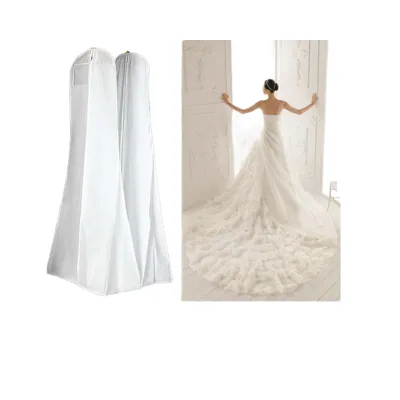


Durable Water Resistant Travel Garment Bag Business Trip Suit Storage Bag
$11.85 - $13.80
MOQ: 300 Pieces


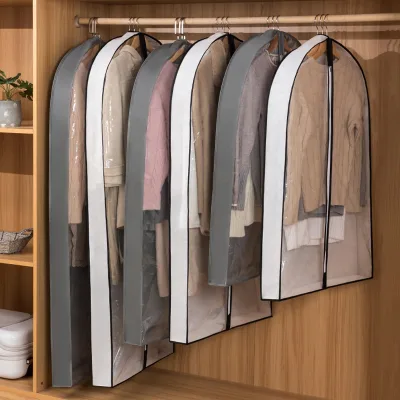

Hanging Storage Bag Suit Cover Dustproof Garment Bag Suit Dry Cleaner Cover Bag
$0.02 - $0.03
MOQ: 5000 Pieces

Customized Mildewproof Dustproof Non-Woven Storage Bag with Waterproof Feature
$0.16 - $0.20
MOQ: 500 Pieces

Comprehensive Sourcing Guide
Strategic Sourcing Guide for Waterproof Dustproof Garment Bags
Understanding Product Specifications and Material Variability
When sourcing waterproof dustproof garment bags, buyers must first navigate the diverse landscape of material compositions and structural designs available in the global market. The core requirement for these products is the ability to protect garments from environmental hazards such as moisture, dust, and pests while maintaining breathability to prevent mold growth. The supplied product data indicates a significant variance in material choices, ranging from Non-woven fabrics to PEVA and Canvas. Non-woven materials are frequently cited for their cost-effectiveness and ease of customization, often serving as a primary choice for disposable or semi-durable storage solutions. In contrast, PEVA (Polyethylene Vinyl Acetate) offers a distinct advantage in terms of transparency and water resistance, making it a preferred option for high-end retail packaging or long-term storage where visibility of the garment is desired. Canvas, on the other hand, provides a rugged aesthetic and durability suitable for travel applications, though it may require specific waterproof treatments to meet the "waterproof" classification observed in some listings.
The structural integrity of the bag is equally critical. The data highlights specific configurations regarding the bottom and side construction. Some models are designed with a dedicated bottom and side structure, providing a rigid form that prevents the bag from collapsing when empty and offers better protection for heavy garments. Conversely, other listings specify "Without Bottom & Side," indicating a softer, foldable design that prioritizes portability and space-saving storage. This distinction is vital for procurement decisions; a buyer seeking to store heavy winter coats may require the structured bottom variant, while a retailer looking for compact travel bags might prefer the unstructured, foldable option. Furthermore, the closure mechanism is standardized around the zipper in many observed models, ensuring a secure seal against dust and moisture. The hardness of the product is generally noted as "Soft," which facilitates packing but requires careful handling to avoid tearing during transit.
| Feature Category | Observed Variations | Procurement Implication |
|---|---|---|
| Material | Non-woven, PEVA, Canvas | Non-woven offers low cost; PEVA offers transparency/waterproofing; Canvas offers durability. |
| Structure | With Bottom & Side; Without Bottom & Side | Structured for heavy loads; Unstructured for compact travel. |
| Closure | Zipper | Essential for dustproof and waterproof sealing. |
| Hardness | Soft | Requires careful handling; suitable for flexible storage. |
| Waterproof | Waterproof (Fabric/Type) | Must verify specific fabric treatment for actual water resistance. |
Compliance, Certification, and Standard Verification
In the realm of B2B procurement, compliance and certification serve as the bedrock of risk management. While the supplied context mentions a low-confidence background regarding CE certification, buyers must exercise caution and not assume that all listed products automatically possess this or any other specific certification. The data explicitly lists "custom" as the product standard for several models, which implies that compliance is often negotiated on a per-order basis rather than adhering to a fixed universal standard. This necessitates a rigorous verification process where the buyer must explicitly request proof of compliance with relevant international standards, such as REACH for chemical safety or specific ISO standards for textile testing, depending on the target market.
The origin of the product plays a significant role in compliance expectations. The data points to "China" and specific locations like "Yiwu Zhejiang" and "Chongqing" as production hubs. While these regions are known for robust manufacturing capabilities, the regulatory environment can vary. Buyers should verify that the factory holds valid quality management system certifications, such as ISO 9001, which are often prerequisites for high-volume contracts. Additionally, the "480g" standard mentioned in one listing likely refers to a specific gram weight or density specification rather than a regulatory standard. Buyers must clarify whether this refers to the fabric weight (GSM) or a specific product weight limit. Without explicit confirmation of certification status from the supplier, buyers should treat all compliance claims as unverified until documented proof is provided. It is advisable to include a clause in the purchase agreement that mandates the supplier to provide third-party test reports for water resistance, tear strength, and chemical safety prior to bulk production.
Cost Drivers and Pricing Dynamics
The pricing structure for waterproof dustproof garment bags is influenced by a complex interplay of material costs, customization requirements, and order volume. The observed price range in the market spans from $0.02 to $68.68 USD, a variance that reflects the extreme diversity in product complexity and material quality. The lower end of this spectrum typically corresponds to simple, non-woven bags with minimal customization and standard sizes. These products often have high production volumes and low material costs, driving the unit price down significantly. Conversely, the higher price points are associated with specialized materials like heavy-duty canvas or PEVA, custom printing processes, and unique structural designs such as those with reinforced bottoms or specialized waterproof fabrics.
Customization is a primary cost driver in this sector. The data confirms that customization is available for printing, logos, and patterns. Suppliers offering "Custom Printing" and "Logo Printing" capabilities will charge premiums for the setup of printing plates, the complexity of the design, and the additional labor required for quality control. The "Sample Time" of 7 days and "Bulk Time" of 15-20 days also factor into the cost structure, as expedited production often incurs rush fees. Furthermore, the Minimum Order Quantity (MOQ) varies widely, ranging from 5 to 85,000 units, with specific listings showing MOQs of 200, 300, and 500 pieces. Buyers must balance their budget against the MOQ; smaller orders often carry a higher unit cost due to the fixed costs of setup and machine time being amortized over fewer units. Payment terms, typically structured as a 30% deposit and 70% balance before shipping, also impact cash flow and overall procurement costs. Buyers should negotiate these terms based on their relationship with the supplier and the total order value to optimize working capital.
Typical Applications and Usage Scenarios
The versatility of waterproof dustproof garment bags allows them to serve a wide array of applications across different industries. The data identifies several key usage scenarios, including storage, beach activities, travel, and outdoor leisure. For the storage sector, these bags are essential for protecting seasonal clothing, such as winter coats and formal wear, from dust, moths, and humidity. The "Garment Bag" designation suggests a primary function of hanging storage, where the bag is suspended in a closet to maintain the shape and condition of the garment. The "Unisex" and "All Seasons" attributes indicate that these products are designed for general household and commercial use without gender or seasonal restrictions.
In the travel and outdoor sectors, the application shifts towards portability and protection against the elements. Listings specifying "Beach Bag," "Travel Bag," and "Suit for Outdoors" highlight the product's utility in dynamic environments. The "Waterproof" attribute is particularly critical here, as it ensures that contents remain dry during rain or accidental splashes. The "Fashion Movement" style and "Solid Color" design suggest that these bags are also marketed as lifestyle accessories, where aesthetics play a role alongside functionality. For industries like fishing or hiking, the "Leisure" and "Hiking" applications imply a need for durability and resistance to rough handling. The "Without Bottom & Side" models are particularly suited for travel, as they can be folded compactly into luggage, while the "With Bottom & Side" models are better for stationary storage or heavy-duty transport. Understanding these specific use cases helps buyers select the right product variant for their end-users, ensuring that the bag meets the functional demands of the intended environment.
Supplier Evaluation and Factory Verification
Selecting the right supplier is a critical step in the procurement process, requiring a thorough evaluation of the manufacturer's capabilities and reliability. The data indicates that "Factory: Yes" is a relevant attribute, suggesting that direct manufacturing relationships are a key differentiator. Buyers should prioritize suppliers who operate their own production facilities, as this often translates to better quality control, more flexible customization options, and potentially lower costs compared to trading companies. The "Place of Origin" being China, specifically in hubs like Yiwu and Chongqing, provides a vast pool of potential suppliers, but it also necessitates rigorous vetting.
Buyers should verify the supplier's production capacity and lead times against their own project timelines. The observed "Bulk Time" of 15-20 days is a standard benchmark, but buyers must confirm if this can be adjusted for urgent orders. The "Sample Time" of 7 days is another critical metric; a supplier that can deliver samples quickly demonstrates efficiency and responsiveness. Additionally, the "Printing Process" being listed as "Without" in some contexts while "Custom" is available in others requires clarification. Buyers must ensure that the supplier has the necessary equipment for the desired printing method, whether it be screen printing, heat transfer, or digital printing. The "Brand Name" attribute, such as "BEST," may indicate private labeling capabilities, allowing buyers to brand the products for their own retail channels. It is essential to request a factory audit or video tour to verify the actual production environment, machinery, and quality control protocols before committing to a large order.
Quality Control and Long-Term Procurement Considerations
Ensuring consistent quality is paramount when sourcing waterproof dustproof garment bags, as defects in the waterproofing or stitching can render the product useless. The "Waterproof" claim must be validated through rigorous testing. Buyers should request specific test reports for water resistance, such as hydrostatic head tests, to confirm that the fabric and seams can withstand the intended exposure to moisture. The "Hardness" being "Soft" suggests that the material may be prone to tearing if subjected to sharp objects or excessive force, so quality control checks should include tensile strength and tear resistance tests. The "Zipper" closure is another critical component; buyers should verify the durability of the zipper, ensuring it does not jam or separate under stress.
For long-term procurement, establishing a strong partnership with the supplier is essential. The "Payment Term" of 30% deposit and 70% balance before shipping is standard, but buyers should consider negotiating terms that include retention for quality assurance or milestone-based payments for large orders. The "Custom" standard and "Other" size options highlight the need for clear communication regarding specifications. Buyers should maintain a detailed specification sheet for each order, including material weight, color codes, and printing requirements, to minimize the risk of miscommunication. Regular quality inspections, either by third-party agencies or internal teams, should be conducted during production and before shipment. Finally, buyers should plan for scalability, ensuring that the supplier can handle increased order volumes without compromising quality or lead times. By focusing on these long-term considerations, buyers can build a resilient supply chain that delivers high-quality waterproof dustproof garment bags consistently.
FAQs
What materials are used for waterproof dustproof garment bags?
These bags are commonly made from non-woven fabric, PEVA, or canvas. Non-woven options offer cost-effectiveness, while PEVA provides transparency and water resistance. Canvas materials are durable and suitable for travel applications when treated for waterproofing.
How is the customization handled for these garment bags?
Customization is available for printing, logos, and patterns on the bags. Buyers can request specific designs, though the printing process may vary between custom and standard options. Samples typically take seven days to produce before bulk manufacturing begins.
Which structural designs are available for storage or travel?
Structures include options with a bottom and side for heavy loads or without them for compact travel. Bags with a bottom offer rigid protection, while unstructured designs fold easily. Most models feature a soft hardness to facilitate flexible packing.
Can buyers find bags with specific waterproof fabric types?
Yes, waterproof fabric options are available for outdoor and beach usage scenarios. These bags are designed to protect against moisture and dust. Buyers should verify specific fabric treatments to ensure the waterproof claim meets their environmental needs.
What are the typical minimum order quantities for these bags?
Minimum order quantities vary, with observed values starting at 200, 300, or 500 pieces. Some suppliers may accept lower orders, but higher volumes often reduce unit costs. Buyers must check specific supplier requirements before placing an order.
How long does it take to produce bulk orders?
Bulk production typically takes 15 to 20 days after the sample is approved. Sample time is generally seven days. Buyers should account for these lead times when planning their procurement schedule and shipping logistics.
Where are these garment bags typically manufactured?
Products originate from China, with specific hubs in Yiwu, Zhejiang, and Chongqing. Factories in these regions offer various capabilities for production and customization. Buyers should verify the exact place of origin for each supplier to ensure compliance with local standards.