Source Waterproof Dustproof LED Work Light for Trucks, Off-Road, Construction
Compare 30 Waterproof Dustproof LED Work Light options from verified Chinese suppliers. Browse models with IP65 or IP67 ratings, various wattages, and universal compatibility for trucks, off-road vehicles, and construction sites.
Key considerations
Products List


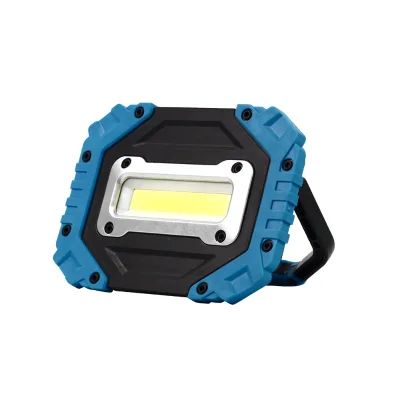
Work Light Portable LED Work Light, COB Flood Lights, Job Site Lighting
$2.40 - $2.75
MOQ: 1000 pieces


LED Work Lights Rechargeable Floodlight Waterproof Portable Floodlight Emergency Work
$5.00 - $30.00
MOQ: 5000 Pieces


Superior 45W LED Work Light with Reliable Waterproof and Sturdy Design
$19.90 - $42.50
MOQ: 100 Pieces
Comprehensive Sourcing Guide
Strategic Sourcing Guide for Waterproof Dustproof LED Work Lights
Understanding Technical Specifications and Performance Metrics
When sourcing waterproof and dustproof LED work lights, the primary objective is to identify units that align with specific operational environments while maintaining energy efficiency and longevity. The product landscape for these components is diverse, ranging from compact auxiliary lights for motorcycles to high-intensity floodlights for heavy industrial machinery. A critical observation in the current market is the variance in voltage requirements. Buyers must verify whether a unit operates on a standard 12V system, which is common in automotive applications, or a broader range such as 9-36V or 9-32V, which offers greater flexibility for vehicles with fluctuating electrical systems or dual-battery setups. The observed data indicates that specific models support a wide voltage input, ensuring compatibility across different vehicle types without the need for complex voltage regulators.
Power consumption is another fundamental specification that dictates the thermal management and electrical load of the system. While some units are designed for low-power applications with ratings around 12W or 20W, others are engineered for high-intensity illumination, reaching outputs of 40W or even exceeding 100W. The choice between these power levels depends heavily on the intended application; lower wattage units are suitable for general visibility or accent lighting, whereas higher wattage models are necessary for off-road navigation or large-scale site illumination. The light source technology is consistently LED, offering superior durability and energy efficiency compared to traditional halogen alternatives. Furthermore, the lens material is typically Polycarbonate (PC), which provides excellent impact resistance and optical clarity, essential for maintaining light output in harsh conditions.
The physical dimensions and form factor are equally critical for integration. The market includes units with specific standard dimensions, such as 877159mm or larger industrial profiles like 470.2536060mm. Buyers must ensure that the selected light fits within the designated mounting area of their equipment. The lamp shade form is predominantly a lens design, which helps in directing the beam pattern effectively. Additionally, the emitting color and color temperature play a role in visibility; options range from pure white at 6000K to yellow or amber hues, which are often preferred in foggy or dusty conditions to reduce glare and improve contrast. The LED life span is a key performance indicator, with observed data suggesting a lifespan of up to 30,000 hours, significantly reducing the frequency of replacements and maintenance costs over the product's lifecycle.
Compliance, Certification, and Environmental Standards
Ensuring that LED work lights meet international safety and environmental standards is a non-negotiable aspect of B2B procurement. The supply chain for these components often involves products originating from major manufacturing hubs, with China being a primary source. To guarantee quality and safety, buyers should look for specific certifications that validate the product's compliance with regional regulations. The observed market data highlights several critical certifications, including CE, C-tick, RoHS, SAA, and SASO. These certifications indicate that the product has undergone rigorous testing for electromagnetic compatibility, chemical safety, and electrical performance.
The CE mark signifies conformity with health, safety, and environmental protection standards for products sold within the European Economic Area. C-tick is the Australian compliance mark, indicating that the product meets Australian electromagnetic compatibility standards. RoHS compliance ensures that the product is free from specific hazardous materials, which is crucial for environmental sustainability and worker safety. SAA certification is vital for the Australian and New Zealand markets, confirming electrical safety, while SASO is the Saudi Arabian Standards Organization certification, essential for entering the Middle Eastern market. The presence of these certifications suggests that the manufacturer adheres to a high standard of quality control and regulatory compliance.
Waterproof and dustproof ratings are perhaps the most critical technical specifications for work lights used in demanding environments. The IP (Ingress Protection) rating system provides a standardized way to describe the level of protection provided by the enclosure. In the observed product data, IP67 and IP65 ratings are prominent. An IP67 rating indicates that the device is dust-tight and can withstand temporary immersion in water up to 1 meter for 30 minutes, making it suitable for heavy rain or accidental submersion. An IP65 rating ensures that the device is dust-tight and protected against water jets from any direction, which is ideal for washing down or exposure to heavy splashing. Buyers must verify that the specific model they intend to purchase carries the appropriate IP rating for their operational environment, as lower ratings may lead to premature failure in wet or dusty conditions.
Cost Drivers and Pricing Structures
The pricing of waterproof dustproof LED work lights is influenced by a complex interplay of factors, including power output, build quality, certification levels, and customization options. The observed price range in the market is exceptionally broad, spanning from $1.50 to $100,000 USD. This vast disparity reflects the diversity of the product category, which includes small auxiliary lights for personal vehicles to massive industrial floodlighting systems. Understanding the drivers behind this range is essential for budgeting and cost analysis.
Low-cost units, typically priced at the lower end of the spectrum, often feature lower wattage (e.g., 12W or 20W), standard IP ratings, and basic packaging. These products are suitable for general applications where extreme durability is not the primary concern. As the price increases, buyers can expect to find units with higher power outputs (40W to 200W+), superior IP ratings (IP67), and more robust materials such as aluminum alloy housings. The inclusion of advanced certifications like SAA, SASO, and C-tick also adds to the cost, as these require additional testing and compliance procedures.
Customization is another significant cost driver. The market data indicates that customization is available for many products, allowing buyers to tailor the light to specific needs. Customization options may include specific mounting brackets, such as stainless steel mountain brackets, custom packaging dimensions, or unique color temperatures. The observed data shows that some products come in standard cartons, while others offer customizable packing solutions. The Minimum Order Quantity (MOQ) also plays a role in pricing, with observed ranges from 1 unit to 5,000 units. Higher MOQs often result in lower per-unit costs due to economies of scale, but they require a larger upfront investment and inventory management capacity. Buyers must balance the trade-off between unit cost and order volume to optimize their procurement strategy.
Typical Applications and Compatibility
The versatility of waterproof dustproof LED work lights makes them suitable for a wide array of applications across various industries. The observed data highlights a "Universal" compatibility, suggesting that these lights can be integrated into a broad spectrum of vehicles and machinery. One of the most common applications is in the automotive sector, particularly for motorcycles. The specific product models observed, such as those with model numbers ending in "26050806" or "26051117," are explicitly categorized as motorcycle lights. These units are designed to enhance visibility for riders in low-light conditions, offering high-intensity illumination that is resistant to water and dust.
Beyond motorcycles, these lights are extensively used in off-road vehicles, trucks, and construction equipment. The high IP ratings and durable aluminum alloy construction make them ideal for environments where exposure to mud, water, and debris is constant. The observed "General" application classification further supports their use in a variety of settings, from agricultural machinery to mining operations. The availability of different beam patterns and color temperatures allows for specialized applications; for instance, yellow or amber lights are often preferred in foggy conditions to reduce glare, while pure white lights at 6000K provide maximum brightness for general illumination.
The mounting options are also a key consideration for application suitability. The presence of stainless steel mountain brackets in the product data indicates that these lights are designed for secure and stable mounting on uneven surfaces. This is particularly important for off-road vehicles that encounter rough terrain. The compact dimensions of some models, such as 1782372.5mm, allow for discreet installation on smaller vehicles, while larger units are suitable for heavy-duty machinery. The ability to customize the packing and mounting solutions further enhances the adaptability of these lights to specific project requirements.
Supplier Evaluation and Quality Assurance
Selecting the right supplier is critical to ensuring the reliability and longevity of waterproof dustproof LED work lights. Buyers should prioritize suppliers who demonstrate a commitment to quality control and transparency. The presence of multiple certifications, such as CE, RoHS, and SAA, is a strong indicator of a supplier's adherence to international standards. However, buyers should not rely solely on the presence of these certifications; they must verify the validity of the certificates and ensure that the specific batch of products being purchased is covered.
Quality assurance processes should be a key part of the supplier evaluation. Buyers should inquire about the manufacturer's testing protocols, including water resistance testing, thermal cycling, and vibration testing. The observed data mentions a 1-year warranty, which is a standard offering, but buyers should clarify the terms and conditions of this warranty, including what is covered and the process for claims. The use of high-quality materials, such as aluminum alloy for the housing and PC for the lens, is another indicator of a reputable supplier. These materials are known for their durability and resistance to corrosion and impact.
Transparency in the supply chain is also important. Buyers should request detailed information about the product origin, production lead times, and packaging standards. The observed data indicates that products originate from China, but buyers should verify the specific manufacturing facility and its capacity to meet their volume requirements. Customization capabilities, such as the ability to provide custom packing or specific model configurations, can also be a differentiator between suppliers. A supplier that offers flexible customization options is more likely to be able to meet the unique needs of the buyer's project.
Long-Term Procurement and Maintenance Considerations
Sourcing waterproof dustproof LED work lights is not just a one-time transaction; it involves long-term considerations regarding maintenance, replacement, and total cost of ownership. The observed LED life span of 30,000 hours is a significant advantage, as it reduces the frequency of replacements and associated labor costs. However, buyers should still plan for periodic inspections to ensure that the seals and gaskets remain intact, as any compromise in the waterproofing can lead to premature failure.
The warranty period, typically observed as 1 year, provides a baseline for product reliability. Buyers should consider the availability of spare parts and the ease of replacement in case of damage. The modular design of many LED work lights, with separate lens and housing components, can facilitate easier repairs. Additionally, the customization of packing and mounting solutions can simplify the logistics of storage and installation, reducing the risk of damage during transit.
In terms of procurement strategy, buyers should consider the scalability of their orders. The observed MOQ range of 1 to 5,000 units allows for flexibility in ordering, but buyers should plan for future growth and potential changes in requirements. Establishing a long-term relationship with a reliable supplier can provide benefits such as priority production, better pricing, and consistent quality. Finally, buyers should stay informed about technological advancements in LED lighting, as newer models may offer improved efficiency, brightness, and durability, which could impact future procurement decisions.
FAQs
What voltage ranges do these lights support?
These lights support flexible voltage inputs ranging from 9 to 36 volts. Some specific models operate on a standard 12V system, while others accept a broader 9-32V range for vehicles with fluctuating electrical systems.
Which certifications ensure international safety compliance?
Products often carry CE, C-tick, RoHS, SAA, and SASO certifications. These marks validate compliance with regional safety standards for Europe, Australia, and the Middle East, ensuring electrical and chemical safety.
Can I find lights with IP67 waterproof ratings?
Yes, certain models feature an IP67 rating for dust-tight protection and temporary water immersion. Other units offer IP65 ratings, which protect against water jets and are suitable for heavy splashing conditions.
How long does the LED light source last?
The LED light source typically offers a lifespan of up to 30,000 hours. This longevity significantly reduces maintenance frequency and replacement costs compared to traditional halogen alternatives used in similar applications.
What materials are used for the housing and lens?
Housings are commonly constructed from durable aluminum alloy to resist corrosion and impact. The lens material is typically polycarbonate, which provides excellent optical clarity and resistance to harsh environmental conditions.
Are customization options available for packaging and mounting?
Customization is available for various product attributes including packaging and mounting solutions. Buyers can request specific packing dimensions or stainless steel mountain brackets to fit unique vehicle or machinery requirements.