Source Waterproof Manhole Cover and Frame for Roads, Yachts, and Gas Stations
Compare 30 Waterproof Manhole Cover and Frame options from verified suppliers. Buyers can evaluate metal and SMC materials, various sizes, and mounting types for municipal roads, yacht applications, and gas station installations.
Key considerations
Products List




Comprehensive Sourcing Guide
Strategic Sourcing Guide for Waterproof Manhole Cover and Frame Systems
Selecting the correct Waterproof Manhole Cover and Frame system is a critical decision for infrastructure projects, municipal developments, and industrial facilities. The primary objective is to ensure a watertight seal that prevents surface water ingress while maintaining structural integrity under dynamic loads. Buyers must navigate a complex landscape of materials, standards, and manufacturing capabilities to identify suppliers who can deliver reliable, long-term solutions. This guide outlines the essential factors for evaluating waterproof systems, focusing on technical specifications, compliance verification, and supply chain stability.
Technical Specifications and Material Selection
The foundation of a reliable manhole cover system lies in the material composition and the engineering of the sealing mechanism. The market offers a diverse range of materials, each with distinct properties regarding strength, weight, and corrosion resistance. Metal remains a dominant category, with specific products utilizing steel or aluminum alloys for high-load applications. For instance, aluminum manhole covers are noted for their high tenacity and suitability for public drain areas, offering a balance between durability and weight management. Conversely, composite materials such as SMC (Sheet Molding Compound) are frequently employed for their specific advantages in corrosion resistance and UV stability. These composite covers are often available in various colors, including black, grey, green, and blue, allowing for aesthetic integration into municipal roads, sidewalks, and residential areas.
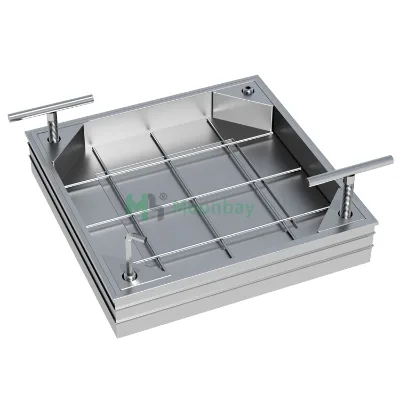
The physical dimensions and shape of the cover are equally critical. While round shapes are common for their structural efficiency in distributing load, rectangular and square configurations are also prevalent, with specific model numbers indicating precise dimensions such as 400x400mm or 500x500mm. The clear opening size, often standardized around 440x440mm, dictates the accessibility for maintenance personnel and equipment. The overall depth of the frame, typically ranging around 60mm, must be sufficient to accommodate the sealing gasket without compromising the structural profile. Furthermore, the surface treatment plays a vital role in longevity; polished surfaces or specific coatings can enhance resistance to environmental degradation. Buyers should verify that the product's shape, whether columnar or round, aligns with the specific mounting requirements of the installation site, such as vertical mounting for underground applications.
Compliance and Certification Verification
In the realm of manhole covers, compliance with international and regional standards is non-negotiable. These standards ensure that the product can withstand the expected loads and environmental conditions. The industry frequently references the EN 124 series, which classifies manhole covers based on their load-bearing capacity. Specific products may claim adherence to standards such as EN124-1:2015, which provides a framework for testing and classification. Additionally, regional standards like JIS (Japanese Industrial Standards), DIN (German Institute for Standardization), GB (Chinese National Standards), and ASTM (American Society for Testing and Materials) are often cited in product specifications.
Certification serves as a third-party validation of these claims. Buyers should look for products that carry recognized certifications such as CE (Conformité Européenne) and ISO (International Organization for Standardization). These marks indicate that the manufacturer has undergone rigorous testing procedures regarding quality management and product safety. However, it is essential to treat certification claims as observations that require verification against the specific batch or model being procured. The presence of a certification does not automatically guarantee that every listed product in a supplier's catalog meets the same standard; due diligence is required to confirm that the specific model number and material composition align with the certified scope. For projects requiring specific load classes, verifying the exact standard version and the corresponding test results is crucial to avoid structural failures.
Cost Drivers and Pricing Dynamics
The pricing of waterproof manhole covers and frames is influenced by a complex interplay of factors, including material costs, manufacturing complexity, and customization requirements. The observed price range in the market can vary significantly, spanning from approximately $1.89 to $700 per unit. This wide disparity is primarily driven by the choice of material, with aluminum and specialized composite materials generally commanding higher prices than standard metal or cast iron options. The size of the cover also plays a pivotal role; larger dimensions require more raw material and more robust manufacturing processes, directly impacting the unit cost.
Customization is another major cost driver. While standard sizes and colors are often available at lower price points, bespoke solutions involving specific dimensions, custom colors, or unique surface treatments incur additional expenses. The packaging method, whether standard cartons or custom wooden and iron pallets, also affects the final landed cost. Furthermore, the Minimum Order Quantity (MOQ) influences the unit price; orders starting from as low as one unit may carry a premium, whereas bulk orders meeting higher MOQ thresholds, such as 50 or 200 pieces, often benefit from economies of scale. Buyers must balance the initial procurement cost against the long-term value, considering that a lower upfront cost for a non-compliant or substandard product can lead to significant maintenance and replacement expenses.
Typical Applications and Performance Requirements
The application environment dictates the specific performance requirements for a manhole cover system. In municipal settings, covers must withstand the dynamic loads of vehicular traffic while resisting corrosion from road salts and environmental exposure. Applications such as municipal roads, sidewalks, and residential areas often require covers with strong bearing capacity and anti-theft features. For specialized environments like gas stations, the requirements may include specific load classes and fire resistance properties. In marine or coastal contexts, the application might involve yachts or boats, where corrosion resistance and UV stability are paramount.
The functional characteristics of the cover must align with the intended use. Features such as anti-theft mechanisms, corrosion resistance, and UV stability are essential for outdoor installations exposed to the elements. The sealing capability is the defining feature for "waterproof" systems, ensuring that surface water does not infiltrate the underground network, which could lead to flooding or structural damage to the surrounding soil. Buyers should assess whether the product is designed for underground vertical mounting or other specific configurations. The choice between a metal, aluminum, or SMC cover should be based on the specific environmental stresses of the site, ensuring that the material's properties match the application's demands.
Supplier Evaluation and Origin Verification
Evaluating a supplier requires a thorough examination of their manufacturing capabilities, origin, and track record. The supply chain for manhole covers is global, with significant production hubs in regions such as China, including specific provinces like Jiangsu, Anhui, and Zhejiang. Suppliers from these regions may offer a wide range of products, from standard models to highly customized solutions. It is important to verify the specific origin of the product, as "China" is a broad designation, and regional manufacturing clusters often have distinct reputations for quality and specialization.
When assessing a supplier, buyers should look for evidence of consistent production capabilities and the ability to meet customization requests. Attributes such as "Customized" or "Customizable" indicate flexibility, but the supplier must demonstrate the technical capacity to execute these requests without compromising quality. The packaging standards, whether using standard cartons or specialized wooden and iron pallets, reflect the supplier's attention to detail and logistics capabilities. Additionally, the supplier's ability to provide documentation for certifications and standards compliance is a key indicator of reliability. Buyers should avoid suppliers who make vague claims about origin or certification without providing verifiable documentation.
Quality Control and Long-Term Procurement Considerations
Ensuring the long-term success of a manhole cover installation requires a robust quality control (QC) strategy. This process begins with the verification of raw materials and continues through the manufacturing and final inspection stages. Buyers should request test reports that validate the load-bearing capacity, sealing integrity, and material composition of the product. The presence of certifications like CE and ISO is a positive indicator, but these should be supplemented with specific test data for the ordered batch.
Long-term procurement considerations also involve the availability of spare parts and the supplier's ability to support the product over its lifecycle. A supplier that offers customizable options may also provide better support for future replacements or modifications. The packaging and shipping methods, such as the use of wooden and iron pallets, ensure that the products arrive in pristine condition, ready for installation. Buyers should also consider the maintenance requirements of the chosen system; covers with polished surfaces or specific coatings may require less maintenance over time, offering a better total cost of ownership. By prioritizing suppliers with a proven track record in quality control and a commitment to long-term support, buyers can mitigate risks and ensure the reliability of their infrastructure investments.
Comparative Analysis of Product Attributes
To facilitate decision-making, it is helpful to compare the key attributes of different manhole cover types based on available market data. The following table summarizes the distinct characteristics observed in the current supply landscape.
| Attribute Category | Metal / Steel Options | Aluminum Options | SMC / Composite Options |
|---|---|---|---|
| Primary Material | Metal (Steel/Iron) | Aluminum | SMC (Sheet Molding Compound) |
| Typical Shape | Column, Round | Round | Round |
| Key Features | Strong Bearing Capacity | High Tenacity | Corrosion Resistance, UV Stable |
| Common Applications | Municipal Roads, Gas Stations | Public Drain Areas | Yacht, Boat, Residential Areas |
| Color Options | Customizable | Customizable | Black, Grey, Green, Blue, Custom |
| Surface Treatment | Polished | Polished | Polished |
| Standard Compliance | ISO, JIS, DIN, GB, ASTM | ISO, JIS, DIN, GB, ASTM | EN124-1:2015, CE, ISO |
| Origin Regions | Jiangsu, Anhui, Zhejiang | China | Anhui, Zhejiang |
This comparison highlights that while all categories aim to provide waterproof solutions, the optimal choice depends heavily on the specific application environment and load requirements. Metal covers offer robust bearing capacity, aluminum provides high tenacity for lighter applications, and SMC composites excel in corrosion resistance and UV stability. Buyers must weigh these attributes against their project constraints to select the most appropriate system.
FAQs
What materials are used for waterproof manhole covers?
Waterproof manhole covers are primarily made from metal, aluminum, or SMC composite materials. Metal options offer strong bearing capacity, while aluminum provides high tenacity for public drain areas. SMC covers feature corrosion resistance and UV stability, suitable for municipal roads and residential applications.
Which certifications do these covers typically hold?
Many waterproof manhole covers carry CE and ISO certifications to validate quality and safety standards. Some products also adhere to specific standards like EN124-1:2015, JIS, DIN, GB, or ASTM. Buyers should verify that the specific model and batch align with the certified scope before procurement.
Can I customize the size and color of the cover?
Yes, customization is available for size, color, and packaging according to customer requirements. Colors can include black, grey, green, blue, or custom options, while dimensions like 400x400mm or 500x500mm are often adjustable. Customized models may require specific packaging like wooden and iron pallets for shipping.
What is the typical minimum order quantity for these products?
The minimum order quantity varies, with some suppliers accepting orders as low as one piece, while others require 50 or 200 pieces. Bulk orders meeting higher MOQ thresholds often benefit from economies of scale, whereas smaller orders may carry a premium per unit depending on the supplier's policy.
Where are these manhole covers manufactured?
These products are manufactured in various locations within China, including Xuzhou, Anhui Feilong, and Zhejiang. The specific origin affects the supply chain, with regional hubs offering different specializations in metal, aluminum, or SMC production for underground and municipal applications.
How does the price range vary for these covers?
The price range spans from approximately $1.89 to $700 per unit, driven by material and size. Aluminum and specialized composites generally cost more than standard metal options, while larger dimensions and custom features like specific surface treatments or anti-theft mechanisms increase the final unit cost.