Source Waterproof Matte And Glossy Paper Label for Packaging, Food, and Shipping
Explore 30 listings for Waterproof Matte And Glossy Paper Label options suitable for packaging, food, and shipping applications. Buyers can compare customization features, printing techniques, and adhesive types from verified suppliers in China.
Key considerations
Products List

Custom Coated Paper Printing Label Waterproof Matte Self Adhesive Label
$0.25 - $0.30
MOQ: 5000 Square Meters


$0.27 - $0.30
MOQ: 4590 Square Meters



Comprehensive Sourcing Guide
Strategic Sourcing Guide for Waterproof Matte and Glossy Paper Labels
Understanding Material Composition and Surface Finishes
When sourcing waterproof matte and glossy paper labels, the primary distinction lies in the substrate selection and the specific surface treatments applied to achieve durability. While the core keyword suggests a paper base, the market reality for waterproof applications often involves a hybrid approach where paper is laminated with synthetic materials or coated with specialized polymers. The supplied data indicates that while "Paper" is a listed material attribute, "Polyester Pet" and "Transparent PVC" are also frequently cited as surface materials for similar waterproof applications. This suggests that a true waterproof paper label often utilizes a paper backing, such as "Glassine," which is then coated or laminated to resist moisture.
The choice between matte and glossy finishes is not merely aesthetic; it dictates the label's interaction with light and its suitability for specific printing technologies. The provided facts confirm that "Screen Printing," "Offset Printing," "Flexographic Printing," and "Digital Printing" are all viable technical processes for these labels. A glossy finish typically offers higher color vibrancy and a smoother surface, which is advantageous for high-resolution digital printing and barcode scanning. Conversely, a matte finish reduces glare, making it ideal for labels used in environments with bright lighting or for applications requiring a more premium, non-reflective look. The data also notes "Lamination" as a surface finishing process, which is a critical step in achieving the "Waterproof" attribute. This lamination acts as a barrier, protecting the printed ink and the paper substrate from water, oils, and abrasion. Buyers must verify whether the "Matte" or "Glossy" description refers to the raw paper texture or the final laminated film, as the latter provides the necessary protection for "High Temperature" and "Low Temperature" resistance.
Technical Specifications and Performance Standards
The technical viability of a waterproof label depends on a convergence of adhesive properties, dimensional stability, and environmental resistance. The supplied product facts highlight "Permanent Adhesive" and "Sided Tape" as key adhesive types, ensuring the label remains affixed under stress. For waterproof applications, the adhesive must be formulated to resist water penetration at the bond line, preventing the label from peeling or curling when exposed to humidity or direct liquid contact. The data confirms a "Waterproof" status of "Yes" and lists "Temperature Resistance" capabilities ranging from "Room Temperature" to "Low Temperature" and "High Temperature." This indicates that the selected label must undergo rigorous testing to ensure the adhesive does not degrade or the substrate does not delaminate under thermal stress.
Dimensional specifications are equally critical. The "Size" is listed as "Customized," and the "Label Shape" is also "Custom Shape," allowing for tailored solutions that fit specific packaging contours. However, the "Standard" is noted as "Sheet / Roll," which dictates the format in which the labels are supplied. Buyers must determine the optimal roll diameter and core size for their existing labeling machinery to ensure smooth feeding and registration. The "Transparency" attribute varies, with data points showing both "Opaque" and "Translucent" options. For a paper-based waterproof label, an opaque finish is typical, but if the application requires a see-through effect, a translucent PVC or PET backing might be necessary. The "H.S Code" of 3919909000 suggests that many waterproof labels fall under the category of self-adhesive plastic sheets, even if they utilize paper substrates, which impacts import duties and classification.
Compliance, Certification, and Regulatory Alignment
Navigating the compliance landscape is essential for B2B procurement, particularly when labels are intended for food, beverage, or pharmaceutical applications. The supplied facts explicitly mention "ISO9001" and "SGS" as certifications, alongside a general "ISO SGS" reference. These certifications indicate that the manufacturing facility adheres to international quality management standards and that third-party testing has been conducted. However, the data also lists "FSC" in a low-confidence section, meaning buyers should not assume Forest Stewardship Council certification is standard without explicit verification. If sustainability is a priority, procurement teams must request specific FSC documentation rather than relying on general claims.
For labels used in food and beverage packaging, as noted in the "Usage" attributes ("Bottled Beverage," "Food," "Packaging"), regulatory compliance regarding food contact safety is paramount. While the provided text does not list specific food-grade standards (such as FDA or EU 10/2011), the presence of "ISO9001" suggests a structured quality system that likely includes such checks. Buyers should verify that the "Permanent Adhesive" and the "Lamination" materials used are compliant with the destination market's food safety regulations. The "Anti-Counterfeit" and "Holographic" features listed in the data also imply that security compliance may be relevant for high-value goods, requiring specific authentication technologies that meet industry-specific security standards.
Cost Drivers and Pricing Dynamics
The cost of waterproof matte and glossy paper labels is influenced by a complex interplay of material complexity, order volume, and customization requirements. The observed price range in the data is 0-13 USD, but this likely represents a per-unit cost that varies significantly based on the "Minimum Order Quantity" (MOQ). The data presents conflicting MOQ figures, listing both "5000 PCS" and "3000PCS," alongside a general observed range of 1-100,000. This discrepancy highlights that pricing is highly volume-dependent. Smaller orders will incur a higher unit cost due to setup fees for printing plates and die-cutting, while larger orders benefit from economies of scale.
Material selection is another primary cost driver. While "Paper" is a base material, the addition of "Polyester Pet," "PVC," or specialized lamination films increases the raw material cost. The "Customization" attribute, which includes "Material/Content/Usage/Size," adds complexity to the production process. Custom shapes and sizes require custom die-cutting tools, which involve upfront tooling costs. Furthermore, the "Surface Finishing" process of "Lamination" adds an extra manufacturing step, increasing the overall price compared to uncoated paper labels. Buyers should anticipate that "Matte" and "Glossy" finishes, especially when combined with waterproofing, will command a premium over standard paper labels. The "Trade Term" being "Negotiated" and the "Port of Shipment" being "Shanghai or Ningbo" also implies that logistics costs, including freight and insurance, will be a variable factor in the total landed cost.
Typical Applications and Use Cases
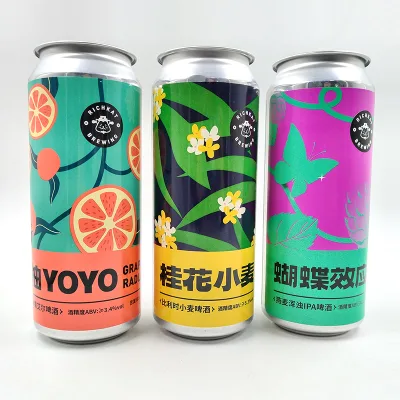
The versatility of waterproof matte and glossy paper labels makes them suitable for a wide array of industrial and consumer applications. The "Application" attributes list "Packaging," "Home Appliances," "Food Label," and "Bottled Beverage," indicating their use in both dry and wet environments. In the food and beverage sector, these labels are essential for bottles and cans that may be chilled or exposed to condensation. The "Waterproof" and "Temperature Resistance" features ensure that the label remains legible and intact during refrigeration or freezing, which is critical for "Low Temperature" applications.
For home appliances, the labels often serve as identification tags or instructional decals. The "Barcode" and "Anti-Counterfeit" features are particularly valuable here for inventory management and brand protection. The "Thermal Printer" and "Label Printer" usage notes suggest that these labels are compatible with various printing technologies, making them ideal for logistics and shipping labels where "Shipping Label" is a specific use case. The "Holographic" and "Heat Sensitive" features mentioned in the data open up possibilities for security labeling in high-value goods or temperature-sensitive monitoring. The "Custom Sticker" usage further expands their application to promotional items and product branding, where the aesthetic appeal of a matte or glossy finish is crucial for consumer perception.
Supplier Evaluation and Quality Control Protocols
Selecting a reliable supplier requires a rigorous evaluation of their technical capabilities and quality assurance processes. The data indicates that suppliers offer "Design Drawings" in formats such as "Ai," "Psd," "Pdf," and "CDR," which demonstrates their ability to handle complex graphic files. Buyers should verify the supplier's capacity for "Screen Printing," "Offset Printing," "Flexographic Printing," and "Digital Printing" to ensure they can meet specific production needs. The "Delivery" time of "7 Days" and "Delivery Time" of "7-10 Days" suggests a relatively quick turnaround, but buyers must confirm if these timelines apply to custom orders or standard stock items.
Quality control should focus on verifying the "Waterproof" claim through practical testing. Buyers should request samples to test for water resistance, adhesive strength after exposure to moisture, and colorfastness under different lighting conditions. The "ISO9001" and "SGS" certifications provide a baseline for quality management, but on-site audits or third-party testing reports are recommended for high-volume contracts. The "Artwork Format" requirements should be clearly defined to avoid production errors, and the "Payment Term" options (T/T, Paypal, West Union) should be evaluated for financial security. Additionally, the "Port of Shipment" being "Shanghai or Ningbo" requires buyers to consider the logistics of importing from China, including potential delays and customs clearance procedures.
Long-Term Procurement and Supply Chain Resilience
Establishing a long-term partnership with a label supplier involves more than just securing a low unit price; it requires ensuring supply chain resilience and adaptability. The "Custom" attribute allows for flexibility in "Material/Content/Usage/Size," which is beneficial for evolving product lines. However, buyers must maintain clear communication regarding design changes and specification updates to avoid production delays. The "MOQ" of 3000 to 5000 PCS represents a significant commitment, so buyers should plan their inventory carefully to avoid overstocking or stockouts.
Sustainability is becoming an increasingly important factor in long-term procurement. While "FSC" is listed as a low-confidence attribute, buyers should proactively inquire about the source of the paper and the recyclability of the laminated films. The "H.S Code" and "Certification" details should be kept up to date to facilitate smooth customs clearance. Finally, the "Trade Term" being "Negotiated" offers an opportunity to discuss volume discounts, payment terms, and logistics arrangements that can optimize the total cost of ownership. By focusing on these strategic elements, buyers can secure a reliable supply of high-quality waterproof matte and glossy paper labels that meet their technical and commercial requirements.
FAQs
What certifications do Waterproof Matte And Glossy Paper Label manufacturers hold?
Manufacturers typically hold ISO9001 and SGS certifications to ensure quality management standards. These credentials verify that production processes meet international requirements for consistency and safety in food and packaging applications.
How long is the delivery time for custom waterproof matte and glossy paper labels?
The standard delivery time ranges from 7 to 10 days for most orders. This timeline applies to customized specifications and may vary slightly depending on the specific order volume and complexity of the design requirements.
Which adhesive type is used for permanent waterproof matte and glossy paper labels?
These labels utilize a permanent adhesive type designed to resist water and temperature variations. The adhesive ensures the label remains securely attached even in low or high-temperature environments without peeling or curling.
Can I order waterproof matte and glossy paper labels with custom sizes and shapes?
Yes, customization is available for material, content, usage, size, and label shape. Buyers can request specific dimensions and custom shapes to fit unique packaging contours or branding needs for various industrial applications.
What is the minimum order quantity for waterproof matte and glossy paper labels?
The minimum order quantity typically ranges between 3000 and 5000 pieces depending on the supplier. This threshold ensures cost-effective production while accommodating the setup costs for custom printing and die-cutting processes.
Which printing techniques are used for waterproof matte and glossy paper labels?
Production utilizes screen printing, offset printing, flexographic printing, and digital printing techniques. These methods allow for high-quality color reproduction in CMYK or Pantone, suitable for barcodes and detailed graphics.
What surface finishing options are available for waterproof matte and glossy paper labels?
Lamination is the primary surface finishing option used to achieve waterproof properties. This process protects the printed ink and substrate from moisture, oils, and abrasion while providing a durable matte or glossy finish.