Source Waterproof Men Puffer Jacket for hiking, commuting, and winter sports
Explore 30 verified listings for the Waterproof Men Puffer Jacket featuring polyester construction and windproof protection. Buyers can compare customization options, lead times, and pricing across suppliers in Fujian and Zhejiang.
Key considerations
Products List


Lightweight Men's Puffer Jacket Puffer Style, Water Repellent, Warm & Windproof
$6.99 - $11.99
MOQ: 100 Piece


New Design Winter Waterproof Warm Thick Coats Lightweight Jacket for Men
$15.00 - $17.00
MOQ: 1000 piece


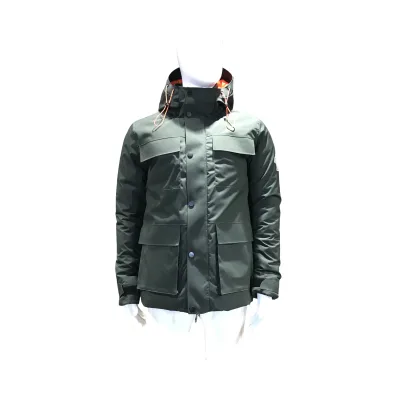


Men's Waterproof Softshell Jacket Lightweight Fleece Lined Jacket Outdoor Hiking Windbreaker
$13.00 - $14.50
MOQ: 1000 Pieces


Men's Winter Puffer Jacket Insulated Warm Breathable and Lightweight Coat for Hiking
$13.56 - $16.53
MOQ: 100 Pieces
Comprehensive Sourcing Guide
Strategic Sourcing Guide for Waterproof Men's Puffer Jackets
Navigating the global market for waterproof men's puffer jackets requires a disciplined approach that balances technical performance with supply chain reliability. The core keyword "Waterproof Men Puffer Jacket" represents a segment where material science, manufacturing capabilities, and logistical precision converge. Buyers must distinguish between generic listings and verified production capabilities, particularly when sourcing from major manufacturing hubs in China. This guide synthesizes observed market data and technical requirements to provide a framework for evaluating potential suppliers without relying on unverified claims or specific vendor recommendations.
Technical Specifications and Material Verification
The foundation of a reliable puffer jacket lies in its material composition and functional attributes. Based on current market observations, the dominant fabric type for this category is polyester. This material choice is driven by its durability, cost-effectiveness, and ability to be engineered for specific weather conditions. When evaluating a product listing, buyers should verify that the fabric is explicitly described as polyester, as this is the standard for achieving the necessary balance between weight and insulation.
Crucially, the functional performance of the jacket must be validated against specific feature claims. The most critical attributes observed in high-quality listings include windproof, waterproof, and breathable properties. A jacket that claims to be waterproof must also address breathability to prevent internal condensation, which can be as uncomfortable as external moisture. Additionally, anti-static features are often listed as a secondary but important specification, particularly for industrial or outdoor work environments where static discharge could be a hazard.
The construction style also dictates the jacket's utility. The "puffer" designation implies a quilted design intended to trap air for insulation. In the observed market, these jackets frequently feature a regular sleeve style and regular clothing length, catering to a standard fit for adult male users. However, buyers must be aware that "Free Size" options exist alongside specific sizing ranges (S, M, L, XL, XXL, and beyond). When sourcing, it is essential to confirm the size chart provided by the supplier, as "Free Size" may not accommodate all body types, whereas a defined range ensures better fit consistency for bulk orders.
Compliance, Certification, and Standardization
In the B2B procurement of protective outerwear, compliance is not merely a formality but a critical risk management tool. While specific certification status varies by supplier, buyers should look for evidence of adherence to recognized standards. In the observed data, some listings reference the CE standard, which indicates conformity with health, safety, and environmental protection standards for products sold within the European Economic Area. However, the presence of a "CE" label in a listing does not automatically guarantee that every unit in a bulk order meets this standard; it serves as a starting point for verification.
Beyond specific certifications, the physical standards of the product must be scrutinized. Weight is a significant indicator of quality and material density. Observed product standards indicate weights ranging from 1.2kg to 1.3kg per unit. This variance suggests that buyers should not assume a single weight specification applies to all models. Instead, the procurement strategy should involve requesting the exact weight specification for the specific model number (e.g., LCW-N-095, lls77, or TD-101) before placing an order. A heavier jacket often implies a higher density of insulation or a more robust outer shell, which may be necessary for extreme winter conditions.
Furthermore, the origin of the product plays a role in compliance. The primary production locations identified are Fujian and Zhejiang provinces in China. These regions have established textile ecosystems, but buyers must ensure that the specific factory adheres to local labor laws and environmental regulations. The "Place of Origin" should be clearly stated on the product documentation to ensure traceability and to verify that the goods are not being routed through third-party countries to bypass trade restrictions.
Cost Drivers and Pricing Dynamics
Understanding the cost structure of waterproof men's puffer jackets is essential for budgeting and negotiation. The observed price range in the market spans from $2.80 to $50.77 USD. This wide disparity is not indicative of a single product tier but rather reflects differences in material quality, customization levels, order volume, and brand positioning. The lower end of the spectrum likely corresponds to basic polyester models with standard printing and minimal customization, while the higher end may reflect advanced fabric treatments, complex patterns, or premium branding services.
The Minimum Order Quantity (MOQ) is another significant cost driver. The observed MOQ range is between 50 and 1000 units. A lower MOQ of 50 units may be suitable for testing a new design or for smaller retailers, but it often comes with a higher unit cost due to the fixed costs of setup and sampling. Conversely, an MOQ of 1000 units typically unlocks economies of scale, reducing the per-unit price. Buyers must align their order volume with their inventory needs and cash flow constraints.
Customization is a primary factor influencing the final price. The market supports OEM (Original Equipment Manufacturer) services, allowing for custom logos, branding, and packaging. The "Customized Packaging" option and the ability to add a "Custom Logo/Brand" are standard features. However, these services often incur additional costs and may extend the lead time. Buyers should request a detailed cost breakdown that separates the base product cost from the customization fees to understand the true value proposition.
Supplier Evaluation and Production Capabilities
Selecting the right supplier requires a deep dive into their production capabilities and service offerings. The "Supply Type" for these jackets is predominantly OEM Service, meaning the supplier manufactures products based on the buyer's specifications. This model offers flexibility but requires clear communication of design requirements. Buyers should verify the supplier's ability to handle "Custom Outdoor Jacket" requests, including the integration of specific patterns, colors (such as Black, Green, or Red), and technical features.
Lead time is a critical metric for supply chain planning. The observed data indicates a sample order lead time of 7 days, with some suppliers offering sample times of 3-5 days. This suggests that prototyping can be done relatively quickly. However, the order delivery time for bulk production is significantly longer, ranging from 20 to 25 days. This timeline should be factored into the overall procurement schedule, especially for seasonal products like winter jackets where timing is crucial.
Payment methods are another area of evaluation. Standard practices observed include Western Union and bank transfers. While these are common, buyers should ensure that the payment terms are secure and that the supplier is willing to provide a proforma invoice before any funds are transferred. The ability to customize the product based on the buyer's design is a strong indicator of a flexible and capable supplier, but it also requires a robust communication channel to ensure the final product matches the initial design intent.
Quality Control and Inspection Protocols
Quality control (QC) is the final barrier between a buyer and a defective product. Given the variability in observed standards and the potential for inconsistencies in mass production, a rigorous QC plan is mandatory. Buyers should not rely solely on the supplier's internal checks. Instead, they should implement a multi-stage inspection process.
The first stage involves the sample approval. With a 7-day sample lead time, buyers should request multiple samples if different colors or sizes are being considered. The sample must be tested for the claimed features: windproof, waterproof, and breathable. This can be done through simple field tests or by sending the sample to a third-party laboratory for formal testing. The "Anti-Static" feature should also be verified, as this is often a specific requirement for industrial applications.
The second stage is the pre-shipment inspection. This should occur after the bulk production is complete but before the goods are packed. Inspectors should verify the product model numbers (e.g., TD-101, Molly0905) to ensure the correct items are being shipped. They should also check the packaging, which is often specified as "1PC/Oppbag, 500PCS/CTN" or "Carton" depending on the supplier. The weight of the finished product should be weighed to ensure it matches the stated standard (e.g., 1.2kg or 1.3kg). Any deviation in weight could indicate a reduction in insulation or material quality.
Long-Term Procurement and Market Considerations
Sourcing waterproof men's puffer jackets is not a one-time transaction but a long-term partnership. The "Winter" seasonality of these products means that demand is cyclical. Buyers must plan their orders well in advance to avoid stockouts during peak demand periods. The 20-25 day delivery time for bulk orders means that production should ideally begin months before the winter season begins.
The market trend towards customization is also a long-term consideration. As brands seek to differentiate themselves, the ability to offer unique patterns, colors, and branding becomes a competitive advantage. Suppliers that support "Customized Packaging" and "Custom Loog/Brand" are better positioned to help buyers build a unique market identity. However, this requires a stable supply chain that can maintain consistency over multiple production runs.
Finally, buyers should remain vigilant about the "Product Name" and "Style" variations. While "Puffer Jacket" and "Men Jacket" are common terms, specific models like "Td-100" or "lls82" may have distinct features. Understanding these nuances ensures that the buyer is ordering the exact product required for their target market. By maintaining a disciplined approach to verification, quality control, and supplier evaluation, buyers can secure a reliable supply of high-quality waterproof men's puffer jackets that meet their specific business needs.
Comparative Analysis of Product Attributes
To facilitate decision-making, the following table summarizes key attributes observed in the market for waterproof men's puffer jackets. This comparison highlights the variability in specifications that buyers must navigate.
| Attribute | Observation A | Observation B | Observation C |
|---|---|---|---|
| Material | Polyester | Polyester | Polyester |
| Gender | Men | Unisex | Men |
| Key Features | Windproof, Waterproof, Breathable, Anti-Static | Windproof, Waterproof, Dust-Proof | Windproof |
| Color Options | Black, Green, Red | Black | Green |
| Size Range | S, M, L, XL, XXL, XXXL, XXXXL | Free Size | S, M, L, XL, XXL, XXXL, XXXXL |
| Weight Standard | 1.2kg | 1.3kg | 1.2kg |
| Origin | Fujian, China | Fu Jian China | Zhejiang, China |
| Packaging | Customized Packaging | Carton | 1PC/Oppbag, 500PCS/CTN |
| Sample Lead Time | 7 Days | 3-5 Days | 7 Days |
| Bulk Lead Time | 20-25 Days | 20-25 Days | 20-25 Days |
| Certification | CE | None Listed | None Listed |
This table underscores the importance of verifying specific details for each model. While the core material and features are consistent, the variations in size, weight, and packaging require careful attention to ensure the final product aligns with the buyer's requirements. By using this structured approach, buyers can effectively manage the complexities of sourcing waterproof men's puffer jackets in a competitive global market.
FAQs
What material is used for these waterproof men puffer jackets?
The jackets are constructed primarily from polyester fabric. This material is selected for its durability and ability to be engineered for windproof and waterproof performance while maintaining breathability.
Can I request custom branding and packaging for bulk orders?
Yes, OEM services support custom logos and customized packaging options. Buyers can specify unique designs, but these customization services may influence the final unit cost and require clear communication of design intent.
What is the typical lead time for sample orders and bulk delivery?
Sample orders typically require 3 to 7 days for preparation. Bulk production delivery times generally range from 20 to 25 days after order confirmation, which must be factored into seasonal planning.
Which certifications and standards apply to these winter jackets?
Some listings reference the CE standard for safety and environmental protection. Product weights are standardized around 1.2kg to 1.3kg, serving as a key indicator of material density and insulation quality for verification.
What are the minimum order quantities for purchasing these jackets?
Minimum order quantities range from 50 to 1000 units depending on the supplier. Lower MOQs like 50 units allow for design testing but often carry higher per-unit costs compared to larger volume orders.
Which product models are available for sourcing from China?
Available models include LCW-N-095, lls77, lls82, and TD-101. These models originate from Fujian and Zhejiang provinces and feature regular sleeve styles with specific color options like black, green, and red.