Source Waterproof Outdoor Dog Carrier for Hiking, Travel, and Daily Use
Explore 30 options for a Waterproof Outdoor Dog Carrier designed for hiking, travel, and daily pet transport. Compare features like shoulder carry types, polyester materials, and sizes S through L to find the right fit for your business needs; compare the available evidence and request quotations based on your requirements.
Key considerations
Products List


Factory Hot Selling Durable Waterproof Pet Carrier Backpack Pet Carrier
$18.00 - $19.00
MOQ: 100 Pieces


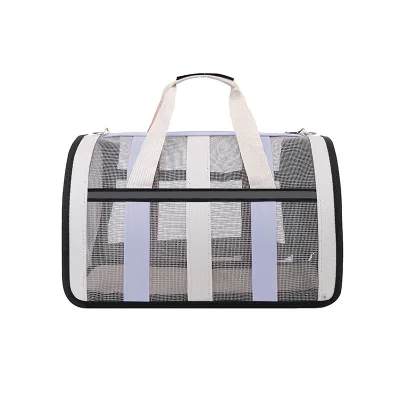
Soft Pet Carrier for Cats Puppy Travel Dogs Carrier Bags Durable Portable
$7.25 - $8.49
MOQ: 300 Pieces



Comprehensive Sourcing Guide
Waterproof Outdoor Dog Carrier Sourcing Guide
Waterproof outdoor dog carriers sit at the intersection of pet travel gear and weather-exposed equipment, which makes them a category where material claims and structural quality matter as much as price. Buyers sourcing these products for retail, e-commerce, or private-label programs should treat waterproofing as a testable specification rather than a marketing label, since outdoor use exposes seams, zippers, and base panels to sustained moisture. The listings observed in this category cover shoulder-style carriers intended for dogs, cats, small animals, and even reptiles, with sizes ranging from S to L and one-size formats, so scope definition is the first sourcing decision.
This guide walks through the full procurement cycle: interpreting listing signals, verifying technical specifications, confirming compliance documentation, understanding cost and commercial terms, qualifying manufacturers, and planning long-term reorders. Throughout, the emphasis is on asking suppliers for evidence — material composition, load ratings, water-resistance methodology — before committing to volume. Buyers who anchor negotiations in verifiable specifications consistently avoid the two most common failures in this category: carriers that leak at seams after light rain, and shoulder straps or base panels that fail well below the stated maximum weight capacity.
Product Scope and Observed Product Scope and Observed Listing Signals
The observed listings define a fairly broad product scope. Carrying type across the category is consistently shoulder bag, with applications spanning dogs, cats, small animals, and in some cases reptiles — a signal that some designs are marketed as multipurpose small-pet carriers rather than dog-specific products. Listed sizes include S, M, and L ranges as well as one-size formats, and maximum weight capacity is stated in a 3–10 kg band, which effectively positions these carriers for small to medium dogs and most cats. Colors range from restrained black and gray to green, blue, orange, and extended multi-color palettes, giving buyers merchandising flexibility.
Condition is uniformly new, and several structural signals stand out for buyer attention. Some listings are marked non-customized stock, while others advertise customization and OEM factory service — a distinction that determines whether you are buying for immediate resale or building a private-label program. Price observations span roughly USD 2.62 to 30.5 and MOQ observations span 1 to 1,000 units, reflecting a mix of sample-friendly listings and production-scale offers. Model identifiers such as SPC-47, SPC-62, MC20HB004B, and MC22DJ004 should be used to anchor specification discussions line by line.
Technical Specifications to Verify
Begin with materials and construction. Observed material references include polyester, and one listing specifies bonded fabric with needled cotton lining, while another references polyester/PVC construction — a meaningful difference, since PVC-coated polyester generally delivers more reliable water shedding than uncoated woven fabric. Buyers should request the exact fabric weight, coating type, and seam-sealing method, and should ask whether zippers and stitching lines are treated with water-resistant tape or flaps. The stated maximum weight range of 3–10 kg should be verified against actual load testing of the base panel and shoulder strap anchor points, not assumed.
Second, verify size and fit engineering. With S, M, L, and one-size variants in the category, confirm internal dimensions, ventilation openings, and closure security for the target animal weight and body length. Net weight observations of 0.23–0.28 kg, 0.30 kg, and 0.95 kg show substantial variation in construction heft, which correlates with durability but also with shipping cost. Where listings claim waterproof status, ask the supplier to describe the test method behind the claim; where a listing states "not waterproof," treat that as honest scoping and plan water exposure accordingly rather than negotiating the claim upward.
Compliance and Safety Documentation
Compliance documentation should be requested before sampling concludes, not after purchase orders are signed. One observed listing carries a CE marking claim, and another references CDP as a standard entry; buyers should ask each supplier to state precisely which standard the marking refers to and to supply the corresponding certificate or test report with a verifiable issuing body. For pet carriers sold into regulated markets, general product safety obligations apply even where no pet-specific carrier standard exists, so documentation of material safety — particularly for fabrics and coatings that animals will contact — is a reasonable request.
Buyers should also verify internal quality grading claims. Listings observed in this category include a "1grade" quality entry, which is a supplier self-assessment rather than an independent result; ask what inspection criteria sit behind it. Request material safety data or composition declarations for the polyester and any PVC components, especially for EU or North American retail programs where chemical content scrutiny is increasing. Finally, confirm that any certification shown on a listing applies to the exact model number you intend to order, since certificates are frequently issued per model or per material batch and do not automatically transfer across a supplier's catalog.
Cost Drivers and Commercial Terms
Price dispersion in the observed range — USD 2.62 to 30.5 — is driven mainly by material construction, size tier, and customization depth. A one-size, non-customized stock carrier in basic polyester sits at the low end, while larger sizes, PVC-coated fabrics, needled cotton linings, and private-label branding push costs upward. Net weight differences from roughly 0.23 kg to 0.95 kg per unit also matter: heavier carriers raise per-unit freight, and packing formats observed range from polybag to carton, with one listing specifying 20 pieces per carton box, which affects container loading calculations.
Commercial terms should be negotiated with equal discipline. Observed payment terms are T/T and PayPal; buyers should agree on deposit proportions and balance timing in writing, and align payment method with order size, since PayPal suits samples and small trial orders while T/T is standard for production runs. Delivery time observations span 5–7 days for stock items and 7–15 days more broadly, so distinguish stock-led replenishment from made-to-order production in your planning. MOQ observations of 1 to 1,000 units mean sample orders and volume orders coexist in this category; confirm where your chosen model's MOQ sits before quoting landed cost.
Supplier Qualification and Quality Control
Supplier qualification starts with entity type. Observed listings identify the seller as a manufacturer with origin in Tianjin, China and more broadly China, and one listing advertises OEM factory service — signals that direct production relationships are available. Buyers should confirm whether the counterparty is the actual manufacturer or a trading intermediary, since this affects customization capability, defect accountability, and pricing headroom. Request factory information, production capacity statements, and references to prior pet-carrier programs, and validate that the OEM service covers your intended branding, packaging, and size requirements.
Quality control should be built into the order, not assumed. Require a pre-production sample for the exact model number, then define an inspection checklist covering seam integrity, waterproofing behavior at seams and zips, strap and buckle strength against the stated 3–10 kg capacity range, zipper cycling, and colorfastness for the chosen colorway. For first production orders, consider third-party inspection before shipment, particularly for customized runs where rework is costly. Agree in writing on the acceptable defect rate, the packing standard — whether polybag or carton, and pieces per carton — and the remediation process for goods that fail inspection at destination.
Long-Term Procurement Checks
Long-term sourcing success in this category depends on treating initial orders as the start of a managed program. Reconfirm specifications at every reorder, because polyester sourcing, coating weights, and lining materials are common substitution points when suppliers face cost pressure; a "same model" shipment can quietly differ from the approved sample. Track delivery-time performance against the observed 5–7 day stock and 7–15 day production windows, and hold suppliers to agreed tolerances so your inventory planning stays reliable across peak pet-travel seasons.
Also review commercial and compliance posture annually. Revalidate certificates against current model numbers, since design changes can invalidate CE or other documentation claims, and update chemical-compliance declarations when materials change. Monitor whether customization terms, MOQ thresholds, and packing configurations remain stable as your volumes grow — growing buyers often earn better terms, but only if they renegotiate with data. Finally, maintain a documented spec sheet per model, including net weight, size tier, color codes, and waterproofing method, so that any alternate supplier can be benchmarked against your current product rather than against a generic category description.
FAQs
What customization options are available for the dog carrier?
Customization is available for this product line, allowing buyers to request specific modifications. The listing confirms both customized and non-customized options exist across different models. Buyers should verify the specific model requirements before placing an order to ensure the desired features are met.
Which certifications do the carriers meet for safety standards?
The carriers meet CE certification standards as confirmed in the product specifications. Some models also adhere to specific fabric standards like bonded fabric and needled cotton lining. Buyers should check the specific model number to confirm the exact certification applicable to their purchase.
How long is the delivery time for these pet carriers?
Delivery times vary between 5 to 15 days depending on the specific model and order details. Some listings indicate a 5-7 day window while others show 7-15 days. Buyers should confirm the exact lead time with the supplier before finalizing their purchase agreement.
Can I find waterproof options for outdoor use with this carrier?
Waterproof options are available, though some models are explicitly listed as not waterproof. The product features include waterproof variants suitable for outdoor conditions. Buyers must select the specific model that matches their waterproof requirements to ensure proper protection for their pets.
What is the maximum weight capacity for these carriers?
The maximum weight capacity ranges from 3 to 10 kilograms depending on the specific carrier model. This ensures suitability for dogs, cats, and small animals. Buyers should verify the net weight and capacity limits for the specific model they intend to purchase.
Which colors are available for the waterproof dog carriers?
Available colors include green, blue, orange, gray, black, white, yellow, red, and purple. The specific color options depend on the model and current stock availability. Buyers should check the product listing for the specific color palette offered for their selected carrier model.
What is the minimum order quantity for these pet carriers?
The minimum order quantity ranges from 1 to 1000 units based on the supplier and model. Some listings allow single unit purchases while others require bulk orders. Buyers should confirm the specific MOQ with the manufacturer before initiating the sourcing process.