Source Waterproof Plaid Taffeta Fabric for Garments, Bags, and Curtains
Compare 30 listings of Waterproof Plaid Taffeta Fabric suitable for garments, bags, and curtains. Buyers can review features like flame retardancy, anti-static properties, and customization options from suppliers in China.
Key considerations
Products List


High Quality 100% Nylon Taffeta 400t Taffeta Waterproof Fabric for Garment
$1.05 - $1.25
MOQ: 1500 Meters

Durable and Washable Not Wrinkle Easily 180t Fabrics Polyester Taffeta Waterproof
$0.50 - $0.85
MOQ: 1500 Meters


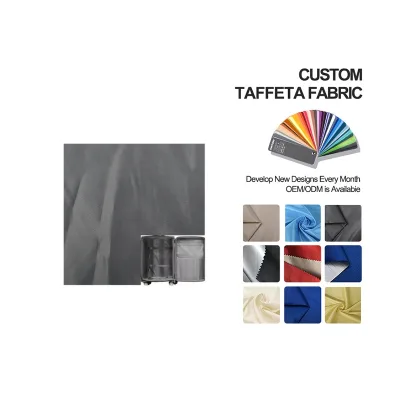


Breathable Ribstop Polyester Taffeta with Downproof for Outdoor Fabrics
$0.30 - $1.30
MOQ: 1200 Meters


Comprehensive Sourcing Guide
Strategic Sourcing Guide for Waterproof Plaid Taffeta Fabric
Understanding the Technical Profile of Taffeta Variants
When sourcing Waterproof Plaid Taffeta Fabric, buyers must first navigate the complex landscape of technical definitions and material compositions. The term "taffeta" in the current market often refers to a specific class of woven synthetic fabrics characterized by a crisp hand and a distinct sheen, though the underlying fiber and construction can vary significantly between suppliers. Based on observed product attributes, the core material composition frequently centers on Polyamide Fiber, commonly known as Nylon. This material choice is critical because it offers a balance of strength, flexibility, and the ability to be engineered for specific functional properties like water resistance.
The production of these fabrics typically utilizes Weft knitting or Woven technics. While traditional taffeta is strictly woven, market observations indicate a blend of definitions where "Weft" knitting is also associated with similar product codes. The structural integrity of the fabric is often described as having a "Synthetic Carbon Chain" structure, which contributes to its durability. A key specification to verify is the fiber cross-section; some high-performance variants utilize "Hollow Filament" technology to enhance insulation or specific texture profiles, while others rely on standard "Filament" types. The physical strength of the fabric is generally categorized as "Medium Strength," which makes it suitable for applications requiring durability without the bulk of heavy canvas.
Width is another critical dimension that varies by model. Standard observations indicate a width of 57/58 inches, though some specifications list a width of 1.5 meters. Buyers must confirm the exact width required for their production line to minimize waste. The fabric is available in various styles, including "Plain Dyed" and "Printed," with the "Plaid" pattern being a specific aesthetic request that requires careful verification of the dyeing process. The "Elephant Skin Crinkle" or "Cason Crinkle" finishes are also noted as available options, adding texture to the smooth taffeta surface.
Functional Performance and Water Resistance Standards
The primary driver for sourcing this specific fabric is its functional performance, particularly regarding water resistance. The market data indicates a wide range of waterproof capabilities. Some products are listed with a "Water Pressure" rating of 10,000mm, which suggests a high level of protection against water penetration suitable for heavy rain or outdoor applications. However, other entries mention "High Water Pressure" as a general advantage without specifying a numerical value, necessitating direct verification with the supplier.
Waterproofing is often achieved through specific chemical treatments. The "Wr Grade" is a crucial metric in this context, with "C6" being a documented standard in the supply chain. C6 treatments are fluorine-free, addressing growing environmental and health concerns regarding per- and polyfluoroalkyl substances (PFAS). This "Fluorine-Free Wr" advantage is a significant differentiator for buyers targeting eco-conscious markets. Additionally, the fabric may feature "Anti-Static" properties, which are essential for preventing dust attraction and ensuring safety in specific industrial or garment applications.
Breathability is a competing requirement that must be balanced against waterproofing. Some specifications list "Air Permeability" ranging from 6 to 8 mm/s, indicating a fabric that allows some air passage while maintaining water resistance. In contrast, other applications may require "Black-out" or "Downproof" features, which significantly reduce air permeability to ensure complete thermal retention and wind protection. The "Water Vapour Permeability" is also a key performance indicator, with some high-end variants achieving a rating of 2000, allowing sweat vapor to escape while keeping liquid water out.
Compliance, Certification, and Regulatory Verification
Navigating the compliance landscape is essential for international procurement, as regulations regarding chemical usage and textile safety vary by destination market. The supply chain for waterproof taffeta fabrics often includes certifications that validate the safety and environmental impact of the materials. Observed certifications include "Oeko-Tex Standard 100" and "SGS" testing, which are widely recognized benchmarks for the absence of harmful substances. Another certification noted is "Idfl SGS Oeko-Tex," suggesting a rigorous third-party verification process.
Buyers must be particularly vigilant regarding the "Dyeing" process. Some suppliers specify "No Limited Metals" in their dyeing protocols, which is a critical compliance point for markets with strict heavy metal regulations. The "C6" treatment mentioned earlier is also a compliance driver, as many global brands are moving away from fluorinated chemicals. While "OEKO-TEX" and "GOTS" are mentioned in background knowledge, buyers should not assume all products carry these specific labels without explicit verification on the product datasheet.
The "prod_standard" field often contains technical codes like "20D/36FX20D/36F 213X182" or "20Dx20D 228x172." These codes represent the denier count, filament count, and thread density. Verifying these standards ensures that the fabric meets the physical requirements of the end product. For instance, a 20D filament count indicates a very fine, lightweight fabric, which is ideal for lightweight rainwear or linings, whereas a higher denier would indicate a heavier, more durable material.
Cost Drivers and Procurement Economics
The cost of Waterproof Plaid Taffeta Fabric is influenced by several variables, including material composition, treatment complexity, and order volume. The observed price range in the market spans from $0.20 to $7.00 per unit, a wide disparity that reflects differences in quality, certification levels, and functional performance. A fabric with a C6 fluorine-free treatment and high water pressure ratings (e.g., 10,000mm) will naturally command a higher price point than a standard waterproof variant.
Minimum Order Quantity (MOQ) is another significant cost driver. The observed MOQ range extends from 1 unit to 50,000 units. For small businesses or prototyping phases, suppliers offering low MOQs (as low as 1) are available, though the unit price may be higher. Conversely, large-scale manufacturers can leverage the upper end of the MOQ range to secure lower per-unit costs. The "prod_packing" method, whether "50m/Roll," "Roll Packing," or "Roll Packing with Plastic Bags," also impacts logistics costs. Bulk packing in rolls is standard, but the inclusion of protective plastic bags adds a layer of cost and waste management consideration.
Lead times and location are also factors in the total cost of ownership. Most observed products originate from "China" or specifically "Wujiang," a major textile hub. While specific lead times are not universally standardized in the provided data, the proximity to major shipping ports in China generally facilitates efficient logistics. Buyers should factor in the potential for currency fluctuations and shipping costs when calculating the final landed cost, especially for orders placed near the lower end of the price spectrum.
Typical Applications and End-Use Suitability
The versatility of Waterproof Plaid Taffeta Fabric makes it suitable for a diverse array of applications. The "Application" field in product specifications lists "Garment," "Home Textile," "Bag," "Lining," "Curtain," "Shoes," "Swimwear," "Sportswear," "Dress," "Trousers," "Umbrella," "Awning fabric," "Crafts," "Outdoor," "Tent," and "Upholstery." This broad range indicates that the fabric can be adapted for both fashion and industrial uses.
For the garment industry, the fabric's "Memory" and "Tear-Resistant" properties make it ideal for sportswear and active wear where durability and shape retention are paramount. The "Plain Dyed" and "Printed" styles allow for creative design work, making it suitable for dresses and trousers. In the home textile sector, the "Waterproof" and "Flame Retardant" features are essential for curtains and upholstery, particularly in commercial settings where safety regulations are strict.
The outdoor and camping industry relies heavily on the "Windproof," "Downproof," and "Black-out" capabilities of these fabrics. Tents, awnings, and umbrellas require materials that can withstand harsh weather conditions while remaining lightweight. The "High Water Pressure" rating ensures that tents and rain gear remain dry during heavy storms. Additionally, the "Anti-Static" feature is beneficial for bag and purse manufacturing, preventing dust accumulation and ensuring a premium feel.
Supplier Evaluation and Quality Control Protocols
Selecting the right supplier requires a rigorous evaluation process that goes beyond price comparison. Buyers should prioritize suppliers who provide transparent technical data sheets that match the observed specifications, such as the "20D/36FX20D/36F" standard or specific "Water Pressure" ratings. The presence of certifications like "Oeko-Tex Standard 100" and "SGS" should be verified through valid certificates rather than just claims on a website.
Quality control should focus on the consistency of the "Crinkle" finish, the uniformity of the "Plaid" pattern, and the durability of the waterproof coating. Since the fabric is often "Roll Packing," buyers should inspect the condition of the rolls upon receipt to ensure there is no damage to the fabric surface or the waterproof treatment. The "Fiber Type" being "Filament" means that the fabric should be smooth and free of pilling, which can be a sign of lower-quality raw materials.
Buyers should also assess the supplier's ability to handle "Customization." The market data indicates that customization is "Available," which includes options for specific widths, colors, and functional treatments. A reliable supplier will be able to accommodate requests for "C6" treatments or specific "Air Permeability" levels without compromising the structural integrity of the fabric.
Long-Term Procurement and Sustainability Considerations
Long-term procurement strategies for waterproof taffeta fabric must account for evolving environmental regulations and consumer preferences. The shift towards "Fluorine-Free Wr" treatments is a clear trend that buyers should anticipate. Suppliers who are already offering C6 treatments or similar alternatives are better positioned for future compliance. Additionally, the "No Limited Metals" dyeing process aligns with global efforts to reduce toxic chemical usage in textiles.
Sustainability also extends to the packaging and logistics. The "Roll Packing" method is standard, but buyers should inquire about the recyclability of the plastic bags used. As the industry moves towards circular economy principles, suppliers who offer eco-friendly packaging solutions will become increasingly competitive.
Finally, the "Physical Feature" of "Medium Strength" suggests that while the fabric is durable, it may not be suitable for extreme heavy-duty applications without reinforcement. Buyers should plan for potential fabric blending or layering in their product designs to ensure longevity. By focusing on suppliers with robust certification records, transparent technical data, and a commitment to sustainable practices, buyers can secure a reliable supply chain for Waterproof Plaid Taffeta Fabric that meets both current market demands and future regulatory requirements.
Comparative Analysis of Fabric Specifications
To assist in decision-making, the following table summarizes key observed specifications and their implications for procurement:
| Specification | Observed Value/Range | Implication for Buyer |
|---|---|---|
| Material | Polyamide Fiber (Nylon), 100% Nylon | High durability, lightweight, suitable for active wear. |
| Technics | Weft, Woven | Woven offers crispness; Weft may offer different drape. |
| Water Pressure | 10,000mm (Specific), High (General) | Verify exact rating for intended use; 10,000mm is high performance. |
| Treatment | C6, Fluorine-Free Wr | Preferred for eco-compliance and safety; verify chemical safety data. |
| Certification | Oeko-Tex Standard 100, SGS, Idfl | Essential for export to EU/US; verify certificate validity. |
| Width | 57/58", 1.5m | Confirm width to optimize cutting patterns and reduce waste. |
| MOQ | 1 - 50,000 | Flexible for startups; bulk discounts available for large orders. |
| Packing | 50m/Roll, Roll with Plastic Bags | Check for damage; consider packaging sustainability. |
| Pattern | Plain, Plaid, Printed | Plaid requires precise dyeing control; verify color fastness. |
| Features | Anti-Static, Flame Retardant, Waterproof | Verify specific performance claims against test reports. |
This comparative overview highlights the diversity in the market and underscores the necessity for buyers to specify their exact requirements clearly to avoid mismatches in product performance.
FAQs
What certifications are available for Waterproof Plaid Taffeta Fabric?
Products often carry Oeko-Tex Standard 100 and SGS certifications to verify safety. Some listings also include Idfl SGS Oeko-Tex validation. Buyers should request specific certificates to confirm the absence of harmful substances before ordering.
How is the waterproof performance measured for this fabric?
Water pressure ratings can reach up to 10000mm for high-performance variants. Some items feature C6 fluorine-free water repellent treatments. Buyers must verify the specific water pressure rating required for their intended application.
Which material composition is standard for waterproof plaid taffeta?
The fabric is primarily made from 100% Polyamide Fiber, also known as Nylon. It typically uses filament fibers with a synthetic carbon chain structure. This composition provides medium strength and durability for various garment and bag applications.
Can buyers request customization for width and color?
Yes, customization is available for specific widths and colors. Standard widths include 57/58 inches or 1.5 meters, with options for plain dyed or printed styles. Buyers should confirm exact requirements with the manufacturer before production begins.
What is the typical price range for this fabric?
The observed price range spans from 0.20 to 7.00 USD per unit. Costs vary based on functional treatments like fluorine-free WR and certification levels. Higher performance features generally command prices at the upper end of this spectrum.
How does the fabric handle breathability and air permeability?
Some variants offer air permeability between 6 to 8 mm/s while maintaining water resistance. Other models prioritize downproof or black-out features which reduce air flow. Select the specific permeability rating that matches your thermal and weather protection needs.
What are the minimum order quantities for sourcing this fabric?
Minimum order quantities range from 1 unit up to 50000 units depending on the supplier. Lower MOQs are available for prototyping, while bulk orders secure better pricing. Buyers should check specific factory policies to align with their volume requirements.