Find Wincor Parts Thermal Printer Head for Labeling, Packaging, and Retail
Source 30 verified options for Wincor Parts Thermal Printer Head compatible with Zebra and Markem devices. Buyers can compare specifications like resolution, paper size, and warranty terms from suppliers in China.
Key considerations
Products List

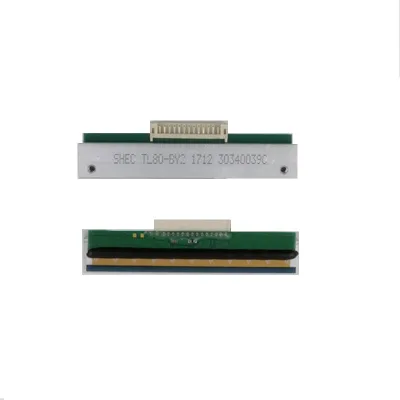


Original Printhead for Videojet 6530 53mm Thermal Label Printer Parts Print Head
$434.00 - $510.00
MOQ: 1 Pieces


Wincor Tp28 Print Head GSM-Tp28-H Original Thermal Printer Head for ATM
$30.00 - $40.00
MOQ: 100 Pieces


NCR ATM Thermal Printhead 497-0465432 15-Pin Head for 6622 6625 Printer
$60.00 - $65.00
MOQ: 100 Pieces


Zebra Thermal Printer Parts Manufacturers Wholesale Compatible 300dpi Printhead
$200.00 - $400.00
MOQ: 1 Pieces

Zebra Printer Parts Supplier Kyocera 00200-6L 300 Dpi Thermal Printhead
$200.00 - $400.00
MOQ: 1 Pieces


Comprehensive Sourcing Guide
Strategic Sourcing Guide for Wincor Thermal Printer Heads
Procuring replacement components for specialized industrial printing equipment requires a disciplined approach that balances technical precision with supply chain reliability. For buyers searching for Wincor parts, specifically thermal printer heads, the market presents a complex landscape of compatible components, varying specifications, and diverse supplier capabilities. This guide provides a structured framework for evaluating thermal printheads, ensuring that procurement decisions are grounded in verified technical attributes and compliance standards rather than unverified marketing claims. The following analysis synthesizes observed market data to assist buyers in navigating the selection, verification, and acquisition of high-performance thermal printer heads suitable for Wincor and similar industrial applications.
Technical Specifications and Compatibility Verification
The primary challenge in sourcing thermal printer heads lies in ensuring exact compatibility with the target printing machinery. Thermal printheads are not generic components; they are engineered with specific electrical, thermal, and mechanical properties that must align with the printer's controller and media handling systems. When evaluating products for Wincor printers, buyers must scrutinize the "Compatible or Genuine" status and the specific model numbers associated with the component. Market observations indicate that while some listings explicitly state compatibility with "Wincor Printer" applications, others reference specific model numbers such as "4502E" or "TH200E," which may serve as cross-reference points for compatibility.
A critical technical attribute to verify is the resolution. The observed data highlights a resolution of 203 dpi for certain barcode printer applications, while other specific print head listings mention a 300 dpi capability. This variance suggests that different printer models or printing requirements necessitate distinct resolution specifications. Buyers must confirm whether their specific Wincor unit requires 203 dpi or 300 dpi to avoid print quality issues such as pixelation or unreadable barcodes. Furthermore, the physical dimensions of the printhead are paramount. Specifications regarding the "Max. Paper Size" of 104mm and the "Single package size" of 20x9x8 cm provide a baseline for physical fitment, but the actual thermal element width and pitch must match the printer's media path exactly.
The color and character structure of the print head also play a role in application suitability. Most observed listings describe the print head color as "Black" and the style as "Black and White," which is standard for thermal transfer printing. However, the "Character Structure" is noted as "Full-Width Characters Printers," a specific detail that may influence how text is rendered on labels or receipts. Buyers should verify if their operational workflow requires full-width character support or if a different character structure is necessary for specific data encoding needs. Additionally, the "Automatic Two-Sided Printing" capability is explicitly noted as "Not Support," indicating that these components are designed for single-sided thermal transfer applications. Understanding these limitations is essential for planning production workflows that do not rely on duplex printing features.
Compliance Standards and Certification Requirements
In the B2B procurement of industrial components, compliance with international standards is non-negotiable for ensuring safety, environmental adherence, and market access. The observed product data references several key certifications, including "CE" and "ROHS," which are critical for products entering the European market and other regions with strict environmental regulations. The CE marking indicates conformity with health, safety, and environmental protection standards for products sold within the European Economic Area, while ROHS (Restriction of Hazardous Substances) ensures that the product does not contain specific hazardous materials.
Beyond these, some listings mention "ISO9001" certification, which relates to the quality management systems of the manufacturing facility rather than the product itself. This distinction is vital for buyers; ISO9001 suggests that the supplier maintains a documented quality management process, but it does not guarantee the specific performance of the thermal head. Buyers must also verify the "prod_standard" attribute, which in some contexts lists "32mm," likely referring to a specific dimension standard or a mislabeled attribute that requires clarification. It is prudent to request official certification documents from the supplier to confirm that the specific batch of thermal heads being purchased carries valid CE and ROHS declarations.
The origin of the product is another factor in compliance. The data indicates origins in "Hangzhou" and "Zhejiang, China," which are major manufacturing hubs. While the location itself does not dictate quality, it informs the supply chain logistics and potential regulatory oversight. Buyers should ensure that the supplier can provide traceability documentation linking the certified product to the specific manufacturing batch, especially when dealing with sensitive industrial equipment where component failure could lead to operational downtime.
Cost Drivers and Pricing Dynamics
Understanding the cost structure of thermal printer heads is essential for budgeting and total cost of ownership analysis. The observed price range in the market spans from 4.5 USD to 985 USD, a significant variance that reflects differences in brand reputation, technical specifications, and volume purchasing power. The lower end of this spectrum likely corresponds to generic or compatible heads, while the higher end may represent genuine OEM parts or specialized high-resolution models. Buyers must be cautious not to equate a lower price with inferior quality, but they should also recognize that the lowest price may not include necessary certifications or warranty support.
The Minimum Order Quantity (MOQ) is a critical cost driver. The data shows an MOQ range of 1 to 100 units, with many listings offering an MOQ of just 1 piece. This flexibility allows buyers to test components without committing to large inventory volumes, which is particularly useful for maintenance departments replacing a single failed unit. However, for bulk procurement, buyers should negotiate based on volume to secure better pricing. The "Selling Units" are typically listed as "Single item," but bulk packaging options like "Carton" or "Box" may offer economies of scale.
Shipping costs also significantly impact the final landed cost. The observed shipping methods include "DHL, UPS, FedEx, TNT, Jcex, EMS, Epacket," as well as "by sea, express, air." For urgent replacements, air express is the standard, but it comes at a premium. For non-urgent bulk orders, sea freight may be more cost-effective. The "Gross Weight" varies, with some listings indicating 145g, 0.5kg, or 1kg per piece. These weight differences directly influence shipping fees, especially when calculating costs for international logistics. Buyers should request a detailed breakdown of shipping costs based on their specific destination and urgency to avoid unexpected expenses.
Typical Applications and Operational Context
Thermal printer heads are primarily utilized in environments requiring high-speed, reliable labeling and receipt printing. The observed applications include "Barcode Printer," "Zebra Label Printer," and "Markem Thermal Transfer Overprinter." While the core keyword focuses on Wincor parts, the versatility of thermal printheads means they are often used in retail, logistics, and manufacturing sectors. The "Usage" attribute explicitly mentions compatibility with "Zebra Label Printer," suggesting that these components may be part of a broader ecosystem of thermal printing solutions.
The "Applicable printing type" is noted as "for Wincor Printer," confirming the specific target audience for these components. However, the "Product Name" varies, with some listings identifying the item as a "Thermal Printhead" or "Original Markem X60 X65 Tto Printhead." This variation in naming conventions can lead to confusion, and buyers must carefully map the product name to their specific printer model. The "Style" is consistently "Black and White," which is standard for thermal transfer printing where the print head heats the ribbon to transfer ink onto the media.
The "Supply Paper Mode" is described as "Automatic," indicating that these heads are designed for use in printers with automated media feeding systems. This is a crucial feature for high-volume operations where manual intervention would reduce efficiency. The "Condition" is listed as "New" and "100% New," ensuring that buyers receive fresh components rather than refurbished or used parts. This is particularly important for thermal heads, which degrade over time and require precise thermal calibration to function correctly.
Supplier Evaluation and Quality Assurance
Selecting the right supplier is as important as selecting the right component. The observed data highlights several quality assurance attributes, such as "Quality: Tested" and "Excellent 100% Tested." These statements suggest that the supplier performs some form of functional testing before shipping. However, buyers should verify the specific testing protocols used. Does the supplier test for thermal uniformity, electrical resistance, or print quality? The "Feature" attribute mentions "Accurate and Clear," which is a performance claim that should be backed by test reports or sample verification.
The "Warranty" period is another key indicator of supplier confidence. The observed data lists a "3 Months" warranty, with some listings noting "3 mouth" (likely a typo for months). A three-month warranty is standard for many electronic components, but buyers should clarify the terms of coverage. Does the warranty cover manufacturing defects only, or does it include shipping damage? The "Packing" method, described as "Head original, box neutral" or "Carton," also reflects the supplier's attention to detail. Proper packaging is essential to prevent damage during transit, especially for delicate thermal elements.
Buyers should also evaluate the supplier's communication and support capabilities. The "Shipping Method" options, including "by Air, by Sea, by Express Courier," indicate a range of logistical capabilities. A supplier that offers multiple shipping options is likely more flexible and better equipped to handle urgent requests. Additionally, the "Place of Origin" being "Zhejiang, China" suggests a concentration of manufacturing expertise in this region, but buyers should still conduct due diligence on the specific factory or trading company.
Long-Term Procurement Considerations
Sourcing thermal printer heads is not a one-time transaction but part of a long-term supply chain strategy. Buyers should consider the "Gross Weight" and "Single gross weight" of the components when planning storage and inventory management. Heavier items may incur higher storage costs and require specialized handling equipment. The "prod_packing" type, whether "Box" or "Carton," also affects storage efficiency and protection against environmental factors like humidity and dust.
Future-proofing the procurement process involves understanding the lifecycle of the printer models in use. If a Wincor printer model is being phased out, investing in a large quantity of compatible heads may not be wise. Conversely, if the printer is a staple of the operation, securing a reliable supply chain with consistent quality is essential. The "Condition" of the parts being "New" and "100% Tested" is a baseline expectation, but buyers should also inquire about the supplier's ability to provide consistent quality over time.
Finally, buyers should monitor the market for changes in standards and certifications. As regulations evolve, the requirements for CE, ROHS, and ISO9001 may become more stringent. Maintaining a relationship with suppliers who are proactive about compliance can mitigate the risk of supply disruptions. By focusing on technical specifications, verifying certifications, and evaluating supplier reliability, buyers can ensure a steady supply of high-quality thermal printer heads that meet the demanding requirements of industrial printing operations.
FAQs
What is the resolution of the thermal printer head?
The thermal printer head offers a resolution of 203 dpi or 300 dpi depending on the specific model. Buyers must verify which resolution matches their Wincor printer requirements to ensure clear barcode printing without pixelation issues.
Can I get a warranty for this thermal printhead?
Yes, a 3-month warranty is typically provided for these thermal printer heads. This coverage applies to manufacturing defects, ensuring reliability for your industrial printing operations while you verify the component compatibility.
Which certifications do these printer heads meet?
These components meet CE and ROHS standards, with some listings also citing ISO9001 for quality management. These certifications ensure compliance with safety and environmental regulations for international markets where Wincor equipment is deployed.
What is the minimum order quantity for purchase?
The minimum order quantity is 1 piece, allowing for single-unit replacement without bulk commitment. This low MOQ supports maintenance departments needing immediate replacements for failed thermal heads in their Wincor or Zebra printers.
How is the product packaged for shipping?
The product is packed in a box or carton, often described as original head packaging with neutral boxes. This secure packing method protects the delicate thermal element during transit via air, sea, or express courier services.
Where is the origin of these thermal heads?
The products originate from Hangzhou and Zhejiang, China, which are major manufacturing hubs. This location indicates the supply chain source but requires verification of specific factory certifications to ensure consistent quality for your procurement needs.