Source Windows Server GPS Tracking Software for Truck Taxi Fleet
Find and compare 30 listings for Windows Server GPS Tracking Software tailored for truck, taxi, and fleet management applications. These solutions support cloud server integration, multi-language interfaces, and real-time monitoring via web platforms and mobile apps.
Key considerations
Products List


Tracking Software Car Multimedia Navigation System Relay 4G LTE GPS Tracker
$17.90 - $19.90
MOQ: 2 Pieces


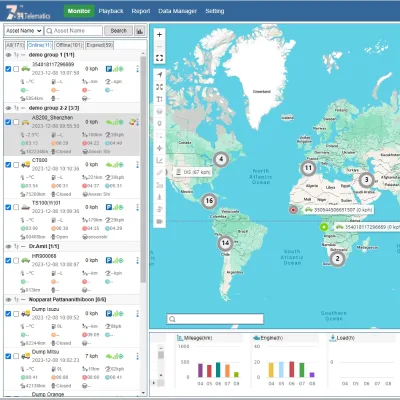


Precise Real-Time Tracking 2g Car GPS Tracker Supporting Tracking Software
$9.00 - $12.50
MOQ: 10 Pieces

Precise Positioning 4G GPS Tracker with Ios & Android Tracking Software
$20.00 - $24.00
MOQ: 50 Pieces


Gnss Time Synchronization Server GPS Timing and Synchronization Server
$1500.00 - $2000.00
MOQ: 5 Pieces
Comprehensive Sourcing Guide
Strategic Sourcing Guide for Windows Server GPS Tracking Software Solutions
Understanding the Core Architecture and Deployment Models
When sourcing GPS tracking software that integrates with Windows Server environments, buyers must first distinguish between the hardware telemetry layer and the backend management platform. The core keyword "Windows Server GPS Tracking Software" implies a specific architectural dependency where the data aggregation, processing, and user interface reside on a server infrastructure running Microsoft Windows Server. In the current market, this often manifests as a hybrid model where physical GPS trackers transmit data via cellular networks to a cloud-based cluster server, which then interfaces with a local or remote Windows Server instance for specific business logic, reporting, or legacy integration.
The observed product landscape indicates that many solutions are classified as "software" standards but rely heavily on "Cloud Cluster Server" architectures for scalability. This distinction is critical for procurement teams. A solution labeled as "Windows Server" compatible may actually be a client-side application or a web portal that requires a specific server environment to function optimally. For instance, some specifications explicitly list "2008 Windows Server" as a requirement, suggesting that while the software is modern, it may have legacy dependencies or specific compatibility layers that must be verified before deployment. Buyers should verify if the "Windows Server" designation refers to the operating system required for the central database or if it is a legacy constraint that necessitates an upgrade path.
Furthermore, the integration of "Online Installation" methods suggests a shift toward Software-as-a-Service (SaaS) models where the physical installation of server software is minimized. However, for enterprises requiring data sovereignty or specific on-premise configurations, the ability to deploy on a local Windows Server remains a key feature. The presence of "Cloud Server" and "Cluster Cloud Server" attributes in the product data indicates that the most robust solutions utilize distributed computing to handle high volumes of tracking data, ensuring that the "Windows Server" component acts as a gateway or a specific management node rather than the sole processing engine.
Technical Specifications and Hardware-Software Integration
The efficacy of GPS tracking software is inextricably linked to the hardware specifications of the GPS trackers it manages. Buyers must evaluate the technical compatibility between the software platform and the device firmware. The market data reveals a high prevalence of 4G modules, specifically the "Quectel Bg96," which supports a wide range of bands including B1, B3, B5, B8, B34, B38, B39, B40, and B41. This multi-band support is essential for global operations, particularly in regions with varying cellular infrastructure. The software must be capable of parsing data from these specific modems and translating them into actionable telemetry.
Positioning accuracy is another critical technical parameter. The observed specifications list "GPS Positioning Accuracy" ranging from "5-10m, 2D RMS" to a specific "5 Meters" claim. These figures are contingent on the "U-Blox 7020" chipset and the "L1, 1575.42 MHz" frequency band. When selecting software, buyers must ensure the platform can visualize and process data with this level of granularity. The software's ability to handle "56 Channels Examine Track" suggests a high capacity for concurrent tracking, which is vital for fleet management applications.
Connectivity and environmental resilience are also paramount. The hardware specifications indicate a "Working Voltage" of 8VDC-46VDC, making the devices suitable for various vehicle types, from passenger cars to heavy trucks. The "Operating Temperature" range of -20 to 70°C ensures reliability in extreme climates. The software must be able to handle connectivity interruptions gracefully, utilizing the "GSM Network Remote Real-time Monitoring" capabilities to store and forward data when the cellular signal is lost. Additionally, the "Built-in" GPS antenna and the "4G Antenna" range of 100-500m for LBS positioning accuracy highlight the need for software that can fuse GPS and LBS data to provide a seamless tracking experience even in urban canyons where satellite signals are obstructed.
Compliance, Certification, and Regulatory Standards
Navigating the regulatory landscape is a non-negotiable aspect of sourcing GPS tracking solutions. The product data explicitly lists "CE, FCC, and ISORoHS" certifications. These are not merely marketing terms but represent adherence to specific international standards. CE certification indicates conformity with health, safety, and environmental protection standards for products sold within the European Economic Area. FCC certification is mandatory for electronic devices sold in the United States, ensuring they do not interfere with other electronic equipment. ISORoHS compliance relates to the restriction of hazardous substances, a critical factor for environmental regulations and supply chain sustainability.
Buyers must verify that the "Windows Server" software component itself does not introduce compliance risks. While the hardware certifications are clear, the software's data handling practices must align with local privacy laws, such as GDPR in Europe or CCPA in California. The "More Than 20 Languages" and "Multi-Language" support observed in the product attributes suggest a global market focus, which implies the software should be capable of handling data localization requirements.
Furthermore, the "Standard" classification of "software" in the product data requires scrutiny. Buyers should confirm if the software adheres to specific industry standards for data security and transmission protocols. The "Normal Maintainance" being listed as "Free" is a significant value proposition, but it must be understood within the context of the service level agreement (SLA). Does "Free" maintenance cover only bug fixes, or does it include security patches and compliance updates? The "1 Year" warranty period is a baseline expectation, but for enterprise-grade deployments, buyers should negotiate extended warranty terms that cover both hardware and software licensing.
Cost Drivers and Total Cost of Ownership Analysis
The pricing landscape for GPS tracking solutions is highly variable, with observed ranges spanning from $1 to $3000. This wide disparity is driven by several factors, including the scale of deployment, the complexity of the software features, and the hardware specifications. The "MOQ" (Minimum Order Quantity) range of 1 to 200 units indicates that the market caters to both small businesses and large fleets. For a buyer with a small fleet, a low MOQ is essential to manage cash flow, whereas large enterprises may leverage higher volumes to negotiate better unit economics.
The "Total Cost of Ownership" (TCO) extends beyond the initial purchase price. Buyers must account for recurring costs such as server hosting, data plan fees for the 4G modules, and software licensing renewals. The "Cloud Server" architecture often implies a subscription-based model, where costs are incurred monthly or annually based on the number of active devices. The "Windows Server" requirement may also introduce hidden costs related to IT infrastructure, including the need for dedicated server hardware, power consumption, and technical staff to manage the operating system.
The "Customization" and "New Customize" support attributes suggest that tailored solutions are available, which typically command a premium. If a buyer requires specific reporting formats, integration with existing ERP systems, or custom user interfaces, the cost will increase significantly. The "Online Installation" feature can reduce deployment costs by minimizing on-site technical labor, but it may require robust internet connectivity at the deployment site. Buyers should request a detailed breakdown of costs, separating hardware, software licensing, and ongoing service fees to accurately assess the financial impact.
Typical Applications and Industry Use Cases
The versatility of GPS tracking software is evident in the diverse applications listed in the product data. The primary use cases include "Automotive," "Business Edition," and specific fleet management scenarios such as "Truck, Taxi, Fleet Management." The "Web Platform Name: Oversee" and "Mobile APP Name: Icruise S" indicate a dual-interface approach, catering to both desktop administrators and mobile field agents. This flexibility is crucial for modern fleet operations where managers need real-time oversight from an office and drivers need navigation and reporting tools on the go.
The "Main Market: Africa" observation highlights the global reach of these solutions, suggesting that the software is robust enough to handle the unique challenges of developing markets, such as intermittent connectivity and diverse terrain. The "More Than 20 Countries" language support further reinforces this global applicability. For businesses operating in multiple regions, the ability to switch languages and adapt to local time zones is a critical feature.
Beyond standard fleet management, the "Function: GSM Network Remote Real-time Monitoring" opens up possibilities for asset tracking, vehicle security, and driver behavior analysis. The "Reports: Trip, Parking, Daily, History Playback" capabilities allow for deep dives into operational efficiency. For example, the "Trip" report can help identify inefficient routes, while the "Parking" report can assist in monitoring unauthorized vehicle use. The "History Playback" feature is particularly valuable for dispute resolution and safety investigations. Buyers should evaluate how well the software's reporting engine aligns with their specific operational KPIs and whether the data can be exported for further analysis in third-party business intelligence tools.
Supplier Evaluation and Quality Assurance Protocols
Selecting the right supplier is as important as selecting the right product. The "Technical Support: 7/24" attribute is a strong indicator of a supplier's commitment to customer service, but buyers must verify the actual response times and the expertise of the support team. A 24/7 support line is only valuable if it can resolve critical issues, such as server outages or data loss, within a reasonable timeframe. The "New Customize: Support" and "Customization: Available" attributes suggest that the supplier is willing to engage in a collaborative development process, which is essential for businesses with unique requirements.
Quality control should be a central part of the evaluation process. Buyers should request documentation regarding the manufacturing process, including the "Neutral Individual Packaging Box" standards and the "prod_packing" methods. The "prod_standard" of "96mm * 52mm * 19mm" provides a physical dimension check, but the internal quality of the components, such as the "Rechargeable Lithium Polymer Battery 260mAh," must also be verified. Buyers should ask for test results regarding battery life, signal strength, and durability under the specified "Operating Temperature" range.
The "Location: Shenzhen China" origin is a common hub for electronics manufacturing, but it requires careful vetting. Buyers should verify the supplier's factory audit reports, their adherence to the "ISORoHS" standards, and their track record for on-time delivery. The "Warranty: 1 Year" is a standard offering, but buyers should inquire about the process for warranty claims, including the lead time for replacements and the cost of shipping. A supplier that offers "Free" normal maintenance is advantageous, but the scope of this maintenance must be clearly defined to avoid unexpected costs later.
Long-Term Procurement and Scalability Considerations
Sourcing GPS tracking software is a long-term investment that requires careful planning for scalability and future-proofing. The "Server Requirement: 2008 Windows Server" is a potential red flag for long-term viability, as this operating system is no longer supported by Microsoft. Buyers must assess whether the software vendor has a migration path to newer Windows Server versions or if the "Cloud Cluster Server" architecture allows for a seamless transition to modern cloud environments. Relying on legacy software can lead to security vulnerabilities and compatibility issues with future hardware.
Scalability is another critical factor. As a business grows, the number of tracked assets will increase, and the software must be able to handle the additional load without degradation in performance. The "56 Channels Examine Track" specification suggests a high capacity, but buyers should confirm the maximum number of devices the system can support simultaneously. The "Cloud Server" architecture is generally more scalable than on-premise solutions, but the cost implications of scaling up should be understood.
Finally, buyers should consider the "Language Version: Multi-Language" and "More Than 20 Languages" support as a strategic asset for global expansion. As the business enters new markets, the software should be able to adapt to local languages and regulatory requirements without requiring a complete system overhaul. The "Online Installation" capability also supports rapid deployment in new locations, reducing the time-to-value for new fleet additions. By prioritizing these long-term considerations, buyers can ensure that their GPS tracking investment remains a competitive advantage rather than a technological liability.
FAQs
What server environment is required for this GPS tracking software?
The software requires a Windows Server 2008 environment to function correctly. It also supports cloud cluster server architectures for scalable fleet management operations.
Can the GPS tracking software be customized for specific business needs?
Yes, customization is available and new customization support is provided. Buyers can request tailored features to fit unique fleet management or business edition requirements.
Which certifications does the GPS tracking hardware and software meet?
The products hold CE, FCC, and ISO RoHS certifications. These ensure compliance with international safety and environmental standards for electronic devices sold globally.
How many languages does the GPS tracking platform support?
The platform supports more than 20 languages and is available in multi-language versions. This enables global deployment across more than 20 countries for diverse user bases.
What is the warranty period for the GPS tracking devices?
The standard warranty period is one year for the hardware components. Normal maintenance is listed as free during this period to ensure operational reliability.
Can the system monitor vehicles in real-time over GSM networks?
Yes, the system provides GSM network remote real-time monitoring capabilities. It utilizes 4G modules like Quectel Bg96 for high-speed data transmission and tracking.