Source Windproof Waterproof Padded Insulation Jacket for Winter, Work, and Outdoor Use
Explore 30 listings of windproof waterproof padded insulation jackets designed for winter protection, work environments, and outdoor activities. Buyers can compare features like windproof, waterproof, and dust-proof capabilities across various styles and materials to find the right supplier.
Key considerations
Products List


Custom Lightweight Waterproof Jacket Dry Coats Windbreakers Outdoor Jacket
$18.00 - $20.00
MOQ: 1000 piece


Unisex Lightweight Outdoor Windproof Waterproof Comfortable Windbreaker Jacket
$15.20 - $18.80
MOQ: 200 Pieces


Customized Logo Winter Waterproof Windproof Warm Padding Jacket for Hiking Camping
$18.62 - $20.56
MOQ: 500 Pieces


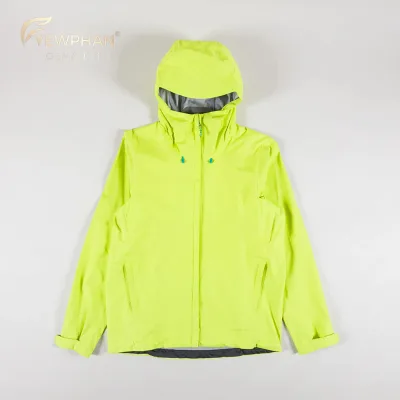


Work Clothes Padded Coat Jacket Waterproof Sports Winter Jacket Outdoor Jacket
$25.00 - $40.00
MOQ: 500 Pieces


Comprehensive Sourcing Guide
Strategic Sourcing Guide for Windproof Waterproof Padded Insulation Jackets
Understanding Product Specifications and Material Composition
When sourcing windproof, waterproof, and padded insulation jackets, buyers must first establish a clear understanding of the technical specifications that define product performance. The core keyword implies a garment designed for thermal retention and protection against harsh environmental elements. Based on available market data, these jackets frequently utilize Polyester or PU (Polyurethane) as primary materials. Polyester variants often feature a 300T Pongee construction with rib stop technology, which provides a balance of durability and lightweight properties. In contrast, PU-coated fabrics are selected for their superior waterproofing capabilities, often layered with a TPU (Thermoplastic Polyurethane) membrane to enhance the barrier against moisture ingress.
The insulation strategy is a critical differentiator in this category. The "padded" designation typically refers to a quilted or filled construction designed to trap body heat. Specifications indicate that these garments are available in "Thick" variants, suitable for winter conditions, though some listings also suggest applicability for Spring/Autumn or Summer seasons depending on the specific insulation density. The thickness specification is not merely a stylistic choice but a functional requirement for thermal regulation. Buyers should verify the specific thickness parameters relative to their intended use case, as a jacket labeled "Thick" may be over-engineered for mild climates but essential for extreme cold.
Collar design and fit are equally significant. High collar styles are prevalent, offering additional protection against wind penetration at the neck. The product attributes also highlight "Hoody" styles, which provide an extra layer of head protection. Sizing is a variable that requires careful attention; while some inventory lists standard sizes ranging from S to 3XL, other options offer fully customized sizing. This flexibility allows procurement teams to align inventory with specific demographic needs, whether targeting adult men, unisex groups, or specific uniform requirements. The distinction between "Casual Clothes" and "Work Clothing" is also evident in the product listings, indicating that the same core technology can be adapted for leisure or professional safety contexts.
Technical Features and Functional Performance
The functional performance of a windproof, waterproof, padded jacket is defined by a specific set of attributes that must be verified during the sourcing process. The primary feature set consistently includes windproof, waterproof, and dust-proof capabilities. These three elements work in tandem to create a protective shell. Windproofing prevents convective heat loss, while waterproofing ensures that external moisture does not compromise the insulation layer. Dust-proofing is particularly relevant for industrial or outdoor environments where particulate matter is a concern.
Beyond the basic shell properties, additional features such as anti-static capabilities are often listed. This attribute is crucial for applications involving electronic environments or areas with potential static discharge risks. Breathability is another critical factor; while the jacket must be waterproof, it should also allow moisture vapor from the body to escape to prevent internal condensation. Some product data explicitly lists "Breathable" as a key function alongside durability and waterproofing. The absence of this attribute in certain listings suggests that buyers must explicitly request breathable membranes if the intended use involves high physical exertion.
The classification of the jacket also influences its functional design. Listings distinguish between "Leisure Jacket" styles, which prioritize comfort and aesthetics, and "Reflective Coat" or "High Visibility Jacket" styles, which are engineered for safety. The latter often includes specific usage scenarios such as Transportation, Road Administration, Traffic Warden, Security Staff, and Sanitation Workers. These professional applications demand not only weather protection but also visibility and durability. The "Type" attribute further categorizes these items as "Workwear" or "Evening Suit," indicating a wide range of potential applications from heavy-duty labor to formal outdoor events. Buyers must ensure that the selected product's feature set aligns precisely with the operational environment of the end-user.
Compliance, Standards, and Certification Verification
Navigating the compliance landscape for protective outerwear requires a disciplined approach to verifying standards and certifications. While specific product listings may reference standards such as EN 17353, EN 343, or EN 342, these should be treated as potential benchmarks rather than guaranteed attributes of every listed item. EN 343, for instance, relates to protective clothing against rain, while EN 342 covers protection against cold. EN 17353 pertains to high-visibility clothing. However, the provided data indicates that many products have a "customized" standard status, meaning that compliance is often determined by the specific order requirements rather than a universal factory certification.
Buyers must not assume that a product listing implies full compliance with international safety standards unless explicitly documented. The verification process should involve requesting specific test reports that confirm the claimed features. For example, if a supplier claims a jacket is "Waterproof," the buyer should ask for the hydrostatic head test results. Similarly, for "Windproof" claims, air permeability test data is necessary. The "Standard" attribute in the product data often lists size ranges (e.g., S-3XL) or packing standards (e.g., 10pcs/carton) rather than safety certifications. This distinction is vital; procurement teams must differentiate between production standards and safety compliance standards.
In the context of workwear, particularly for roles like traffic wardens or sanitation workers, high-visibility standards are often mandatory. If the product is categorized as a "High Visibility Jacket," the buyer must verify that the reflective materials meet local regulatory requirements for color contrast and retro-reflective performance. The "Customized" label on the product standard suggests that suppliers are willing to tailor the compliance level to the buyer's specific regional regulations. Therefore, the sourcing strategy should prioritize suppliers who can provide documentation for the specific standards required by the buyer's jurisdiction, rather than relying on generic claims.
Cost Drivers and Pricing Structure Analysis
The pricing structure for windproof, waterproof, padded insulation jackets is influenced by a complex interplay of material costs, customization levels, and order volume. The observed price range in the market spans from $0.50 to $55.00 USD. This wide variance indicates that the final cost is highly dependent on the specific configuration of the jacket. Lower price points likely correspond to basic Polyester constructions with minimal customization and standard sizing. Conversely, the upper end of the price spectrum likely reflects advanced PU/TPU laminations, high-visibility reflective elements, anti-static treatments, and fully customized branding or sizing.
Material composition is a primary cost driver. PU and TPU materials generally command a higher price than standard Polyester due to the added manufacturing steps required for coating and lamination. The "Thick" insulation specification also adds to the material cost, as does the inclusion of specialized features like anti-static properties. Furthermore, the "Customized" nature of the label and standard implies that bespoke orders will incur additional costs for pattern making, sample development, and setup fees.
Order volume plays a significant role in determining the unit price. The observed Minimum Order Quantity (MOQ) ranges from 50 to 1000 units. Buyers ordering at the lower end of the MOQ spectrum may face higher per-unit costs due to the fixed costs of production setup being amortized over fewer units. As the order volume increases, the unit price typically decreases. The packing specifications, such as "1PC/Polybag, 10PCS/CTN" or "Polybag and Export Carton," also impact logistics costs. Bulk packing in export cartons is generally more cost-effective for large shipments but requires careful coordination to ensure the carton count aligns with the total order quantity.
Typical Applications and Usage Scenarios
The versatility of windproof, waterproof, padded insulation jackets allows them to serve a diverse array of applications. The product data highlights a clear bifurcation between casual and professional use cases. In the leisure sector, these jackets are marketed as "Casual Clothes" or "Leisure Jackets," suitable for everyday wear during Winter, Spring, or Autumn seasons. The "Padded" style and "High Collar" design cater to consumers seeking comfort and warmth in urban or outdoor recreational settings.
In the professional domain, the applications are more specialized and safety-critical. The "Work Clothing" and "Workwear" categories include jackets designed for Transportation, Road Administration, Traffic Warden, Security Staff, and Sanitation Workers. These roles often require the jacket to function as a "Reflective Coat" or "High Visibility Jacket." The "Windproof, Waterproof, Dust-Proof" feature set is essential for personnel working outdoors in all weather conditions, ensuring that they remain dry and warm while maintaining visibility. The "Anti-Static" feature is particularly relevant for environments where static electricity could pose a safety hazard, such as in certain industrial or utility settings.
The "Evening Suit" classification suggests that these jackets can also be adapted for formal or semi-formal outdoor events, provided the style and color (e.g., Black, Gray) meet the dress code requirements. The "Unisex" gender attribute further expands the potential user base, allowing for uniform procurement across mixed-gender teams. Buyers must carefully match the product's "Key" attributes (e.g., Outerwear, Work Clothing) to the specific operational needs of their target audience to ensure the selected jacket provides the necessary protection and functionality.
Supplier Evaluation and Quality Control Protocols
Evaluating suppliers for this category requires a focus on their ability to deliver consistent quality and adhere to customization requirements. The product origin is listed as China, with specific mentions of Fu Jian and Xia Men regions, which are known hubs for textile manufacturing. When selecting a supplier, buyers should verify their capacity for customization, as the "Customized" attribute is a recurring theme. This includes the ability to produce specific sizes (S-3XL or custom), colors (Black, Gray, or others), and branding (Customized Label).
Quality control protocols should be established to verify the claimed features. Given the "Thick" and "Padded" specifications, buyers should inspect the stitching quality and the integrity of the insulation layer to ensure it does not shift or clump after washing. The "Windproof, Waterproof" claims must be validated through physical testing or third-party certification. Suppliers should be required to provide samples that can be subjected to water spray tests and wind tunnel evaluations. Additionally, the "Anti-Static" feature requires specific testing to confirm that the electrical resistance falls within acceptable limits.
The packing standards, such as "10PCS/CTN" or "100% Polyester 300T Pongnee with rib stop + TPU wh," should be clearly defined in the purchase agreement to prevent shipping errors. Buyers should also assess the supplier's lead time capabilities, although specific lead times are not provided in the data. Establishing a clear communication channel for quality assurance is essential, especially when dealing with customized orders where deviations from the standard specification can lead to significant issues.
Long-Term Procurement and Inventory Management
Sourcing windproof, waterproof, padded insulation jackets involves long-term considerations regarding inventory management and supply chain stability. The "Customized" nature of the product means that inventory management must be precise to avoid overstocking of specific sizes or colors. The MOQ range of 50 to 1000 units suggests that buyers should plan their orders carefully to balance inventory costs with the need for variety. For large organizations, a staggered ordering strategy might be more effective than a single bulk purchase, allowing for adjustments based on seasonal demand fluctuations.
The seasonal applicability of these jackets, ranging from Winter to Summer, requires buyers to forecast demand accurately. While the "Thick" specification is ideal for Winter, the availability of "Spring/Autumn" and "Summer" variants indicates that suppliers can produce lighter versions. Buyers should consider the climate of their end-users when planning inventory. For example, a company operating in a region with mild winters might prioritize the "Spring/Autumn" models over the "Winter" models to optimize cost and comfort.
Finally, the "Customized" standard and label options offer opportunities for brand building and corporate identity. Buyers should plan for the long-term availability of these customization services to ensure consistency in branding across multiple procurement cycles. Establishing a relationship with a supplier who can maintain quality and customization standards over time is crucial for long-term procurement success. By focusing on these strategic elements, buyers can secure a reliable supply of high-performance jackets that meet their specific operational and aesthetic requirements.
FAQs
What materials are used for windproof waterproof padded insulation jackets?
These jackets primarily use Polyester or PU materials. Polyester variants often feature 300T Pongee construction with rib stop technology, while PU options include TPU membranes for enhanced waterproofing and durability against harsh weather conditions.
Can I get customized sizes for these padded jackets?
Yes, customized sizing is available for these jackets. Buyers can select from standard ranges like S to 3XL or request fully customized dimensions to align with specific demographic needs or uniform requirements for adult men and unisex groups.
Which features protect users from wind and dust in these jackets?
The jackets feature windproof, waterproof, and dust-proof capabilities. Additional attributes often include anti-static properties and breathability, ensuring protection against environmental elements while allowing moisture vapor to escape during physical exertion.
How are these jackets packed for export shipments?
Standard packing involves 1PC per polybag and 10PCS per carton. Some suppliers also use polybag and export carton combinations, ensuring bulk packing is cost-effective for large orders while maintaining product integrity during transit.
What is the typical MOQ for ordering these jackets?
The minimum order quantity ranges from 50 to 1000 units. Lower MOQs may result in higher per-unit costs due to setup fees, while larger orders typically benefit from reduced pricing and more efficient production amortization.
Where are these jackets manufactured and what is the origin?
These jackets originate from China, specifically regions like Fu Jian and Xia Men. These areas are known textile manufacturing hubs capable of producing customized workwear and casual outerwear with varying specifications and standards.