Source Winter Woollen Pet Sweater for dogs, cats, and small pets
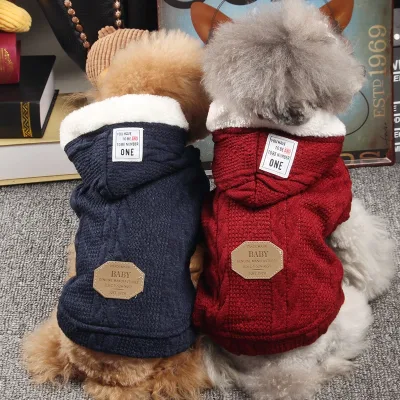
Compare 30 Winter Woollen Pet Sweater options from verified Chinese manufacturers. Buyers can evaluate materials like polyester and cotton, sizes ranging from XS to XXL, and customization features for dogs and cats.
Key considerations
Products List


Rena Pet High Quality Autumn Winter Warm Knitted Pet Sweater with Sleeve
$2.00 - $2.30
MOQ: 1000 Pieces


Shirt Jacket Christmas Small Dog Sweater Lovely Pet Dog Clothes Winter Coats
$2.69 - $2.99
MOQ: 100 Pieces

Pet Two-Legged Multi-Color Thin Fleece Comfortable and Soft Sweater Shirt
$0.72 - $0.82
MOQ: 50 pieces



Comprehensive Sourcing Guide
Strategic Sourcing Guide for Winter Woollen Pet Sweaters
Understanding Product Specifications and Material Variations
When sourcing winter woollen pet sweaters, buyers must first navigate a complex landscape of material definitions and technical specifications. While the core keyword suggests "woollen" construction, the actual market data indicates a significant divergence in material composition. The observed product attributes reveal that while some items are explicitly listed as "Cotton" or "Polyester," the term "woollen" is often used in marketing to describe the knitted texture rather than the fiber content. For instance, specific product models such as ATPCS013 and ZJ023125 are documented with materials like Polyester, while other listings specify Cotton. This discrepancy necessitates a rigorous verification process where buyers must confirm the fiber blend percentage rather than relying solely on the product title.
The construction type is equally critical. The data identifies the product category as "Pet Knitted Sweater" and "Knitted Sweater," with specific model numbers like 5663-PC1023 and 80864. These items are designed with a "Coldproof" function, intended to provide insulation during the Winter season, although some listings also reference Summer usage, suggesting a potential variance in fabric weight or intended climate zone. The sizing standards vary significantly across suppliers, with observed ranges including XS, S, M, L, XL, and even extending to XXL or XXS. Buyers must align these standard size charts (S-XXL, XS, S, M, L) with the specific breed and body measurements of their target pet demographic to ensure a proper fit. The "British" and "Sports" style attributes indicate that design aesthetics range from traditional casual wear to functional athletic gear, requiring buyers to define their visual requirements clearly before engaging with manufacturers.
Compliance, Certification, and Safety Standards
In the realm of pet apparel, compliance and safety are paramount, yet the provided data does not explicitly list third-party certifications such as OEKO-TEX or specific fire safety ratings. Consequently, buyers must treat the absence of listed certifications as a prompt for further inquiry rather than a confirmation of safety. The product attributes mention "Wash Label," "Hang Tag," and "Own Brand Label" as standard accessories, which are essential for compliance with labeling laws in many jurisdictions. These labels must accurately reflect the material composition, care instructions, and country of origin, which is listed as "China" for the majority of the observed products.
Buyers should verify that the "Washing Instructions," such as "Warm Hand or Machine Wash," are printed clearly and durably on the garment to prevent consumer confusion and product damage. Furthermore, the presence of "Metal Patch" or "Leather Patch" as logo options introduces a potential safety hazard if these components are not securely attached or if they contain sharp edges. Procurement teams must request evidence that all decorative elements, including embroidery and woven labels, meet safety standards for small parts to prevent choking hazards. Since the data does not confirm specific chemical compliance standards, buyers should mandate that suppliers provide test reports for azo dyes, formaldehyde, and heavy metals, particularly given the direct contact of the garment with the animal's skin. The "Customized" and "Non-Customized" attributes suggest that suppliers offer both OEM and ODM services, but the quality of the customization process must be validated through sample inspection to ensure that custom logos and labels do not compromise the garment's structural integrity or safety.
Cost Drivers and Pricing Dynamics
The pricing structure for winter woollen pet sweaters is influenced by a combination of material costs, customization levels, and order volume. The observed price range spans from 0.5 to 14.9 USD, a wide variance that reflects differences in material quality, design complexity, and order quantity. Lower-priced items typically correspond to basic Polyester or Cotton constructions with minimal customization, while higher-priced units often involve complex knitting patterns, premium materials, or extensive branding services. The "Small Orders: Accepted" attribute indicates that suppliers are flexible with volume, but the "MOQ range" of 10 to 5000 units suggests that unit costs will decrease significantly as order volume increases.
Sample fees, observed between 10 and 40 USD, represent an initial cost barrier that buyers must factor into their budget. These fees are often credited against the final bulk order, but they serve as a filter for serious buyers. The "Production Time" of 30 to 55 days is another critical cost driver, as longer lead times can impact inventory planning and increase holding costs. Buyers should note that "Customized" orders generally incur higher costs and longer production times compared to "Non-Customized" stock items. The choice of packaging, whether "Carton," "PE Bag," or "1 Piece in 1 Polybag," also affects the final landed cost, as more elaborate packaging requires additional labor and materials. Additionally, the "Sample Time" of 5 to 8 days allows for rapid iteration but may incur rush charges if the timeline is compressed. Understanding these variables is essential for accurate cost modeling and negotiating favorable terms with potential suppliers.
Typical Applications and Market Segmentation
The applications for winter woollen pet sweaters extend beyond simple warmth, catering to various lifestyle needs and pet demographics. The data highlights that these products are suitable for "Cats" and "Dogs," with specific emphasis on "Dog" as the primary target. The "Coldproof" function confirms their utility in winter climates, protecting pets from low temperatures. However, the presence of "Summer" as a listed season suggests that some suppliers may be marketing lightweight knitted sweaters for transitional weather or indoor climate control, requiring buyers to clarify the intended seasonal use.
The "Style" attributes, ranging from "Casual" to "British" and "Sports," indicate diverse market segments. Casual sweaters are suitable for everyday wear, while British-style designs may appeal to owners seeking a traditional or aesthetic look. Sports-style sweaters are designed for active pets, offering flexibility and durability during outdoor activities. The color palette, including options like "White," "Black," "Grey," "Red," "Pink," "Blue," "Purple," "Green," "Yellow," "Orange," "Brown," and "Multicolor," allows buyers to target specific consumer preferences or seasonal trends. The "Own Brand Label" option enables retailers to create a unique brand identity, while the "Logo" options such as "Embroidery" and "Woven Label" provide opportunities for brand reinforcement. Understanding these applications helps buyers align their procurement strategy with specific market demands, whether they are targeting mass-market retailers, boutique pet stores, or specialized e-commerce platforms.
Supplier Evaluation and Production Capabilities
Evaluating suppliers requires a deep dive into their production capabilities, flexibility, and reliability. The data indicates that suppliers are located in "China," a major hub for textile manufacturing, but the specific factory locations are not disclosed. Buyers should assess the supplier's ability to handle "Customized" orders, as this capability often correlates with their technical expertise and quality control processes. The "Sample Time" of 5 to 8 days and "Production Time" of 30 to 55 days provide a baseline for evaluating their operational efficiency. Suppliers who can consistently meet these timelines are more likely to be reliable partners.
The "Small Orders: Accepted" attribute suggests that suppliers are willing to work with smaller businesses, but the "MOQ range" of 10 to 5000 units indicates that volume discounts may be available. Buyers should verify the supplier's capacity to handle large orders without compromising quality or delivery schedules. The availability of various "prod_model" numbers, such as ATPCS013, ZJ023125, and 5663-PC1023, demonstrates a diverse product portfolio, but buyers must ensure that the specific models they select meet their quality and design requirements. The "prod_packing" options, including "Carton," "Hangtag," and "Poly Bag," should be evaluated for their suitability to the buyer's logistics and retail needs. Additionally, the "Shipping Model" options of "Express," "Air," "Sea," and "Train" offer flexibility in logistics, but buyers must consider the cost and speed implications of each method.
Quality Control and Long-Term Procurement Considerations
Quality control is a critical component of the procurement process, especially for products that come into direct contact with animals. Buyers should implement a rigorous inspection protocol that covers material verification, stitching quality, and the security of decorative elements. The "Washing Instructions" must be tested to ensure the garment retains its shape and color after multiple washes. The "Accessories" list, which includes "Wash Label," "Hang Tag," "Poly Bag," and "Own Brand Label," should be checked for accuracy and durability. Any discrepancies in labeling or packaging can lead to compliance issues and customer dissatisfaction.
Long-term procurement considerations involve building a sustainable relationship with suppliers who can adapt to changing market demands. The "Customization" attribute suggests that suppliers can offer tailored solutions, but buyers must ensure that these customizations are scalable and cost-effective. The "Standard" attributes, such as "XXS, XS, S, M, L" and "S, M, L, XL, XXL," indicate that suppliers offer a range of sizes, but buyers should verify that these sizes are consistent across different production batches. The "Material" options, including "Polyester" and "Cotton," should be evaluated for their performance characteristics, such as breathability, warmth, and durability. By focusing on these quality and long-term factors, buyers can mitigate risks and ensure a steady supply of high-quality winter woollen pet sweaters for their customers.
Comparative Analysis of Product Attributes
To facilitate decision-making, the following table summarizes key product attributes observed in the market data, highlighting the variations that buyers must consider during the sourcing process.
| Attribute Category | Observed Variations | Sourcing Implication |
|---|---|---|
| Material | Polyester, Cotton | Verify fiber content; "woollen" may be a marketing term. |
| Season | Winter, Summer | Clarify intended climate; check fabric weight for insulation. |
| Size Range | XS to XXL, XXS to L | Match size charts to target pet breeds; check for consistency. |
| Style | Casual, British, Sports | Align with brand identity and customer preferences. |
| Customization | Available, Non-Customized | Determine need for OEM/ODM; assess impact on cost and lead time. |
| Packing | Carton, PE Bag, Polybag | Evaluate logistics needs and retail presentation requirements. |
| Lead Time | Sample: 5-8 days; Production: 30-55 days | Plan inventory cycles and account for potential delays. |
| MOQ | 10 to 5000 units | Negotiate volume discounts; assess feasibility for small businesses. |
This comparative analysis underscores the importance of detailed specification checks and clear communication with suppliers to ensure that the final product meets the buyer's expectations and market requirements.
FAQs
What materials are used for winter woollen pet sweaters?
Materials typically include Polyester or Cotton rather than actual wool. Buyers must verify fiber content because the term woollen often describes the knitted texture. Specific models like ATPCS013 use Polyester while others specify Cotton for warmth and durability.
Which sizes are available for winter woollen pet sweaters?
Sizes range from XXS to XXL depending on the specific model and supplier. Common standard sizes include XS, S, M, L, and XL. Buyers should align these size charts with their target pet breed measurements to ensure a proper fit.
Can I customize winter woollen pet sweaters with my logo?
Customization is available for many products but some listings are non-customized. Options include embroidery, leather patches, woven labels, and metal patches. Buyers should confirm customization details and sample fees before placing bulk orders.
How long does production take for winter woollen pet sweaters?
Production time typically ranges from 30 to 55 days for bulk orders. Sample preparation takes 5 to 8 days with fees between 10 and 40 USD. Longer lead times apply to customized orders compared to standard stock items.
What is the price range for winter woollen pet sweaters?
Prices observed range from 0.5 to 14.9 USD per unit. Costs vary based on material quality, design complexity, and order volume. Lower prices usually correspond to basic Polyester or Cotton constructions with minimal customization.
Which styles are available for winter woollen pet sweaters?
Styles include Casual, British, and Sports designs to suit different aesthetics. Casual sweaters are for everyday wear while Sports styles offer flexibility for active pets. Buyers should define visual requirements clearly before engaging with manufacturers.
What are the washing instructions for winter woollen pet sweaters?
Washing instructions generally recommend warm hand or machine washing. Labels must clearly reflect care instructions to prevent product damage. Buyers should verify that care labels are durable and accurate to avoid consumer confusion.