Source Wireless Indoor Smoke Detector for homes, offices, and warehouses
Compare 30 Wireless Indoor Smoke Detector options from verified Chinese manufacturers. Buyers can evaluate specifications like alarm volume, power supply, and transmission modes to find suitable safety solutions for various indoor environments.
Key considerations
Products List


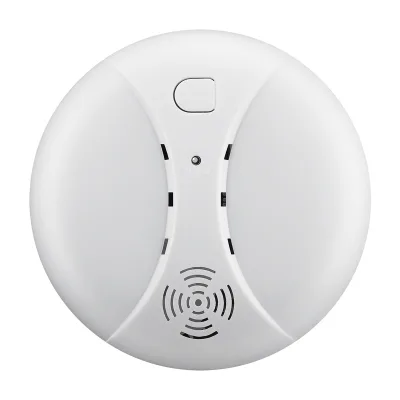
Wireless Smoke Detector for Addressable Fire Alarm Safety&Security System
$16.20 - $16.80
MOQ: 1 Pieces




Comprehensive Sourcing Guide
Strategic Sourcing Guide for Wireless Indoor Smoke Detectors
Understanding the Core Technology and Operational Principles
When sourcing wireless indoor smoke detectors, the primary focus must be on the underlying working principle that dictates detection accuracy and response time. The available market data indicates that these devices primarily utilize an electro-optical type working principle, specifically categorized as photoelectric smoke style. This technology operates by emitting a light beam into a sensing chamber; when smoke particles enter, they scatter the light, triggering the alarm. This method is generally preferred for detecting smoldering fires, which produce larger smoke particles, compared to ionization methods.
A critical distinction in the current product landscape is the variation in signal transmission modes. While the core keyword specifies "wireless," the supply base also includes wired alternatives. Buyers must verify the transmission mode explicitly, as the data shows products offering both wireless and cable-based transmission. For a wireless setup, the signal transmission is defined as a wireless alarm, ensuring flexibility in installation without the need for extensive cabling. Conversely, some units operate on a wired alarm system with cable transmission, which may offer different reliability profiles depending on the building infrastructure. The power supply requirements also vary significantly across models. While some units operate on a low-voltage DC 3V system, others are designed for DC 9V or even a broader DC (17~28)V range, often associated with addressable loop systems. Understanding these power specifications is essential for compatibility with existing building management systems or battery-operated standalone units.
Technical Specifications and Performance Metrics
Evaluating the technical specifications of a smoke detector requires a close examination of dimensions, alarm volume, and response times. The physical footprint of these devices is not uniform; observed dimensions range from compact units measuring 67x47mm to larger industrial models reaching 101x34mm or 85x39mm. The material composition is predominantly ABS plastic, which offers durability and resistance to environmental factors common in indoor settings. Color options are typically standardized to white, ensuring aesthetic integration into residential and commercial ceilings.
Performance metrics are equally critical for safety compliance. The alarm volume is a key differentiator, with observed data indicating thresholds of ≥90dB within 1 meter for standard units and ≥110dB for higher-output models. This variation suggests that buyers must select units based on the ambient noise levels of the specific installation environment. Furthermore, the sampling time for advanced addressable systems is noted to be less than 2 seconds, with a reset time of under 30 seconds. For wireless systems, the remote LED output current is capped at a maximum of 2 mA, which impacts the design of any external signaling devices. The usable addresses per alarm loop can reach up to 125, a specification relevant for large-scale commercial deployments utilizing addressable loops rather than simple wireless mesh networks.
Compliance, Certification, and Regulatory Standards
Navigating the certification landscape is perhaps the most critical step in the procurement process. The market presents a mix of certifications and standards, and buyers must verify that the specific model they intend to purchase meets the regulatory requirements of their target market. The most frequently observed standard is EN 14604, which is cited in both product certificates and general standard descriptions. This standard is crucial for residential and general indoor smoke alarms. Additionally, the CE mark is prevalent, often appearing in conjunction with CPR (Construction Products Regulation) requirements, denoted as CE-CPR En 14604.
For commercial or industrial applications, particularly in Europe, the EN54 standard is a significant benchmark. The data indicates that some products hold approval under EN54, which is a more rigorous standard for fire detection and fire alarm systems. Other certifications observed include ISO and RoHS compliance. RoHS is essential for ensuring the product does not contain restricted hazardous substances, while ISO certification generally indicates adherence to quality management systems. It is important to note that while some listings mention "CE" or "ISO" broadly, others specify "CE En14604" or "En54." Buyers should not assume that a product with a general CE mark automatically meets the specific EN54 requirements for industrial use. Verification of the specific certificate number and the scope of the approval is necessary to avoid compliance gaps.
Cost Drivers and Procurement Parameters
The cost structure for wireless indoor smoke detectors is influenced by several factors, including the complexity of the technology, certification levels, and packaging requirements. The observed price range in the market is vast, spanning from $1 to $8,800. This wide disparity is likely driven by the difference between simple standalone battery-operated units and complex addressable, wired, or integrated systems with advanced features like voice speakers and dual LED indicators. The minimum order quantity (MOQ) also varies significantly, ranging from 1 unit to 5,000 units. This flexibility allows buyers to source small batches for pilot projects or large volumes for full-scale deployments.
Packaging plays a role in both cost and logistics. Products are available in various packaging formats, including color boxes, blister packs, gift boxes, double blisters, and export cartons. Bulk packaging often specifies quantities like 10 pieces per box and 10 boxes per carton, which affects shipping efficiency and unit cost. Customization is available for many suppliers, allowing for branding or specific technical adjustments, which can impact the final price and lead time. The origin of the products is primarily located in China, with specific hubs identified in Zhejiang and Ningbo. While these locations are known for manufacturing electronics, buyers should verify the specific factory capabilities and quality control measures associated with the origin, as "China" is a broad designation that may encompass different tiers of manufacturing quality.
Typical Applications and Installation Scenarios
The application scope for these detectors is primarily defined as indoor use, making them suitable for residential apartments, hotels, offices, and commercial buildings. The specific type of smoke detector, whether photoelectric or electro-acoustic, dictates its suitability for different fire scenarios. The electro-optical type is ideal for general indoor environments where smoldering fires are a risk. However, some models feature an electro-acoustic style working principle, which may be better suited for specific industrial applications or environments with high dust levels where optical sensors might be prone to false alarms.
The transmission mode further influences the application. Wireless alarm systems are ideal for retrofitting existing buildings where running new cables is impractical or too costly. These systems often utilize a sound and light alarm approach, ensuring visibility and audibility. In contrast, wired alarm systems with cable transmission are preferred for new construction or large commercial facilities where a centralized control panel is required. The operating voltage of DC (17~28)V suggests these units are part of a larger, addressable fire alarm loop, suitable for high-rise buildings or complex facilities requiring precise location tracking of the alarm source. The inclusion of features like voice speakers and dual red LEDs indicates that these units are designed for environments where clear evacuation instructions and visual alerts are mandatory.
Supplier Evaluation and Quality Assurance
Evaluating suppliers for wireless indoor smoke detectors requires a rigorous approach to quality assurance. Buyers should not rely solely on the presence of certifications but must request valid documentation for each specific model. The distinction between "Certification" and "Certificate" in product listings highlights the need for clarity; a supplier may claim RoHS certification, but the actual product certificate might be CE or ISO. Buyers must verify that the specific model number, such as KD-125B, KD-127D, or KD-122LA, corresponds to the claimed certifications.
Quality control should extend beyond the initial product inspection. Given the variation in dimensions and power requirements, buyers should request samples to verify physical fit and electrical compatibility. The observation of different packing standards, from simple color boxes to export cartons, suggests that packaging quality may vary. It is advisable to specify packaging requirements in the purchase order to ensure products arrive in a condition suitable for retail or industrial installation. Furthermore, the availability of customization implies that suppliers have the capacity to adapt products, but this also introduces a variable in quality consistency. Buyers should establish clear quality benchmarks and inspection protocols before placing large orders, especially given the high-end price points observed in the market.
Long-Term Procurement and Lifecycle Management
Long-term procurement considerations for smoke detectors involve more than just the initial purchase price. The lifecycle of these devices includes battery replacement, sensor degradation, and potential system upgrades. For units operating on DC 3V or DC 9V, the battery life and replacement frequency are critical maintenance factors. Addressable systems with DC (17~28)V power may have different maintenance schedules, often tied to the central power supply and loop integrity. The reset time of less than 30 seconds is a positive attribute for minimizing downtime after a false alarm, but buyers should also consider the long-term reliability of the electronic components.
The standard EN 14604 and EN54 provide a framework for the expected lifespan and performance of these devices, but buyers should verify the manufacturer's recommended replacement intervals. As technology evolves, wireless protocols may become obsolete, so selecting suppliers who offer firmware updates or compatible future models is advantageous. The wide range of MOQs allows for a phased procurement strategy, where initial orders can be small to test performance, followed by larger orders as the system proves reliable. Finally, the location of the supplier in Zhejiang or Ningbo, China, should be factored into logistics planning, including lead times and shipping costs, to ensure a stable supply chain that can meet the ongoing safety requirements of the facility.
FAQs
What working principle do wireless indoor smoke detectors use?
Most units utilize an electro-optical type working principle with photoelectric smoke style detection. This method emits light into a sensing chamber where smoke particles scatter the beam to trigger the alarm, making it effective for smoldering fires.
Which certifications are commonly found on these smoke detectors?
Common certifications include RoHS, CE, ISO, and specific standards like EN 14604 or EN54. Buyers must verify the specific certificate number, as some products hold CE-CPR approval while others may only have general CE marks.
Can I find wireless indoor smoke detectors with customizable options?
Yes, customization is available for many models to suit specific branding or technical needs. This allows buyers to request adjustments to dimensions, packaging, or features like the alarm volume and indicator lights.
What are the typical power supply requirements for these devices?
Power requirements vary significantly, with some units operating on DC 3V or DC 9V batteries. Others designed for addressable loops use a broader DC 17 to 28V range, requiring compatibility checks with existing building management systems.
How loud is the alarm sound produced by these detectors?
Alarm volume thresholds typically range from at least 90dB to 110dB within one meter. Buyers should select units based on ambient noise levels, as higher output models are available for noisier environments.
Where are these wireless indoor smoke detectors manufactured?
Products originate primarily from China, with specific manufacturing hubs identified in Zhejiang and Ningbo. Buyers should verify the specific factory capabilities and quality control measures associated with these locations.
What is the minimum order quantity for purchasing these detectors?
Minimum order quantities range from 1 unit to 5,000 units depending on the supplier and model. This flexibility allows for small pilot batches or large-scale deployments without requiring massive initial inventory.