Source Wireless Home Agriculture Weather Station for farms, homes, and gardens
Explore 30 listings for the Wireless Home Agriculture Weather Station, comparing features like digital displays, solar power options, and sensor ranges for industrial and household use across China.
Key considerations
Products List

Outdoor Home Use Wind Direction Speed Thermometer Wireless Digital Home Weather Station
$40.00 - $50.00
MOQ: 1 Pieces


Home Use Solar Panels WiFi Wireless 433MHz Digital Home Weather Forecast Station
$140.00 - $160.00
MOQ: 1 Pieces


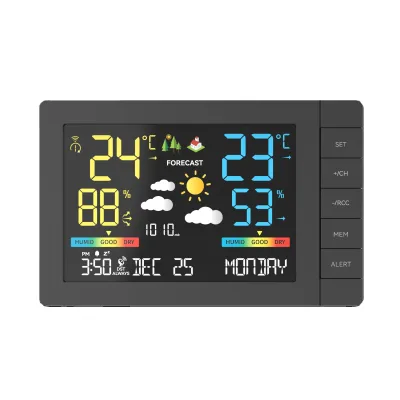


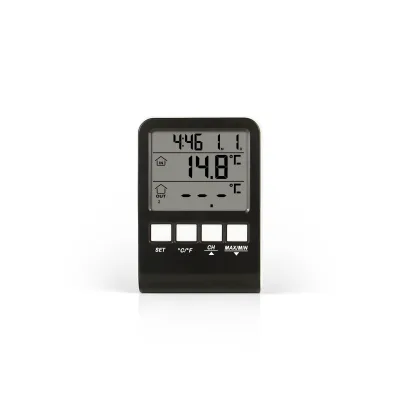

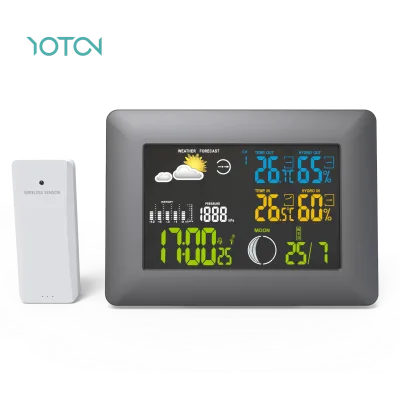

Integrated Meteorological Monitoring System of Agricultural Wireless Weather Station
$4500.00 - $4980.00
MOQ: 1 Pieces


Agriculture and Forestry Small Climate Information Acquisition System Weather Station
$3800.00 - $4342.00
MOQ: 1 Pieces


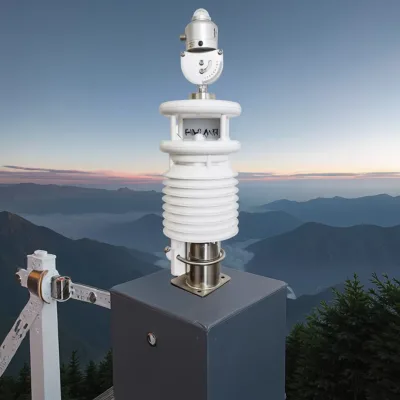
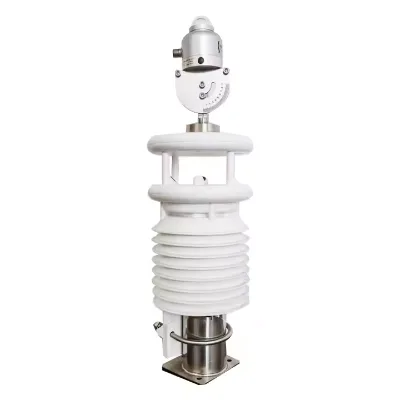


Manufacturer Outdoor Solar Powered Wireless Weather Station Agriculture with Wind
$38.00 - $43.00
MOQ: 10 Pieces


2020 New Colorful Weather Station Wireless Mini Weather Station with Data Storage
$63.50 - $68.00
MOQ: 10 Pieces

Comprehensive Sourcing Guide
Strategic Sourcing Guide for Wireless Home Agriculture Weather Stations
Navigating the procurement landscape for wireless home agriculture weather stations requires a disciplined approach that balances consumer-grade convenience with agricultural-grade reliability. The market offers a diverse array of units ranging from simple indoor monitors to complex outdoor systems capable of measuring wind, rain, and soil conditions. For buyers in the B2B sector, the primary challenge lies in distinguishing between generic consumer electronics and specialized agricultural instrumentation. This guide outlines the critical technical, compliance, and operational factors necessary to make informed sourcing decisions without relying on unverified marketing claims.
Technical Specifications and Sensor Accuracy
The core value of a wireless weather station lies in its sensor fidelity. When evaluating potential suppliers, procurement teams must scrutinize the specific measurement ranges and accuracy ratings provided in the product datasheets. For home and agricultural applications, temperature accuracy is a primary differentiator. Some units in the current market offer an accuracy of 1°C, which may suffice for general household monitoring, while others provide a tighter tolerance of ≤0.5°C, which is often preferred for precise agricultural data logging.
Beyond temperature, the operational range of the sensors dictates suitability for specific climates. A robust agricultural station should typically support a temperature measuring range of -40°C to 60°C or even -40°C to 80°C to withstand extreme seasonal variations. Humidity sensors must also be evaluated against the intended environment; while some models cover a range of 20% to 90% Relative Humidity (RH), agricultural applications often require sensors capable of measuring 0% to 100% RH to capture dew points and saturation levels accurately.
Wind speed and direction are critical for crop management and frost protection. Buyers should verify that the anemometer specifications align with local weather patterns. Observed specifications in the sector include ranges from 0-30 m/s to 0-50 m/s, with some high-performance units extending up to 0-40 m/s. Similarly, rainfall measurement capabilities vary significantly. While some systems focus on wind and temperature, others include a rain volume display with a capacity of 0-6000mm, a feature essential for irrigation management. Light intensity, measured in Lux, is another vital parameter for photosynthesis monitoring, with typical ranges observed between 0-200k Lux.
Connectivity and Power Supply Architecture
The "wireless" aspect of these stations is a defining feature, yet the implementation varies widely. The output signal type is a critical technical specification to verify. Many modern units utilize digital output signals, which reduce noise interference and simplify data integration with farm management software. Connectivity protocols such as WiFi are increasingly common, allowing for real-time data transmission to mobile devices or cloud platforms. However, buyers must confirm the specific output signal type and compatibility with existing infrastructure.
Power supply is another area requiring careful evaluation, particularly for remote agricultural sites where grid access is limited. The market includes units powered by standard batteries, with some manufacturers claiming a minimum battery life of 12 months for the base station. For off-grid applications, solar-powered models are available, utilizing integrated solar panels to ensure continuous operation. These systems often feature a hybrid approach or dedicated solar charging circuits. When sourcing, it is essential to confirm the power supply method and the autonomy of the system during extended periods of low sunlight.
Compliance, Certification, and Environmental Ratings
In the B2B procurement of agricultural equipment, compliance is not merely a formality but a risk mitigation strategy. While specific certification statuses can vary by supplier, buyers should actively seek documentation for recognized standards such as CE, which indicates conformity with health, safety, and environmental protection standards for products sold within the European Economic Area. Other potential certifications like RoHS may also be relevant for electronic components, though their presence should be verified against the specific product batch.
Environmental durability is equally important. Weather stations deployed outdoors must withstand rain, dust, and UV exposure. The Ingress Protection (IP) rating is a standard metric for this purpose. Buyers should look for specific IP ratings that guarantee protection against water ingress and dust. Furthermore, the material composition of the housing and sensors plays a significant role in longevity. While some units may utilize thermocouples for temperature sensing, others might incorporate gas sensors or other specialized materials depending on the application. The physical construction should be robust enough to handle the specific environmental stresses of the deployment site.
Cost Drivers and Procurement Economics
The price range for wireless weather stations is broad, reflecting the diversity in features and build quality. Market observations indicate a wide spectrum, with prices ranging from approximately $5.59 to over $7,800. This variance is driven by several factors, including the number of sensors, the accuracy of the measurements, the connectivity options, and the durability of the housing. High-end agricultural stations with multiple sensor arrays, solar power, and industrial-grade durability will naturally command a higher price point compared to basic home monitoring units.
Minimum Order Quantity (MOQ) is another critical economic factor. Suppliers may offer MOQs ranging from a single unit to 2000 units. For smaller operations or pilot projects, suppliers with low MOQs are preferable. However, for large-scale agricultural deployments, negotiating lower unit costs through higher volume orders can significantly impact the total cost of ownership. Buyers should also consider the total cost of deployment, including the cost of additional sensors, mounting hardware, and potential integration with existing farm management systems.
Supplier Evaluation and Origin Verification
When selecting a supplier, verifying the origin of the product is a fundamental step. Many weather stations are manufactured in specific industrial hubs, such as Shaanxi, China, or other regions known for electronics manufacturing. Understanding the origin helps in assessing the supply chain stability and potential logistical lead times. Buyers should also evaluate the production process, looking for indicators of quality control such as integration processes and standardized manufacturing protocols.
The product model number is a key identifier for due diligence. Models such as AWSS-23, AWSS-24, AWSS-11, AWSS-12, and AWSS-27 represent different configurations and capabilities. By cross-referencing these model numbers with technical datasheets, buyers can ensure they are comparing apples to apples. Additionally, the availability of customization is a significant factor for B2B buyers. Some suppliers offer customized solutions, allowing for tailored sensor configurations or branding, which can be crucial for specific agricultural needs.
Quality Control and Long-Term Maintenance
Ensuring the long-term reliability of weather stations requires a proactive approach to quality control. Buyers should request test results and performance data from suppliers, focusing on accuracy over time and resistance to environmental degradation. The battery life of the base station, often cited as a minimum of 12 months, should be validated under real-world conditions rather than just theoretical lab tests.
Maintenance considerations include the ease of sensor replacement and the availability of spare parts. For solar-powered units, the longevity of the solar panels and the efficiency of the charging system are critical. Buyers should also consider the data integrity of the system; digital output signals and robust connectivity ensure that data is not lost during transmission. Regular calibration checks may be necessary to maintain the specified accuracy levels, and suppliers should provide clear guidelines for these procedures.
Typical Applications and Deployment Scenarios
The versatility of wireless weather stations allows for a wide range of applications. In a home setting, these devices provide basic weather monitoring for gardening and personal comfort. In an agricultural context, the applications expand to include crop monitoring, irrigation scheduling, and frost protection. The ability to measure wind speed, direction, and rainfall volume is particularly valuable for managing large fields and greenhouses.
For specialized agricultural operations, stations may need to measure additional parameters such as atmospheric pressure, conductivity, and elevation. Units with an atmospheric pressure range of 10-1200 hPa or 300-1100 hPa are suitable for various altitudes, from sea level to high elevations up to 9000 meters. The specific application dictates the required sensor suite; a vineyard may prioritize humidity and temperature, while a wind farm might focus on wind speed and direction.
Summary of Key Specifications
To assist in the comparison of different models, the following table summarizes key technical specifications observed in the market. This data serves as a reference for buyers to identify the features that align with their specific requirements.
| Feature | Model A (Home Wireless) | Model B (Solar Wireless) | Model C (Agricultural) | Model D (Ultrasonic) |
|---|---|---|---|---|
| Product Name | Home Wireless Weather Station | Home Solar Wireless Weather Station | Agricultural Weather Station | Ultrasonic Handheld Weather Station |
| Accuracy | 1°C | ≤0.5°C | - | - |
| Temperature Range | -40~60°C | -40~80°C | -30~70°C | - |
| Humidity Range | 20% to 90% | 0~100% Rh | - | - |
| Wind Speed | 0-50m/S | - | 0~30m/S | 0-40m/S |
| Power Supply | Battery | Solar Panels | - | - |
| Output Signal | Digital | WiFi | Digital Type | - |
| Rain Volume | 0-6000mm | - | - | - |
| Light Intensity | 0-200K Lux | - | 0~200klux | - |
| Atmospheric Pressure | - | - | 10~1200hpa | 300-1100hpa |
| Origin | Shaanxi, China | China | - | - |
| Certification | - | - | CE | - |
By adhering to these guidelines and focusing on verified technical data, buyers can navigate the complex market of wireless weather stations with confidence. The goal is to select a solution that not only meets immediate monitoring needs but also provides the reliability and scalability required for long-term agricultural success.
FAQs
What accuracy levels are available for wireless home agriculture weather stations?
Accuracy levels vary between 1°C and ≤0.5°C depending on the specific model selected. Higher precision units like the AWSS-24 offer tighter tolerances suitable for detailed agricultural logging, while standard home units typically provide 1°C accuracy.
Which temperature measuring ranges do these weather stations support?
Units support ranges from -40°C to 60°C or -40°C to 80°C for extreme climates. Some models also cover -30°C to 70°C, ensuring reliable operation across diverse seasonal variations and specific environmental conditions.
Can these stations measure wind speed and direction for crop management?
Yes, models measure wind speed from 0-30m/s up to 0-50m/s. This capability is essential for frost protection and crop management, with some units also tracking wind direction as a primary parameter.
What power supply options exist for off-grid agricultural applications?
Power options include standard batteries with a minimum 12-month life or solar panels for continuous operation. Solar-powered models ensure autonomy in remote locations without grid access, utilizing integrated charging circuits.
Which certifications should buyers look for in agricultural weather station suppliers?
Buyers should verify CE certification to ensure conformity with safety and environmental standards. While other certifications may exist, CE is a documented requirement for many units sold within the European Economic Area.
What is the typical humidity measurement range for these devices?
Humidity ranges vary from 20% to 90% for general use to 0% to 100% RH for agricultural needs. The broader range captures dew points and saturation levels critical for precise irrigation and crop monitoring.
Where are these weather stations typically manufactured?
Manufacturing origins include Shaanxi, China, and other regions known for electronics production. Verifying the origin helps assess supply chain stability and potential logistical lead times for bulk orders.