Source Wireless Restaurant Ring Watch Caller for Hotels Restaurants
Compare 30 Wireless Restaurant Ring Watch Caller units from verified suppliers. These electronic systems feature plastic construction, CE certification, and transmission distances up to 300 meters for efficient service in cafes, hotels, and restaurants.
Key considerations
Products List






Comprehensive Sourcing Guide
Strategic Sourcing Guide for Wireless Restaurant Ring Watch Caller Systems
Understanding the Technical Architecture of Wireless Calling Systems
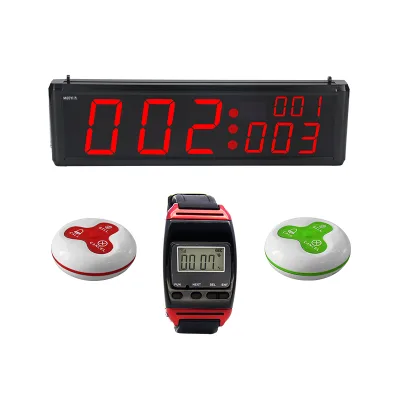
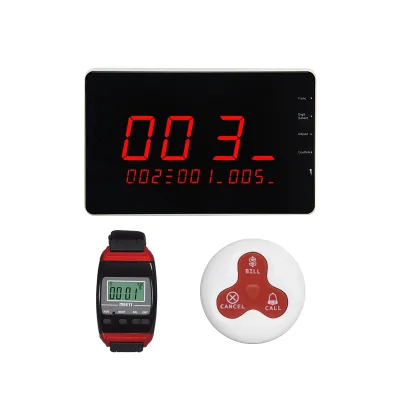
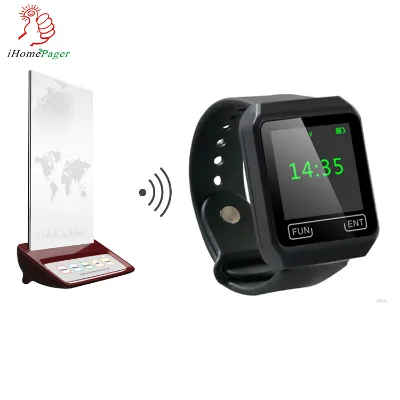
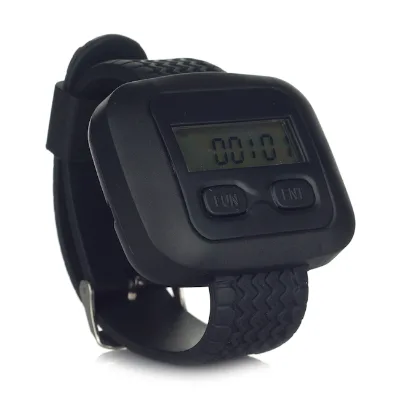
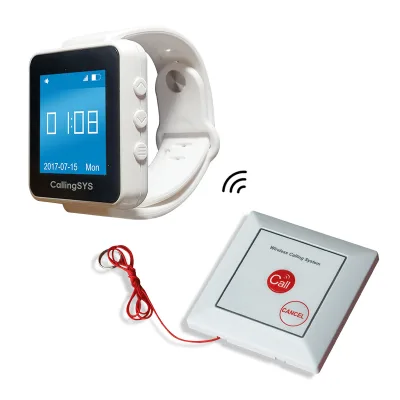
The core of a Wireless Restaurant Ring Watch Caller system lies in its ability to transmit signals from a service button to a wearable receiver, ensuring immediate notification without the need for physical wiring. Based on observed product attributes, these systems typically operate on specific radio frequencies, with documented instances utilizing 433.92 MHz for signal transmission. This frequency band is critical for balancing range and penetration through obstacles common in restaurant environments, such as kitchen walls and dining partitions. The effective range is a primary technical differentiator; while some configurations are rated for 200 meters in open areas, others in the same category claim a wireless distance of up to 300 meters. Buyers must verify the actual tested range in a cluttered environment rather than relying solely on open-area specifications, as metal fixtures and high foot traffic can attenuate signals.
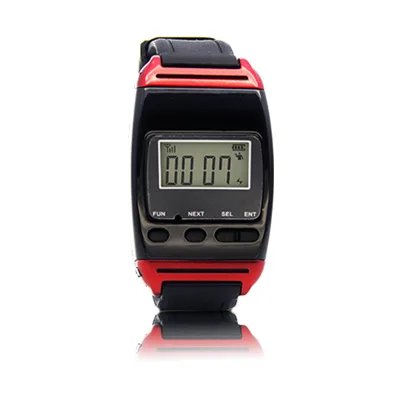
Power sources vary significantly across different unit configurations. The receiver units, often designed as wrist-worn watches, may utilize electronic power sources with specific voltage requirements, such as DC12V 1A or a broader working voltage range of DC12V to DC18V. Alternatively, some components, particularly the service buttons, may rely on battery power to facilitate portability and ease of installation. The material composition of the housing is another vital technical consideration. Products are frequently constructed from durable plastics, including ABS Plastic and PC (Polycarbonate), which offer resistance to impact and chemical cleaning agents common in food service settings. The color options for these units often extend beyond standard black, with suppliers offering red, green, silver, gray, grape, orange, and blue finishes to match specific branding or functional color-coding strategies within a venue.
Compliance and Certification Verification Protocols
In the B2B procurement of electronic devices for commercial use, verifying compliance with international safety and environmental standards is non-negotiable. The supplied product data indicates that many wireless calling systems carry CE certification, which is a mandatory conformity mark for products sold within the European Economic Area. This certification suggests that the device meets EU safety, health, and environmental protection requirements. Furthermore, some product listings explicitly mention RoHS (Restriction of Hazardous Substances) certification alongside CE. RoHS compliance ensures that the electronic components do not contain specific hazardous materials like lead, mercury, or cadmium, which is increasingly important for sustainability mandates and waste disposal regulations.
Buyers must treat these certifications as observations of specific listings rather than universal guarantees for every unit in the market. When evaluating a potential supplier, the procurement team should request valid, up-to-date test reports and certificates of conformity directly from the manufacturer. It is essential to confirm that the certification applies to the specific model number being purchased, as different models may have different internal circuitry and power supplies that require separate testing. Additionally, the "IP Rating" for these devices is often described in terms of "Handheld" usage, but specific IP numerical ratings (e.g., IP65 for dust and water resistance) are not explicitly detailed in the provided context. Therefore, buyers should explicitly ask for the IP rating to ensure the devices can withstand the humidity and potential liquid splashes found in restaurant kitchens and service areas.
Cost Drivers and Pricing Structure Analysis
The pricing for Wireless Restaurant Ring Watch Caller systems exhibits a wide variance, with observed listed prices ranging from $3 to $508.91 USD. This broad spectrum indicates that the cost is heavily influenced by the complexity of the system, the quantity of units included in a set, and the specific features offered. A lower price point likely corresponds to a basic single-item unit or a minimal configuration, whereas the higher end of the range suggests a complete system including multiple buttons, a display unit, a wristwatch receiver, and potentially a signal repeater. The "Selling Units" attribute often specifies a "Single item," which implies that the base price may need to be multiplied significantly to outfit a full restaurant floor.
Several factors drive the cost beyond the unit price. The "Supply Ability" of the manufacturer, noted as 1000 sets per month for certain wireless waiter watch models, can influence pricing stability and volume discounts. Suppliers with higher production capacities may offer more competitive rates for large orders. The "MOQ" (Minimum Order Quantity) is another critical cost driver, with observed ranges between 1 and 20 units. A lower MOQ allows for smaller initial investments and risk mitigation for new buyers, while higher volume orders typically unlock better per-unit economics. Additionally, the "Private mold" availability is a significant cost factor. Systems with private molds allow for custom branding and unique designs, which often incurs higher upfront tooling costs but provides long-term exclusivity. Buyers should request a detailed breakdown of costs to distinguish between the base hardware price, customization fees, and packaging costs, which are described as "Brown box packing" in standard configurations.
Typical Applications and Functional Requirements
The primary application for these wireless calling systems is the hospitality sector, specifically within restaurants, cafes, and hotels. The system is designed to streamline the service workflow by allowing customers to summon staff instantly. The functional requirements vary based on the specific venue layout. For instance, a large hotel may require a system with a "signal repeater" to ensure coverage across multiple floors, while a small cafe might only need a direct line-of-sight connection between the button and the watch. The "Feature" of being "Easily Assembled" is crucial for venues that may need to reconfigure their layout frequently or for staff who need to install the system quickly without specialized technical training.
The interface design also plays a role in application suitability. Some systems feature a "Display" unit, which can provide visual cues in addition to sound, aiding staff in noisy environments. The "Type" of alert is often described as "Sound," but the integration of visual displays enhances reliability. The "Key button" functionality typically includes "call and cancel" options, allowing customers to cancel a request if they no longer need service, which prevents unnecessary staff dispatches. The "Color" of the units can also serve a functional purpose; for example, using different colors to distinguish between different service requests (e.g., red for urgent assistance, green for bill payment). The "Single package size" and "Single gross weight" of the units, ranging from 20x20x33 cm with 2.5 kg weight to 70x30x20 cm with 4.5 kg weight, indicate that the system components vary in physical bulk, which impacts storage and logistics planning for the buyer.
Supplier Evaluation and Operational Capabilities
When evaluating suppliers for wireless calling systems, buyers must look beyond the product specifications to assess the supplier's operational reliability. The "Place of origin" for many of these products is Fujian, China, a region known for its electronics manufacturing capabilities. However, the specific "Port of dispatch" is a critical logistical detail; for example, shipments may originate from Xiamen. Buyers should verify the supplier's ability to handle logistics from this port to their destination, considering potential transit times and customs requirements. The "Warranty" period is another key indicator of supplier confidence; a standard offering of 1 Year suggests a baseline level of quality assurance, but buyers should clarify what specific defects are covered and the process for claiming warranty support.
The "Customization" availability is a significant differentiator for suppliers. Some manufacturers offer "Private mold" options, allowing buyers to brand the devices with their own logos or customize the color schemes to match their brand identity. This level of customization requires a more thorough evaluation of the supplier's design and production capabilities. Buyers should also assess the "Advantage" of the supplier, which may include factors like "Delivery" speed or reliability. The "Quantity of each set" is another operational detail; some sets include 1 display, 1 watch, and 10 buttons, while others may vary. Understanding the exact composition of each set is essential for accurate inventory planning and cost estimation.
Quality Control and Long-Term Procurement Strategy
Implementing a robust quality control (QC) strategy is essential for ensuring the longevity and reliability of wireless calling systems. Given the "Material" composition of ABS Plastic and PC, buyers should verify the durability of the housing against drops and impacts, which are common in busy restaurant environments. The "Frequency" of 433.92 MHz or 100 MHz must be consistent across all units in a set to prevent interference and ensure seamless communication. Buyers should request sample units for rigorous testing, including signal strength tests in the actual venue environment, battery life assessments, and durability checks of the "Key button" mechanism.
For long-term procurement, buyers should consider the "Supply Ability" of the supplier to ensure they can meet future demand without disruption. A capacity of 1000 sets per month is a strong indicator of a stable supply chain, but buyers should also inquire about the supplier's contingency plans for raw material shortages or production delays. The "Working voltage" range of DC12V to DC18V offers some flexibility in power supply options, but buyers should ensure that their venue's power infrastructure is compatible with these requirements. Finally, the "Feature" of being "Easily Assembled" should be validated through a hands-on trial to ensure that the installation process is truly straightforward for the venue's maintenance staff. By focusing on these technical and operational details, buyers can secure a reliable wireless calling system that enhances service efficiency and customer satisfaction.
FAQs
What certifications do these wireless calling systems have?
Many units carry CE certification, and some listings explicitly mention RoHS certification alongside CE. Buyers should request valid test reports directly from the manufacturer to confirm compliance for the specific model number being purchased.
How far can the signal transmit in open areas?
Documented ranges vary, with some configurations rated for 200 meters and others claiming up to 300 meters in open areas. Actual performance in cluttered environments may be lower due to obstacles like kitchen walls and high foot traffic.
What materials are used to construct the device housing?
Products are frequently constructed from durable plastics, including ABS Plastic and PC (Polycarbonate). These materials offer resistance to impact and chemical cleaning agents common in food service settings.
Can buyers customize the product with private molds?
Yes, some manufacturers offer private mold options, allowing buyers to brand the devices with their own logos or customize color schemes. This customization often incurs higher upfront tooling costs but provides long-term exclusivity.
What is the typical supply capacity for these wireless watches?
The supply ability is noted as 1000 sets per month for certain wireless waiter watch models. This capacity indicates a stable supply chain, though buyers should inquire about contingency plans for raw material shortages.
Where are these products typically manufactured and shipped from?
The place of origin for many products is Fujian, China, with shipments often dispatched from the Xiamen port. Buyers should verify the supplier's ability to handle logistics from this specific port to their destination.
What power sources are used for the receiver units?
Receiver units may utilize electronic power sources with specific voltage requirements like DC12V 1A or a range of DC12V to DC18V. Alternatively, some components, particularly service buttons, may rely on battery power for portability.