Source X-Ray Detectable Surgical Gauze Ball for Hospitals, Clinics, and Surgery Centers
Find 30 verified listings for X-Ray Detectable Surgical Gauze Ball from Chinese manufacturers. Buyers can compare cotton and non-woven options, sterile certifications, and custom sizes to match medical care needs.
Key considerations
Products List

Medical Sterile Gauze Ball with Detectable X-ray Thread and Gauze Cotton Ball
$0.01 - $0.05
MOQ: 10000 Pieces

Cotton Gauze Ball Disposable Sterile Absorbent Surgical Medical Gauze Ball
$0.15 - $0.25
MOQ: 10000 Bags


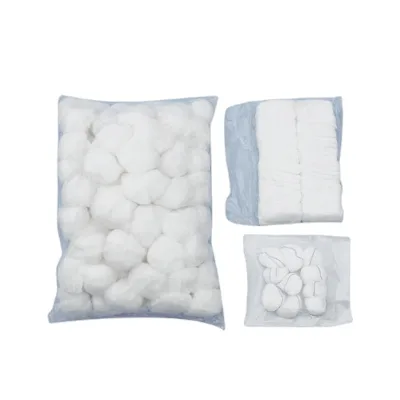
Medical Gauze Ball Green Gauze Ball Non-sterile or Sterile Gauze Ball With X Ray Line
$0.01 - $0.10
MOQ: 10000 Minimum


Cotton Wool Organic Sterile Surgical Dental Medical Absorbent Gauze Ball with X-ray
$0.01 - $1.10
MOQ: 100000 Pieces


Comprehensive Sourcing Guide
Strategic Sourcing Guide for X-Ray Detectable Surgical Gauze Balls
The procurement of surgical supplies requires a rigorous approach to ensure patient safety, regulatory compliance, and operational efficiency. When sourcing X-ray detectable surgical gauze balls, buyers must navigate a complex landscape of material specifications, sterilization protocols, and certification requirements. The following guide provides a structured framework for evaluating potential suppliers and products, grounded in the specific attributes and constraints observed in the current market. This analysis focuses on the critical dimensions of product definition, technical standards, and supplier vetting to facilitate informed decision-making.
Defining Product Specifications and Material Composition
The foundation of any successful procurement strategy lies in a precise definition of the product requirements. For X-ray detectable surgical gauze balls, the material composition is paramount. The supplied data indicates that products in this category are frequently manufactured from cotton or non-woven fabric. The "Cotton Series" designation suggests a traditional absorbent material, while "Non-woven Fabric" options offer distinct handling characteristics. Buyers must verify the specific material composition for their intended application, as the choice between cotton and non-woven materials impacts absorbency, tensile strength, and the integration of X-ray detectable threads.
Size and shape are equally critical variables. The market data reveals a wide spectrum of standard dimensions, ranging from compact 5x5cm units to larger 30x30cm variants. Specific models listed include dimensions such as 5x5cm, 7.5x7.5cm, 10x10cm, 10x20cm, and 10x40cm. Furthermore, the shape of the gauze ball is not uniform; options include round, peanut, flat, and hat shapes. The selection of shape often depends on the surgical procedure and the specific anatomical area being treated. For instance, peanut-shaped gauze may be preferred for specific cavity packing, while round balls are standard for general wound care.
Packing configurations also vary significantly across suppliers. Some products are packaged in cartons, while others utilize plastic bags with counts of 100 pieces per bag. Paper or poly pouches are also noted as standard packaging methods. The quantity per package, such as 100 PCS/Bag, directly influences inventory management and sterilization logistics. Buyers should align their packaging requirements with their hospital's storage capabilities and usage rates to minimize waste and ensure sterility maintenance.
Technical Standards and Certification Verification
Compliance with international standards is non-negotiable in the medical device sector. The supplied information highlights several key certifications that serve as indicators of quality and regulatory adherence. Products are frequently associated with CE and ISO certifications, with specific mentions of CE, RoHS, and ISO. More advanced compliance levels include the presence of FDA certification alongside CE and ISO. These certifications are essential for verifying that the manufacturer adheres to quality management systems and safety protocols.
Specific standards related to sterilization and materials are also critical. Ethylene Oxide (EtO) sterilization is a common method noted in the product attributes, with some items explicitly labeled as "Sterile" or "Ethylene Oxide Sterilization." Buyers must confirm that the sterilization method used is appropriate for the specific material (cotton vs. non-woven) and that the sterilization process does not compromise the X-ray detectability of the gauze. The presence of a "Quality Guarantee Period" of two or three years suggests that manufacturers stand behind the shelf life and stability of their products, though buyers should verify the specific expiration dating protocols.
Instrument classification is another vital technical parameter. The data indicates that these products fall under "Class I" Instrument Classification. This classification generally implies a lower risk profile, but it still requires strict adherence to manufacturing standards. Buyers should request documentation proving that the X-ray detectable threads meet the necessary radiopacity standards to ensure visibility under fluoroscopy and standard X-ray imaging. Without this verification, the primary safety function of the product is compromised.
Cost Drivers and Economic Considerations
Understanding the cost structure of surgical gauze balls is essential for budgeting and negotiation. The observed price range in the market is between 0.01 and 5 USD per unit. This wide variance suggests that price is heavily influenced by factors such as material quality, certification levels, packaging complexity, and order volume. The minimum order quantity (MOQ) is a significant driver of unit cost, with observed ranges spanning from 100 to 100,000 units.
For smaller procurement needs, an MOQ of 100 units may be accessible, but this often results in a higher per-unit cost. Conversely, larger orders, such as those starting at 10,000 bags, can leverage economies of scale to reduce the unit price. The specific MOQ of 10,000 bags mentioned in the data points to a threshold where manufacturers are willing to offer competitive pricing, likely due to the efficiency of automated production lines.
Payment terms also play a role in the total cost of ownership. The standard payment method noted is "Tt" (Telegraphic Transfer), which is a common practice in international trade. Buyers should negotiate payment terms that align with their cash flow, potentially seeking letters of credit or other secure payment methods for large initial orders. Additionally, the availability of free samples is a valuable cost-saving measure, allowing buyers to test product quality before committing to a large purchase. This reduces the risk of procuring substandard materials that could lead to surgical complications or waste.
Typical Applications and Functional Requirements
The functional application of X-ray detectable surgical gauze balls is primarily in medical care and health services. The data explicitly lists "Medical Health Services" and "Medical Care" as the primary functions. These products are designed for use in surgical environments where the risk of retained foreign objects is a critical concern. The X-ray detectable feature ensures that if a piece of gauze is inadvertently left inside a patient, it can be quickly identified and removed via imaging, preventing serious complications such as infection or organ damage.
The "Surgical Supplies Materials" classification underscores the sterile and high-integrity nature of these products. They are intended for use in procedures requiring high levels of hygiene and precision. The "Adult" group designation indicates that these products are sized and designed for adult patients, distinguishing them from pediatric-specific supplies. The ability to customize logos and packaging allows hospitals and distributors to brand the products, which can be important for inventory tracking and supply chain management.
Furthermore, the customization options extend to the product itself. Buyers can request specific sizes, shapes, and materials to match their surgical protocols. The "Custom" standard option allows for tailored dimensions, ensuring that the gauze fits specific surgical needs. This flexibility is a key advantage for large healthcare systems that may have unique requirements for different departments or procedures.
Supplier Evaluation and Quality Control Protocols
Selecting the right supplier is as important as selecting the right product. The data indicates that many manufacturers are located in China, with specific mentions of Hubei as a production origin. While location is a factor, the primary evaluation criteria should focus on the supplier's ability to meet quality and compliance standards. Buyers should verify the manufacturer's status, with the data confirming that "Manufacturer: Yes" is a common attribute, suggesting a direct supply chain from the factory.
Quality control processes must be robust. The "Quality Guarantee Period" of two or three years implies a commitment to product longevity and stability. However, buyers should also inquire about the supplier's internal quality control measures, including batch testing for X-ray detectability and sterility. The "Customization" attribute suggests that suppliers are capable of adapting to specific buyer requirements, but this capability must be backed by rigorous quality assurance protocols to ensure consistency.
Lead times are another critical factor in supplier evaluation. The observed delivery time ranges from 30 to 45 days. This timeframe should be factored into procurement planning to avoid stockouts. Buyers should also assess the supplier's ability to handle urgent orders and their track record for on-time delivery. The "OEM: Accepted" attribute indicates that suppliers are open to original equipment manufacturing, which can be beneficial for buyers seeking branded products.
Long-Term Procurement and Supply Chain Resilience
Sourcing surgical supplies is not a one-time transaction but a long-term partnership. Buyers should consider the scalability of their supplier relationships. The wide range of MOQs, from 100 to 100,000 units, offers flexibility for different stages of procurement, from initial trials to large-scale contracts. However, reliance on a single supplier can pose risks, particularly regarding supply chain disruptions. Diversifying the supplier base can mitigate these risks and ensure a steady supply of critical medical products.
The "Sample: Free Offered" attribute is a strategic tool for long-term procurement. By testing samples from multiple suppliers, buyers can compare product quality, packaging, and performance before establishing long-term contracts. This due diligence helps in building a reliable supply chain that can adapt to changing market conditions and regulatory requirements.
Finally, buyers should monitor the evolving landscape of certifications and standards. While current data highlights CE, ISO, and FDA certifications, future regulatory changes may require additional compliance measures. Maintaining open communication with suppliers regarding these changes ensures that the procurement strategy remains compliant and effective over the long term. By focusing on these strategic elements, buyers can secure a reliable supply of high-quality X-ray detectable surgical gauze balls that meet the rigorous demands of modern healthcare.
FAQs
What materials are used for X-Ray Detectable Surgical Gauze Ball?
Products are manufactured from cotton or non-woven fabric materials. The cotton series offers traditional absorbency, while non-woven options provide distinct handling characteristics for various surgical needs.
Which certifications do these medical gauze products hold?
Many items carry CE, RoHS, and ISO certifications, with some also holding FDA approval. These documents verify adherence to quality management systems and safety protocols required for medical device classification.
Can buyers request custom sizes and shapes for these gauze balls?
Yes, customization is available for specific dimensions like 5x5cm or 10x20cm and shapes including round, peanut, flat, or hat. Buyers can also request customized logo printing on the packaging or product.
How is the sterilization process handled for these surgical supplies?
Ethylene Oxide sterilization is a common method used to ensure the products are sterile. Some items are explicitly labeled as sterile, while others may be available without sterilization depending on the specific order requirements.
What is the typical minimum order quantity for these surgical gauze balls?
The minimum order quantity ranges from 100 to 100,000 units depending on the supplier and product configuration. Larger orders often start at 10,000 bags to leverage economies of scale and reduce unit costs.
Where are the manufacturers of these surgical supplies located?
Manufacturers are primarily located in China, with specific production hubs noted in Hubei. Buyers should verify the origin to ensure compliance with local and international shipping regulations for medical devices.
What is the expected delivery time for bulk orders of gauze balls?
The standard delivery time ranges from 30 to 45 days after order confirmation. This lead time accounts for production, sterilization, and packaging processes required to meet the quality guarantee period standards.