Source Yogurt Maker for Home Use, Commercial, and Cold Water Applications
Compare 30 available Yogurt Maker options from verified manufacturers. Buyers can evaluate features like full automatic control, stainless steel inner materials, and varying capacities for household or commercial use.
Key considerations
Products List


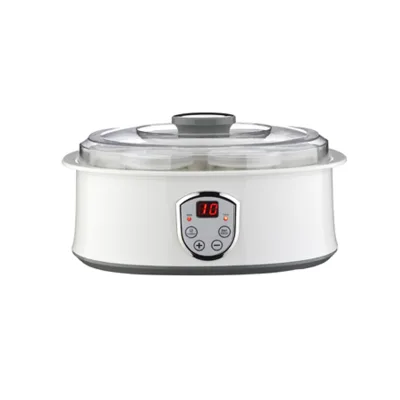


Frozen Fruit Ice Cream Maker/ Fruit Yoghurt Maker/Home DIY Yogurt Maker
$10.88 - $15.88
MOQ: 50 Pieces


Comprehensive Sourcing Guide
Strategic Sourcing Guide for Yogurt Maker Equipment
The global market for food processing equipment has seen a significant shift toward versatile, compact, and highly automated solutions for small to medium-scale production. For buyers specifically researching the core keyword "Yogurt Maker," the procurement landscape requires a nuanced understanding of dual-purpose machinery, material safety, and the specific operational parameters that define commercial viability. This guide synthesizes available product attributes and industry standards to provide a disciplined framework for sourcing, evaluating, and integrating yogurt-making equipment into existing production lines or retail operations.
Technical Specifications and Functional Versatility
When evaluating yogurt makers, the primary technical differentiator is often the functional scope of the unit. The market presents a distinct category of equipment that combines yogurt production capabilities with other fermentation functions, such as rice wine production. This dual-functionality suggests a design philosophy centered on temperature control precision and microbial incubation environments. Buyers must verify that the control mode of the unit is "Full Automatic," as this indicates a reduction in manual intervention and a higher consistency in the final product quality.
The power consumption profile is another critical technical specification. Available data indicates a power range of 200W to 400W for certain commercial units, while smaller, specialized models may operate at 20W. This variance implies that the sourcing strategy must align the equipment's power rating with the available facility infrastructure. A unit rated at 400W is suitable for continuous commercial operation, whereas a 20W unit might be intended for laboratory or very small-batch testing. Furthermore, the physical structure of the machine often features a "Single Hole" design, which simplifies installation and maintenance but requires careful consideration of the internal volume. The capacity range observed in the market spans from 1 to 5 liters, making these units ideal for boutique production, home-based businesses, or as pilot units for larger facilities.
Material Composition and Surface Engineering
The integrity of the final food product is inextricably linked to the materials used in the construction of the Yogurt Maker. The inner material is predominantly specified as "Stainless Steel," a non-negotiable standard for food-grade equipment due to its corrosion resistance and ease of sanitation. However, specific components, such as internal moving parts or seals, may utilize "Food Grade POM" (Polyoxymethylene), a durable plastic known for its low friction and chemical resistance.
The exterior housing often employs "Plastic" materials, which offer cost-effective insulation and aesthetic flexibility. The surface treatment and finishing processes are equally vital for hygiene and longevity. Observed specifications include "Polished" surface treatments and "Chrome Plated" finishes. These processes not only enhance the visual appeal but also create a non-porous surface that inhibits bacterial adhesion. Buyers should note that while "Chrome" finishing is common, the specific thickness and adhesion of the plating are critical for preventing peeling or flaking, which could contaminate the product. The net weight of such units, often around 1120g, provides an indication of the material density and build quality, serving as a proxy for the robustness of the internal components.
Compliance, Certification, and Safety Standards
In the realm of food processing equipment, compliance is not merely a regulatory hurdle but a fundamental aspect of brand reputation and operational safety. While specific certification bodies like ISO 22000 are often referenced in the broader industry context, buyers must verify the actual certification status of the specific supplier and model they intend to purchase. The absence of explicit certification data in general product listings necessitates a proactive verification process where the buyer requests current certificates of compliance directly from the manufacturer.
Safety features are paramount, particularly regarding electrical components and material leaching. One key feature highlighted in the market is "Lead Free Function," which is essential for any equipment coming into contact with consumable goods. This attribute ensures that the materials used, particularly in the cartridge and internal plumbing, do not introduce heavy metals into the food supply. Additionally, the "Cartridge Life" is a specific performance metric, with some units rated for 200,000 cycles. This longevity figure is a strong indicator of the durability of the internal sealing mechanisms, which are critical for maintaining the sterile environment required for fermentation.
Cost Drivers and Procurement Economics
The pricing structure for yogurt makers is highly variable, reflecting the diversity in capacity, automation level, and material quality. The observed price range in the market spans from $4.10 to $50,000 USD. This wide disparity suggests that buyers must clearly define their production scale before engaging with suppliers. The lower end of the spectrum likely corresponds to basic, manual, or semi-automatic units with smaller capacities, while the higher end encompasses fully automated, industrial-grade systems with advanced control interfaces and larger volumes.
Minimum Order Quantity (MOQ) is another significant economic factor. The observed MOQ range is between 1 and 4,000 units. This flexibility allows for different procurement strategies: small businesses or startups can begin with a single unit to test the market, while large distributors or manufacturing plants can leverage bulk ordering to reduce unit costs. However, buyers must be aware that the "Business Type" of the supplier is often "Manufacture," which can influence the negotiation leverage and lead times. Payment terms, such as a standard "TT30% Deposit + 70% Balance Payments," are common in this sector and should be factored into the cash flow planning.
Typical Applications and Operational Context
The application scope of yogurt makers extends beyond simple home use. The market data indicates a clear segmentation into "Commercial" and "Home Use" categories, with some units specifically designed for "Household" applications. This versatility allows a single product line to serve diverse market segments. For commercial applications, the equipment is often integrated into settings requiring high hygiene standards, such as dairy processing plants, boutique cafes, or catering services.
Specific usage scenarios include the production of yogurt, rice wine, and potentially other fermented goods. The "Function" attribute explicitly lists "Yogurt Maker" and "Rice Wine," confirming the equipment's capability to handle different fermentation profiles. In a commercial setting, the "Application" may also extend to washing basins or garden areas if the unit is part of a larger water management system, though the primary focus remains on food production. The "Installation" method is typically "Deck Mounted," which requires a dedicated workspace with appropriate plumbing and electrical connections. Buyers should ensure their facility layout accommodates these installation requirements before finalizing a purchase.
Supplier Evaluation and Quality Assurance
Selecting the right supplier is as critical as selecting the right machine. The "Business Type" being "Manufacture" suggests that the supplier has direct control over the production process, which can be advantageous for quality control and customization. Buyers should prioritize suppliers who offer "Customization" options, as this allows for tailoring the equipment to specific production needs, such as unique capacity requirements or branding elements. The availability of a "Customize Available" package further supports this flexibility.
Quality assurance should be a continuous process rather than a one-time check. Buyers should verify the "After-Sales Service" provisions, which may include "Free Spare Parts" for a defined period. The warranty period, often cited as "1 Year," is a baseline expectation, but the specific terms of the warranty should be scrutinized. Additionally, the "Sample time" of 7 days and the ability to offer samples allow buyers to physically inspect the product before committing to a bulk order. The "Private mold" status, noted as "No" in some listings, indicates that the supplier may use standard molds, which could affect the uniqueness of the final product but ensures consistency and lower tooling costs.
Long-Term Procurement and Maintenance Considerations
Sourcing yogurt makers is not a transactional event but a long-term partnership that requires careful planning for maintenance and scalability. The "Cartridge" type, specifically "Ceramic," is a key component for longevity, as ceramic cartridges are known for their resistance to wear and tear compared to rubber seals. However, the "Cartridge Life" of 200,000 cycles must be understood in the context of the specific production volume to ensure timely replacement schedules.
The "Product Origin" is another factor that influences logistics and supply chain resilience. Listings indicate origins in regions such as "Fujian" and "Zhejiang, China," which are major manufacturing hubs. Buyers should consider the lead times associated with these locations and the potential for supply chain disruptions. The "Net Weight" and "Single volume" of the product are essential for calculating shipping costs and storage requirements. Finally, the "Model Number" (e.g., HT-158A, OT-8145) serves as a unique identifier for tracking parts and ensuring compatibility with existing systems. By maintaining a disciplined approach to these long-term considerations, buyers can secure a reliable supply of high-quality yogurt-making equipment that supports their business growth.
FAQs
What functions does the Yogurt Maker support?
The unit supports both yogurt and rice wine production. This dual functionality allows for versatile fermentation processes in a single machine.
How is the control mode operated?
The device operates in a full automatic mode. This reduces manual intervention and ensures consistent product quality during the fermentation cycle.
What materials are used for the inner construction?
The inner material is stainless steel for hygiene. Some components also utilize food grade POM for durability and chemical resistance in moving parts.
Can the product be customized for buyers?
Yes, customization is available for this product. Buyers can request specific packaging options and other tailored features to meet their business needs.
What is the power consumption range?
Power consumption ranges from 20W to 400W depending on the model. This allows selection based on facility infrastructure and production scale requirements.
Which cartridge type is used in the unit?
The unit uses a ceramic cartridge for longevity. This component is rated for up to 200,000 cycles to ensure reliable sealing and operation.
Where are the products manufactured?
Products originate from Fujian and Zhejiang in China. These regions are major manufacturing hubs for food processing equipment and related components.