AC Computer Laptop Power Cable Suppliers and Manufacturers
Explore 20 verified suppliers offering AC Computer Laptop Power Cable with customizable lengths and insulation materials. Compare lead times, certifications like CCC and CE, and pricing ranges to select the right factory for your needs. Request samples to verify quality before placing orders.
Suppliers List

Changsha Sibel Electronic Technology Co., Ltd.
- Trading Company
- China Hunan
- Lead time15 days
Main productsWiring Harness, Automotive Connectors, Collaborative Robots, Electronic Controller, Wire Harness, Automobile Connectors, Car Wiring Harness, Cable Harness, Electronic Wire Harness, Te Molex Jst Hirose Jae Connectors
Main marketsDomestic,Europe,North America


Factory Customized 16A 250V Power Cord Copper Material European Standard Laptop AC Power Cable
$0.80 - $1.10
MOQ: 1 Pieces


Customized 1.2m 1.5m 1.8m Pure Copper 3 Prong EU AC Power Cord for Computer Laptop
$1.00 - $1.20
MOQ: 500 Pieces

Shanghai Fengy Cable Technology Co., Ltd.
- Verified by CTI
- Trading Company
- China Shanghai
- Lead time23 days
Main productsPower Cord, Flexible Cable, PVC Cable, Spiral Cable, Ethernet Cable, Extension Cord, Drag Chain Cable, Electrical Cables, Flat Cable, Data Cable
Main marketsSouth America,Africa,Southeast Asia/ Mideast,East Asia(Japan/ South Korea),Domestic,Europe,Australia,North America

Factory Wholesale Computer Laptop Charger AC Power Cable Italy 3 Pin Plug Power Cord
$0.62 - $1.19
MOQ: 300 Pieces

Replacement Laptop AC Power Cord 3prong Computer Power Cable 18AWG Heavy Duty NEMA 5-15p to C5
$1.65 - $1.69
MOQ: 100 Pieces

2.5A IEC C5 to IEC C8 AC Plug 0.75mm2 Power Extension Cable Laptop Power Cord
$0.99 - $1.25
MOQ: 300 Pieces

$1.52 - $2.35
MOQ: 300 Pieces

1.5m 1.8m Black EU to C13 Power Cord with Copper for Laptop Desktop Computer Power Cable
$0.38 - $1.48
MOQ: 300 Pieces

Guangdong Ripo Industry Co., Ltd.
- Verified by CTI
- Manufacturer/Factory
- China Guangdong
- Lead time0 days
Main productsWire and Cable, Network Cable, Conductor Stretching Equipment, LAN Cable, Wire Making Machine, LAN Cable Machine, Silicone Extrusion Machine

Dongguan Hundu Electronic Co., Ltd.
- Verified by TUVRHEINLAND
- Combined
- China Guangdong
- Lead time30 days
Main productsDisplayport Cable, Lvds Cable, USB Cable, DVI Cable, HDMI Cable, RS232 Cable, VGA Cable, M12 Cable, Car Wire Harness, Medical Wire Harness
Main marketsEurope

Lanka Industrial Automation (Shanghai) Co., Ltd.
- Combined
- China Shanghai
- Lead time15 days
Main productsPower Cord, Power Cable, Electric Wire, Extension Cord, Power Extension Cable, Cable Reel, Spiral Cable, Data Cable, PDU, Flat Wire
Main marketsEast Asia(Japan/ South Korea),Europe,North America

3 Pin UK Plug to Right Angle C13 PC Laptop Computer Monitor AC Power Cord Cable
$2.98 - $6.86
MOQ: 1000 Pieces

250V 13A UK to C13 Power Cord 1.8m 2m 3m Cable PC Laptop Computer Monitor Power Cord
$1.28 - $1.86
MOQ: 300 Pieces


1.5m Extension Cable DC5525 Male to Female DC 5.5X2.5 Laptop Monitor Cable Power Cord
$0.92 - $0.96
MOQ: 300 Pieces
Huizhou Adp Optical Communications Co., Ltd.
- Verified by TüVRheinland
- Manufacturer, Trading Company
- Lead time20 days
- Avg. response≤ 1h
Main productsNetwork Cable, Fiber Optic Cable, Security Cable, Electrical Cable, Cable Raw Material
Main marketsSoutheast Asia(32%), South America(11%), Western Europe(7%)
Shenzhen Haolei Technology Co.,ltd
- Manufacturer, Trading Company
- Guangdong, China
- Lead time0 days
- Avg. response≤ 3h
Main productsLaptop AC Adapter,Laptop DC Power Jacks,Laptop DC Power Plug Cable,Laptop AC Cable,DC Power Plug Cable
Main marketsDomestic Market(40.00%), North America(10.00%), South Asia(10.00%), Western Europe(5.00%), Eastern Asia(5.00%), Mid East(5.00%), Southern Europe(5.00%), Northern Europe(5.00%), Central America(5.00%), Eastern Europe(2.00%), South America(2.00%), Oceania(2.00%), Africa(2.00%), Southeast Asia(2.00%)
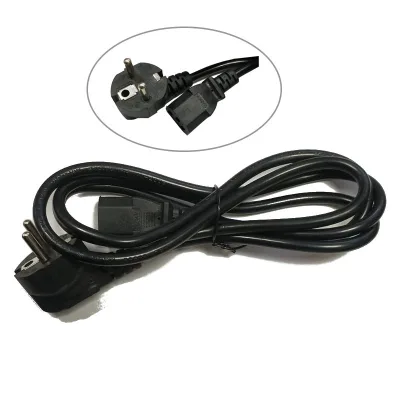
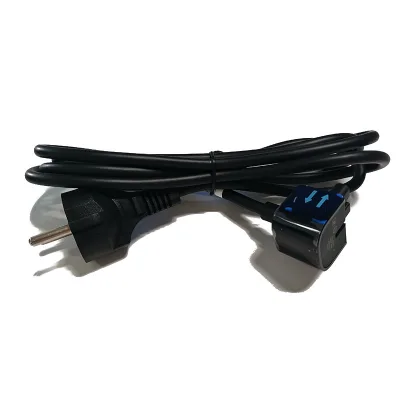
New Laptop Charger AC Power Cable With EU Plug for HP Square AC Adapter Power Cord 1.8M
$2.06 - $2.21
MOQ: 5 pieces
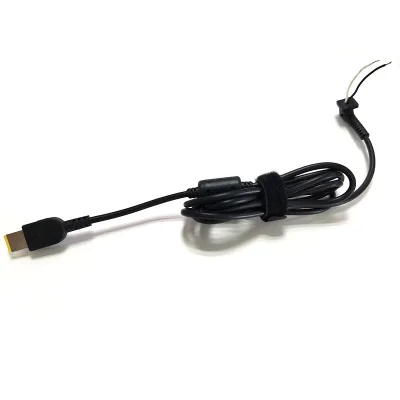
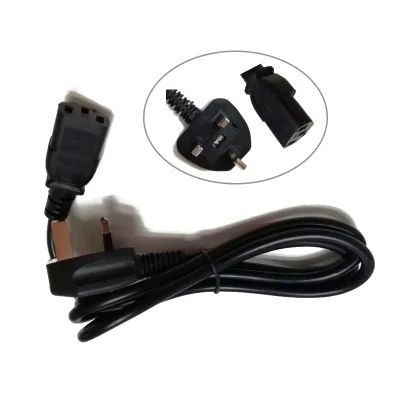
Good Quality British UK Plug 3 Prong Laptop AC Power Cable Original Extension Cable 1.5m
$1.47 - $2.21
MOQ: 5 pieces
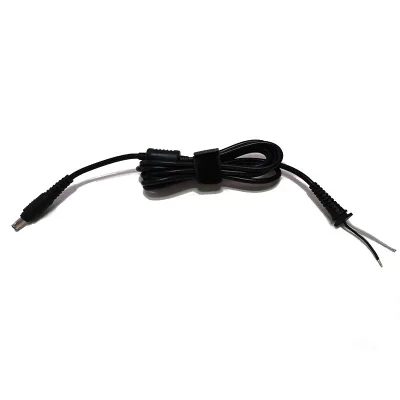
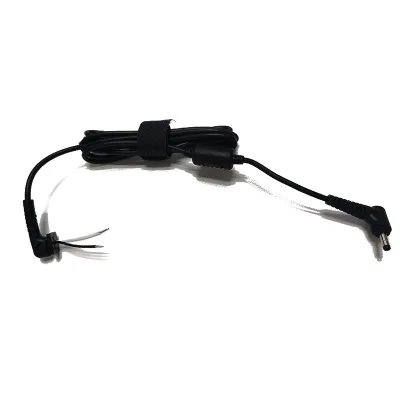
- Verified by BV
- Combined
- China Guangdong
- Lead time23 days
Main marketsSouth America,Africa,Southeast Asia/ Mideast,East Asia(Japan/ South Korea),Europe,Australia,North America

- Verified by SGS
- Combined
- China Shandong
- Lead time15 days
Main productsXLPE Cable, PVC Cable, Power Cable, Electric Cable, Wire, Electric Wire, Medium Voltage Cable, Flexible Wire, Rubber Cable, Overhead Conductor
Main marketsEurope

Dongguan Bibuke Electronic Technology CO.,LTD
- Verified by SGS
- Trading Company,Manufacturer/Factory,Group Corporation
- China Guangdong
- Lead time23 days
Main productsLCD Display, TFT LCD Display, LCD Module Display, OLED Display, COB LCD Display, Cog LCD Display, Buzzer, Other Electronic Materials
Main marketsSouth America,Eastern Europe,Mid East,North America,Southeast Asia,Eastern Asia,Oceania,Western Europe,Africa

Ningbo A-Line Cable & Wire Co., Ltd.
- Verified by TUVRHEINLAND
- Combined
- China Zhejiang
- Lead time23 days
Main productsPower Cord, Power Plug, Work Light, Wire Harness, Plug Insert, Electric Wire, Extension Cord, Wiring Harness, Power Cable
Main marketsEast Asia(Japan/ South Korea),Domestic,Europe,North America
Dongguan Saisonic Electronics Co., Ltd
- Verified by SGS
- Combined
- China Guangdong
- Lead time30 days
Main productsWire Harness, Custom Cable Assembly, Wire Cable, Over Molded Cable Assemblies, USB Cable, Medical Cable Harness Assembly, Aux Audio and Video Cable, Automotive Wiring Harness, Computer Cable, Home Appliances Wiring Harness

Computer Power Cord C20 to C19 Plug AC Power Cable Power Supply Cord Extension Cord
$0.10 - $60.00
MOQ: 1000 Pieces


Changzhou HITEK Electronics Co., Ltd.
- Combined
- China Jiangsu
- Lead time30 days
Main productsHDMI Cable, Connector, Antenna, RCA Cable, DVI Cable, AV Cable, Vedio Cable, Audio Cable, USB Cable, Network Cable
Main marketsDomestic


MOQ: 1000 Pieces

Ninghai Yingjiao Electrical Co., Ltd.
- Verified by BV
- Combined
- China Zhejiang
- Lead time30 days
Main productsAdapter, Power Adapter, AC/DC Adapter, Power Supply, Battery Charger, AC Adapter, CCTV Power Supply, Linear Power Adapter, LED Driver, Switching Power Adaptor
Main marketsEurope,North America

Guangdong MYIXI Technology Co., Ltd.
- Verified by BV
- Combined
- China Guangdong
- Lead time30 days
Main productsPower Adapter, AC Adapter, DC Adapter, Power Supply, Switching Power Supply, Charger, Power Adaptor, Travel Power Adapter, Server Power Adapter, Power Supply Company
Main marketsSouth America,Africa,Southeast Asia/ Mideast,East Asia(Japan/ South Korea),Domestic,Europe,Australia,North America

DONGGUAN TOONG YEAN PLASTIC IND. CO., LTD.
- Manufacturer
- China Guangdong
- Lead time45 days
Main productsAC Power Cord, AC Power Plugs and Sockets, DC Wire, Power Supply, IEC Connector, Waterproof Cable
Main marketsSoutheast Asia/ Mideast,East Asia(Japan/ South Korea),Europe,North America

Changsha Ambet Electronic Technology Co., Ltd.
- Verified by SGS
- Trading Company,Manufacturer/Factory
- China Hunan
- Lead time23 days
Main productsCable Assembly, Automotive Connector, Wiring Harness, Power Cord, Power Cable, Car Charger, Phoenix Contacts, Wire Connector, Drawing Toys, Kid Toys
Main marketsSouth America,Eastern Europe,Mid East,North America,Southeast Asia,Eastern Asia,Oceania,Western Europe,Africa

Shenzhen Merryking Electronics Co., Ltd.
- Verified by TUVRHEINLAND
- Manufacturer/Factory
- China Guangdong
- Lead time15 days
Main productsPower Adapter, AC Adapter, AC DC Adapter, DC Adapter, Switch Power Supply, USB Charger, AC/DC Adapter, DC Adapter Manufacturer / Supplier in China, Pd Charger, Power Adapter Manufacturer
Main marketsSouth America,Eastern Europe,North America,Southeast Asia,Eastern Asia,Oceania,Western Europe


High-Quality Universal Power Adapter for Laptops with CE and UL Approval
$14.00 - $18.00
MOQ: 500 Pieces

Dongguan Lewe Electronics Co., Ltd.
- Verified by BV
- Combined
- China Guangdong
- Lead time15 days
Main productsLaptop Battery Packs, Power Tool Battery Packs, Power Bank, Mobile Battery Packs, AC Adapters, Storage Battery, Travel Battery, Backup Battery, Portable Power Bank, External Battery Pack
Main marketsAustralia,North America

Laptop Notebook Computer Adapter Charger Power Supply Connectors 19V/4.74A
$10.00 - $20.00
MOQ: 10 Pieces

Replacement Computer Adapter Charger Power Supply Connectors 45W 19.5V2.31A AC Adapter
$10.00 - $20.00
MOQ: 10 Pieces
Ningbo Ousheng Electric Co., Ltd.
- Verified by SGS
- Combined
- China Zhejiang
- Lead time30 days
Main productsPower Cord, Power Cords, Power Supply Cord
Main marketsEurope


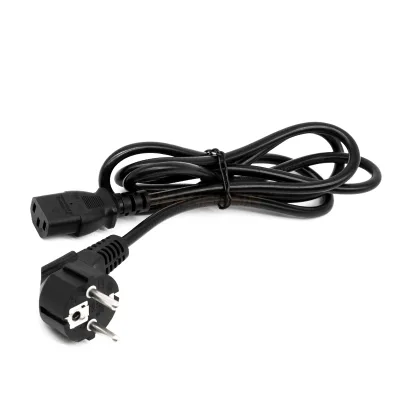
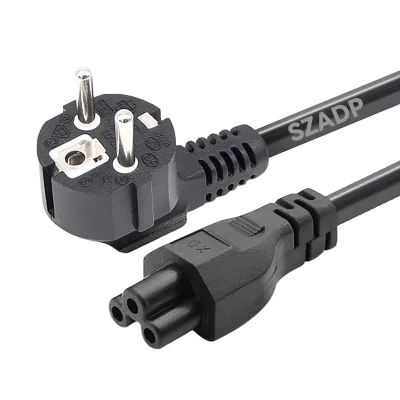
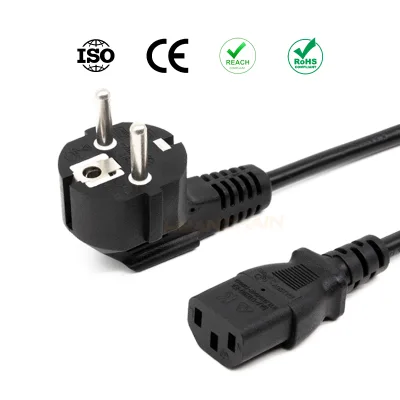


Comprehensive Sourcing Guide
AC Computer Laptop Power Cable Supplier Concentration and Factory Types
Current data indicates that suppliers for AC Computer Laptop Power Cable are concentrated in specific Chinese provinces, with Hunan and Shanghai appearing as documented locations for active vendors. These regions host a mix of trading companies and manufacturers, though the specific ratio varies by individual listing. Some suppliers explicitly identify as trading companies, which often implies they aggregate products from multiple factories rather than operating a single production line. This structure can influence lead times and communication flows, as the trading entity acts as an intermediary between the buyer and the actual manufacturing facility. Buyers should verify whether a supplier is a direct factory or a trading company to understand the depth of their technical support and production control capabilities.
When evaluating the factory types, it is essential to look for evidence of direct manufacturing capabilities versus pure trading operations. The presence of specific product attributes like "ODM/OEM/Customized" services suggests a supplier's ability to modify designs, which is more common in factory settings. However, trading companies may also offer these services by coordinating with partner factories. Buyers must distinguish between these models by checking the supplier's main product list and company type designation. If a supplier lists diverse categories like "Collaborative Robots" alongside "Wiring Harness," it may indicate a broader trading scope rather than specialized cable manufacturing. Confirming the physical location and the nature of the business entity is the first step in assessing whether the supplier can meet specific production volume and customization needs for AC Computer Laptop Power Cable orders.
How to Verify AC Computer Laptop Power Cable Suppliers
Verification of AC Computer Laptop Power Cable suppliers requires a rigorous check of their stated credentials and physical presence. Buyers should prioritize suppliers who display third-party verification badges, such as CTI, which indicates that an independent agency has validated the company's business license and operational status. While some listings may show certifications like CCC, CE, or RoHS, these must be cross-referenced with the specific product models to ensure they apply to the exact cables being ordered. A supplier claiming "100% Inspection Before Shipment" provides a quality assurance metric, but buyers should request detailed inspection reports or video evidence of the testing process to confirm these claims are not generic marketing statements.
Beyond digital badges, buyers must verify the supplier's response time and lead time consistency to gauge operational reliability. The data shows lead times ranging from 15 to 23 days, with some specific product listings indicating an 18-day turnaround for customized orders. These variations suggest that lead times are not uniform across all suppliers or even all products within a single supplier's catalog. Buyers should ask for a confirmed production schedule before placing an order, especially for urgent requirements. Additionally, checking the supplier's establishment year and history of service can provide insight into their stability. If a supplier cannot provide a clear timeline for sample delivery or production, it is a red flag that warrants further investigation before committing to a larger purchase order.
What to Compare Across AC Computer Laptop Power Cable Suppliers
Comparing suppliers for AC Computer Laptop Power Cable involves analyzing key operational metrics such as Minimum Order Quantity (MOQ), pricing structures, and lead time flexibility. The market data reveals significant variation in MOQs, with some suppliers requiring as few as 1 unit for specific charging cables, while others mandate 500 units for standard power cords. This disparity means buyers must align their order volume with supplier thresholds to avoid unnecessary costs or stockpiling. Pricing also fluctuates based on specifications, with some listings showing a narrow range around $0.40 to $0.80, while others range from $0.62 to $1.20. Buyers should compare these figures against the specific material requirements, such as copper conductor quality or insulation type, to ensure they are comparing equivalent products.
Another critical comparison point is the customization capability and standard compliance of the offered cables. Suppliers differ in their ability to provide customized lengths, wire gauges, and plug types, with some explicitly listing options for European, American, British, and German standards. The availability of specific certifications like CCC or ISO is another differentiator that can impact market access in different regions. Buyers should also evaluate the packaging standards, as some suppliers offer standard export packing while others provide custom carton configurations. By creating a comparison matrix that includes these variables, buyers can identify which suppliers offer the best balance of cost, flexibility, and compliance for their specific AC Computer Laptop Power Cable requirements.
Common AC Computer Laptop Power Cable Sourcing Risks
One significant risk in sourcing AC Computer Laptop Power Cable is the potential mismatch between advertised certifications and actual product compliance. While many suppliers list certifications like CCC, CE, and RoHS, these may apply to a broader product line rather than the specific model ordered. Buyers must ensure that the certification documents correspond to the exact product model number and that the testing was conducted recently. Relying on generic certification claims without verification can lead to customs delays or product rejection in target markets. Additionally, the "Customization" attribute often implies flexibility, but without clear technical drawings and agreed-upon specifications, the final product may not meet the buyer's functional requirements.
Another risk involves the reliability of lead times and the consistency of quality control processes. Suppliers may quote a lead time of 15 days, but actual production could be delayed due to raw material shortages or capacity constraints. The variation in lead times observed, from 15 to 23 days, highlights the need for buffer planning in the supply chain. Furthermore, the "100% Inspection Before Shipment" claim requires validation; buyers should request third-party inspection reports or conduct their own pre-shipment inspections to verify that the cables meet the specified electrical and mechanical standards. Failure to address these risks can result in receiving substandard products that fail to perform safely or reliably in the intended application.
AC Computer Laptop Power Cable Regional Sourcing and Logistics
Sourcing AC Computer Laptop Power Cable from China involves navigating logistics from specific manufacturing hubs like Hunan and Shanghai. These regions offer established infrastructure for exporting electrical components, but the distance from the factory to the port can impact shipping costs and transit times. Buyers should consider the origin location when calculating total landed costs, as suppliers in Shanghai may have different freight advantages compared to those in Hunan. The packaging standards, such as "Paper Carton" or "Carton Box," also play a role in logistics efficiency, as improper packing can lead to damage during transit. Understanding the specific origin of the product helps in planning the supply chain and anticipating potential delays.
Logistics planning must also account for the specific requirements of the destination market, including voltage standards and plug configurations. Since suppliers offer cables compliant with European, American, British, and other standards, buyers must ensure the selected product matches the local electrical infrastructure. The "Customized Length" and "Wire Gauge" options allow for tailored solutions, but these customizations can complicate shipping if they result in non-standard packaging dimensions. Buyers should work with suppliers to optimize packaging for container loading to reduce freight costs. Additionally, verifying the supplier's experience with international shipping and their ability to handle documentation for customs clearance is crucial for a smooth delivery process.
AC Computer Laptop Power Cable Commercial Terms and Order Planning
Commercial terms for AC Computer Laptop Power Cable orders vary significantly based on the supplier's MOQ and pricing structure. Some suppliers accept orders as low as 1 unit, while others require a minimum of 500 units, which directly impacts the buyer's inventory strategy and cash flow. Pricing ranges from $0.40 to $1.20 per unit, depending on the complexity of the cable, such as the inclusion of specific connectors or custom insulation materials. Buyers must negotiate these terms carefully, considering the total cost of ownership, including shipping, duties, and potential rework costs if the product does not meet specifications. Understanding the payment terms and escrow options is also vital to mitigate financial risk during the transaction.
Order planning should incorporate the supplier's lead time and sample availability to ensure timely delivery. With lead times ranging from 15 to 23 days, buyers need to factor in production time plus shipping duration when setting delivery deadlines. The availability of samples allows buyers to test product quality before committing to a large order, which is a recommended practice for AC Computer Laptop Power Cable sourcing. Buyers should also plan for potential delays by maintaining a buffer in their production schedule. By aligning order quantities with supplier MOQs and accounting for lead time variability, buyers can create a robust procurement plan that minimizes disruption and ensures a steady supply of high-quality power cables.
FAQs
What is the typical lead time for AC power cables?
Manufacturers in China generally require 15 to 23 days to produce and ship AC power cables. This timeframe depends on order volume and customization needs. Buyers should confirm specific delivery schedules with suppliers before placing orders to ensure timely project completion.
What certifications are available for these power cables?
Common certifications include CCC, CE, and RoHS for compliance with international standards. Some products also meet European, American, British, and German standards. Buyers must verify specific certification requirements with suppliers to ensure the cables meet local regulatory requirements for their target markets.
What is the minimum order quantity for power cords?
Minimum order quantities vary significantly, ranging from 1 piece for samples to 100 or 500 pieces for bulk orders. Some suppliers require 300 pieces as a standard MOQ. Buyers should check individual product listings to determine the exact minimum order quantity required for their purchase.
What materials are used in these power cables?
Most cables use copper conductors for efficient power transmission. Insulation materials typically include PVC, rubber, silicone, PE, or PU. Sheath materials may also be polypropylene or polystyrene. Buyers should specify their preferred material composition to ensure compatibility with their specific electrical applications and safety standards.
Can these cables be customized for specific lengths?
Yes, customization is widely available for length, wire gauge, and plug types. Suppliers offer options like 1.2m, 1.5m, or 1.8m lengths. Buyers can request specific configurations to match their equipment requirements. Confirming customization details with the supplier ensures the final product meets exact operational needs.
What is the price range for AC power cables?
Prices typically range from $0.40 to $1.20 per unit depending on specifications. Basic cables may cost around $0.40, while specialized EV charging cables can reach $1.10. Buyers should request quotes based on their specific quantity and customization requirements to get accurate pricing for their orders.