German Type C Power Strip with USB Port Suppliers
Source German Type C Power Strip with USB Port from 19 verified suppliers in China. Compare ISO certifications, CE standards, lead times, and MOQs to find the right partner. Request quotes today; review the available evidence before requesting comparable quotations from suitable candidates.
Suppliers List

Huizhou Qihe Electronic Technology Co., Ltd.
- Verified by TUVRHEINLAND
- Combined
- China Zhejiang
- Lead time30 days
- Avg. response≤ 8h
Main productsVoltage Regulator, Voltage Stabilizer, Automatic Voltage Regulator, Automatic Voltage Stabilizer, Servo Type of Voltage Stabilizer, Relay Type of Voltage Stabilizer, Power Panel, Power Strip, Power Strip with USB, Power Strip USB
Main marketsAfrica,Europe

NINGBO SELLWELL LIGHTING APPLIANCE CO., LTD.
- Trading Company,Manufacturer/Factory
- China Zhejiang
- Lead time30 days
- Avg. response≤ 7h
Main productsSmart LED Light, LED Bulb, LED Filament Lamp Bulb, LED Flood Light, LED Panel Light, LED T5 T8 Tube, LED Wall Light, LED Decorative Bulb, LED Street Light, LED ceiling Light
Main marketsEastern Europe,Western Europe


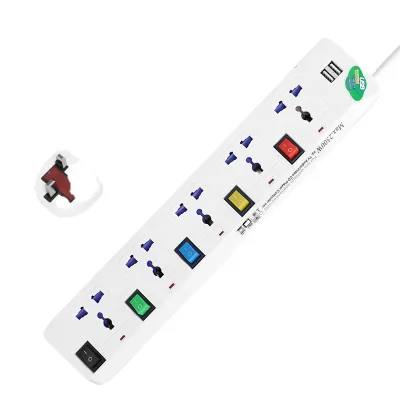
5 Ways British Outlets Power Strips with USB Type-C Type-C Charging Cord
$0.10 - $12.99
MOQ: 1500 Pieces

Ningbo Weidan Electronics Co., Ltd.
- Verified by BV
- Manufacturer/Factory
- China Zhejiang
- Lead time75 days
- Avg. response≤ 24h
Main productsAV Cable, Network Cable, Power Cord, Network Accessories, WiFi Products, Computer Cable, Wires & Harness, Sensor Cable, Waterproof Cable, Auto Wiring Kit
Main marketsSouth America,Eastern Europe,Mid East,North America,Southeast Asia,Eastern Asia,Oceania,Western Europe,Africa

- Verified by BV
- Combined
- China Fujian
- Lead time30 days
- Avg. response≤ 4h
Main productsCeiling Fan Light, Lighting, Electronic Product, Electrocity Product
Main marketsDomestic

Dongguan Baiyou Electronic Co. Ltd
- Verified by TUVRHEINLAND
- Combined
- China Guangdong
- Lead time15 days
- Avg. response≤ 11h
Main productsPower Outlet, Power Strip, Power Socket, USB Charger, Wireless Charger, USB Power Strip, Furniture Power Outlet, Furniture LED Light, Japanese Power Outlet, Electrical Socket
Main marketsSoutheast Asia/ Mideast

Zhongshan Lonpower Technology Co., Ltd.
- Verified by SGS
- Combined
- China Guangdong
- Lead time15 days
- Avg. response≤ 25h
Main productsPower Strip, Manufacturer of Intelligent Socket, Surge Protector, Extension Socket, Switch Socket, Multiple Charger, USB Power Strip, Wall Power Strip, USA Power Strip, Multifunctional Socket
Main marketsNorth America


18 Outlet German Surge Protector Extension Power Strip with 6 USB Charger
$11.98 - $12.19
MOQ: 500 Pieces


- Combined
- China Zhejiang
- Lead time30 days
- Avg. response≤ 25h
Main productsPVC Insulated Building Wire, LV/Mv Power Cable, Control Cable, Solar Cable, XLPE PVC Armoured Cable, Rubber Cable, Welding Cable, Aerial Bundled(ABC) Cable, Australian/New Zealand Standard (AS/NZS) Cable, Speaker/LAN/Telephone/Coaxial Cable
Main marketsAfrica


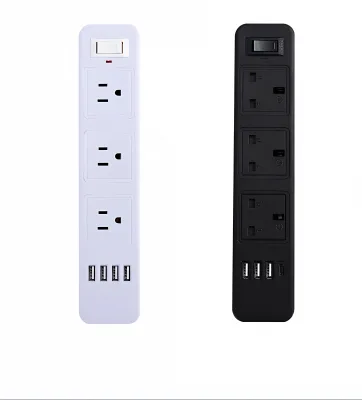
Multi Way Black or White Color Brazil Power Strip with Switch and USB Ports
$0.10 - $1.99
MOQ: 2000 Pieces


- Verified by BV
- Combined
- China Guangdong
- Lead time23 days
- Avg. response≤ 4h
Main marketsSouth America,Africa,Southeast Asia/ Mideast,East Asia(Japan/ South Korea),Europe,Australia,North America
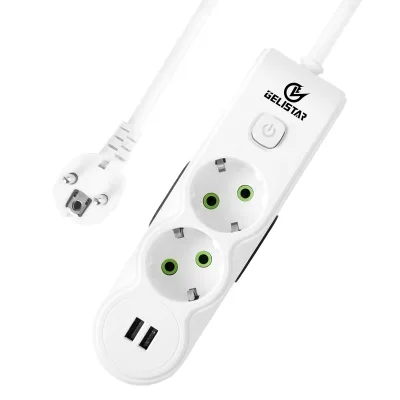
YIWU GELISTAR ELECTRIC APPLIANCES CO.,LTD
- Trading Company
- ZHEJIANG, China
- Lead time0 days
- Avg. response≤ 10h
Main productssocket,extension,cable,wire,led light
Main marketsAfrica(60.00%), Mid East(40.00%)

Guangdong Ldnio Electronic Technology Co., Ltd.
- Verified by BV
- Combined
- China Guangdong
- Lead time30 days
- Avg. response≤ 2h
Main productsMobile Phone Charger, Car Charger, Data Cable, Power Strip, Power Bank, Earphones, Smartwatches, USB Hub, Car Holder, Docking Station
Main marketsSouth America,Africa,Southeast Asia/ Mideast,East Asia(Japan/ South Korea),Europe,North America
Yueqing Jieyue Electronic Co., Ltd.
- Manufacturer, Trading Company
- Zhejiang, China
- Lead time0 days
- Avg. response≤ 4h
Main productsTact Switch,rocker switch,Self-locking switch,Toggle switch,Power Tool Accessories
Main marketsDomestic Market(10.00%), Northern Europe(10.00%), Southeast Asia(10.00%), Western Europe(10.00%), Eastern Asia(10.00%), North America(10.00%), Oceania(5.00%), South Asia(5.00%), Southern Europe(5.00%), Africa(5.00%), Central America(5.00%), Eastern Europe(5.00%), South America(5.00%), Mid East(5.00%)
Ningbo Safeline Electrical Co., Ltd.
- Verified by TüVRheinland
- Manufacturer, Trading Company
- Lead time35 days
Main productsSocket, Plug, Extension Cord, Cable Reel, Adapter
Main marketsWestern Europe(65%), South America(18%), Southern Europe(11%)

Guangzhou Longgui Intelligent Technology Co., Ltd.
- Verified by BV
- Combined
- China Guangdong
- Lead time30 days
- Avg. response≤ 6h
Main productsCable Cubby, Projector Lift, TV Lift, TV Bracket, Monitor Lift, Pup-up Sockets, Wall Panel, Hotel Socekt, Customrized Goods, Customerized Alumnium or Steel Parts
Main marketsOthers(foreignTradeCapacity.exportBusinessCapacityMarketOther)

WANSHUN ELECTRICAL & INTELLIGENT MANUFACTURE (GUANGDONG) CO., LTD.
- Trading Company
- China Guangdong
- Lead time0 days
- Avg. response≤ 8h
Main productsSocket, Switch, Travel Adapter, Extension Socket, Plug Top, Terminal Block, Conversion Box

WENZHOU ELENDAX ELECTRICAL CO., LTD.
- Combined
- China Zhejiang
- Lead time30 days
- Avg. response≤ 5h
Main productsWall Switch, Socket, Plug, Extension Socket, Adaptor, Lamp Holder, Power Cord, Outlet, Power Strip, Switch
Main marketsOthers(foreignTradeCapacity.exportBusinessCapacityMarketOther),Southeast Asia/ Mideast,Europe

Lanka Industrial Automation (Shanghai) Co., Ltd.
- Combined
- China Shanghai
- Lead time15 days
- Avg. response≤ 4h
Main productsPower Cord, Power Cable, Electric Wire, Extension Cord, Power Extension Cable, Cable Reel, Spiral Cable, Data Cable, PDU, Flat Wire
Main marketsEast Asia(Japan/ South Korea),Europe,North America


$2.45 - $3.99
MOQ: 500 Pieces
Wenzhou Hansilang Electric Appliance Co., Ltd.
- Verified by Intertek
- Manufacturer, Trading Company
- Lead time10 days
- Avg. response≤ 5h
Main productsLamp Holder, Expansion Socket, Switch, Travel Adapter
Main marketsDomestic Market(58%), Africa(28%), Mid East(12%)

- Verified by SGS
- Trading Company
- China Zhejiang
- Lead time15 days
- Avg. response≤ 19h
Main productsFan, Heater Fan, Air Fryer, Toaster, Rice Cooker, Vacuum Cleaner, Coffee Machine, Hairdressing Appliance, Electric Toothbrush, Steam Iron
Main marketsEurope,Australia

Power Strip Adapter American Standard Australian German Standard Conversion Plug Socket
$1.20 - $1.30
MOQ: 770 Pieces

Power Strip Socket Converter Multi-Hole Panel Electric Simple Wireless Strip Socket
$0.48 - $0.50
MOQ: 2000 Pieces

Shanghai Fengy Cable Technology Co., Ltd.
- Verified by CTI
- Trading Company
- China Shanghai
- Lead time23 days
- Avg. response≤ 4h
Main productsPower Cord, Flexible Cable, PVC Cable, Spiral Cable, Ethernet Cable, Extension Cord, Drag Chain Cable, Electrical Cables, Flat Cable, Data Cable
Main marketsSouth America,Africa,Southeast Asia/ Mideast,East Asia(Japan/ South Korea),Domestic,Europe,Australia,North America

$2.78 - $3.99
MOQ: 100 Pieces

$2.78 - $3.99
MOQ: 300 Pieces


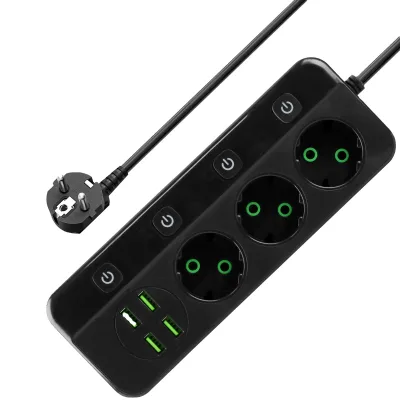
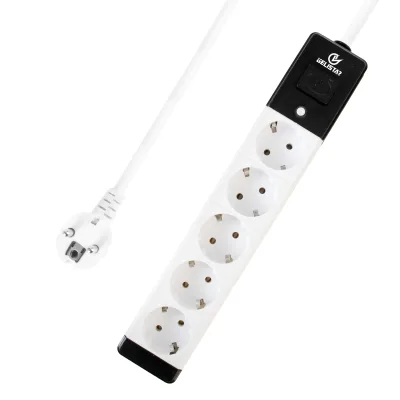
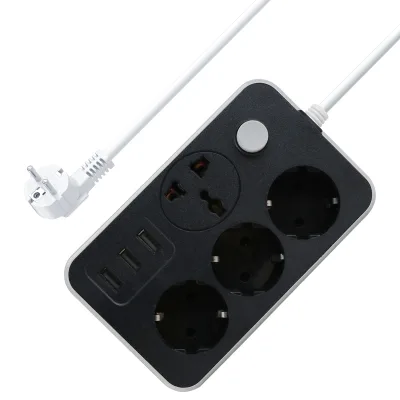
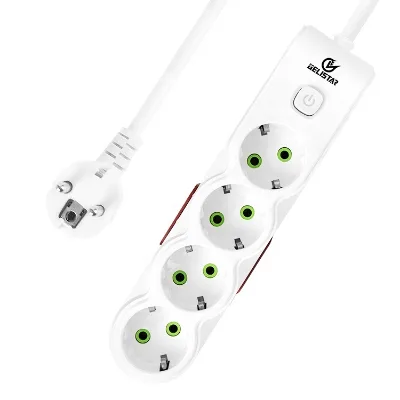




Comprehensive Sourcing Guide
German Type C Power Strip with USB Port Supplier Concentration and Factory Types
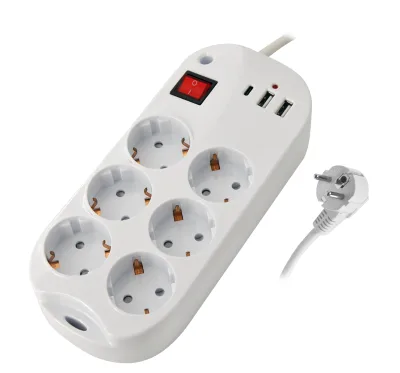
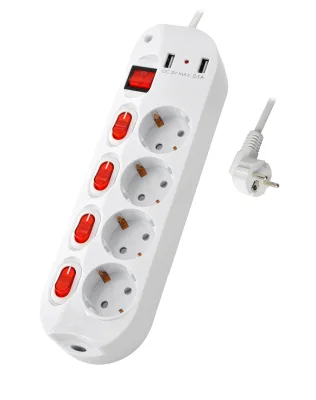
The available data indicates that manufacturers of German Type C Power Strip with USB Port units are concentrated in the Zhejiang province of China. This region hosts a mix of combined entities and dedicated manufacturing factories that produce electrical supplies. Some suppliers operate as trading companies while others function as manufacturers with their own factories, offering a blend of direct production capabilities and sourcing services. The primary product lines observed include various voltage regulators, stabilizers, and extensive ranges of power strips featuring USB ports. These facilities often list their main products alongside LED lighting and network cables, suggesting a diversified electrical manufacturing base.
When evaluating the factory types, buyers should note that some entities hold combined company types, while others are strictly manufacturers or trading companies. The presence of ODM and OEM capabilities is evident in the research data, with some suppliers offering own-brand solutions alongside custom manufacturing. This variation means that a single search result may represent a factory with in-house production lines or a trading firm aggregating goods from multiple sources. Buyers must verify the specific nature of the entity to ensure they are dealing with the actual production source if that is a priority for their supply chain strategy.
How to Verify German Type C Power Strip with USB Port Suppliers
Verification of suppliers for German Type C Power Strip with USB Port units relies heavily on third-party audit reports and system certifications found in the search results. Several suppliers display verification badges from recognized bodies such as TÜV Rheinland and Bureau Veritas, which serve as critical indicators of operational legitimacy. Additionally, system certifications like ISO 9001:2015, BSCI, and TS 16949 are frequently listed, providing evidence of quality management systems and compliance with international standards. Buyers should prioritize suppliers who explicitly display these verification statuses rather than relying on self-declared claims, as these external validations offer a higher degree of confidence in the supplier's operational integrity.
Beyond verification badges, the product attributes and certifications listed for specific items provide further evidence of compliance. Many power strips in the results carry CE and RoHS certifications, confirming adherence to safety and environmental standards required for the European market. Specific product attributes such as "Standard Grounding," "PP with Flame Retardant" materials, and rated voltages of 110-250V AC are documented in the product evidence. Buyers must cross-reference these specific product-level certifications with the supplier's general system certifications to ensure consistency. If a supplier claims a specific standard but the product evidence lacks the corresponding certification mark, this discrepancy requires immediate clarification before proceeding with any order.
What to Compare Across German Type C Power Strip with USB Port Suppliers
Comparing suppliers requires a detailed analysis of response times, lead times, and minimum order quantities (MOQ) to determine operational fit. The data shows response times varying significantly, with some suppliers responding in under eight hours while others take over twenty-three hours. Lead times also differ, ranging from thirty days to seventy-five days depending on the supplier and product complexity. MOQs are another critical variable, with some suppliers requiring orders as low as one hundred units, while others mandate minimums of fifteen hundred units. Buyers must align these logistical metrics with their inventory needs and sales velocity to avoid stockouts or excessive capital tie-up.
In addition to logistical metrics, buyers should compare the main product portfolios and customization capabilities. Some suppliers specialize in voltage regulators and stabilizers, while others focus heavily on power strips and extension cords. The ability to customize products is a key differentiator, with some suppliers offering "Available" customization options and others listing "Non-Customized" items. Product attributes such as cable length, IP ratings, and specific plug types (German vs. British standards) vary across the supplier base. A supplier offering a wide range of customization options and diverse product lines may be better suited for complex procurement needs than a specialized manufacturer with rigid product specifications.
Common German Type C Power Strip with USB Port Sourcing Risks
One significant risk in sourcing these electrical components is the potential mismatch between claimed certifications and actual product compliance. While many suppliers list CE and RoHS certifications in their product attributes, the absence of specific test reports or third-party verification for individual batches can lead to non-compliance issues at the destination market. Buyers must ensure that the "CE" mark on the product is backed by valid documentation, as generic claims without supporting evidence can result in customs delays or product recalls. The variation in certification types, such as ISO 9001 versus TS 16949, also indicates different levels of quality control, requiring buyers to assess which standard aligns with their specific risk tolerance.
Another risk involves the inconsistency in lead times and production capacity, which can disrupt supply chain planning. The observed lead times range from thirty to seventy-five days, a substantial variance that can impact delivery schedules. Suppliers with longer lead times may face capacity constraints or supply chain bottlenecks that are not immediately apparent. Furthermore, the distinction between ODM and OEM capabilities affects the ability to scale production quickly. If a supplier relies on third-party components or has limited R&D capacity, they may struggle to meet urgent demand spikes. Buyers should verify the actual production capacity and current order backlog to mitigate the risk of delayed shipments.
German Type C Power Strip with USB Port Regional Sourcing and Logistics
The primary sourcing hub for German Type C Power Strip with USB Port units is identified as Zhejiang, China, with specific mentions of Ningbo as a production origin. This concentration suggests that logistics and shipping routes are optimized for this region, potentially offering competitive freight rates and established export infrastructure. Buyers sourcing from this area should anticipate shipping times and costs associated with major Chinese ports, which are generally well-connected to global trade routes. The proximity of manufacturers to these ports can facilitate faster loading and reduced inland transportation costs, making this region a strategic choice for bulk procurement.
However, buyers must also consider the implications of regional sourcing on product standards and compatibility. The data indicates that products are manufactured to meet specific regional standards, such as German or British plug types, which must align with the target market's electrical infrastructure. While the manufacturing cluster is in China, the product specifications are tailored for international markets, requiring careful verification of plug types and voltage ratings. Buyers should confirm that the "German Standard" or "Euro Style" products are indeed compatible with their local grid requirements. Additionally, the origin location influences the supply chain's resilience, as regional disruptions in Zhejiang could impact the availability of these specific electrical components.
German Type C Power Strip with USB Port Commercial Terms and Order Planning
Commercial terms for German Type C Power Strip with USB Port units vary significantly based on the supplier's pricing structure and order volume. The observed price ranges for these products span from approximately one dollar to over fourteen dollars per unit, depending on the model, features, and order quantity. Minimum order quantities are a critical factor in determining the final unit cost, with some suppliers offering lower prices for orders exceeding one thousand units. Buyers must calculate the total landed cost, including shipping and duties, to ensure the final price remains within budget. The wide price variance suggests that buyers should negotiate based on volume and specific product configurations to secure the most favorable terms.
Order planning must account for the diverse packaging and material specifications found in the supplier data. Products are often packed in master cartons, poly bags, or combinations thereof, with materials ranging from PP with flame retardant properties to PC plastic. The cable lengths and outlet configurations, such as 2/3/4 outlet models or 6-way extensions, directly impact the packaging dimensions and shipping volume. Buyers should verify the exact packing specifications to optimize container loading and reduce freight costs. Additionally, the availability of customization options allows for tailored packaging solutions, which can be crucial for branding and retail presentation. Careful planning of these commercial details ensures a smooth transition from order placement to final delivery.
FAQs
What is the price range for German type C power strips with USB ports?
Prices for these power strips typically range from $1.00 to $14.59 depending on the specific model and configuration. Basic extension cords with multiple outlets and USB ports are available at the lower end, while premium models with advanced surge protection or specific certifications may cost more. Buyers should check individual product listings for exact pricing based on quantity and customization needs.
What certifications are available for these power strips?
Manufacturers offer products with CE and RoHS certifications, ensuring compliance with European safety and environmental standards. Some suppliers also hold ISO 9001:2015 or ISO 9001 system certifications for quality management. Buyers requiring specific regulatory approvals should verify the certification details on each product page, as availability varies by manufacturer and model specifications.
What is the typical lead time for ordering these power strips?
Lead times generally range from 30 to 75 days depending on the supplier and order volume. Some manufacturers with established production lines can deliver within 30 days, while others may require up to 75 days for larger orders or custom configurations. Buyers should confirm the specific lead time with the supplier before placing an order to ensure timely delivery.
What is the minimum order quantity for these products?
Minimum order quantities vary significantly, ranging from 100 units for some models to 1500 units for others. Buyers seeking smaller quantities should look for suppliers with lower MOQs, while those ordering in bulk may benefit from suppliers with higher volume requirements. Always check the specific MOQ listed for the desired product model to ensure it aligns with your purchasing needs.
Where are these power strips manufactured?
These power strips are primarily manufactured in China, with specific production hubs located in Zhejiang and Ningbo. Suppliers in these regions offer a wide range of models, including German standard and Euro style options. Buyers can filter results by location to find suppliers in these key manufacturing areas, ensuring access to a diverse selection of products and competitive pricing.
Can these power strips be customized for specific needs?
Customization is available for many models, including options for different outlet configurations, cable lengths, and branding. Some suppliers offer ODM and OEM services, allowing for tailored designs and packaging. Buyers should specify their customization requirements, such as color, material, or specific certifications, when contacting suppliers to ensure the product meets their exact specifications and standards.