UK Standard Pop Up Socket with Wireless Charge Suppliers and Manufacturers
Compare 19 verified suppliers offering UK Standard Pop Up Socket with Wireless Charge from Guangdong, China. Review lead times, certifications, and pricing before requesting quotes. Check response times and minimum order quantities to ensure the selected factory meets your specific production schedule and budget requirements for bulk orders.
Updated
Suppliers List

Dongguan Haiao Technology Co., Ltd.
- Trading Company
- Guangdong, China
- Lead time30 days
- Avg. response≤ 2h
Main productsSocket,Home Sockets,Universal Socket,Plastic Sockets,Tabletop Socket
Main marketsSouthern Europe(30.00%), Eastern Europe(30.00%), South America(10.00%), North America(10.00%), Northern Europe(8.00%), Western Europe(5.00%), Oceania(5.00%), Southeast Asia(1.00%), Mid East(1.00%)
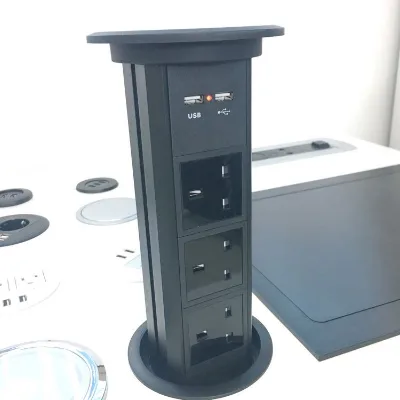
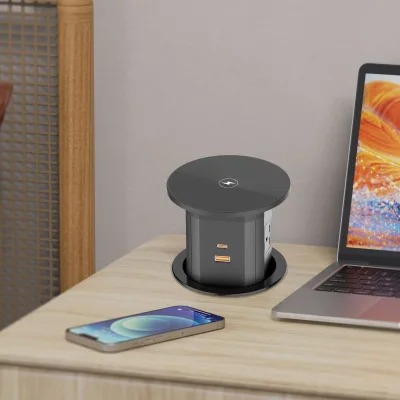
$38.6825 - $41.4594
MOQ: 50 pieces
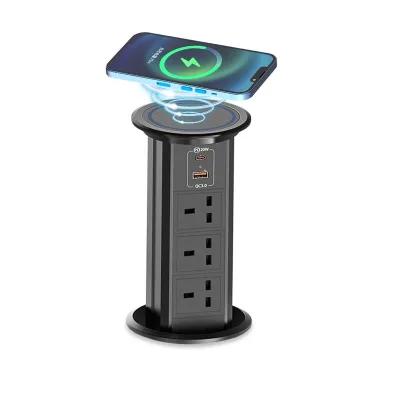
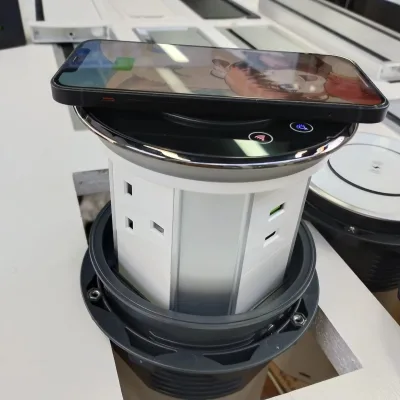
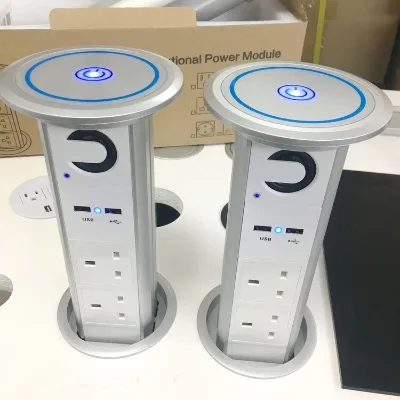
$91.9038 - $102.1149
MOQ: 5 pieces

Guangzhou Longgui Intelligent Technology Co., Ltd.
- Verified by BV
- Combined
- China Guangdong
- Lead time30 days
- Avg. response≤ 5h
Main productsCable Cubby, Projector Lift, TV Lift, TV Bracket, Monitor Lift, Pup-up Sockets, Wall Panel, Hotel Socekt, Customrized Goods, Customerized Alumnium or Steel Parts
Main marketsOthers(foreignTradeCapacity.exportBusinessCapacityMarketOther)
Dongguan Blue Shark Technology Co., Limited
- Verified by SGS Group
- Trading Company
- Lead time10 days
- Avg. response≤ 2h
Main productsDesktop Socket, LCD Monitor Lift, Flip Monitor, Interactive White Board, TV Lift
Main marketsNorth America(25%), Western Europe(12%), South America(10%)
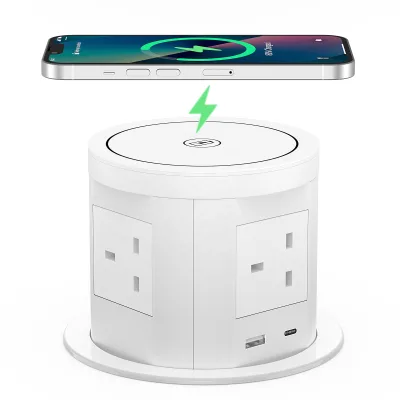
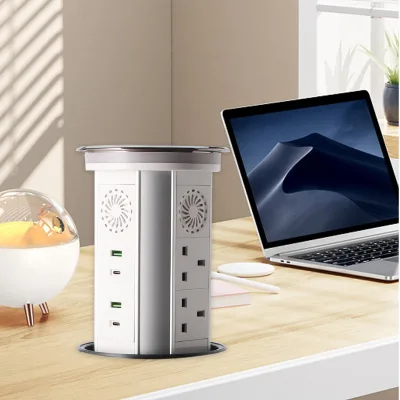
$71.4832 - $85.4697
MOQ: 1 pieces
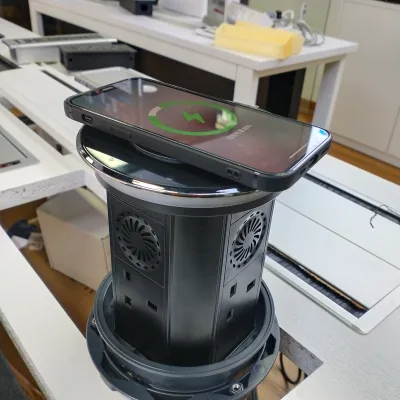
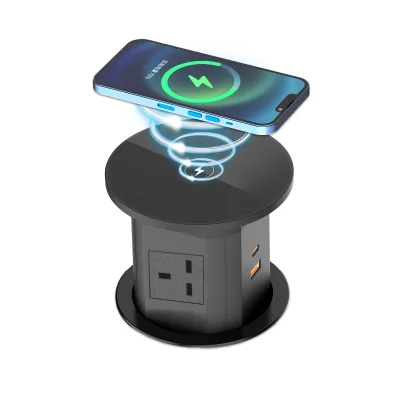
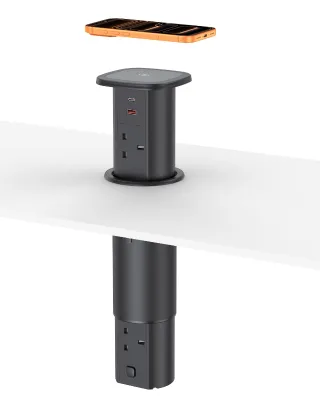
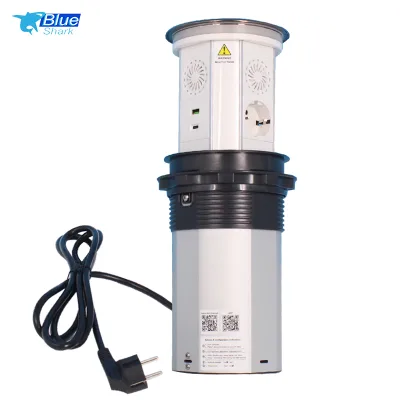
IP65 Wifi Smart 15W Wireless Charging Motorized Pop up Power Socket Desktop Recessed Power Socket
$70.00 - $83.00
MOQ: 10 pieces
Hangzhou Junyue Technology Co., Ltd.
- Verified by Intertek
- Manufacturer, Trading Company
- Lead time30 days
- Avg. response≤ 4h
Main productsOffice Furniture Socket, Cable Grommets, Cable Tray, USB Charger, Pop Up Sockets
Main marketsDomestic Market(60%), North America(11%), Southeast Asia(7%)
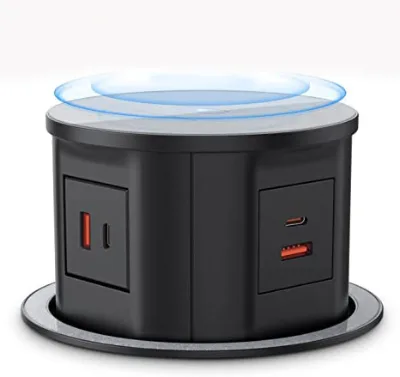
Custom US/UK Outlet 16A 4-Outlets Pop up Socket with Wireless Charger for Kitchen Use
$36.35 - $38.67
MOQ: 20
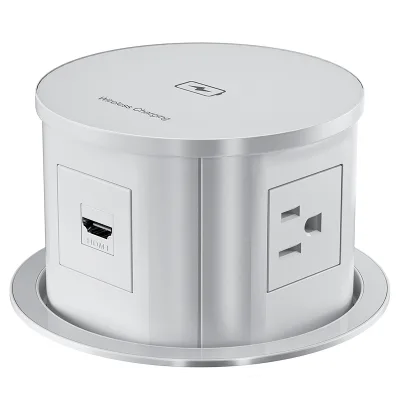
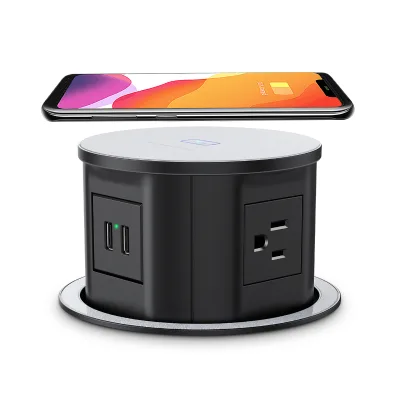
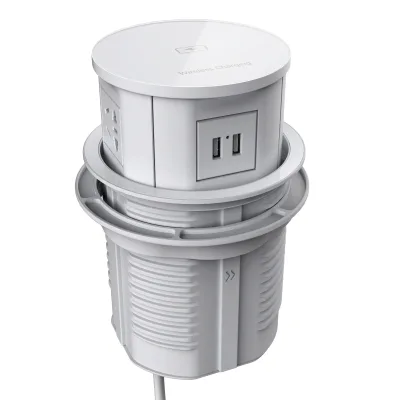
New Design Vertical Pop up with Usb Wireless Charging Pop up Power Sockets Pop up Outlet Counter Top
$36.35 - $38.67
MOQ: 20 pieces

Wenzhou Sinoamigo Electric Co.,Ltd
- Verified by BV
- Manufacturer/Factory
- China Zhejiang
- Lead time23 days
- Avg. response≤ 2h
Main productsFloor Boxes, Floor Sockets, Receptacles, Desk Sockets, Wall Switches, Sockets, Wiring Solution, Outlet Boxes, Outlets, Electrical Outlet
Main marketsSouth America,Mid East,North America,Eastern Asia,Africa

Audio Smart Hidden Motorised Pop up Desktop Socket with Wireless Charging
$90.00 - $160.00
MOQ: 1 Pieces


Intelligent Pop up Power Desktop Socket Motorized with Wireless Charging
$90.00 - $160.00
MOQ: 1 Pieces


Ningbo Weidan Electronics Co., Ltd.
- Verified by BV
- Manufacturer/Factory
- China Zhejiang
- Lead time75 days
- Avg. response≤ 24h
Main productsAV Cable, Network Cable, Power Cord, Network Accessories, WiFi Products, Computer Cable, Wires & Harness, Sensor Cable, Waterproof Cable, Auto Wiring Kit
Main marketsSouth America,Eastern Europe,Mid East,North America,Southeast Asia,Eastern Asia,Oceania,Western Europe,Africa
Foshan City Shunde District Honlly Technology Co., Ltd.
- Manufacturer
- Guangdong, China
- Lead time25 days
- Avg. response≤ 1h
Main productsWall switch,Wall socket,Pop up socket,PVC box,Distribution box
Main marketsDomestic Market(20.00%), Southeast Asia(15.00%), Mid East(10.00%), South America(10.00%), South Asia(10.00%), Central America(10.00%), Oceania(5.00%), Africa(5.00%), Southern Europe(5.00%), Eastern Europe(5.00%), Eastern Asia(5.00%)
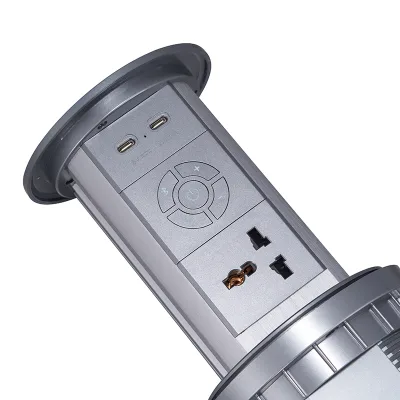
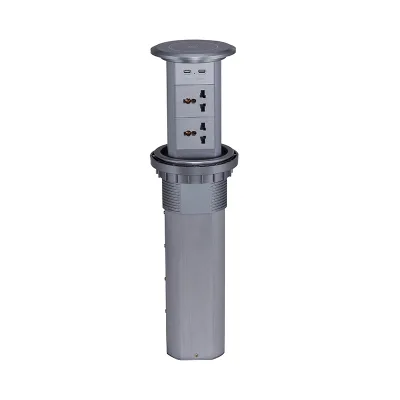
$56.395 - $71.7752
MOQ: 2000 pieces
Dongguan Blue Shark Technology Co., Limited
- Trading Company
- Lead time旺季: "1 - 1":7,"2 - 100":15,"101 - 1000":25,"> 1000":"To be negotiated", 淡季: "1 - 1":7,"2 - 100":15,"101 - 1000":25,"> 1000":"To be negotiated"
- Avg. response≤ 2h
Main productsDesktop Socket / Wall Socket / Power Strip / Power Grommet Box, LCD Monitor Lift

Dongguan LEGA Smart Office Equipment Co., Ltd.
- Manufacturer, Trading Company
- Guangdong, China
- Lead time25 days
- Avg. response≤ 2h
Main productsOffice Power Netbox,Cable Management,Hotel socket,Metal hardware,Adjustable Desk
Main marketsDomestic Market(19.00%), Mid East(14.00%), Western Europe(13.00%), Eastern Europe(13.00%), Southeast Asia(12.00%), Northern Europe(8.00%), Southern Europe(6.00%), South America(5.00%), North America(3.00%), South Asia(2.00%), Central America(2.00%), Eastern Asia(1.00%), Africa(1.00%), Oceania(1.00%)
Guangzhou Boente Technology Co., Ltd.
- Verified by SGS Group
- Manufacturer, Trading Company
- Lead time15 days
- Avg. response≤ 2h
Main productsPop Up Socket, Kitchen Socket, Floor Socket, Power Track Socket, Monitor Lift
Main marketsEastern Europe(35%), Southeast Asia(15%), Mid East(15%)
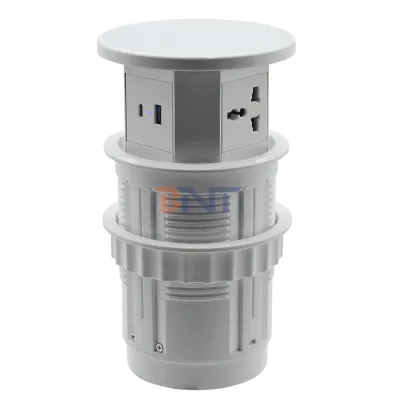
$46.7498 - $54.0207
MOQ: 100 units
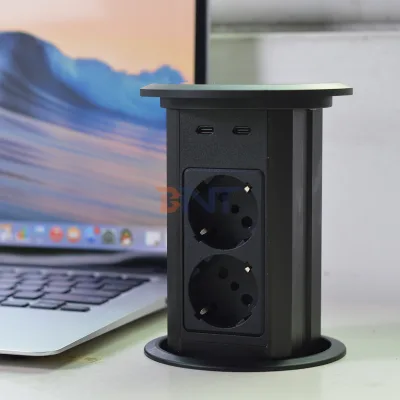
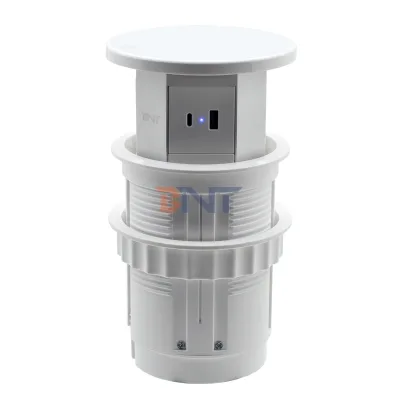
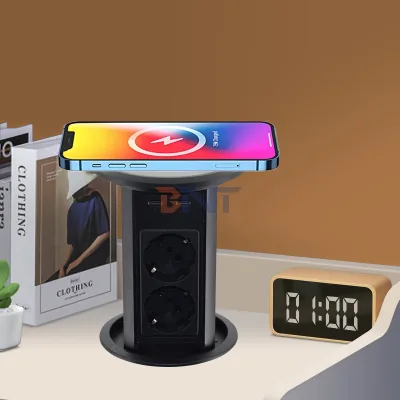

Foshan City Sevilo Hardware Co., Ltd.
- Verified by SGS
- Combined
- China Guangdong
- Lead time15 days
- Avg. response≤ 3h
Main productsFurniture Hardware, Office Furniture Hardware, Cabinet Fittings, Glass Fittings, Save Space Mechanism
Main marketsSouth America,Africa,Southeast Asia/ Mideast,East Asia(Japan/ South Korea),Europe,Australia,North America


Recessed Pop up Wireless Charging Round UK Desktop Power Socket for Kitchen Worktops
$5.30 - $6.50
MOQ: 50 Pieces
Guangzhou Junnan Audio-Visual Technology Co., Ltd.
- Verified by SGS Group
- Manufacturer, Trading Company
- Lead time7 days
- Avg. response≤ 2h
Main productsPaperless Conference System, Lcd Monitor Lift, Projector Lift, Desktop Socket, Sound System
Main marketsDomestic Market(30%), South America(15%), Mid East(14%)
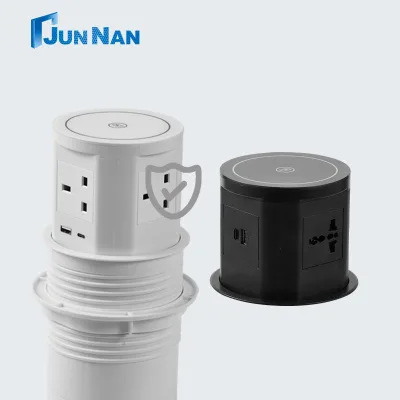
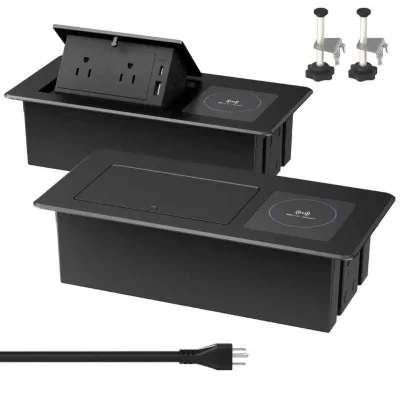
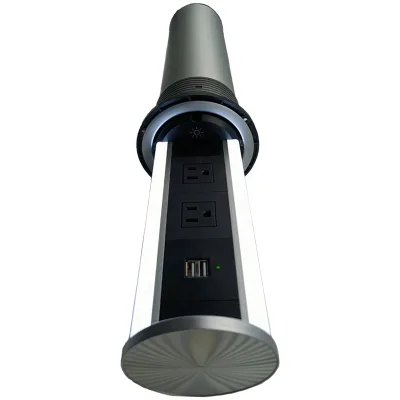
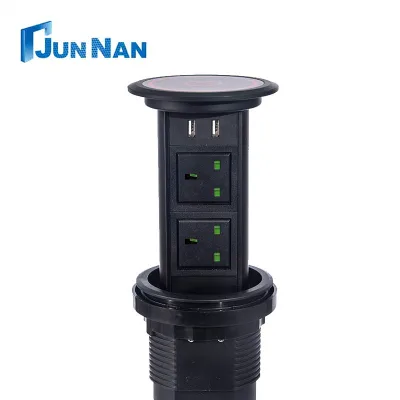
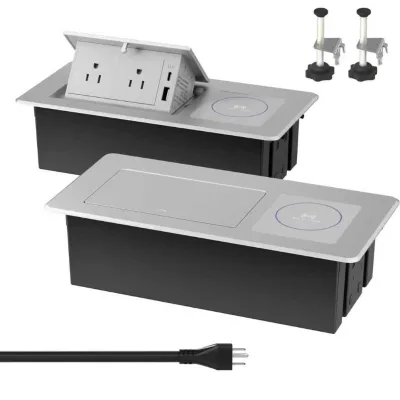
$21.7559 - $23.8277
MOQ: 10 pieces
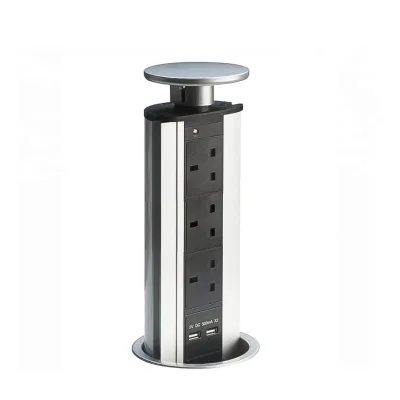
Guangzhou Boente Technology Co., Ltd.
- Manufacturer, Trading Company
- Lead time旺季: "1 - 1000":31,"> 1000":"To be negotiated", 淡季: "1 - 1000":31,"> 1000":"To be negotiated"
- Avg. response≤ 2h
Main productsTable Socket, Pop Up Socket, Floor Socket, Monitor Lift, TV lift
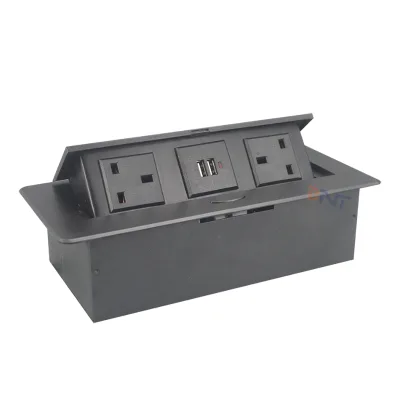
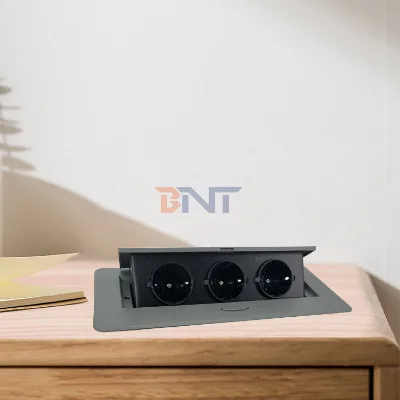
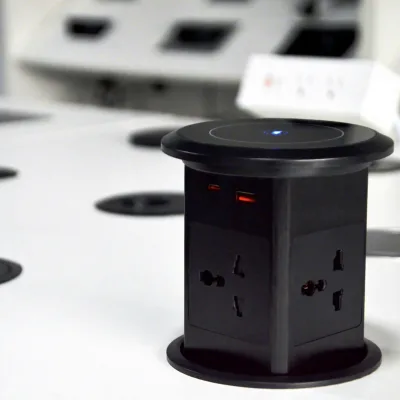
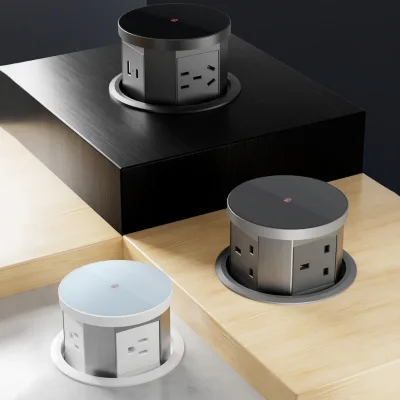
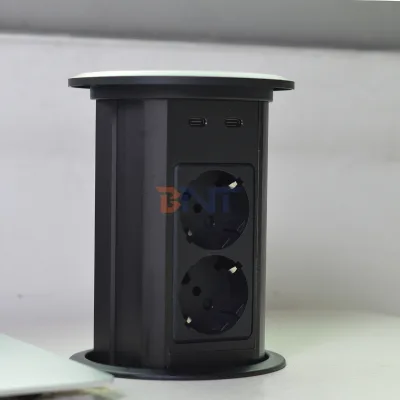
Wholesale Worktops Hidden Pop up Socket Mobile EU Usb Fast Charging Pop up Sockets Power Socket
$9.00 - $11.50
MOQ: 10 units
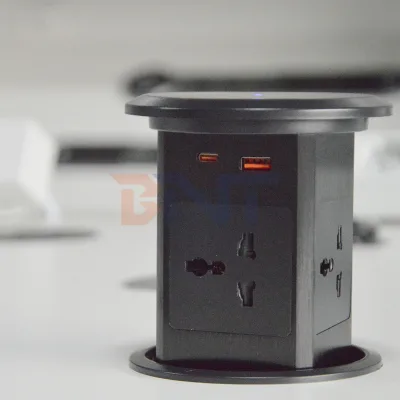
YIWU GELISTAR ELECTRIC APPLIANCES CO.,LTD
- Trading Company
- ZHEJIANG, China
- Lead time0 days
- Avg. response≤ 12h
Main productssocket,extension,cable,wire,led light
Main marketsAfrica(60.00%), Mid East(40.00%)
Shanghai Ouben Intelligent Technology Co., Ltd.
- Verified by SGS Group
- Manufacturer, Trading Company
- Lead time15 days
- Avg. response≤ 3h
Main productsTrack Socket, Switch Socket, Pop Up Socket, Extension Socket, Circuit Breaker
Main marketsDomestic Market(65%), Eastern Europe(10%), North America(10%)

Wenzhou Sunny Electrical Co., Ltd.
- Verified by CTI
- Trading Company,Manufacturer/Factory
- China Zhejiang
- Lead time23 days
- Avg. response≤ 6h
Main productsWall Switch, Socket, Light Switch, Electric Switch, Plug, Electrical Switch, Power Socket, Socket Outlet, Switch Plate, Lamp Holder
Main marketsSouth America,Mid East,North America,Southeast Asia,Eastern Asia,Africa

Wenzhou Huifeng Alloy Technology Co., Ltd.
- Manufacturer, Trading Company
- Zhejiang, China
- Lead time25 days
- Avg. response≤ 6h
Main productsSilver Contact, Socket, Switch Accessories, Wall Switches, Mould
Main marketsDomestic Market(50.00%), South Asia(10.00%), South America(10.00%), Mid East(10.00%), Southeast Asia(10.00%), North America(5.00%), Eastern Europe(5.00%)

Wenzhou Huafeng Electric Co., Ltd.
- Verified by SGS
- Combined
- China Zhejiang
- Lead time30 days
- Avg. response≤ 5h
Main productsWall Switch, Socket, Plug, Circuit Breakers, Lighting Equipment, Wall Socket, Swith Socket, LED Bulb, Switches, Cable Tie
Main marketsSouth America,Africa,Others(foreignTradeCapacity.exportBusinessCapacityMarketOther),Europe,North America

Fujian Baijiang Electric Appliance Co., Ltd.
- Manufacturer, Trading Company
- Fujian, China
- Lead time15 days
- Avg. response≤ 7h
Main productsSocket, Switch, Smart Switch, Curtain Robot
Main marketsSouthern Europe(40.00%), North America(30.00%), Domestic Market(15.00%), Africa(10.00%), Oceania(5.00%)
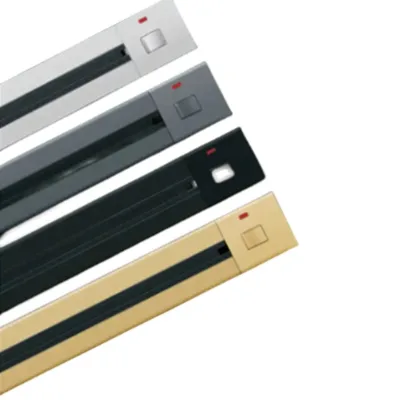
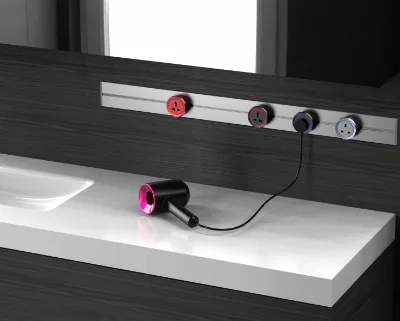
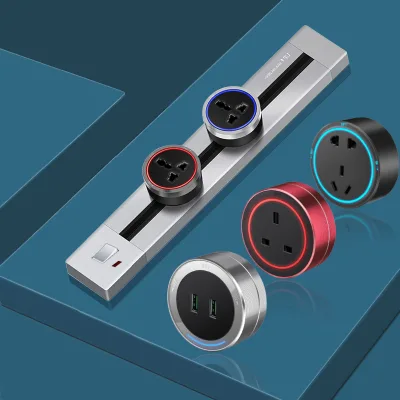
$16.1526 - $26.4265
MOQ: 50 Minimum


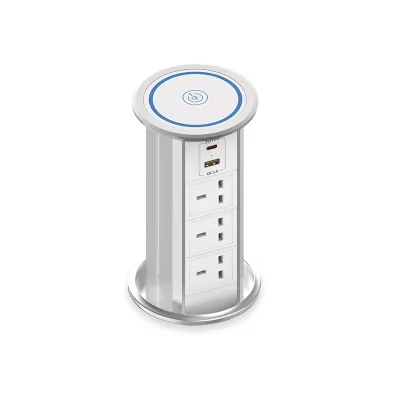
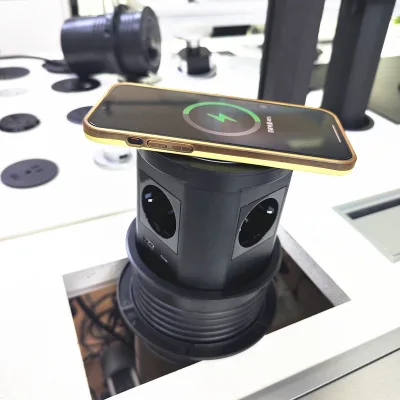
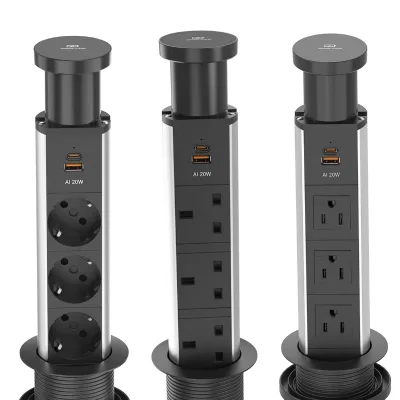
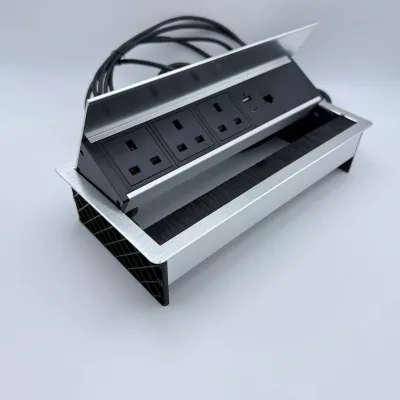
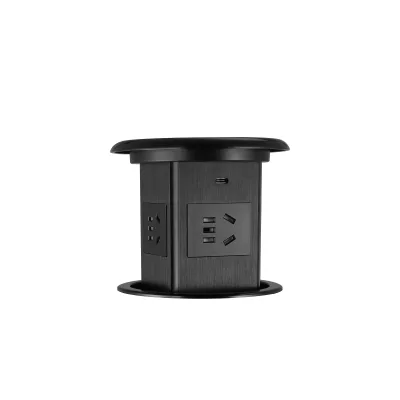
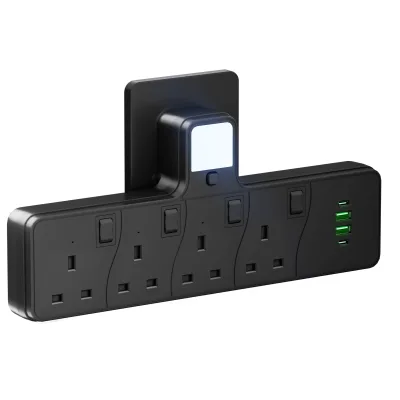
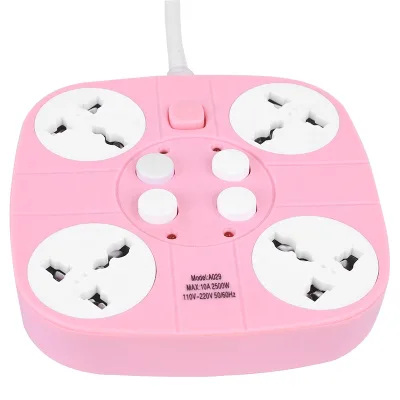
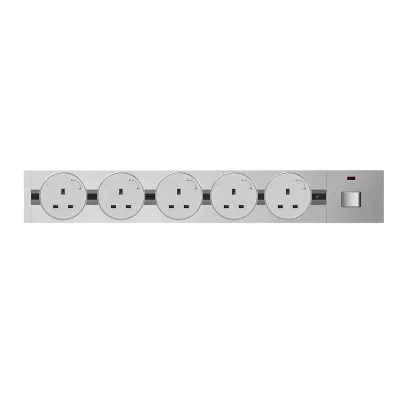




Comprehensive Sourcing Guide
UK Standard Pop Up Socket with Wireless Charge Supplier Concentration and Factory Types
The available data indicates that suppliers for these specialized electrical components are concentrated in Guangdong, China, a region known for its robust manufacturing ecosystem for electrical equipment. This location is explicitly cited as the place of origin for multiple product listings, including motorized pop-up sockets and wireless charging towers. Buyers should prioritize verifying this geographic concentration, as it often correlates with established supply chains for aluminum alloy, glass, and ABS materials used in these units. The presence of a Trading Company structure among the results suggests that some intermediaries facilitate access to factories, while others may operate as direct manufacturers. It is essential to distinguish between these entity types, as trading companies might offer broader product ranges but less direct control over production schedules compared to factories.
When assessing the factory types, buyers must look for specific product evidence that confirms manufacturing capability rather than just resale. The observed product attributes, such as specific model numbers like ZSE-UK and BST-1006, along with detailed material specifications like aluminum alloy and glass, provide clues about the production complexity. Some listings highlight features like IP44 or IP65 ratings and Zigbee or NFC network capabilities, which require specialized assembly lines. Buyers should request proof of these manufacturing capabilities, such as factory audit reports or video tours, to confirm that the supplier can handle the intricate assembly of motorized lifting mechanisms and wireless charging coils. Without such verification, the claim of being a factory may be unsubstantiated, and the buyer risks dealing with a reseller who cannot guarantee quality control or customization.
How to Verify UK Standard Pop Up Socket with Wireless Charge Suppliers
Verification begins with scrutinizing the system certifications and product-specific compliance documents provided in the supplier profile. The data shows a Declaration of Conformity for some listings, while others explicitly mention CE certification for specific models. Buyers must ensure that the certification matches the target market requirements, particularly for UK standards which often demand specific plug configurations and safety ratings. It is critical to request the full certification documents rather than relying on a badge or a brief mention in the product description. The presence of a Declaration of Conformity is a positive signal, but it must be cross-referenced with the specific model number and the intended electrical standards to ensure validity.
Beyond certifications, buyers should validate the supplier's response time and lead time claims through direct communication. The observed response time of 2 hours suggests a high level of operational readiness, but this metric can vary significantly between different suppliers or even within the same company depending on the inquiry type. Buyers should test this responsiveness by asking technical questions about the wireless charging wattage or the motorized mechanism's durability. Additionally, verifying the lead time of 30 days is crucial for production planning. Buyers should ask for a detailed production schedule that breaks down the timeline from order confirmation to shipment, ensuring that the 30-day estimate includes time for quality control checks and packaging. This due diligence helps confirm that the supplier can meet delivery deadlines without compromising on the quality of the electrical components.
What to Compare Across UK Standard Pop Up Socket with Wireless Charge Suppliers
When comparing suppliers, the primary focus should be on the technical specifications and pricing structures associated with different product models. The data reveals a wide range of prices, from approximately 38.68 to 92.00, depending on features like wireless charging power, USB-C output, and material composition. Buyers must compare the rated voltage and current, such as 10A-16A or 13A, to ensure compatibility with their specific electrical infrastructure. The presence of different outlet quantities, ranging from 2 to 3 outlets, and varying USB port configurations, including USB-A and USB-C ports, requires careful evaluation against the end-user's needs. A lower price point might indicate a reduction in material quality, such as using plastic instead of aluminum alloy, which could affect the longevity and safety of the product.
Another critical comparison point is the Minimum Order Quantity (MOQ) and the associated unit costs. The observed MOQs vary significantly, with some suppliers requiring orders as low as 5 units while others demand 50 units. This variation directly impacts the total cost of ownership and the flexibility of the buyer's inventory strategy. Buyers should calculate the effective unit price by dividing the total cost by the quantity, considering that higher MOQs often yield better per-unit pricing. Additionally, the feature set, such as the inclusion of LED lights, audio capabilities, or specific network protocols like Zigbee and NFC, should be weighed against the price difference. A supplier offering a higher MOQ might provide better customization options or more advanced features, but the buyer must determine if these extras justify the increased initial investment and inventory commitment.
Common UK Standard Pop Up Socket with Wireless Charge Sourcing Risks
One significant risk involves the discrepancy between advertised features and actual product performance, particularly regarding wireless charging efficiency and motorized reliability. Some listings claim 15W wireless charging or 20W USB-C output, but without third-party testing reports, these claims remain unverified. Buyers face the risk of receiving products that do not meet the stated power delivery standards, which could lead to customer dissatisfaction or safety hazards. The complexity of integrating wireless charging coils with motorized lifting mechanisms increases the potential for mechanical failure or electrical interference. It is essential to request sample units for independent testing to verify that the wireless charging functions correctly and that the motorized mechanism operates smoothly over repeated cycles.
Another risk is the inconsistency in product standards and plug configurations across different suppliers. The data shows variations in plug standards, including UK, EU, US, AU, and South African configurations, which can lead to confusion if the wrong standard is ordered. Buyers must ensure that the product strictly adheres to the UK standard required for their market, as using a non-compliant plug can result in legal liabilities and safety violations. The risk is compounded if the supplier claims to offer OEM customization but fails to deliver the correct specifications. Buyers should explicitly confirm the plug standard and grounding requirements in writing before placing an order. Additionally, the lack of a unified warranty policy across different suppliers poses a risk, as some listings mention a 1-year warranty while others do not specify any coverage, leaving the buyer vulnerable to defects.
UK Standard Pop Up Socket with Wireless Charge Regional Sourcing and Logistics
Sourcing from Guangdong, China, offers logistical advantages due to the region's well-developed infrastructure for exporting electrical goods. The concentration of suppliers in this area facilitates efficient shipping and reduces transit times to major global ports. However, buyers must account for the specific packaging dimensions and weights observed in the product data, such as single package sizes of 40x20x20 cm or 50x30x20 cm, and weights ranging from 0.76 kg to 4.0 kg. These factors directly influence freight costs and the number of units that can be shipped per container. Buyers should calculate the volumetric weight to optimize shipping costs, especially when ordering smaller MOQs where the cost per unit for shipping might be disproportionately high.
Logistics planning also requires attention to the lead time and the potential for delays in customs clearance. The observed lead time of 30 days is a baseline that may extend due to production bottlenecks or shipping disruptions. Buyers should build a buffer into their supply chain planning to accommodate these variables. Furthermore, the specific packaging requirements, such as the 6pcs/ctn configuration, must be considered when arranging freight. Buyers should verify if the supplier offers consolidated shipping options or if they require separate shipments for different product variants. Understanding the logistics chain from the factory floor in Guangdong to the final destination is crucial for maintaining inventory levels and meeting customer demand without unexpected delays or cost overruns.
UK Standard Pop Up Socket with Wireless Charge Commercial Terms and Order Planning
Commercial terms for these products often include specific payment structures and warranty conditions that must be clearly defined before order placement. The data indicates a warranty period of 1 year for some models, but this is not universal across all suppliers. Buyers should negotiate warranty terms that cover both the electrical components and the motorized mechanisms, as these are the most likely points of failure. Additionally, the price ranges observed, from 38.68 to 92.00, suggest that payment terms may vary based on the order value and the supplier's risk assessment. Buyers should aim for secure payment methods, such as escrow services, to protect their funds until the goods are verified and accepted.
Order planning must align with the supplier's production capacity and the buyer's sales forecasts. The varying MOQs, from 5 to 50 units, allow for flexibility but require careful inventory management to avoid overstocking or stockouts. Buyers should plan their orders based on the lead time of 30 days, ensuring that they place orders well in advance of peak sales seasons. It is also important to consider the customization options available, such as branding or specific feature configurations, which may extend the lead time. Buyers should communicate their customization needs clearly and confirm the additional time required for production. By aligning commercial terms with realistic order planning, buyers can mitigate risks and ensure a smooth supply chain operation for these specialized electrical products.
FAQs
What is the price range for UK pop-up sockets with wireless charging?
Prices for these motorized sockets typically range from approximately $38.68 to $105.00 per unit. The final cost depends on specific features such as USB-C output, material choice, and certification levels. Buyers should request quotes for bulk orders to secure better pricing tiers.
What is the minimum order quantity for these sockets?
The minimum order quantity varies by supplier and product model. Some listings require a minimum of 5 units, while others may demand 50 units or more. Buyers should verify the specific MOQ with the supplier before placing an order to ensure it fits their procurement needs.
How long does production take for these sockets?
Standard lead times for manufacturing these motorized sockets are around 30 days. This duration allows for production, quality control, and preparation for shipment. Buyers should confirm the exact timeline with the supplier, as rush orders or custom specifications might affect the delivery schedule.
What certifications are available for these UK standard sockets?
Common certifications include CE and Declaration of Conformity. These ensure the products meet specific safety and performance standards for the UK and EU markets. Buyers should request valid certification documents from the supplier to verify compliance before finalizing any purchase agreements.
Where are these sockets manufactured?
These products are primarily manufactured in Guangdong, China. This region is known for its robust electrical equipment supply chain. Buyers can verify the specific factory location and production capabilities with the supplier to ensure quality control and logistical efficiency for their orders.
What wireless charging power do these sockets support?
Many models support 15W wireless charging for compatible devices. Some advanced units also include 20W USB-C ports for faster charging. Buyers should check the specific product specifications to ensure the wireless charging power meets their device requirements and usage scenarios.