Automatic Roll-to-Roll DTF Printer Suppliers and Manufacturers
Explore 13 verified suppliers offering Automatic Roll-to-Roll DTF Printer options from China Guangdong. Compare response times, lead times, prices, and certifications like SGS to find the right partner. Contact suppliers directly to request quotes and verify specifications; review the available evidence before requesting comparable quotations from suitable candidates.
Suppliers List

Guangzhou Baicheng Digital Equipment Co., Ltd.
- Verified by SGS
- Trading Company,Manufacturer/Factory
- China Guangdong
- Lead time0 days
- Avg. response≤ 10h
Main productsInkjet Printer, UV Printer, Dtf Printer, UV Dtf Printer, Eco Solvent Printer, Solvent Printer, Sublimation Printer
Guangzhou LETOP International Trade Co., Ltd.
- Verified by SGS
- Combined
- China Guangdong
- Lead time45 days
- Avg. response≤ 2h
Main productsInkjet Printer, Printing Ink, Printing Material, Print Head, Printer Board Kit, Inkjet Printer Spare Parts
Main marketsSouth America

Shaoxing Licai Digital Technology Co., Ltd.
- Verified by SGS
- Trading Company
- China Zhejiang
- Lead time15 days
- Avg. response≤ 4h
Main productsDigital Printer, Sublimation Printer, Dtf Printer, UV Printer, Dtf Ink, UV Ink, Dtf Film, Sublimation Ink, Sublimation Paper, DTG Printer
Main marketsSouth America,North America


Factory Direct-to-Sale A1 Dtf Printer 60cm Four I3200 Printhead Roll-to-Roll Dtf Printer
$11348.00
MOQ: 1 Pieces


Shenzhen Focus Technology Development Co., Ltd.
- Verified by TüVRheinland
- Manufacturer, Trading Company
- Lead time15 days
- Avg. response≤ 3h
Main productsDTF Printer, Package Printer, UV Flatbed Printer, Digital Printer, DTG Printer
Main marketsNorth America(30%), Western Europe(20%), Mid East(15%)
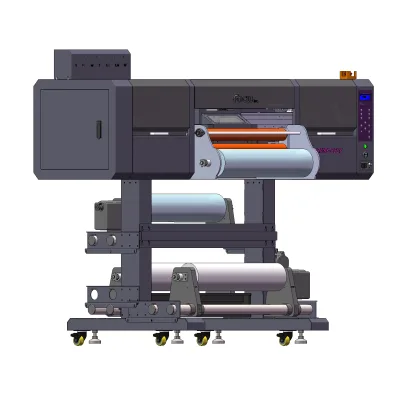
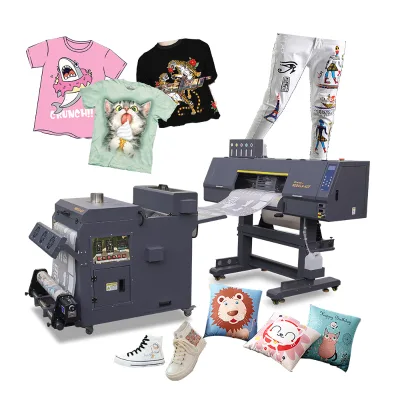
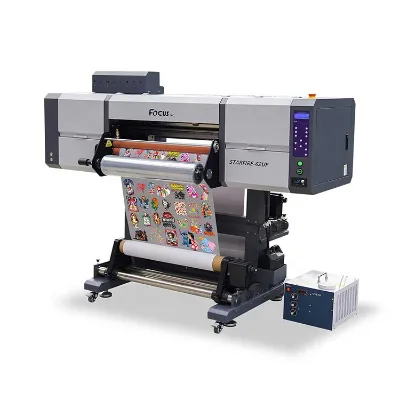
$4927.00 - $5217.00
MOQ: 1 sets

Henan Zhongliqi Printing Material Co., Ltd.
- Verified by SGS
- Trading Company,Manufacturer/Factory
- China Henan
- Lead time0 days
- Avg. response≤ 3h
Main productsDigital Printer, Dtf Printer, UV Printer, UV Dtf Printer, UV Flatbed Printer, Sublimation Printer, Dtf Ink, Sublimation Ink, Offset Ink, Offset Sublimation Ink
Main marketsSouth America,Eastern Europe,Mid East,North America,Southeast Asia,Eastern Asia,Oceania,Western Europe,Africa

Dtf Printer with White Ink Circulation System Direct to Film Printer
$2000.00 - $7000.00
MOQ: 1 Pieces


Guangzhou Fuxin Intelligent Technology Co., Ltd.
- Verified by BV
- Manufacturer/Factory
- China Guangdong
- Lead time23 days
- Avg. response≤ 4h
Main productsDtf Printer, UV Dtf Printer, Sublimation Printer, Sublimation Ink, Dtf Ink, Dtf Pet Film, Eco Solvent Ink, DTG Printer
Main marketsSouth America,Eastern Europe,Mid East,North America,Southeast Asia,Eastern Asia,Western Europe,Africa

Wholesale Automatic Machine T-Shirt Print Dtf Printer 60cm XP600 Roll-to-Roll Printer
$899.00 - $3799.00
MOQ: 1 Pieces


Support Local After-Sales Service UV Dtf Roll to Roll Printer Ab Gold Film
$999.00 - $4699.00
MOQ: 1 Pieces

Commercial 60cm Automatic Dtf Printer Direct to Film Printing Machine with Shaker
$999.00 - $7999.00
MOQ: 1 Pieces

Technical Support 4head Digital Dtf Printer I3200 24inch Roll-to-Roll Dtf Printer Machine
$6999.00 - $7499.00
MOQ: 1 Pieces

1.2m Wide Format Dtf I3200 8 Head Automatic Roll-to-Roll Printer 1-Year Warranty
$999.00 - $21150.00
MOQ: 1 Pieces

Shenzhen Goosam Technology Co., Ltd.
- Verified by SGS
- Trading Company
- China Guangdong
- Lead time15 days
- Avg. response≤ 5h
Main productsDtf Printer, UV Dtf Printe, Sublimation Printer, Dtf Ink, Dtf Powder, Dtf Film /UV Dtf Film, Sublimation Ink /UV Ink/Eco Solvenrt Ink, Pigement Ink, Dey Ink, Ink Cartridge
Main marketsSoutheast Asia/ Mideast,North America

Dtf Printer 600mm High Quality Direct to Film Printing Machine Printer Dtf Film
$3610.00 - $3800.00
MOQ: 1 Pieces


Guangzhou Inktime Digital Technology Co., Ltd.
- Verified by SGS
- Combined
- China Guangdong
- Lead time30 days
- Avg. response≤ 11h
Main productsDtf Printer, Sublimation Printer, Advertising Printer, Dtf Film, Dtf Ink, Sublimation Ink, Sublimation Paper, UV Printer
Main marketsSouth America,Africa,Southeast Asia/ Mideast,East Asia(Japan/ South Korea),Domestic,Europe,North America

Hot Sale A3 UV Dtf Printer Film a Film B Sticker Roll to Roll Adhesive Printer
$240.00 - $4000.00
MOQ: 1 Sets


Xiamen Chenhui Technology Co., Ltd.
- Verified by SGS
- Trading Company,Manufacturer/Factory
- China Fujian
- Lead time15 days
- Avg. response≤ 3h
Main productsUV Printer, UV Dtf Printer, Dtf Printer, UV Flatbed Printer, Packaging Printing Machine, Single Pass Printer, DTG Printer, Corrugated Box Printer, Inkjet Printheads, Printing Cosumable
Main marketsSouth America,Eastern Europe,Mid East,North America,Southeast Asia,Eastern Asia,Oceania,Western Europe,Africa

Compact Roll-to-Roll Dtf Printing Machine A1 Automatic Digital T Shirt Printers with Powder Shaker
$3255.00 - $4355.00
MOQ: 1 Sets

$4355.00 - $8995.00
MOQ: 1 Pieces

Guangzhou Deliyin Digital Technology Co., Ltd.
- Verified by BV
- Manufacturer/Factory
- China Guangdong
- Lead time15 days
- Avg. response≤ 5h
Main productsUV Printer, Dtf Printer, UV Dtf Printer, Wall Printer, Eco Solvent Printer, Solvent Printer, DTG Printer, Heat Press Machine, Sublimation Printer, Inkjet Printer
Main marketsSouth America,Eastern Europe,Mid East,North America,Southeast Asia,Eastern Asia,Oceania,Western Europe,Africa

$3680.00 - $3880.00
MOQ: 1 Sets

24 Inch 60cm UV Dtf Printer Color White Color Roll to Roll Printer Wholesale UV Dtf Printer
$3680.00 - $3880.00
MOQ: 1 Sets

$3680.00 - $3880.00
MOQ: 1 Sets

Dtf Printer A2 XP600 Dtf Printer Printing Machine T-Shirt Printing Machine A3 Dtf Printer
$1805.00 - $2090.00
MOQ: 1 Sets


Guangzhou Xin Flying Digital Technology Co., Ltd
- Verified by TUVRHEINLAND
- Manufacturer/Factory
- China Guangdong
- Lead time15 days
- Avg. response≤ 3h
Main productsDtf Printer, UV Dtf Printer, Sublimation Printer, Sublimation Ink/Eco Solvent Ink/UV Ink, Roller Heat Transfer Machine, Dtf Pet Film, Heat Transfer Paper, Mutoh Digital Printer, Dtf Ink, Dtf Hot Melt Powder
Main marketsSouth America,Eastern Europe,Mid East,North America,Southeast Asia,Eastern Asia,Oceania,Western Europe,Africa

Zhengzhou New Century Digital Technology Co., Ltd.
- Verified by SGS
- Combined
- China Henan
- Lead time15 days
- Avg. response≤ 3h
Main productsDtf Printer, UV Printer, A3 Dtf Printer, Inkjet Printer, Sublimation Printer, UV Dtf Printer
Main marketsSouth America,Africa,Southeast Asia/ Mideast,East Asia(Japan/ South Korea),Domestic,Europe,North America

Zhuhai Lancelot Technology Co., Ltd.
- Combined
- China Guangdong
- Lead time30 days
- Avg. response≤ 14h
Main productsInk, Ink Cartridge, Toner Cartridge
Main marketsAfrica,Southeast Asia/ Mideast,North America

Dtf Printer 60cm Dtf Printer Printing Automatic Machine All in One Dtf Printer
$7746.00 - $7988.00
MOQ: 1 Pieces


Comprehensive Sourcing Guide
Automatic Roll-to-Roll DTF Printer Supplier Concentration and Factory Types
The current supplier landscape for Automatic Roll-to-Roll DTF Printer units shows a distinct concentration in China Guangdong, where multiple manufacturers and trading companies operate. This region serves as a primary hub for the production of inkjet printers, uv printers, dtf printers, and eco solvent printers, creating a dense ecosystem of specialized vendors. The observed data indicates that suppliers in this area often list themselves as a combination of trading companies and manufacturers, suggesting a hybrid model where some entities manage both production and distribution. This dual classification allows buyers to access factory-direct pricing while benefiting from the logistical flexibility of trading firms. The presence of verified suppliers, such as those holding SGS verification, adds a layer of credibility to the regional cluster, though buyers must confirm that verification status applies to the specific entity they engage.
When evaluating the factory types within this concentration, it is crucial to distinguish between pure manufacturers and trading companies that may source from various factories. The available facts reveal that some suppliers offer a wide range of main products, including printing ink, print heads, and board kits, which indicates a comprehensive supply chain capability. Others focus specifically on the printer hardware, such as the A3 size roll-to-roll dtf printer or the 60cm printing machine. Buyers should verify if the supplier claims to be a manufacturer by checking for specific production capabilities like the Hanson mainboard or the specific print head models like XP600 and I3200. Understanding this distinction helps in assessing whether the supplier can provide technical support and spare parts directly or if they rely on third-party vendors for these critical components.
How to Verify Automatic Roll-to-Roll DTF Printer Suppliers
Verification of Automatic Roll-to-Roll DTF Printer suppliers requires a rigorous check of their stated credentials and operational history. The current data highlights that some suppliers have undergone SGS verification, which serves as a tangible proof point for their business legitimacy. However, buyers must not assume that all suppliers in the search results possess this specific certification without direct confirmation. It is essential to request current verification documents and cross-reference them with the supplier's profile to ensure the status is active and not expired. Additionally, the response time metric, which varies significantly among suppliers, can serve as an indirect indicator of operational efficiency. A supplier with a response time of 1.51 hours may demonstrate higher engagement levels compared to one with a slower response, though this should be validated through direct communication rather than relying solely on the displayed number.
Beyond verification badges and response metrics, buyers should scrutinize the product evidence provided to ensure it aligns with the supplier's claims. The product attributes listed, such as the automatic grade, printing interface, and supported systems, must be consistent across different listings from the same supplier. For instance, some products are described as semi-automatic while others are fully automatic, which requires clarification on the specific model being offered. Buyers should also check the origin of the products, as the data confirms that items originate from China or Guangdong, but they must verify if the specific unit they order matches these specifications. Requesting video evidence of the production line or a live demonstration of the printer's functionality can further validate the supplier's ability to deliver the promised Automatic Roll-to-Roll DTF Printer technology.
What to Compare Across Automatic Roll-to-Roll DTF Printer Suppliers
Comparing suppliers for Automatic Roll-to-Roll DTF Printer units involves analyzing several key dimensions, including lead time, minimum order quantity, and pricing structures. The observed data shows a wide range in lead times, with some suppliers indicating a lead time of zero days while others specify a 45-day production window. This variance suggests that inventory availability and production capacity differ significantly between vendors. Buyers should prioritize suppliers who can meet their specific timeline requirements, as a zero lead time might indicate ready stock, whereas a 45-day lead time could imply a custom manufacturing process. Additionally, the minimum order quantity (MOQ) is a critical factor, with some suppliers offering an MOQ of just one unit, making them accessible for small-scale testing, while others may have higher thresholds that require larger capital investment.
Pricing and product specifications also play a vital role in the comparison process. The price range for these printers varies from approximately 470 to 6420, depending on the model, features, and brand. Buyers must carefully examine the product attributes, such as the print head type (XP600, I3200, or I1600), the printing interface (USB2 or USB3), and the supported operating systems (Windows XP or Windows 64-bit). These technical details directly impact the performance and compatibility of the printer with existing workflows. Furthermore, the customization availability and the type of ink used (DTF ink or textile pigment ink) should be compared to ensure the supplier can meet the specific needs of the buyer's production line. By systematically evaluating these factors, buyers can identify the supplier that offers the best balance of cost, speed, and technical capability for their specific application.
Common Automatic Roll-to-Roll DTF Printer Sourcing Risks
One of the primary risks in sourcing automatic roll to roll dtf printers is the potential mismatch between advertised specifications and actual product performance. The data reveals that some products are labeled as semi-automatic while others are automatic, and the distinction can be subtle but critical for production efficiency. Buyers may encounter situations where the claimed automatic grade does not match the reality of the machine's operation, leading to delays and additional training costs. This discrepancy is often exacerbated by the lack of standardized testing results in the provided data, making it difficult to verify the true capabilities of the printer without physical inspection or third-party testing. Therefore, buyers should insist on detailed technical documentation and, if possible, a trial run before committing to a large order.
Another significant risk involves the reliability of the supply chain and the availability of after-sales support. While some suppliers list a lead time of zero, others indicate a 45-day wait, which can disrupt production schedules if not managed correctly. The variation in response times, ranging from 1.51 hours to nearly 10 hours, also highlights the inconsistency in customer service quality. Buyers must assess whether the supplier can provide timely support for maintenance, repairs, and spare parts, especially given the complex nature of the printer components like the Hanson mainboard or the specific print heads. Without a robust support system, any downtime can result in significant financial losses. Consequently, buyers should verify the supplier's track record for handling post-sales issues and ensure that warranty terms are clearly defined and enforceable.
Automatic Roll-to-Roll DTF Printer Regional Sourcing and Logistics
The regional sourcing of automatic roll to roll dtf printers is heavily concentrated in China Guangdong, a hub known for its extensive manufacturing capabilities in the printing industry. This location offers logistical advantages due to its proximity to major shipping ports and a well-developed infrastructure for exporting industrial machinery. However, buyers must be aware that the specific origin of the product, whether it is Guangdong or another part of China, can impact shipping costs and delivery times. The data confirms that products originate from this region, but buyers should verify the exact shipping terms and Incoterms to understand who bears the responsibility for freight and insurance. Understanding the logistics network of the supplier is crucial for planning the arrival of the equipment and minimizing potential delays.
Logistics planning also involves considering the packaging and handling requirements of the printers. The product evidence indicates that items are typically packed in wooden boxes, which provides protection during transit but adds to the overall weight and volume of the shipment. For example, some units have a standard weight of 51kg, while others may be heavier, affecting the choice of shipping method and the associated costs. Buyers should coordinate with their freight forwarders to ensure that the packaging meets the necessary standards for international transport and that the supplier provides accurate dimensions for the wooden boxes. Additionally, the lead time of 45 days for some suppliers means that logistics planning must begin well in advance to avoid bottlenecks in the supply chain. Proper coordination of these logistical elements ensures a smooth transition from order placement to equipment installation.
Automatic Roll-to-Roll DTF Printer Commercial Terms and Order Planning
Commercial terms for Automatic Roll-to-Roll DTF Printer orders must be carefully negotiated to align with the buyer's financial and operational goals. The data shows a wide price range, from 470 to 6420, which necessitates a clear understanding of the total cost of ownership, including shipping, taxes, and installation fees. Buyers should request a detailed quotation that breaks down these costs to avoid unexpected expenses later. Furthermore, the minimum order quantity (MOQ) of one unit for some suppliers offers flexibility for small businesses, while others may require larger orders, impacting the initial capital outlay. It is essential to clarify payment terms, such as the use of escrow services, to protect the buyer's funds until the equipment is delivered and verified.
Order planning for these printers requires a strategic approach to ensure that the procurement process is efficient and effective. The lead time, which can vary from zero to 45 days, must be factored into the production schedule to prevent disruptions. Buyers should establish a clear timeline for order placement, payment, manufacturing, and shipping, ensuring that all parties are aligned on the expected delivery date. Additionally, the customization options available, such as specific print head configurations or software integrations, should be finalized before the order is placed to avoid delays. By planning ahead and maintaining open communication with the supplier, buyers can mitigate risks and ensure that the Automatic Roll-to-Roll DTF Printer is ready for deployment when needed. This proactive approach to order planning is key to successful procurement in this dynamic market.
FAQs
What is the price range for automatic roll to roll dtf printers?
Prices for these printers vary significantly based on specifications and features. Some models are listed starting at 470 dollars, while others range up to 6420 dollars. Buyers should verify specific pricing for their required printing width and automation level before placing an order.
Where are these printers manufactured and what is the origin?
The majority of these machines originate from Guangdong, China. Specific product attributes confirm the place of origin as Guangdong for several models. Buyers should verify the exact factory location and shipping terms with the supplier to ensure compliance with import regulations.
What is the typical lead time for shipping these printers?
Lead times can vary depending on the specific supplier and model selected. One observed supplier indicates a lead time of 45 days for production and delivery. Buyers must confirm the current production schedule and shipping duration directly with the vendor to plan their inventory effectively.
What is the minimum order quantity for these printers?
The minimum order quantity is typically one unit for most available models. This allows buyers to purchase a single machine for testing or small-scale operations. However, bulk pricing may apply for larger orders, so buyers should request a quote for their specific volume requirements.
What printing interfaces and software are supported by these machines?
Most units support USB2 or USB3 interfaces for connecting to computers. Compatible software often includes Riin, Maintop, or Photoprint for RIP processing. The system requirements usually include Windows XP or newer versions, ensuring compatibility with standard office environments for digital printing workflows.
Are customization options available for these roll to roll printers?
Yes, customization is available for many of the listed printer models. Buyers can often request specific modifications to fit their production needs. It is essential to discuss these requirements with the supplier to confirm feasibility, additional costs, and the impact on the overall delivery timeline.
What print heads are commonly used in these automatic printers?
Common print head models include XP600, I1600, and I3200 for high-quality output. Some machines feature a single head while others may support multiple heads for increased speed. The choice of print head affects print resolution and ink consumption, so verify the specific configuration before purchasing.