Full Automatic Eco-solvent Inkjet Printer Suppliers and Manufacturers
Source 14 verified suppliers for Full Automatic Eco-solvent Inkjet Printer units across China. Compare response times, lead times, MOQs, and certifications to identify suitable partners. Submit inquiries to request pricing and technical specifications; review the available evidence before requesting comparable quotations from suitable candidates.
Suppliers List

LINYI YICAI DIGITAL MACHINERY CO., LTD.
- Verified by TUVRHEINLAND
- Combined
- China Shandong
- Lead time15 days
- Avg. response≤ 19h
Main productsUV Printer, UV Flatbed Printer, CNC Rounter, UV Roll to Roll Printer, Digital Inkjet Printer, UV Wallpaper Printer
Main marketsSouth America,Europe

Ningbo Tec Electronic Industry and Trade Co., Ltd.
- Trading Company
- China Zhejiang
- Lead time15 days
- Avg. response≤ 6h
Main productsSolvent Printer, Large Format Printers, Inkjet Printer, Digital Printer, Material for Digital Printing, Inkjet, Exhibition Frames, Solvent Eco Ink, UV Flatbed Printer, DTG Printer
Main marketsSouth America,Africa,Southeast Asia/ Mideast,East Asia(Japan/ South Korea),Europe,Australia,North America


Manufactory Direct Sale Digital Inkjet Printing Machine Eco Solvent Printer
$3000.00 - $10000.00
MOQ: 1 Pieces


Guangzhou Baicheng Digital Equipment Co., Ltd.
- Verified by SGS
- Trading Company,Manufacturer/Factory
- China Guangdong
- Lead time0 days
- Avg. response≤ 10h
Main productsInkjet Printer, UV Printer, Dtf Printer, UV Dtf Printer, Eco Solvent Printer, Solvent Printer, Sublimation Printer

Zhuhai Lancelot Technology Co., Ltd.
- Combined
- China Guangdong
- Lead time30 days
- Avg. response≤ 15h
Main productsInk, Ink Cartridge, Toner Cartridge
Main marketsAfrica,Southeast Asia/ Mideast,North America

Advertising Digital Printing XP600 Eco Solvent Printer Inkjet Printers
$1400.00 - $1700.00
MOQ: 1 Pieces


1.8m Digital Printing XP600 Eco Solvent Printer Inkjet Printers with Single or Double Heads
$1600.00 - $1800.00
MOQ: 1 Pieces


Wuhan Leadjet Science and Technology Development Co., Ltd.
- Verified by BV
- Combined
- China Hubei
- Lead time15 days
- Avg. response≤ 2h
Main productsInkjet Coder, Laser Coder, Cij Printer, Coding Machine, Inkjet Printer, Case Coder, Conveyor, Page Machine, Marking Machine, Industrial Ink Jet
Main marketsSouth America,Southeast Asia/ Mideast,North America


Batch Printing Machine Inkjet Printer Plastic Expiry Date Inkjet Printer
$2400.00 - $2800.00
MOQ: 1 Pieces

Guangzhou Disen Electronic Equipment Co., Ltd.
- Verified by TüVRheinland
- Trading Company
- Lead time7 days
- Avg. response≤ 3h
Main productsApparel Machinery, Printing Machine, Paper Production Machinery, Office Equipment, Industry Laser Equipment
Main marketsAfrica(20%), North America(10%), South America(10%)

Zhejiang Aishijie Digital Technology Co., Ltd.
- Verified by SGS
- Combined
- China Zhejiang
- Lead time15 days
- Avg. response≤ 1h
Main productsTextile Printing Machine, UV Printer, Printing Machinery, 3D Printing Machine, PVC Film Printer, Wall Panel Film Printer, Thermal Transfer Film Printer, Digital Printer, Spc Digital Printing Machine
Main marketsDomestic
Zhengzhou Dana Photoelectric Technology Co., Ltd.
- Verified by TUVRHEINLAND
- Combined
- China Henan
- Lead time15 days
- Avg. response≤ 1h
Main productsLaser Engraving Machine, Tij Printer, Laser Marking
Main marketsSoutheast Asia/ Mideast,Domestic

WILLITA INK JET TECHNOLOGY(WUHAN) CO.,LTD.
- Verified by SGS
- Combined
- China Hubei
- Lead time15 days
- Avg. response≤ 2h
Main productsInkjet Printer, Laser Marking Machine, Tij Inkjet Printer, Industrial Inkjet Printer, Inkjet Printer Inks, Handheld Inkjet Printer, Wall Printer
Main marketsSouth America,Africa,Southeast Asia/ Mideast,East Asia(Japan/ South Korea),Europe,Australia,North America


Inkjet Printer White Ink Tank Inkjet Printer Industrial Inkjet Printer
$1899.00 - $2199.00
MOQ: 1 Pieces


Guangzhou Docod Precision Group Limited
- Verified by BV
- Combined
- China Guangdong
- Lead time15 days
- Avg. response≤ 6h
Main productsContinuous Inkjet Printer, Tlj Online Printer, Tlj Handheld Printer, Dod Large Character Inkjet Printer, Tto Thermal Transfer Overprinter, Laser Marking Machine, Piezo Inkjet Pritner (Pij), Application Equipment, Clj Spare Parts
Main marketsSouth America,Africa,Southeast Asia/ Mideast,East Asia(Japan/ South Korea),Europe


High-Performance Large Character Inkjet Printer for Efficient Coding
$1661.54 - $2492.31
MOQ: 1 Pieces


Guangzhou EC-PACK Packaging Equipment Co., Ltd.
- Verified by BV
- Combined
- China Guangdong
- Lead time15 days
- Avg. response≤ 20h
Main productsLaser Printer, Coding Printer, Cij Inkjet Printer, Dod Inkjet Printer, High Resolution Inkjet Printer, Continous Coding Printer, Inkjet Printer Machine, Coding Printer Machine, Cij Inkjet Printer Machine, Dod Coding Printer
Main marketsSouth America,Africa,Southeast Asia/ Mideast,East Asia(Japan/ South Korea),Europe,Australia,North America

Eco Solvent Printer Machine Continuous Inkjet Printer for Batch Code (EC-JET2000)
$6500.00
MOQ: 1 Pieces


Shanghai Yindao Digital Technology Co., Ltd.
- Trading Company,Manufacturer/Factory,Group Corporation
- China Shanghai
- Lead time15 days
- Avg. response≤ 5h
Main productsUV Printer, Eco Solvent Printer, Dtf Printer, Sublimation Printer, T-Shirt Printer, Solvent Printer, UV Dtf Printer, Inkjet Ink, Large Format Printer, Digital Inkjet Printer
Main marketsSouth America,Eastern Europe,Mid East,North America,Southeast Asia,Eastern Asia,Western Europe,Africa
Guangzhou Wdot Industrial Equipment Co., Ltd.
- Verified by SGS
- Combined
- China Guangdong
- Lead time15 days
- Avg. response≤ 3h
Main marketsSouth America,Southeast Asia/ Mideast

Qingdao Zhongkang Printing and Packaging Machinery Co., Ltd.
- Verified by TUVRHEINLAND
- Trading Company
- China Shandong
- Lead time30 days
- Avg. response≤ 2h
Main productsPacking Machine, Non-Woven Bags, Filling Machine, Capping Machine, Vacuum Packing Machine, Labeling Machine, Strapping Machine, Sealing Machine, Printer Coding Machine, Packaging Bag
Main marketsSouth America,Domestic,Europe


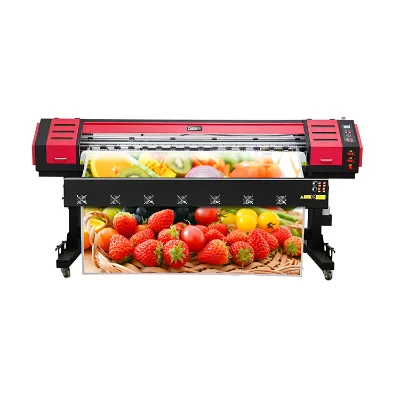
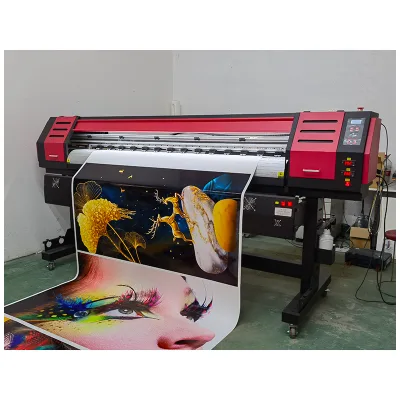
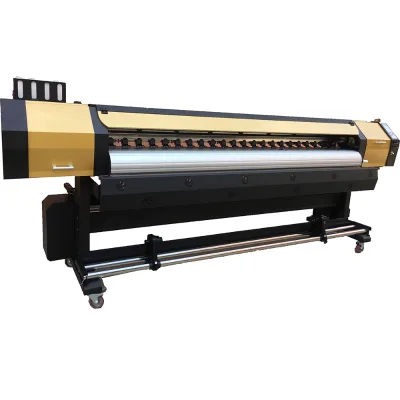


Comprehensive Sourcing Guide
Full Automatic Eco-solvent Inkjet Printer Supplier Concentration and Factory Types
Suppliers of the Full Automatic Eco-solvent Inkjet Printer on B2B platforms are overwhelmingly China-based, and the current results show listings rooted in Shandong, Zhejiang and Guangdong. Each of these provinces plays a slightly different role in the printing machinery supply chain. Shandong-based companies in these results describe themselves as combined manufacturers with ODM and OEM capability, listing main products that span UV flatbed printers, roll-to-roll printers, CNC routers and eco solvent machines. Zhejiang entries appear as trading companies, with Ningbo shown as an origin on one product, and they list a broader mix including solvent printers, printing materials, inks and exhibition frames. Guangdong entries combine trading company and manufacturer/factory labels and focus tightly on inkjet, UV, DTF and eco solvent printing equipment.
Understanding these company types matters because the label affects how you source. A combined manufacturer offering ODM and OEM services can potentially adjust configurations, while a trading company may aggregate machines from multiple factories and bundle consumables such as eco solvent ink. Guangdong's dual trading-and-factory listings suggest hybrid operations that may assemble as well as resell. When scanning results elsewhere, identify clusters by checking the location field, the stated origin on product attributes, and whether the main product list is concentrated in printing machinery or spread across accessories — a narrow, printer-focused list usually signals a closer connection to the production line.
How to Verify Full Automatic Eco-solvent Inkjet Printer Suppliers
Verification starts with the platform-supplied signals in the search results themselves. Some listings here display third-party verification badges — one supplier shows TUV Rheinland verification and another shows SGS — while others display no system certification at all, with the certification field reading NIL. Treat that NIL entry as an explicit gap to close, not an automatic disqualification: request evidence of factory audits, ISO-style quality management documentation, and product-level certificates such as CE, SGS or ISO9001:2015 references, which appear on one product's attribute list in the current results. Never assume a certificate quoted on a product page transfers to the company itself; ask which entity holds it.
Beyond paperwork, verify operational substance. Response time is a usable data point: listings in these results range from roughly five and a half hours to over eighteen hours, so message several candidates and measure actual reply speed against the displayed figure. Confirm the claimed company type — trading company, manufacturer, combined — by requesting a business license, a live video factory walkthrough, and photos of the assembly area with the printer models you are quoting. Ask whether ODM or OEM work is genuinely supported, since this capability is claimed by at least one combined-type supplier in the results but is not a universal feature. Finally, verify that the machine, model number and origin on the listing match what the company confirms in writing, because listings sometimes carry attribute data that appears inconsistent or templated.
What to Compare Across Full Automatic Eco-solvent Inkjet Printer Suppliers
Build a comparison table using the dimensions actually displayed on listings. In the current results you can compare: location (Shandong, Zhejiang, Guangdong), company type (combined, trading, trading plus manufacturer), verification badge (TUV Rheinland, SGS, or none), response time, lead time, and main product breadth. Lead time figures vary meaningfully — one Shandong listing states fifteen days and its product attributes say delivery within fifteen days, while a Guangdong listing shows a lead time of zero, which likely means unstated rather than immediate. Confirm every lead time in writing before ranking suppliers, and remember that some results will not display the attribute at all.
On the product side, compare machine specifications rather than headline prices. The results show 1.6-meter eco solvent models and a TECJET series ranging from 4ft to 10ft widths, with printhead options listed as DX7, DX5, XP600, I1600 and I3200, resolutions up to 1440dpi or 720×1440dpi, and ink compatibility covering eco solvent, water-based and sublimation inks. Compare print width, printhead choice, resolution, packing (wooden box versus plywood appears in the results), warranty length — one listing states one year on the machine and one year on core components, another lists one year after-sales service — and whether customization is available. Quoted price ranges here span from $3,000 to $10,000 depending on configuration, so normalize comparisons to identical printhead and width configurations.
Common Full Automatic Eco-solvent Inkjet Printer Sourcing Risks
The most common risk in this category is specification ambiguity. Product listings sometimes mix inconsistent attribute data — one result pairs a flatbed cylinder press structure with gravure plate types on an eco solvent roll printer, and lists a Windows XP system requirement that signals dated listing templates. Do not rely on listing attributes as the technical contract. Instead, require a written specification sheet confirming printhead model, print width, resolution, ink system, RIP software, voltage (220V appears in one listing) and included spare parts before any deposit. Machines at dramatically different price points can look identical in photos while differing in printhead grade and carriage construction.
A second risk cluster involves supplier identity and after-sales support. Trading companies may not control spare parts inventory or firmware updates, and combined manufacturers offering ODM/OEM may substitute components between order and shipment. Mitigate by naming critical components in the purchase contract, requesting a machinery test report — one Guangdong listing states one is provided — and insisting on a pre-shipment video test printing your own sample files. Warranty terms also vary: one year appears on several listings, but scope differs between machine-wide coverage and core-components-only coverage, so get the warranty scope, response commitments and spare-parts shipping terms in writing. Finally, beware of listings whose origin, model number or packing details conflict across fields; such inconsistencies often indicate aggregator listings rather than the actual seller of the machine.
Full Automatic Eco-solvent Inkjet Printer Regional Sourcing and Logistics
The regional picture from the current results is concentrated in three coastal-facing provinces. Shandong-based combined manufacturers position themselves as production-oriented sources for wide-format printers and adjacent UV and CNC equipment. Zhejiang trading companies, with Ningbo shown as a product origin, sit near one of China's major container ports, which is relevant because machines of this size — one listing cites a packed wooden box and machine dimensions of 4520×1000×850mm — typically ship by sea freight in full or shared containers. Guangdong suppliers combine factory and trading roles and serve a dense electronics and printing equipment ecosystem. These provincial roles are drawn from the supplied results and should be re-verified with each new search.
For logistics planning, treat machine size, packing method and destination port as the variables that drive cost. A 1.6-meter printer with a wooden box or plywood case may fit shared container space, while multi-unit orders of 4ft to 10ft machines usually justify dedicated containers; ask each supplier for packed dimensions and gross weight per unit. Confirm whether the quoted price is FOB from the nearest port or includes inland haulage, since Zhejiang, Shandong and Guangdong suppliers will have different port access. Also clarify customs documentation responsibilities, wooden packaging treatment standards for your import market, and who arranges marine insurance. If you need consumables such as eco solvent ink alongside machines, note that Zhejiang listings include ink and printing materials, which can consolidate a shipment.
Full Automatic Eco-solvent Inkjet Printer Commercial Terms and Order Planning
Commercial terms on the current listings give you a realistic starting frame for negotiation. MOQs shown range from one set on several machines to a MOQ of three on one Zhejiang listing, so single-unit trial orders appear feasible with some suppliers but not all. Prices in the results span roughly $3,000–$3,500 for 1.6-meter models up to $6,700–$7,300 for a 6090-class UV unit, and one series quotes $3,000–$10,000 across widths — confirming that width and printhead configuration, not supplier location alone, drives price. Ask for tiered quotes at one, three and five units, and note that one listing invites inquiries for discounts, suggesting quoted prices are negotiable rather than fixed.
For order planning, sequence payments and milestones around the verified lead time. Where a supplier states fifteen days, build in buffer for QC, packing and port booking; where lead time is unstated, get a written production and shipment calendar before paying a deposit. Use staged payment structures — deposit with balance after pre-shipment inspection — and confirm warranty activation, spare parts inclusion and the machinery test report as delivery conditions. For repeat purchasing, agree on firmware, printhead sourcing and ink supply continuity in the initial contract, since consumable dependency is high in this category. Finally, keep all commercial terms — price, MOQ, warranty, delivery — in a signed document rather than relying on chat records or listing descriptions.
WORD COUNT CHECK: aim ~1390## Full Automatic Eco-solvent Inkjet Printer Supplier Concentration and Factory Types
Suppliers of the Full Automatic Eco-solvent Inkjet Printer on B2B platforms are overwhelmingly China-based, and the current results show listings rooted in Shandong, Zhejiang and Guangdong. Each of these provinces plays a slightly different role in the printing machinery supply chain. Shandong-based companies in these results describe themselves as combined manufacturers with ODM and OEM capability, listing main products that span UV flatbed printers, roll-to-roll printers, CNC routers and eco solvent machines. Zhejiang entries appear as trading companies, with Ningbo shown as an origin on one product, and they list a broader mix including solvent printers, printing materials, inks and exhibition frames. Guangdong entries combine trading company and manufacturer/factory labels and focus tightly on inkjet, UV, DTF and eco solvent printing equipment.
Understanding these company types matters because the label affects how you source. A combined manufacturer offering ODM and OEM services can potentially adjust configurations, while a trading company may aggregate machines from multiple factories and bundle consumables such as eco solvent ink. Guangdong's dual trading-and-factory listings suggest hybrid operations that may assemble as well as resell. When scanning results elsewhere, identify clusters by checking the location field, the stated origin on product attributes, and whether the main product list is concentrated in printing machinery or spread across accessories — a narrow, printer-focused list usually signals a closer connection to the production line.
How to Verify Full Automatic Eco-solvent Inkjet Printer Suppliers
Verification starts with the platform-supplied signals in the search results themselves. Some listings here display third-party verification badges — one supplier shows TUV Rheinland verification and another shows SGS — while others display no system certification at all, with the certification field reading NIL. Treat that NIL entry as an explicit gap to close, not an automatic disqualification: request evidence of factory audits, quality management documentation, and product-level certificates such as the CE, SGS and ISO9001:2015 references that appear on one product's attribute list in the current results. Never assume a certificate quoted on a product page transfers to the company itself; ask which entity holds it and request a copy.
Beyond paperwork, verify operational substance. Response time is a usable data point: listings in these results range from roughly five and a half hours to over eighteen hours, so message several candidates and measure actual reply speed against the displayed figure. Confirm the claimed company type
FAQs
What is the price range for eco solvent inkjet printers?
Prices for these machines typically range from $3,000 to $10,000 depending on specifications. Some entry-level models start at $3,500, while high-resolution options with advanced print heads can reach $7,300. Buyers should verify exact costs through direct inquiries as pricing varies by configuration and included accessories.
What is the minimum order quantity for these printers?
The minimum order quantity is generally one set for most suppliers. However, certain listings specify a minimum of three units for specific models. Buyers should confirm the exact MOQ with the supplier before placing an order to ensure compliance with their specific inventory requirements.
How long does delivery take for these printers?
Standard lead times are approximately 15 days for production and shipping. Some suppliers indicate delivery within 15 days, while others may list zero days for immediate stock availability. Buyers should confirm the exact timeline with the supplier to plan their inventory and project schedules effectively.
Where are these printers manufactured?
Manufacturing locations include China Shandong, China Zhejiang, and China Guangdong. Specific models originate from Ningbo in Zhejiang province. Buyers should verify the exact origin of the machine they intend to purchase to understand logistics, tariffs, and regional manufacturing standards.
What certifications do these printers have?
Common certifications include CE, SGS, and ISO9001:2015. Some suppliers hold TUVRHEINLAND verification, while others have SGS verification. Buyers should request valid certification documents directly from the supplier to ensure the equipment meets international safety and quality standards for their specific market.
What is the typical response time for suppliers?
Supplier response times vary, with some replying within 5.55 hours and others taking up to 18.24 hours. Faster response times often indicate higher availability and customer service efficiency. Buyers should prioritize suppliers with quicker response rates for smoother communication and faster issue resolution.