Contemporary Plastic Baby Playpens Suppliers and Manufacturers
Source Contemporary Plastic Baby Playpens from 10 verified suppliers in China. Compare key dimensions including location, response time, lead time, and MOQ to find the right partner. Review product specifications and certifications to make an informed sourcing decision today; review the available evidence before requesting comparable quotations from suitable candidates.
Suppliers List

Bei Mei Ti Home Supplies (Shenzhen) Co., Ltd
- Verified by BV
- Manufacturer/Factory
- China Guangdong
- Lead time38 days
- Avg. response≤ 6h
Main productsLeather Mat, Baby Play Mats, Dogs Mats, Home Mats, Placemats, Mouse Pads, Kitchen Mats
Main marketsSouth America,Eastern Europe,Mid East,North America,Southeast Asia,Eastern Asia,Oceania,Western Europe,Africa

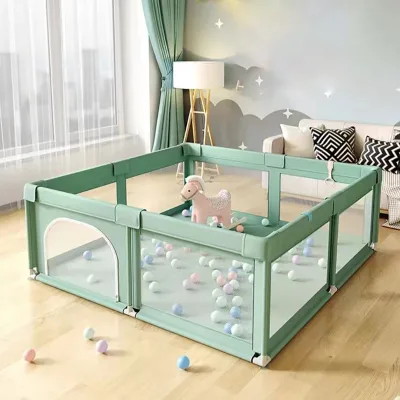
Indoor Baby Fence Kids Play Playpens Children Toddler Playpens Perfect for Playtime
$32.85 - $38.85
Moq: 10


Ningbo Happy Island Baby Products Co., Ltd.
- Verified by SGS
- Manufacturer/Factory
- China Zhejiang
- Lead time60 days
- Avg. response≤ 4h
Main productsBaby Bed, Baby Stroller, Baby Changing Station, Baby Play Pen, Baby Playard, Baby Camp Cot, Baby Travel Bed, Portable Bed, Foldable Cot, Baby Pram
Main marketsSouth America,Eastern Europe,Mid East,North America,Southeast Asia,Eastern Asia,Oceania,Western Europe,Africa

Shandong Memizo New Material Technology Co.,Ltd.
- Verified by BV
- Trading Company
- China Shandong
- Lead time15 days
- Avg. response≤ 5h
Main productsPlay Mat, EVA Mat, Foam Mat
Main marketsSouth America,Southeast Asia/ Mideast,Europe
Ningbo Langlang Children Products Co., Ltd.
- Manufacturer, Trading Company
- Zhejiang, China
- Lead time45 days
- Avg. response≤ 5h
Main productsBaby Crib, Baby Playpen, Baby High Chair
Main marketsWestern Europe(26.0%), South America(16.0%), Eastern Asia(12.0%), North America(12.0%), Mid East(10.0%), Domestic Market(5.0%), Southern Europe(4.0%), Africa(4.0%), Oceania(3.0%), Eastern Europe(3.0%), Central America(2.0%), Northern Europe(2.0%), Southeast Asia(1.0%)
Anhui Cool Baby Science & Technology Development Corporation
- Verified by SGS Group
- Manufacturer, Trading Company
- Lead time45 days
- Avg. response≤ 4h
Main productsBaby Playard, Baby Bassinet, Baby Chair, Baby Stroller, Baby Buggy
Main marketsNorth America(30%), Western Europe(20%), Northern Europe(10%)

Ningbo Tonglu Children Products Co., Ltd.
- Manufacturer
- China Zhejiang
- Lead time30 days
- Avg. response≤ 6h
Main productsKids Tricycle, Kids Furniture, Kids Table, Kids Chair, Kids Balance Bike, Kids Scooter, Kids Bookshelf, Kids Storage Cabinet, Kids Educational Toys, Kids Sofe
Main marketsSouth America,Europe,North America

Linyi Suzaku International Trade Co., Ltd.
- Verified by SGS
- Combined
- China Shandong
- Lead time23 days
- Avg. response≤ 8h
Main productsBaby Playpen, Children's Play Mat, Baby Play Fence, Baby Play Mat, Baby Cotton Play Mat, Playpen Accessories
Main marketsEurope
Hangzhou Erxiangbo Household Products Co., Ltd.
- Verified by Intertek
- Trading Company
- Lead time7 days
Main productsBaby Playpen, Baby Cribs, Baby Bed Rail, Baby Chair, Baby Safety Gate
Main marketsWestern Europe(40%), North America(30%), South America(10%)
Hebei Runshi Import And Export Co., Ltd.
- Trading Company
- Hebei, China
- Lead time0 days
- Avg. response≤ 15h
Main productsartificial grass
Main marketsDomestic Market(10.0%), South Asia(10.0%), Northern Europe(10.0%), Central America(10.0%), Eastern Asia(10.0%), Mid East(10.0%), Africa(10.0%), Southeast Asia(10.0%), South America(10.0%), North America(10.0%)

- Verified by BV
- Combined
- China Zhejiang
- Lead time30 days
- Avg. response≤ 2h
Main productsOutdoor Playground, Indoor Playground, Playground, Playground Kid Outdoor, Playground Equipment, Kids Playground, Swing
Main marketsSouth America,Africa,Southeast Asia/ Mideast,East Asia(Japan/ South Korea),Europe,Australia,North America


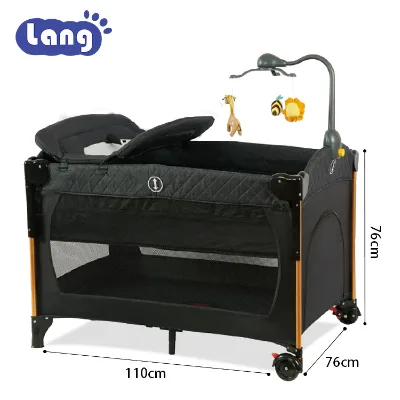
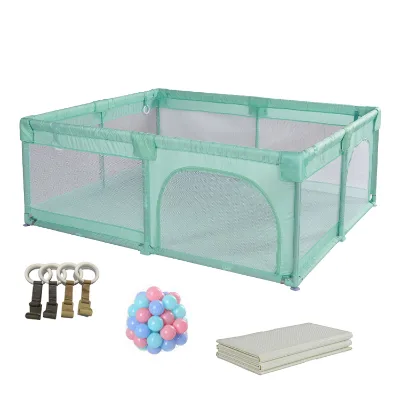
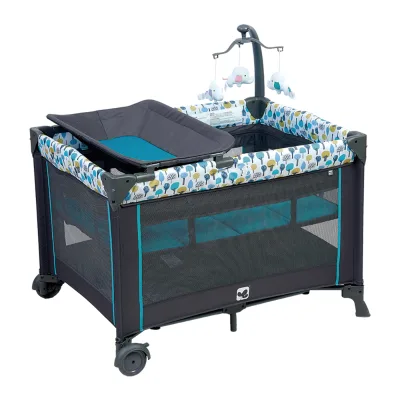
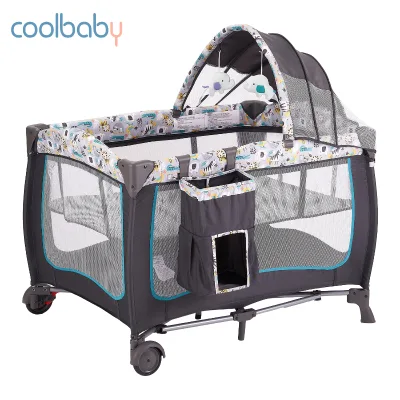




Comprehensive Sourcing Guide
Contemporary Plastic Baby Playpens Supplier Concentration and Factory Types
Current data indicates that manufacturers of Contemporary Plastic Baby Playpens are concentrated in specific Chinese provinces, with Guangdong and Zhejiang emerging as primary hubs for this category. Factories in Guangdong often specialize in a broader range of home mats and play equipment, while Zhejiang-based entities frequently focus on baby furniture and portable playards. These clusters suggest a supply chain where raw material access and specialized molding capabilities are localized, allowing for efficient production scaling. Buyers should verify if a supplier's listed location matches these known manufacturing clusters to ensure they are dealing with a direct producer rather than a middleman.
The supplier types observed in this sector include both direct manufacturers and trading companies, each offering distinct advantages for different procurement strategies. Manufacturers typically hold their own brands and offer OEM or ODM services, providing greater control over customization and quality standards. In contrast, trading companies may aggregate products from multiple factories, offering a wider variety of styles but potentially less direct oversight on the production line. When evaluating a supplier, buyers must confirm whether the entity is a factory or a trading company, as this distinction impacts lead times, communication speed, and the ability to implement specific design changes for contemporary plastic playpens.
How to Verify Contemporary Plastic Baby Playpens Suppliers
Verification of suppliers for Contemporary Plastic Baby Playpens requires a rigorous check of third-party audit reports and system certifications. Available data shows that some suppliers hold BV verification, while others carry SGS credentials, indicating different levels of external scrutiny. Buyers should prioritize suppliers who display active verification badges and cross-reference these with the specific certifications listed, such as ISO 9001 or ISO 14001, which are common in the observed results. It is essential to confirm that the certification covers the specific product line of plastic playpens, as general factory certifications may not guarantee compliance with child safety standards for this specific item.
Beyond physical audits, buyers must scrutinize the product-specific evidence provided in supplier listings to ensure safety and quality compliance. Product attributes often list standards like CPSIA, EN716, or claims of being non-toxic and lead-free, which are critical for baby products. However, these claims must be backed by valid test reports rather than just marketing text. Buyers should request the actual test documentation for the specific model numbers, such as BM251005B or H05, to verify that the plastic materials and structural integrity meet international safety requirements. Relying solely on the presence of a certification label without validating the specific test results for the product model poses a significant risk to product safety and regulatory compliance.
What to Compare Across Contemporary Plastic Baby Playpens Suppliers
When comparing suppliers, lead time and minimum order quantity (MOQ) are critical differentiators that directly impact inventory planning and cash flow. Observed data reveals a wide variance in lead times, ranging from 15 days for some trading companies to 60 days for manufacturers in different regions. Similarly, MOQs fluctuate significantly, with some suppliers requiring as few as 10 pieces while others demand orders of 300 units or more. Buyers must align these constraints with their sales volume forecasts; a supplier with a low MOQ and short lead time may be ideal for testing the market, whereas a high-volume manufacturer might offer better unit economics for established brands.
Response time and customization capabilities also serve as vital comparison metrics for evaluating supplier responsiveness and flexibility. The data indicates response times varying from approximately 3.5 hours to over 5 hours, which can affect the speed of negotiation and problem resolution. Furthermore, while many suppliers offer OEM and ODM services, the extent of customization varies, with some listing "Available" for design changes and others noting "Non-Customized" options. Buyers should compare these attributes to determine which supplier can best adapt to specific design requirements, such as color variations or structural adjustments, without compromising the production schedule or incurring excessive costs for small-batch orders.
Common Contemporary Plastic Baby Playpens Sourcing Risks
One significant risk in sourcing Contemporary Plastic Baby Playpens involves the discrepancy between claimed certifications and actual product safety compliance. Suppliers may list broad system certifications like ISO 9001, but these do not automatically guarantee that the specific plastic playpen models meet rigorous child safety standards such as CPSIA or EN716. There is a risk that a supplier might use substandard materials that pass general factory audits but fail specific product testing for toxicity or structural stability. Buyers must insist on product-specific test reports rather than relying on general company credentials to mitigate the risk of regulatory violations or product recalls in their target markets.
Another critical risk is the potential for supply chain delays caused by inconsistent lead times and capacity constraints. The observed data shows lead times ranging from 15 to 60 days, which can create bottlenecks if a supplier overpromises on delivery schedules. Trading companies might have shorter lead times but less control over production, while manufacturers may offer longer lead times due to complex scheduling. If a buyer places a large order without verifying the supplier's current production capacity or understanding their specific lead time constraints, they risk stockouts or delayed market entry. It is essential to confirm the supplier's ability to meet the required delivery date before finalizing the order to avoid disruptions in the supply chain.
Contemporary Plastic Baby Playpens Regional Sourcing and Logistics
Regional sourcing decisions for Contemporary Plastic Baby Playpens are heavily influenced by the location of the manufacturing clusters, which dictate logistics costs and transit times. Factories in Guangdong and Zhejiang offer distinct logistical advantages, with Guangdong often providing access to major ports for international shipping and Zhejiang offering proximity to other manufacturing hubs. Buyers should evaluate the specific location of the supplier to estimate freight costs and transit durations accurately. Understanding the regional concentration helps in selecting a supplier that minimizes shipping expenses and reduces the overall carbon footprint of the logistics network, which is increasingly important for modern supply chain strategies.
Logistics planning must also account for the packaging standards and dimensions provided by the supplier, as these affect container loading efficiency. Product attributes often specify packing methods like "PE Bag with Carton Box" or "Cardboard Carton," which influence how many units fit into a standard shipping container. Buyers should calculate the volume and weight of the packaged playpens to optimize container utilization and reduce per-unit shipping costs. Additionally, the origin country, typically China, impacts import duties and customs clearance procedures. Buyers need to factor in these regional logistics variables when negotiating prices to ensure the total landed cost remains competitive and aligns with their budget constraints.
Contemporary Plastic Baby Playpens Commercial Terms and Order Planning
Commercial terms for Contemporary Plastic Baby Playpens vary significantly based on the supplier's pricing structure and order volume. Observed price ranges for similar products can span from $15 to $38 per unit, depending on the model, material quality, and customization level. Buyers must analyze these price points in the context of their target margin and the specific features required, such as eco-friendly materials or specific safety certifications. It is crucial to request detailed quotes that break down costs for different order quantities, as unit prices often decrease with higher volumes. Understanding the price elasticity helps in negotiating better terms and securing a competitive advantage in the market.
Order planning requires careful consideration of the supplier's capacity for customization and their ability to handle scale. While many suppliers offer OEM and ODM services, the extent of customization available can impact the production timeline and cost. Buyers should plan their orders to align with the supplier's production cycles, ensuring that design changes or special requests do not cause delays. Additionally, the response time of the supplier, which can range from 3.5 to 5.6 hours, plays a role in how quickly issues can be resolved during the order fulfillment process. Effective order planning involves balancing the need for customization with the constraints of lead time and capacity to ensure a smooth and timely delivery of Contemporary Plastic Baby Playpens.
FAQs
What is the typical lead time for plastic baby playpens?
Lead times vary by supplier and location. One manufacturer in Guangdong reports a 38-day lead time, while a Zhejiang supplier indicates 60 days. A trading company in Shandong offers a faster 15-day turnaround. Buyers should confirm specific timelines based on their chosen supplier and order volume before finalizing purchases.
What are the minimum order quantities for these products?
Minimum order quantities differ significantly across suppliers. One product listing requires a minimum of 10 pieces, while another specifies 300 pieces as the lowest acceptable order. Buyers must check individual product pages to verify the specific MOQ required for their selected model and supplier to ensure compliance with purchasing requirements.
Which certifications do these baby playpens hold?
Many suppliers hold ISO 9001 and ISO 14001 certifications for quality and environmental management. Specific products also carry Cpsia and En716 testing certifications to ensure safety. Some manufacturers maintain OHSAS 18001 and QC 080000 standards. Buyers should verify that the specific product they select matches the required safety and quality certifications.
Where are the manufacturers of these playpens located?
Manufacturers are primarily located in China, with facilities in Guangdong, Zhejiang, and Shandong provinces. Guangdong suppliers often focus on leather and foam mats alongside playpens. Zhejiang and Shandong locations also produce various baby furniture items. Buyers can filter results by these specific regions to find suppliers closest to their logistical needs.
What is the price range for Contemporary Plastic Baby Playpens?
Prices vary based on model and features. One range spans from 32.85 to 38.85 dollars per unit, while another offers prices between 15.00 and 20.00 dollars. A third option lists costs from 20.00 to 30.00 dollars. Buyers should compare specific product listings to determine the exact cost for their required specifications and order quantity.
Do these suppliers offer customization services?
Yes, many suppliers provide customization options including OEM and ODM services. Some listings explicitly state that customization is available for specific models. Buyers can request custom branding or design changes. It is essential to confirm the customization details and any associated costs directly with the supplier before placing an order.
How quickly do suppliers typically respond to inquiries?
Response times vary among the listed suppliers. One manufacturer in Guangdong has a response time of 5.63, while a Zhejiang supplier responds in 3.57. A trading company in Shandong shows a response time of 4.58. Buyers should expect varying reply speeds and may need to follow up to ensure timely communication regarding their sourcing needs.