Custom Shape Titanium Alloy Cube Suppliers and Manufacturers
Compare 21 verified suppliers offering Custom Shape Titanium Alloy Cube products with dimensions ranging from 10mm to 61mm. Review ASTM B265 standards and lead times to select a factory for your specific needs; review the available evidence before requesting comparable quotations from suitable candidates.
Suppliers List
Baoji Hanz Metal Material Co., Ltd.
- Verified by TüVRheinland
- Manufacturer, Trading Company
- Lead time20 days
Main productsTungsten And Alloys, Molybdenum And Alloys, Tantalum And Alloys, Nickel And Alloys, Titanium And Alloys
Main marketsNorth America(25%), Western Europe(20%), Eastern Asia(15%)
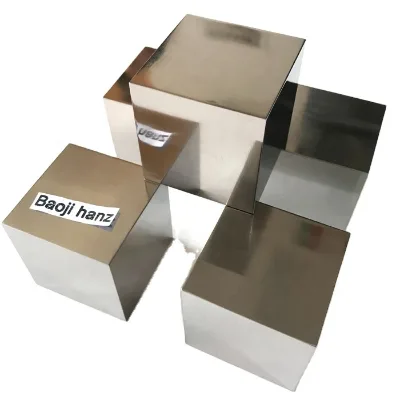
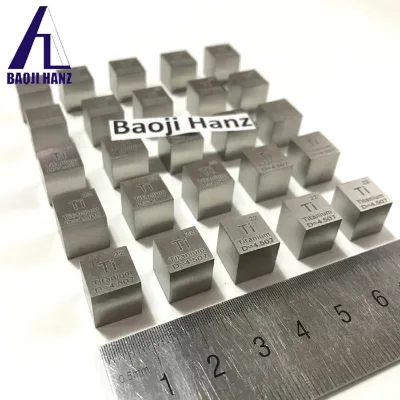
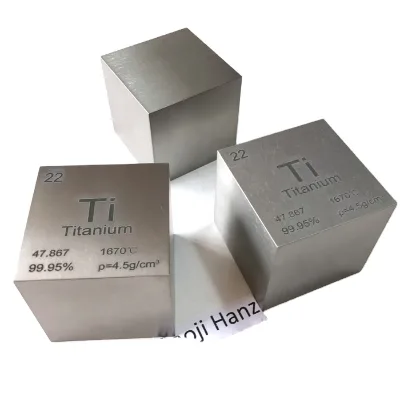
High Quality 1kg Pure Ti Block Titanium Cube
Contact supplier
Shandong Meide Import and Export Co., Ltd.
- Verified by TUVRHEINLAND
- Trading Company
- China Shandong
- Lead time15 days
- Avg. response≤ 8h
Main productsForging Parts, Industrial Machinery Parts, Casting & Forging, Custom Metal Parts, Precision Seamless Steel Tube, Shaped Seamless Steel Tube
Main marketsEurope

LUOYANG COMBAT TUNGSTEN & MOLYBDENUM MATERIAL CO., LTD.
- Verified by TUVRHEINLAND
- Combined
- China Henan
- Lead time30 days
- Avg. response≤ 11h
Main productsTungsten Wire, Molybdenum Wire, Tungsten Plate, Tantalum Sheet, Molybdenum Bar, Nickel Wire, Tungsten Heavy Alloy, W-Cu Alloy, Tzm, Tungsten Copper Alloy
Main marketsSouth America,Southeast Asia/ Mideast,East Asia(Japan/ South Korea),Domestic,Europe,North America

Jinjiang Jiaxing Supply Management Co., Ltd.
- Verified by TUVRHEINLAND
- Trading Company
- China Fujian
- Lead time30 days
- Avg. response≤ 1h
Main productsEVA Clogs, Flip Flop, Shoe Charms, Shopping Bags, Wristbands, Gifts, Promotional Gifts, Slipper, Sport Cap, Ball
Main marketsNorth America

Zhangjiagang Maitan Metal Products Co., Limited
- Trading Company,Manufacturer/Factory
- China Jiangsu
- Lead time23 days
- Avg. response≤ 25h
Main productsTube Sheet, Shell, Channel, Low Fin Tubes, Fin Tube, Titanium Tube, Titanium Plate, Stainless Steel Precision Tubes, Nickel Alloy Tube, Special Alloy Products
Main marketsSouth America,Eastern Europe,Mid East,North America,Southeast Asia,Eastern Asia,Oceania,Western Europe,Africa
Baoji Chengjin Titanium Industry Co., Ltd.
- Verified by TüVRheinland
- Manufacturer, Trading Company
- Lead time15 days
- Avg. response≤ 2h
Main productsTitanium Fasteners, Titanium CNC Processing Parts, Titanium CNC Pipe Parts And Connector, Titanium Bolt, Titanium Screw
Main marketsNorth America(60%), Western Europe(20%), Eastern Europe(4%)

Ningbo Galaxy International Trading Co., Ltd.
- Trading Company,Manufacturer/Factory,Group Corporation
- China Zhejiang
- Lead time23 days
- Avg. response≤ 17h
Main productsTitanium, Titanium Bar, Nickel Base Alloy, Titanium Sheet, Nickel Sheet, Titanium Pipe, Nickel Bar, Titanium Tube, Tantalum Bar, Niobium Bar
Main marketsSouth America,Eastern Europe,Mid East,North America,Southeast Asia,Eastern Asia,Oceania,Western Europe,Africa

Yiwu Justsy Imp & Exp Co., Ltd.
- Verified by BV
- Combined
- China Zhejiang
- Lead time30 days
- Avg. response≤ 3h
Main productsCrystal Award, Crystal Trophy, China Crystal, Crystal Animal Figurines, Crystal Gift, Crystal Craft, 3D Laser Crystal, Crystal Keychain, Crystal Jewelry, Crystal Wine Stopper
Main marketsAfrica,Southeast Asia/ Mideast,East Asia(Japan/ South Korea),Europe,Australia,North America

Tianjin Tiangang Weiye Steel Tube Co., Ltd.
- Manufacturer/Factory
- China Tianjin
- Lead time15 days
- Avg. response≤ 11h
Main productsStainless Steel Pipe, Stainless Steel Plate, Stainless Steel Bar, Alloy Steel Pipe, Stainless Steel Coil, Low Temperature Pipe, Seamless Steel Pipe, Steel Plate, Copper Products, Nickel and Titanium Products
Main marketsSouth America,Eastern Europe,Mid East,North America,Southeast Asia,Eastern Asia,Oceania,Western Europe,Africa

Pujiang E-Thing Craft Co., Ltd.
- Manufacturer/Factory
- China Zhejiang
- Lead time0 days
- Avg. response≤ 7h
Main productsAward, Trophy, Gifts, Award Crafts, Business Gifts, Giveaways, Rewards, Recognition Rewards, Trophies Rewards, Decoration
Main marketsSouth America,Eastern Europe,North America,Western Europe


Clipped Cube Crystal Award (CA-1239)
Contact supplier

Changsha Xinkang Advanced Materials Co., Ltd.
- Verified by TUVRHEINLAND
- Combined
- China Hunan
- Lead time15 days
- Avg. response≤ 5h
Main productsSputtering Targets, Evaporation Materials, High Purity Metal Materials, Alloy Materials, Compound Materials, Metal Test
Main marketsEurope

Baoji Toptech Industrial Co., Ltd.
- Verified by BV
- Trading Company
- China Shaanxi
- Lead time15 days
- Avg. response≤ 2h
Main productsMetal Detector, Needle Detector, Titanium Tube, X Ray Inspection Machine, Walk Through Metal Detector Door, Food Metal Detector, Check Weigher Machines, Conveyor Metal Detector, Titanium Bar, Metal Detection Machine
Main marketsSouth America,Africa,Southeast Asia/ Mideast,East Asia(Japan/ South Korea),Domestic,Europe,Australia,North America

Hangzhou Yangyi Magnetics Co., Ltd.
- Verified by TUVRHEINLAND
- Manufacturer/Factory
- China Zhejiang
- Lead time23 days
- Avg. response≤ 7h
Main productsPermanent Magnet, Neodymium Magnet, Pot Magnet, AlNiCo Magnet, Hook Magnet, Magnetic Name Badge, Rubber Coated Magnet, Ferrite Magnet, Magnetic Bar, Rubber Magnet
Main marketsSouth America,Mid East,North America,Southeast Asia,Eastern Asia,Oceania,Western Europe,Africa

SHAANXI RUIYANG IMPORT EXPORT CO., LTD.
- Verified by TUVRHEINLAND
- Trading Company,Manufacturer/Factory
- China Shaanxi
- Lead time23 days
- Avg. response≤ 6h
Main productsSteel Pipe, Stainless Steel, Steel Wire Rope, Stainless Steel Bar, Aluminium, Anchor Bolt, Marine Hardware, Reformer Tube, Bolts and Nuts, Centrifugal Cast Tube
Main marketsSouth America,Eastern Europe,Mid East,North America,Southeast Asia,Eastern Asia,Oceania,Western Europe,Africa
Xi'an Kefeng Powder Metallurgy Co., Ltd.
- Verified by SGS
- Trading Company,Manufacturer/Factory
- China Shaanxi
- Lead time30 days
- Avg. response≤ 9h
Main productsTungsten Heavy Metal Alloys, Tungsten Rod, China Tungsten Alloy Radiation Shielding Factory, Tungsten Alloy Ball and Cube, Tungsten Plate, Tungsten Ring, Tungsten Alloy Block, Tungsten Alloy Balance, Tungsten Counterweights and Shielding, Tuntungsten Based Heavy Metal Alloy
Main marketsSouth America,Eastern Europe,Mid East,North America,Southeast Asia,Western Europe

- Verified by TUVRHEINLAND
- Manufacturer/Factory
- China Hunan
- Lead time30 days
- Avg. response≤ 10h
Main productsRhenium Metal, Tungsten Metal, Molybdenum Metal, Ruthenium Metal, Tantalum Metal, Niobium Metal, Titanium Metal, Iridium Metal, Refractory Metal, Rare Metal
Main marketsNorth America,Eastern Asia,Western Europe


Manufacturers Custom 25.4mm Elements Collectible Price Concessions Boron Cube/Ingot
Contact supplier
Moq: 1

HUNAN WESTION TECHNOLOGY CO., LTD.
- Combined
- China Hunan
- Lead time23 days
- Avg. response≤ 12h
Main productsTungsten Carbide Additive Powder, Titanium Carbide Powder, Tantalum Carbide Powder, Niobium Carbide Powder, Vanadium Carbide Powder, Chromium Carbide Powder, Molybdenum Carbide Powder, Zirconium Carbide Powder, Hafnium Carbide Powder, Titanium Carbonitride Powder
Main marketsSouth America,Africa,Southeast Asia/ Mideast,East Asia(Japan/ South Korea),Domestic,Europe,Australia,North America

Di Ao International Trade (Tianjin) Co.,Ltd.
- Verified by BV
- Trading Company,Manufacturer/Factory,Group Corporation
- China Tianjin
- Lead time15 days
- Avg. response≤ 3h
Main productsSmart Watch, LED Street Light, LED Flood Light, LED High Bay Light, Solar Light, Steel Wire, Chemical Materials, Plasitc Household Products, Military Boots
Main marketsSouth America,Eastern Europe,Mid East,North America,Southeast Asia,Eastern Asia,Oceania,Western Europe,Africa

CHB ELECTRONICS COMPANY LIMITED
- Trading Company
- China Guangdong
- Lead time15 days
- Avg. response≤ 1h
Main productsTitanium Electrode, Salt Chlorination Cell, Titanium Electrode Mesh, Chlorinator, Ozone Generator, Electrolytic Titanium Electrode, Titanium Plate, Titanium Anode, Water Treatment Electrode Plate, Sodium Hypochlorite Generator
Main marketsEast Asia(Japan/ South Korea),Europe,North America
Wuxi Gelanten Technology Co., Ltd.
- Verified by TUVRHEINLAND
- Manufacturer/Factory
- China Jiangsu
- Lead time23 days
- Avg. response≤ 3h
Main productsCNC Machining Parts, Custom Machining Part, OEM Parts, CNC Machining Service, Custom Machinery Part, Technology Solution Service, High Precision Customized Fixture, High Precision Shaft, Metal Injection Molding Part, Aluminum Casting Mold
Main marketsSouth America,Eastern Europe,Mid East,North America,Southeast Asia,Eastern Asia,Oceania,Western Europe,Africa
Suzhou Youbetter Medical Apparatus Co., Ltd.
- Verified by BV
- Trading Company,Manufacturer/Factory
- China Jiangsu
- Lead time15 days
- Avg. response≤ 16h
Main productsOrthopedic Implants, Orthopedic Instruments, External Fixators, Orthopedic Power Tools, General Instruments, Trauma Implants, Metal Bone Plate and Screw, Spine Implants, Interlocking Nail, Cannulated Screw
Main marketsSouth America,Eastern Europe,Mid East,North America,Southeast Asia,Eastern Asia,Oceania,Western Europe,Africa


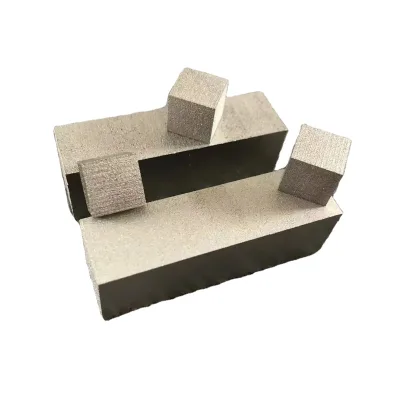


Comprehensive Sourcing Guide
Custom Shape Titanium Alloy Cube Supplier Concentration and Factory Types
The current supplier landscape for custom shape titanium alloy cubes reveals a distinct mix of manufacturing capabilities and trading structures that buyers must navigate carefully. Evidence indicates that the primary producers of these specialized metal components are located in Shaanxi, China, a region known for its robust metallurgical infrastructure. These entities are classified as manufacturers, suggesting they possess the direct operational control over the melting, rolling, and machining processes required to produce high-purity titanium blocks. The presence of specific product attributes, such as ASTM B265 standards and grades like Gr1, Gr2, and Gr5, confirms that these suppliers have the technical capacity to deliver materials that meet rigorous industrial specifications. The ability to offer stock sizes ranging from 10mm to 60mm, along with customized dimensions, highlights a flexible production environment capable of handling both standard inventory and bespoke orders. This concentration in Shaanxi provides a clear geographic anchor for sourcing, allowing buyers to focus their verification efforts on facilities within this specific industrial hub rather than dispersing their search across unrelated regions.
In contrast to the direct manufacturers, the market also includes trading companies that facilitate the procurement of these titanium components. These entities, often located in regions like Shandong and Henan, serve as intermediaries that may aggregate products from multiple factories or offer broader catalogs of industrial machinery parts alongside titanium cubes. While trading companies can provide logistical convenience and potentially lower minimum order quantities for certain items, they introduce an additional layer between the buyer and the actual production source. The distinction between a manufacturer and a trading company is critical because it affects transparency regarding pricing, quality control protocols, and communication efficiency. Buyers seeking direct factory engagement for complex custom shapes should prioritize suppliers explicitly identified as manufacturers, as these entities are more likely to have the in-house engineering teams necessary to interpret and execute non-standard geometric requirements. Understanding this dichotomy helps in structuring initial inquiries and setting appropriate expectations for lead times and technical support.
How to Verify Custom Shape Titanium Alloy Cube Suppliers
Verifying the legitimacy and capability of suppliers requires a multi-layered approach that goes beyond simple profile reviews. One of the most immediate indicators of supplier reliability is the presence of third-party verification badges, such as those from TÜV Rheinland. This verification status suggests that the supplier has undergone external audits regarding their business operations and potentially their manufacturing facilities. Buyers should prioritize suppliers who display this level of independent validation, as it provides a baseline assurance of operational integrity. Additionally, system certifications like ISO9001:2015 are crucial for ensuring that the supplier maintains consistent quality management systems throughout their production process. For titanium cubes, which are often used in high-stakes applications, the presence of such certifications indicates a commitment to standardized procedures in material handling, processing, and final inspection. Buyers should request copies of these certificates and verify their validity through the issuing bodies to ensure they are current and applicable to the specific products being ordered.
Beyond certifications, technical verification involves scrutinizing the specific product attributes and processing services offered. Suppliers claiming to produce custom shape titanium alloy cubes should be able to provide detailed specifications regarding material composition, such as titanium content percentages that meet or exceed 99.95%. The ability to offer specific processing services like cutting, punching, polishing, and machining is a strong indicator of technical competence. Buyers should ask for detailed product data sheets that include density, melting point, and standard compliance, such as ASTM B265. Furthermore, the availability of sample processing services is a significant advantage, as it allows buyers to physically inspect the quality of the material before committing to larger orders. The presence of specific stock sizes and the ability to customize dimensions on demand further demonstrates the supplier's flexibility and technical readiness. By cross-referencing these technical details with the supplier's stated capabilities, buyers can effectively filter out entities that lack the necessary infrastructure to deliver high-quality custom titanium components.
What to Compare Across Custom Shape Titanium Alloy Cube Suppliers
When evaluating multiple suppliers for custom shape titanium alloy cubes, several key commercial and operational metrics must be compared to determine the best fit for specific procurement needs. Lead time is a critical factor, with observed data showing variations such as 20 days for some manufacturers and 15 days for others. These differences can significantly impact project timelines, especially for time-sensitive industrial applications. Buyers should also closely examine the minimum order quantity (MOQ) requirements, which can range from as low as 2 pieces for certain cube products to 10 pieces for forged rings or other related items. Lower MOQs are advantageous for prototyping and small-batch production, while higher MOQs may offer better unit economics for large-scale manufacturing. Response time is another important metric, with some suppliers demonstrating rapid communication capabilities, indicated by response times under 8 hours. Fast response times are essential for resolving technical queries and negotiating custom specifications efficiently.
Price structures and main product focus also play a vital role in supplier selection. Price ranges for titanium cubes can vary widely, with some products starting at low single-digit prices per unit while others command higher premiums based on size, grade, and surface finish. Buyers should compare not just the unit price but also the total cost of ownership, including packaging and shipping. The main products listed by each supplier provide insight into their core competencies; manufacturers specializing in tungsten, molybdenum, and titanium alloys are likely to have deeper expertise in these materials compared to general trading companies. Additionally, the availability of customization options, such as specific surface treatments like mirror polishing or passivation, should be compared. Suppliers that offer a broader range of processing services, including hot rolling, cold rolling, and sintering, may provide more comprehensive solutions for complex custom shapes. By systematically comparing these attributes, buyers can identify suppliers that offer the best balance of cost, speed, and technical capability for their specific requirements.
Common Custom Shape Titanium Alloy Cube Sourcing Risks
Sourcing custom shape titanium alloy cubes involves several inherent risks that buyers must actively manage to ensure successful procurement. One significant risk is the potential mismatch between advertised capabilities and actual production capacity. While suppliers may claim to offer extensive customization, the reality of their machinery and expertise might be limited to standard sizes and simple geometries. This discrepancy can lead to delays, increased costs, or suboptimal product quality if the supplier lacks the necessary CNC machining or forging equipment for complex shapes. Another risk is the variability in material quality, particularly regarding titanium purity and grade consistency. Although suppliers may state that their titanium content is above 99.95%, without rigorous testing and certification, there is a risk of receiving material that does not meet the specified standards. This is particularly critical for applications requiring high corrosion resistance or specific mechanical properties, where deviations in material composition can have severe consequences.
Logistical and communication risks are also prevalent in international sourcing. Differences in time zones and language barriers can lead to misunderstandings regarding technical specifications, leading to errors in production. Additionally, the reliance on trading companies can obscure the true origin of the materials, making it difficult to trace quality issues back to the source. Buyers must also be cautious of pricing structures that seem unusually low, as this may indicate the use of inferior materials or shortcuts in the manufacturing process. The risk of intellectual property leakage is another concern when sharing detailed custom designs with suppliers, especially if they also serve competitors. To mitigate these risks, buyers should implement strict quality control measures, including third-party inspections and material testing, before finalizing payments. Clear and detailed contracts that specify technical requirements, quality standards, and liability clauses are essential for protecting the buyer's interests and ensuring that the supplier is held accountable for delivering products that meet the agreed-upon specifications.
Custom Shape Titanium Alloy Cube Regional Sourcing and Logistics
The geographic location of suppliers significantly influences logistics, lead times, and overall sourcing strategy for custom shape titanium alloy cubes. Evidence points to Shaanxi, China, as a primary manufacturing hub for these products, leveraging the region's established metallurgical industry. Sourcing from this region offers access to specialized manufacturers with deep expertise in titanium processing, but it also requires careful consideration of transportation routes and customs procedures. Buyers should evaluate the proximity of the supplier to major ports or logistics hubs to minimize transit times and costs. For suppliers located in other regions, such as Shandong or Henan, the logistics profile may differ, potentially offering alternative shipping options or closer proximity to specific international markets. Understanding the regional infrastructure helps in planning efficient supply chains and anticipating potential bottlenecks during peak production seasons or global logistics disruptions.
Logistics planning must also account for the specific packaging and handling requirements of titanium cubes. These materials are dense and can be heavy, requiring robust packaging to prevent damage during transit. Suppliers often provide standard export packing, but buyers should verify that the packaging meets international shipping standards to avoid damage or loss. The single package size and gross weight, such as 30x30x35 cm and 3.000 kg for certain cubes, are critical factors in calculating shipping costs and determining the optimal mode of transport. For smaller quantities, air freight may be considered for speed, while larger orders are typically shipped via sea freight to reduce costs. Buyers should work closely with their suppliers to consolidate shipments and optimize container utilization. Additionally, understanding the import regulations and tariffs in the destination country is essential for accurate cost estimation. By integrating regional logistics insights into their sourcing strategy, buyers can streamline the procurement process and ensure timely delivery of custom titanium components.
Custom Shape Titanium Alloy Cube Commercial Terms and Order Planning
Effective order planning for custom shape titanium alloy cubes requires a thorough understanding of commercial terms and payment structures. Minimum order quantities (MOQs) vary significantly, with some suppliers requiring as few as 2 pieces for specific cube products, while others may have higher thresholds for custom or forged items. Buyers should align their order volumes with the supplier's MOQs to avoid unnecessary costs or production delays. Payment terms are another critical aspect, with options ranging from partial upfront payments to full payment upon completion. Using secure payment methods, such as escrow services, can provide an additional layer of protection for both parties, ensuring that funds are released only when the goods meet the agreed-upon specifications. Buyers should negotiate clear terms regarding delivery schedules, inspection rights, and return policies to mitigate financial risks.
Lead times and production schedules must be carefully coordinated to align with project deadlines. Observed lead times of 15 to 20 days indicate that suppliers require a reasonable amount of time for processing, machining, and quality control. Buyers should factor in additional time for shipping and customs clearance when planning their inventory. Communication is key to successful order execution, with suppliers demonstrating response times under 8 hours being preferable for resolving issues quickly. Buyers should establish a clear point of contact and regular update protocols to monitor production progress. Additionally, understanding the supplier's capacity for handling rush orders or changes in specifications is important for managing unexpected project requirements. By developing a comprehensive commercial strategy that addresses MOQs, payment terms, lead times, and communication protocols, buyers can ensure a smooth and efficient procurement process for custom shape titanium alloy cubes.
FAQs
What is the minimum order quantity for titanium cubes?
The minimum order quantity varies by product type. For polished small cubes, the MOQ is typically 5 pieces. For larger mirror-finish cubes, the MOQ is 2 pieces. Buyers should check specific product listings to confirm the exact quantity required for their order.
What are the available stock sizes for titanium cubes?
Common stock sizes include 10mm, 25.4mm, 38.1mm, and 60mm. Some suppliers offer specific dimensions like 10mm or 1-inch cubes. Custom sizes are also available upon request. Buyers should verify the exact dimensions needed for their application before placing an order.
What is the lead time for titanium cube orders?
The lead time for titanium cubes is generally around 20 days. Some suppliers may offer faster turnaround times depending on stock availability. Buyers should confirm the exact lead time with the supplier before finalizing their purchase to ensure timely delivery for their project.
What standards do titanium cubes meet?
Titanium cubes typically meet the ASTM B265 standard. This ensures quality and consistency for industrial applications. Buyers should verify that the supplier provides certification for the specific grade required. This standard is widely recognized for titanium and titanium alloy products.
What is the price range for titanium cubes?
Prices for titanium cubes range from $1.53 to $65.00 per piece. The cost depends on the size, grade, and surface finish. Smaller cubes are generally less expensive. Buyers should request quotes for their specific requirements to get an accurate price estimate.
What grades of titanium are available for cubes?
Available grades include Gr1, Gr2, and Gr5. These grades offer different levels of strength and corrosion resistance. Gr1 and Gr2 are commercially pure, while Gr5 is a titanium alloy. Buyers should select the grade that best suits their mechanical and chemical requirements.