Eco-Friendly Knitted Cotton Polyester T-Shirt Suppliers and Manufacturers
Source 20 verified suppliers for Eco-Friendly Knitted Cotton Polyester T-Shirt. Compare pricing, MOQ, lead times, and customization options from Shanghai-based factories. Request quotes to secure competitive terms; review the available evidence before requesting comparable quotations from suitable candidates.
Suppliers List

Shanghai Touch Industrial Development Co., Ltd.
- Verified by TUVRHEINLAND
- Combined
- China Shanghai
- Lead time15 days
Main productsInstant Hot Pack, Hot Cold Pack, Gel Eye Mask, Gel Ice Pack, Gel Bottle Cooler, Instant Ice Pack, Hand Warmer, Heat Pack, Cooling Scarf, Gel Beads
Main marketsSouth America,Others(foreignTradeCapacity.exportBusinessCapacityMarketOther),Southeast Asia/ Mideast,East Asia(Japan/ South Korea),Domestic,Europe,Australia,North America

Shanghai Easun Group Imp & Exp Co., Ltd.
- Verified by BV
- Trading Company
- China Shanghai
- Lead time15 days
Main productsHoodies, Pajamas, T-Shirt, Bath Robe, Sleepwear, Polo Shirts, Safety Shoes
Main marketsAfrica

- Verified by CTI
- Trading Company
- China Anhui
- Lead time23 days
Main productsFurniture, Home Furniture
Main marketsSoutheast Asia/ Mideast

Guangzhou Colorful Clothing Co., Ltd.
- Verified by SGS
- Combined
- China Guangdong
- Lead time15 days
Main productsT Shirt, Polo Shirt, Work Uniform, School Uniform, Restaurant Staff Uniform, Security Guard Uniform, Jackets, Pants, Shirts, Hoodies
Main marketsAfrica,Southeast Asia/ Mideast,Australia,North America


Short Sleeve Crew Neck T-Shirt Cotton Soft Breathable Comfortable Fabric Anti-Wrinkle T Shirts
$2.99 - $3.99
MOQ: 100 Piece

Guangzhou Vision Clothing Co., Ltd.
- Verified by BV
- Combined
- China Guangdong
- Lead time15 days
Main productsT-Shirt, Hoodie, Polo Shirt, Sweatpants
Main marketsSouth America,Southeast Asia/ Mideast,Europe,Australia,North America

Custom Men′ S Pure-Color T-Shirt Eco-Friendly Shirt Organic Cotton T-Shirt
$4.99 - $7.39
MOQ: 30 Pieces


Guangzhou Ouzun Clothing Co., Ltd.
- Verified by CTI
- Combined
- China Guangdong
- Lead time23 days
Main productsUniforms, Pants, Suits&Blazer, T Shirt, Polo Shirt, Sportswear, Jacket, Hoodies&Sweatshirts
Main marketsDomestic

Eco-Friendly Recycled Polyester Blended Plain T-Shirt for Sustainable Fashion T Shirts
$3.99 - $8.99
MOQ: 100 Pieces

Recycled Polyester Sustainable T-Shirt for Environmental Friendly Clothing Line T Shirts
$3.99 - $8.99
MOQ: 100 Pieces

Biodegradable Material Custom Logo Plain T-Shirt for Environmental Campaign T Shirts
$3.99 - $8.99
MOQ: 100 Pieces
- Verified by SGS
- Trading Company
- China Zhejiang
- Lead time15 days
Main productsT-Shirt, Hoodie, Shorts, Baseball Cap, Sweatshirt, Pants, Gym Wear, Football Jersey, Waistcoat, Hat
Main marketsSouth America,Southeast Asia/ Mideast,East Asia(Japan/ South Korea),Domestic,Europe,Australia,North America


High Quality Custom Knitted Men's T-Shirts Blank 100%Cotton Plain T Shirt
$2.99 - $4.20
MOQ: 50 Pieces

Custom 100% Cotton Knitted Eco-Friendly Heavyweight Breathable Men's T-Shirts-Blank Short Sleeve
$7.19 - $9.12
MOQ: 50 Pieces


Yancheng City Zhou Chi Imp. & Exp. Co. Ltd.
- Verified by TUVRHEINLAND
- Trading Company
- China Jiangsu
- Lead time23 days
Main productsApparel, T Shirt, Hoodies, Shorts, Leggings, Jackets, Woven Shirts
Main marketsSoutheast Asia/ Mideast,Europe,North America
Guangzhou Tianyuan Clothing Co., Ltd
- Verified by SGS
- Combined
- China Guangdong
- Lead time30 days
Main productsPolo Shirt, Shirt, Suit, T-Shirt, School Uniform, Hooded Sweatshirt, Medical Uniform, Chef's Uniform, Trousers, Work Clothes
Main marketsDomestic
Zhousi (Shenzhen) Clothing Co., Ltd.
- Verified by CTI
- Trading Company
- China Guangdong
- Lead time23 days
Main marketsDomestic

Shandong Rangde Garments Co.,Ltd
- Verified by CTI
- Trading Company
- China Shandong
- Lead time30 days
Main productsT-Shirt, Clothing
Main marketsEast Asia(Japan/ South Korea)

Foshan Dopoo Sportswear Co., Ltd.
- Verified by TUVRHEINLAND
- Trading Company
- China Guangdong
- Lead time30 days
Main productsSportswear, Hoodies, Baseball Jersey, Basketball Jersey, Fishing Shirts, Apparel, Jacket Jersey, Hockey Jersey, Cheerleading Uniform, Running Shirts
Main marketsNorth America

Shenzhen Fly-High Industry Co., Ltd.
- Trading Company,Manufacturer/Factory,Group Corporation
- China Guangdong
- Lead time23 days
Main productsT-Shirt, Polo Shirt, Promotional Items, Cap, Apron, Jacket, Scarf, Singlet, Towel, Hat
Main marketsSouth America,Eastern Europe,Mid East,North America,Southeast Asia,Eastern Asia,Oceania,Africa

Yan Cheng Jie Chanel Fashion Co., Ltd.
- Verified by TUVRHEINLAND
- Combined
- China Jiangsu
- Lead time15 days
Main productsThe North Face-Summit, Outdoor Equipment, Outdoor Travel Shoes, Backpack (Outdoor Bag), Sunscreen Clothes, Quick Drying, Fleece, Outdoor Shirt, Tactical Trousers, Winter Clothes
Main marketsDomestic

Shanghai David International Trade Co., Ltd.
- Verified by TUVRHEINLAND
- Combined
- China Shanghai
- Lead time15 days
Main productsPromotional Gifts, Gift Sets, Tshirts, Hats, Hot Packs, Hot Cold Packs, Ice Packs, Bags, Umbrellas, Water Bottles
Main marketsSouth America,Africa,Southeast Asia/ Mideast,East Asia(Japan/ South Korea),Domestic,Europe,Australia,North America


High Quality T-Shirts Custom Printing 100% Cotton T-Shirts
MOQ: 500 Pieces

- Verified by TUVRHEINLAND
- Trading Company,Manufacturer/Factory
- China Chongqing
- Lead time38 days
Main productsBaseball Cap, Beanie Hat, Trucker Hat, Bucket Hat, Snapback Hat, Scarf, Gloves, Apron, Sock, T Shirt&Polo Shirt
Main marketsSouth America,Eastern Europe,Mid East,North America,Southeast Asia,Eastern Asia,Oceania,Western Europe,Africa
Fuzhou Depshine International Trading Co., Ltd.
- Verified by SGS Group
- Trading Company
- Fujian, China
- Lead time8 days
- Avg. response≤ 2h
Main productsT Shirt, Hoodie, Sweat Suit, Jacket, Hat
Main marketsNorth America(80%), Northern Europe(10%), Western Europe(8%)

Guangzhou Fengrong Clothing Co., Ltd.
- Verified by SGS
- Combined
- China Guangdong
- Lead time15 days
Main productsT-Shirt, Hoodie, Jacket, Trousers, Shorts
Main marketsDomestic

Blank Mock Neck Oversized T-Shirt Recycled Cotton with Eco-Friendly Print Customization
$7.96 - $8.43
MOQ: 50 Pieces

Promotional Basic Short Sleeve T-Shirt with Flexible Customization Options
$5.97 - $6.32
MOQ: 50 Pieces

Ningbo V.k. Industry And Trading Co., Ltd.
- Verified by SGS
- Combined
- China Zhejiang
- Lead time60 days
Main productsFlannel Fleece Blanket, Sherpa Throw Blanket, Dog Waterproof Blanket, Fleece Bathrobe, PVC Leather, TV Blanket, Down Coat, PV Fleece Blanket, Bazin Riche, Ice Bath Tub
Main marketsSouth America,Africa,Southeast Asia/ Mideast,East Asia(Japan/ South Korea),Domestic,Europe,Australia,North America

Nc Isa Industry and Trade Company
- Verified by TUVRHEINLAND
- Combined
- China Jiangxi
- Lead time23 days
Main productsT Shirt, Polo Shirt, Cap, Sweatshirt, Baseball Shirt, Tank Top, Shorts, Tote Bag, Hoodies, Sportswear
Main marketsEurope,North America

Customizable High Quality Cotton T-Shirts for Men Soft & Lightweight for Outdoor
$5.90 - $7.90
MOQ: 100 Pieces




Comprehensive Sourcing Guide
Eco-Friendly Knitted Cotton Polyester T-Shirt Supplier Concentration and Factory Types
Current data indicates a specific concentration of manufacturing activity in Shanghai, China, where suppliers list their origin for knitted cotton polyester t-shirts. This location serves as a verified hub for companies offering both OEM and ODM capabilities, allowing buyers to access factories that can handle custom designs and branding directly. The supplier pool includes combined entities and trading companies, suggesting a mix of direct manufacturing and sourcing intermediaries. Buyers should note that while some suppliers explicitly state Shanghai as their origin, others may list China generally, requiring careful verification of the specific factory address before committing to an order.
Factory types vary significantly within this category, ranging from combined entities that manage both production and sales to pure trading companies that facilitate transactions between buyers and external manufacturers. The presence of ODM and OEM capacity confirms that many suppliers can adapt existing designs or create new ones based on buyer specifications. However, the main product lists also include items like hoodies, pajamas, and safety shoes, indicating that some suppliers operate as general apparel manufacturers rather than specialists in t-shirts. Buyers must distinguish between suppliers whose primary focus is knitted cotton polyester t-shirts and those for whom this is a secondary product line to ensure dedicated production capacity.
How to Verify Eco-Friendly Knitted Cotton Polyester T-Shirt Suppliers
Verification processes for suppliers in this category rely heavily on third-party audit results and specific credential checks. Some suppliers in the current results display TUVRHEINLAND or BV verification status, which serves as a tangible indicator of operational legitimacy. Buyers should prioritize suppliers with these visible verification badges, as they suggest that an independent body has assessed the company's business practices and facility conditions. It is critical to confirm that the verification covers the specific product line of knitted cotton polyester t-shirts, as a general company audit may not validate the quality controls specific to textile manufacturing.
Beyond verification badges, buyers must scrutinize the product evidence provided to ensure it matches the "eco-friendly" and "knitted" claims. The available data shows product attributes such as "Knitted" technics and materials like "100% Cotton" or "100% Polyester," but explicit eco-certifications like GOTS or Oeko-Tex are not universally present in the current supplier facts. In the absence of specific eco-certification data, buyers should request test reports directly from the supplier to confirm the environmental claims. Relying solely on marketing keywords without physical evidence of certification or material testing can lead to sourcing products that do not meet the intended sustainability standards.
What to Compare Across Eco-Friendly Knitted Cotton Polyester T-Shirt Suppliers
When evaluating multiple suppliers, the primary comparison points should include lead times, minimum order quantities, and price ranges, as these vary significantly across the supplier pool. Current data reveals lead times of approximately 15 days for some suppliers, while others may have different production schedules not explicitly listed. Minimum order quantities range from 300 pieces to 3000 pieces, with specific products showing MOQs of 500, 1000, or 3000 units. Buyers must align these thresholds with their inventory needs, as ordering below the MOQ may result in higher unit costs or refusal of the order. Price comparisons should also account for the wide range observed, from as low as $0.70 to as high as $5.00 per unit, depending on material composition and customization levels.
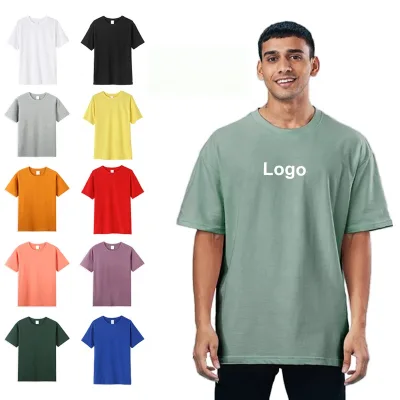
Customization capabilities and product attributes offer another critical dimension for comparison. Some suppliers offer "Print or Embroidery" logo options, while others are limited to printing only. The material composition varies between 100% cotton, 100% polyester, and blended options, which directly impacts the "eco-friendly" nature of the final product. Buyers should compare the specific product attributes listed, such as "Breathable," "Moisture Absorption," and "Compressed" features, to ensure the t-shirts meet functional requirements. Additionally, packaging standards differ, with some suppliers using paper cartons and others using polybags, which affects the final presentation and shipping costs.
Common Eco-Friendly Knitted Cotton Polyester T-Shirt Sourcing Risks
One significant risk involves the discrepancy between claimed eco-friendly attributes and actual material composition. While product keywords often highlight "Cotton" or "Polyester," the specific blend ratios and the source of the fibers are not always detailed in the initial product evidence. A supplier might list "100% Cotton" but fail to provide proof of organic certification, leading to a product that is cotton but not necessarily eco-friendly in the way the buyer intends. Without explicit certification data in the supplier facts, buyers face the risk of receiving standard cotton t-shirts that do not meet their sustainability criteria, potentially damaging their brand reputation.
Another risk stems from the variability in minimum order quantities and the potential for hidden costs associated with customization. Suppliers with high MOQs, such as 3000 pieces, may require significant capital investment upfront, which can be risky for new product launches. Furthermore, the customization options, while available, often come with additional costs for printing or embroidery that are not always clearly itemized in the base price. Buyers must verify if the quoted price includes all customization fees, packaging, and shipping to avoid budget overruns. The lack of standardized response times and establishment years in the current data also adds uncertainty regarding the supplier's reliability and ability to meet deadlines consistently.
Eco-Friendly Knitted Cotton Polyester T-Shirt Regional Sourcing and Logistics
The primary sourcing region identified in the current data is Shanghai, China, which serves as a central hub for apparel manufacturing. This location offers logistical advantages due to its proximity to major ports, facilitating efficient export of goods. However, buyers must verify the exact factory location, as some suppliers may list "China" generally without specifying the city. If a supplier claims to be in Shanghai, buyers should confirm this address to ensure the logistics chain is streamlined. For suppliers not explicitly located in Shanghai, buyers need to investigate their specific regional location to estimate shipping times and freight costs accurately.
Logistics planning must also account for the varying packaging standards observed across suppliers. Some products are packed in paper cartons, while others use polybags, which affects the volume and weight of the shipment. Buyers should calculate the total shipping volume based on the specific packaging method to optimize container space and reduce freight costs. Additionally, the lead time of 15 days mentioned for some suppliers must be factored into the overall delivery schedule, including the time required for customs clearance and inland transportation. Understanding these regional and logistical nuances is essential for maintaining a reliable supply chain and meeting market demand timelines.
Eco-Friendly Knitted Cotton Polyester T-Shirt Commercial Terms and Order Planning
Commercial terms for this category often include specific customization requirements and flexible packaging options. Suppliers frequently offer "Custom" packaging and design services, allowing buyers to tailor the product to their brand identity. However, the minimum order quantities can be a barrier, with some suppliers requiring orders of 3000 pieces or more. Buyers should plan their orders carefully to meet these thresholds while managing inventory levels. It is also crucial to clarify the payment terms and whether escrow services are available to protect the transaction, as this information is not uniformly present in the current supplier facts.
Order planning must also consider the production capacity and response times of the selected suppliers. While some suppliers list ODM and OEM capabilities, the actual response speed and establishment years are not always provided. Buyers should establish clear communication channels to confirm production schedules and ensure that the supplier can meet the required delivery dates. Additionally, buyers should verify the product standards and specifications, such as the "L, XL, XXL" sizing or "Both Codes" size options, to ensure the final product matches the target market's expectations. Careful planning of these commercial terms will help mitigate risks and ensure a successful sourcing outcome.
FAQs
What is the price range for custom knitted cotton polyester t-shirts?
Prices for custom knitted cotton polyester t-shirts typically range from $0.70 to $5.00 per unit. Specific listings show costs between $1.80 and $3.00 depending on material composition and customization options. Buyers should verify exact pricing based on order volume and specific design requirements before finalizing procurement decisions.
What is the minimum order quantity for these t-shirts?
Minimum order quantities vary significantly among suppliers, ranging from 300 to 3000 pieces. Some listings require a minimum of 500 units, while others accept orders as low as 300. Buyers must check individual product specifications to determine the exact MOQ applicable to their specific customization needs and order size.
Where are these t-shirt suppliers located?
Suppliers offering these products are primarily located in China, with specific operations based in Shanghai. This geographic concentration facilitates efficient logistics and manufacturing processes. Buyers should confirm the exact origin of production to ensure alignment with their supply chain requirements and potential import regulations.
What is the typical lead time for production?
The typical lead time for production is approximately 15 days. This duration allows for manufacturing, quality control, and preparation for shipment. Buyers should account for this timeframe when planning inventory and delivery schedules to ensure timely receipt of goods for promotional or retail purposes.
Are these suppliers verified by third parties?
Yes, suppliers are verified by recognized third-party organizations such as TÜV Rheinland and Bureau Veritas. These verifications provide assurance regarding the legitimacy and operational standards of the manufacturers. Buyers can rely on these credentials to mitigate risks associated with international sourcing and supplier reliability.
What customization options are available for these t-shirts?
Customization options include logo printing, embroidery, and custom designs. Materials can be selected from cotton, polyester, or blends. Features like breathable fabric and moisture absorption are available. Buyers can specify collar styles, sleeve lengths, and colors to meet specific branding or functional requirements for their products.