Eco-Friendly Bamboo Fiber T-Shirts Suppliers and Manufacturers
Source 12 verified suppliers for Eco-Friendly Bamboo Fiber T-Shirts. Compare locations in China, response times, lead times, and MOQs to find the right partner. Review product specs and pricing to streamline your procurement process; review the available evidence before requesting comparable quotations from suitable candidates.
Suppliers List

Shandong Rangde Garments Co.,Ltd
- Verified by CTI
- Trading Company
- China Shandong
- Lead time30 days
- Avg. response≤ 3h
Main productsT-Shirt, Clothing
Main marketsEast Asia(Japan/ South Korea)

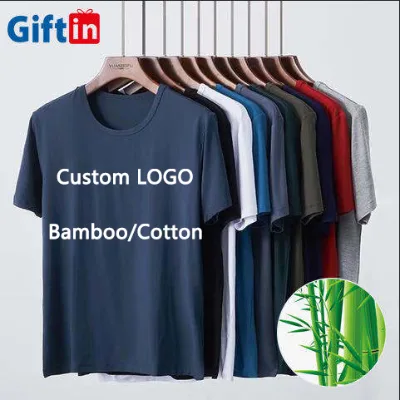
T Shirt Bamboo Organic Cotton T Shirts Eco Friendly Bamboo Fiber T Shirt Plain
$2.50 - $3.50
MOQ: 500 Pieces


Wholesale Eco-Friendly Bamboo Fiber T-Shirt Custom Casual Crew Neck Bamboo Fiber T-Shirt
$2.50 - $3.50
MOQ: 3000 Pieces

- Manufacturer, Trading Company
- Lead time旺季: "1 - 500":15,"> 500":"To be negotiated", 淡季: "1 - 500":15,"> 500":"To be negotiated"
- Avg. response≤ 4h
Main productsPolo, Sports Jerseys, T-Shirt; , Short, Jacket

Shanghai Easun Group Imp & Exp Co., Ltd.
- Verified by BV
- Trading Company
- China Shanghai
- Lead time15 days
- Avg. response≤ 19h
Main productsHoodies, Pajamas, T-Shirt, Bath Robe, Sleepwear, Polo Shirts, Safety Shoes
Main marketsAfrica

- Verified by TUVRHEINLAND
- Combined
- China Shanghai
- Lead time15 days
- Avg. response≤ 4h
Main productsInfant Clothes, Baby Clothes, Kids Wear, Underwear, Sock, Pajama, Night Dress, Sleep Bag, Yoga Clothes, Nursing Tee
Main marketsEurope,Australia,North America


Men's O-Neck T-Shirt Bamboo Modern Fitted Undershirt Luxury Fiber T-Shirt
$6.72 - $7.78
MOQ: 100 Pieces

Custom Logo Sports Eco Friendly T Shirt Bamboo Organic Men 95% Bamboo 5% Spandex T-Shirt with Logo
$5.99 - $6.99
MOQ: 100 Pieces


Sichuan Sustainable Garments Co., Ltd.
- Verified by CTI
- Combined
- China Sichuan
- Lead time30 days
- Avg. response≤ 10h
Main productsSweaters, Dresses, Hoodies, Socks, Underwear
Main marketsAustralia,North America

WEIFANG YIPPEE TEXTILE TECHNOLOGY CO., LTD.
- Trading Company
- China Shandong
- Lead time0 days
- Avg. response≤ 16h
Main productsMuslin Swaddle Blanket, Sweatpants, T-Shirt, Hoodies, Sweatshirt, Shorts, Spunlace Non Woven Fabric, Pajamas, Towels, Blanket


Men's V-Neck T Shirt Undershirt Made of Bamboo Fabric
MOQ: 200 Pieces

Yancheng Yunqian Apparel Co.,Ltd
- Verified by CTI
- Trading Company
- China Jiangsu
- Lead time30 days
- Avg. response≤ 4h
Main productsT Shirt, Hawaiian Shirt, Flannel Shirt, Hoodies, Dress Shirt, Leggings, Pants, Polo Shirt, Jacket
Main marketsSouth America,Europe,Australia,North America


Organic Bamboo T Shirt Men Wholesale Eco-Friendly Bamboo T Shirt Organic Plain T Shirts
$2.88 - $8.28
MOQ: 100 Pieces

Organic Bamboo Tshirt Men Wholesale Eco-Friendly Unisex Bamboo T Shirt Organic Plain T Shirts
$2.88 - $8.28
MOQ: 100 Pieces

Guangzhou Ouzun Clothing Co., Ltd.
- Verified by CTI
- Combined
- China Guangdong
- Lead time23 days
- Avg. response≤ 3h
Main productsUniforms, Pants, Suits&Blazer, T Shirt, Polo Shirt, Sportswear, Jacket, Hoodies&Sweatshirts
Main marketsDomestic

Thermal Regulating Bamboo Charcoal Fiber T-Shirt for Sports and Outdoor Activity Sports Wear
$3.99 - $8.99
MOQ: 100 Pieces

Recycled Polyester Sustainable T-Shirt for Environmental Friendly Clothing Line T Shirts
$3.99 - $8.99
MOQ: 100 Pieces


Eco-Friendly Recycled Polyester Blended Plain T-Shirt for Sustainable Fashion T Shirts
$3.99 - $8.99
MOQ: 100 Pieces

Biodegradable Material Custom Logo Plain T-Shirt for Environmental Campaign T Shirts
$3.99 - $8.99
MOQ: 100 Pieces

Xiamen Crownway Apparel Co., Ltd.
- Verified by TUVRHEINLAND
- Trading Company
- China Fujian
- Lead time30 days
- Avg. response≤ 5h
Main productsOutdoor/Ski/Waterproof/Down Jackets, Hiking/ Camping/Waterproof/Ski Pants, Yoga/Gym/Fitness Wear, Active Pants&Shorts, Hoody&Sweatshirt, Beachwear, Underwear, Cycling Wear/Running Wear, Equestrian Clothing/Breeches, Safety/Security Workwear
Main marketsSoutheast Asia/ Mideast,Europe,North America

Trendy and Sustainable Men's Bamboo Spandex Shirt Cotton / Bamboo Fiber Men's T-Shirts
$2.90 - $3.50
MOQ: 50 Pieces


- Verified by CTI
- Trading Company
- China Anhui
- Lead time23 days
- Avg. response≤ 1h
Main productsFurniture, Home Furniture
Main marketsSoutheast Asia/ Mideast

Guangzhou Vision Clothing Co., Ltd.
- Verified by BV
- Combined
- China Guangdong
- Lead time15 days
- Avg. response≤ 6h
Main productsT-Shirt, Hoodie, Polo Shirt, Sweatpants
Main marketsSouth America,Southeast Asia/ Mideast,Europe,Australia,North America

Custom Men′ S Pure-Color T-Shirt Eco-Friendly Shirt Organic Cotton T-Shirt
$4.99 - $7.39
MOQ: 30 Pieces


Shanghai Touch Industrial Development Co., Ltd.
- Verified by TUVRHEINLAND
- Combined
- China Shanghai
- Lead time15 days
- Avg. response≤ 6h
Main productsInstant Hot Pack, Hot Cold Pack, Gel Eye Mask, Gel Ice Pack, Gel Bottle Cooler, Instant Ice Pack, Hand Warmer, Heat Pack, Cooling Scarf, Gel Beads
Main marketsSouth America,Others(foreignTradeCapacity.exportBusinessCapacityMarketOther),Southeast Asia/ Mideast,East Asia(Japan/ South Korea),Domestic,Europe,Australia,North America



Comprehensive Sourcing Guide
Eco-Friendly Bamboo Fiber T-Shirts Supplier Concentration and Factory Types
Current data indicates a concentration of suppliers in China Shandong, where specific listings show origins tied to this region for bamboo fiber products. Some suppliers in this cluster operate as trading companies, while others function as manufacturers or a hybrid of both types. This mix allows buyers to access a range of capabilities, from direct production to broader sourcing networks. The presence of both company types suggests that buyers must distinguish between a factory that controls the knitting and dyeing processes and a trading entity that aggregates goods from multiple sources. Understanding this distinction is critical when evaluating the supply chain for eco-friendly bamboo fiber t-shirts, as the level of control over material sourcing and production quality varies significantly between the two models.
When a location is not explicitly confirmed in the search results, buyers should identify clusters by analyzing the "Place of Origin" fields in product attributes and cross-referencing them with the supplier's registered address. In the absence of specific data, do not assume a cluster exists; instead, verify the origin through direct communication or by requesting factory audit reports. The observed data shows that some products list Shandong as the origin, while others may originate from different regions like Hong Kong S.A.R. This variation highlights the need to scrutinize the specific product listing rather than generalizing about the entire supplier base. Buyers should look for consistency between the stated location and the actual manufacturing capabilities to ensure the supply chain aligns with their sustainability and logistics requirements.
How to Verify Eco-Friendly Bamboo Fiber T-Shirts Suppliers
Verification is a critical step when sourcing eco-friendly bamboo fiber t-shirts, as the market contains various levels of authenticity regarding material claims. Some suppliers in the current results display verification badges from third-party agencies such as CTI or BV, which provide a baseline level of trust regarding their business legitimacy. However, these badges primarily confirm the company's existence and basic operational status rather than the specific environmental claims of the bamboo fiber used. Buyers must look beyond the verification badge to confirm that the supplier can provide test reports for the bamboo content, ensuring the material is genuinely eco-friendly and not a blend with synthetic fibers that undermines the sustainability promise.
Response time and verification status are key indicators of a supplier's reliability and operational efficiency. The data shows response times ranging from approximately 2.94 hours to over 18 hours, which can significantly impact the speed of the sourcing process. A faster response time often correlates with a more active and responsive sales team, which is essential for resolving queries about material certifications and production details. Buyers should prioritize suppliers with shorter response times when time is a constraint, but they must also verify that the rapid response is backed by accurate information. Always request specific documentation for the bamboo fiber content and ask for references from previous clients who have ordered similar eco-friendly products to validate the supplier's claims independently.
What to Compare Across Eco-Friendly Bamboo Fiber T-Shirts Suppliers
Comparing suppliers requires a detailed analysis of multiple dimensions, including lead times, minimum order quantities (MOQ), and pricing structures. The observed data reveals a wide range of MOQs, with some suppliers requiring as few as 100 pieces while others demand 3,000 pieces. This variation allows buyers to select partners that match their inventory strategy, whether they are testing the market with small batches or committing to large-scale production. Additionally, lead times vary, with some suppliers offering a standard 15 to 30 days, while others specify different timelines based on order volume or seasonality. Buyers must carefully evaluate these constraints to ensure they align with their production schedules and market launch dates.
Pricing and product attributes are equally important factors in the comparison process. The price range for bamboo fiber t-shirts in the current results spans from $2.50 to $7.25 per unit, reflecting differences in material quality, customization options, and order volume. Some listings highlight specific features like "Oversized" fits, "Striped" patterns, or "Silk screen printing," which can influence the final cost. Buyers should compare the specific attributes of each product, such as fabric weight, sleeve style, and collar type, to ensure they are comparing equivalent items. It is also essential to verify if the price includes customization services like logo printing or label placement, as these add-ons can significantly affect the total cost of the order.
Common Eco-Friendly Bamboo Fiber T-Shirts Sourcing Risks
One of the primary risks in sourcing eco-friendly bamboo fiber t-shirts is the potential discrepancy between the claimed material composition and the actual product received. While some suppliers list "100% Bamboo Fiber" or "95% Bamboo 5% Spandex," others may use generic terms like "Bamboo Fiber" without providing detailed breakdowns. This ambiguity can lead to receiving products that do not meet the expected sustainability standards or performance characteristics. Buyers must mitigate this risk by demanding third-party test reports that verify the fiber content and ensure that the "eco-friendly" label is backed by concrete evidence rather than marketing claims.
Another significant risk involves the variability in lead times and the potential for delays during peak seasons. The data indicates that lead times can change based on order volume, with some suppliers noting that orders over 500 units require negotiation or extended timelines. This variability can disrupt supply chains, especially if a buyer is relying on a specific delivery date for a product launch. To manage this risk, buyers should confirm the lead time in writing before placing an order and inquire about the supplier's capacity during peak periods. Additionally, buyers should verify if the supplier offers sample orders with a short lead time, such as 7 days, to test the product quality and production speed before committing to a larger order.
Eco-Friendly Bamboo Fiber T-Shirts Regional Sourcing and Logistics
Regional sourcing plays a crucial role in determining the efficiency and cost of logistics for eco-friendly bamboo fiber t-shirts. The current data shows suppliers located in China Shandong and China Shanghai, with some products originating from Hong Kong S.A.R. These locations offer different logistical advantages, with Shandong being a major manufacturing hub and Shanghai providing access to a major port for international shipping. Buyers should consider the proximity of the supplier to their target market to minimize shipping costs and transit times. For instance, sourcing from Shanghai might be more efficient for buyers in North America or Europe due to the port's extensive shipping connections, while Shandong might offer cost advantages for domestic or regional Asian markets.
When a specific location is not confirmed in the search results, buyers should identify the logistics implications by asking suppliers for their preferred shipping methods and estimated transit times. The data shows that some products are packed in poly bags or paper cartons, which can affect the volume and weight of the shipment. Buyers must ensure that the packaging is suitable for long-distance shipping to prevent damage to the bamboo fiber t-shirts. Additionally, buyers should verify if the supplier handles export documentation and customs clearance, as this can simplify the logistics process and reduce the risk of delays at the border. Understanding the regional logistics landscape is essential for planning a smooth and cost-effective supply chain.
Eco-Friendly Bamboo Fiber T-Shirts Commercial Terms and Order Planning
Commercial terms and order planning are vital for ensuring a successful transaction when sourcing eco-friendly bamboo fiber t-shirts. The data indicates that some suppliers support sample orders with a lead time of 7 days, which is a valuable option for buyers who want to test the product before placing a large order. Buyers should also verify if the supplier accepts customized samples and if there are any additional costs associated with this service. Understanding the sample process is crucial for validating the product quality and ensuring that the supplier can meet the buyer's specific requirements before committing to a full production run.
Payment terms and order volume are also key considerations in the planning phase. The observed MOQs range from 100 to 3,000 pieces, and buyers must ensure they can meet these requirements to secure the best pricing. Some suppliers may offer flexible terms for larger orders, while others might have strict minimums. Buyers should also check if the supplier offers escrow services or other payment protections to safeguard their investment. Additionally, buyers should plan for potential variations in lead times and pricing based on order volume, as these factors can impact the overall budget and timeline. By carefully planning the commercial terms and order volume, buyers can minimize risks and ensure a smooth sourcing experience.
FAQs
What is the price range for bamboo fiber t-shirts?
Prices typically range from $2.50 to $7.25 per unit depending on material composition and customization. Basic cotton blends start lower, while premium bamboo-spandex mixes cost more. Buyers should verify exact quotes based on order volume and specific fabric weight requirements.
What is the minimum order quantity for these shirts?
MOQs vary significantly by supplier, ranging from 100 to 3000 pieces. Some manufacturers support small batches for sampling, while others require larger volumes for production. Buyers must confirm the specific MOQ with each supplier before placing bulk orders to avoid delays.
How long does production take for bamboo t-shirts?
Lead times generally span 15 to 30 days, depending on order size and season. Peak seasons may require negotiation for longer timelines, while smaller orders under 500 units often ship faster. Buyers should confirm exact dates with suppliers to ensure timely delivery.
Are these t-shirts available with custom logo printing?
Yes, most suppliers offer custom logo printing via silk screen or embroidery. Options include single-color prints or multi-color designs on blank or striped fabrics. Buyers should provide high-resolution artwork and confirm printing methods and costs with the supplier during the quotation phase.
Where are these bamboo t-shirt suppliers located?
Suppliers are primarily located in China, specifically in Shandong and Shanghai regions. These areas are known for textile manufacturing and export capabilities. Buyers can filter results by location to prioritize suppliers closer to their shipping ports or preferred logistics routes.
What certifications do these suppliers hold?
Verified suppliers hold third-party certifications such as CTI and BV for quality assurance. These verifications confirm business legitimacy and product standards. Buyers should request specific certification documents to ensure compliance with international safety and environmental regulations for their target markets.