Fishing Jig Heads Suppliers and Manufacturers
Compare 11 Fishing Jig Heads suppliers across grounded dimensions including location, lead time, response time, MOQ, certifications, and OEM/ODM capability. Review listed specifications, then contact suppliers to request quotes and samples; review the available evidence before requesting comparable quotations from suitable candidates.
Suppliers List

Ningbo Rodcore International Co., Ltd.
- Trading Company
- China Zhejiang
- Lead time60 days
- Avg. response≤ 6h
Main productsFly Rod, Fly Reel, Fly Line, Fly Box, Bamboo Fly Rod, Fishing Rod, Fishing Lure, Fishing Reel, Fishing Line, Fishing Hook
Main marketsSouth America,North America

Weihai Lotus Outdoor Co., Ltd.
- Manufacturer/Factory,Group Corporation
- China Shandong
- Lead time38 days
- Avg. response≤ 24h
Main productsFishing Reel, Fishing Lure, Fishing Tackle, Reel, Rod, Terminal Tackle, Fishing Rigs, Outdoor Products, Fishing Line, Fishing Rod
Main marketsSouth America,Eastern Europe,Mid East,North America,Southeast Asia,Eastern Asia,Oceania,Western Europe,Africa

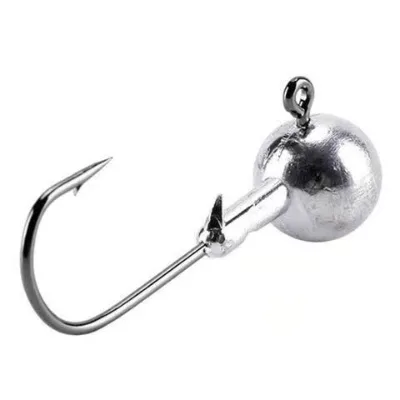
Hybrid Fishing Jig Heads Fishing Lure Jig Lure Jig Head Salt Water and Fresh Water Jig Head
$0.35 - $0.90
MOQ: 2000 Pieces


Jig Heads Fishing Lures Hooks Swimbait Jig Head Minnow Fish Head Jig for Fishing Jig Lure
$0.30 - $0.50
MOQ: 3000 Pieces
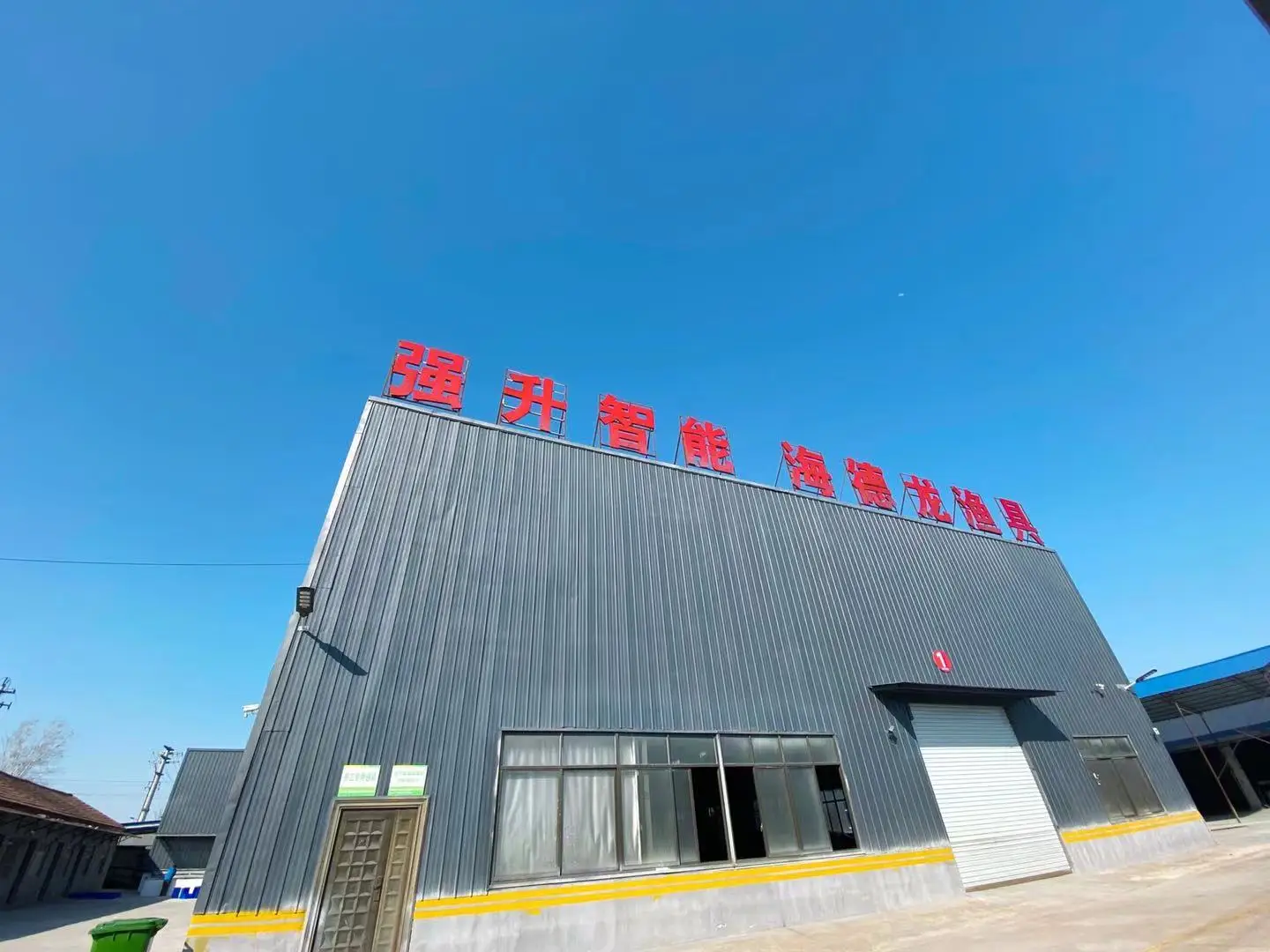
Jieshou Haidelong Fishing Tackle Co., Ltd.
- Manufacturer, Trading Company
- Anhui, China
- Lead time30 days
- Avg. response≤ 6h
Main productsLead Jig; Trolling Lure; Bucktail Jig; Lead Sinker; Ice Jig,Fishing Tackle,Fishing Lure,Fishing Accessory
Main marketsNorth America(25.00%), South America(20.00%), Domestic Market(11.00%), Southeast Asia(10.00%), Eastern Europe(9.00%), Mid East(4.00%), South Asia(4.00%), Northern Europe(3.00%), Africa(3.00%), Oceania(3.00%), Central America(2.00%), Southern Europe(2.00%), Western Europe(2.00%), Eastern Asia(2.00%)

Weihai Surefish Fishing Tackle Co., Ltd.
- Trading Company
- China Shandong
- Lead time30 days
- Avg. response≤ 2h
Main productsFishing Tackle, Fishing Rod, Fishing Line, Fishing Swivel, Fishing Lure, Fly Fishing, Fishing Reel, Fishing Hook, Fishing Equipment, Carp Fishing
Main marketsEurope,Australia,North America
- Trading Company
- Lead time旺季: "1 - 10000":20,"> 10000":"To be negotiated", 淡季: "1 - 10000":20,"> 10000":"To be negotiated"
- Avg. response≤ 3h
Main productsTungsten Fishing Weight, Tungsten Shots/Tungsten Carbide Rod/Tungsten Carbide Products/Tungsten Carbide Ball

WEIHAI ONETE OUTDOOR PRODUCTS CO., LTD.
- Verified by BV
- Trading Company
- China Shandong
- Lead time45 days
- Avg. response≤ 9h
Main productsFishing Lures, Fishing Tackle, Fishing Rods, Fishing Reels, Fishing Line, Fly Fishing, Ice Rods, Tackle Box, Fishing Rod Handle, CNC Metal Parts
Main marketsNorth America


$0.29 - $0.42
MOQ: 2000 Pieces


Zhejiang New Vision I. /E. Co., Ltd.
- Trading Company,Manufacturer/Factory
- China Zhejiang
- Lead time0 days
- Avg. response≤ 25h
Main productsFishing Tackle, Fishing Lure, Fishing Swivel/Snap, Swimbaits, Fishing Hook, Nylon Thread, Swivel/Snap, Prewound Bobbin Thread, Fishing Soft Bait, Fishing Terminal Tackle
Suqian Blue Sea Sports Goods Co., Ltd.
- Verified by TüVRheinland
- Trading Company
- Lead time0 days
- Avg. response≤ 5h
Main productsFishing Lure, Fishing Hook, Fishing Rig, Fishing Line, Fishing Accessories
Main marketsNorth America(30%), Western Europe(16%), Eastern Europe(10%)

- Trading Company
- China Zhejiang
- Lead time30 days
- Avg. response≤ 7h
Main productsFishing Products, Hand Dryer, Soap Dispenser, Paper Dispenser
Main marketsSouth America,Europe,North America

Zhuzhou Up Cemented Carbide Co., Ltd.
- Trading Company,Manufacturer/Factory
- China Hunan
- Lead time23 days
- Avg. response≤ 12h
Main productsTungsten Carbide Rod, Tungsten Carbide Ball, Tungsten Carbide Button, Tungsten Carbide Insert, Tungsten Carbide Plate, Tungsten Cabride Strip, Tungsten Carbide Disc Cutter, Cast Tungsten Carbide, Carbide Composite Rod, Tungsten Carbide Saw Tip
Main marketsSouth America,Eastern Europe,Mid East,North America,Southeast Asia,Eastern Asia,Oceania,Western Europe,Africa

Nanjing Suleho Imp.& Exp.Co., Ltd.
- Trading Company
- China Jiangsu
- Lead time23 days
- Avg. response≤ 12h
Main productsFishing Tackle, Nylon Monofilament, Braided Line, Fishing Lure, Fishing Rods, Fishing Reels, Fishing Boxes, Fishing Hooks, Fishing Swivels, Fishing Floats
Main marketsSouth America,Africa,Southeast Asia/ Mideast,Europe,North America

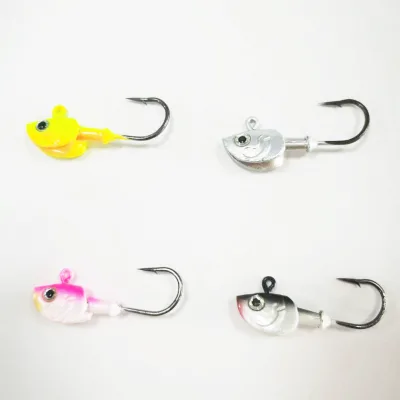
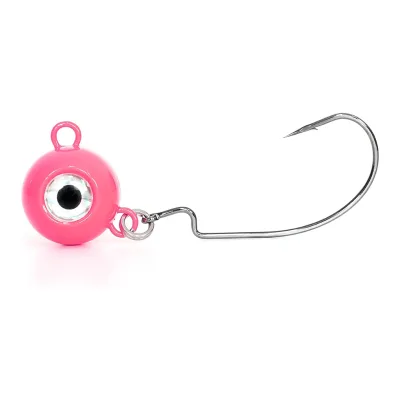
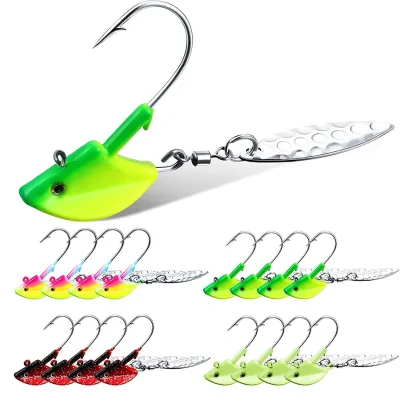
Artificial Fish Jig Head High Carbon Steel Fishing Hooks for Wholesale
$0.01 - $0.02
MOQ: 50000 Pieces








Comprehensive Sourcing Guide
Fishing Jig Heads Supplier Concentration and Factory Types
Current data indicates a concentration of suppliers in China, specifically within the Zhejiang and Shandong provinces. Zhejiang-based entities are identified as trading companies, while Shandong-based operations are classified as manufacturers, factories, or group corporations. This distinction is critical because trading companies typically aggregate products from various sources, whereas manufacturers control the production line directly. The Shandong cluster includes facilities with significant research and development capabilities, offering both OEM and ODM services for custom jig head designs. Buyers should verify if a supplier's stated location matches their actual factory presence, as some trading firms may list a provincial address without owning production assets.
When assessing factory types, look for specific evidence of manufacturing capacity rather than relying solely on company type labels. The Shandong suppliers display extensive system certifications, including ISO 9001, ISO 14001, and BSCI, which often correlate with established production facilities. In contrast, the Zhejiang trading companies focus on a broad range of fishing tackle, including reels, lines, and hooks, alongside jig heads. Buyers must confirm whether the supplier can provide proof of their manufacturing floor or if they act as an intermediary. Understanding this structural difference helps in predicting lead times and the ability to handle complex customization requests for specific jig head models.
How to Verify Fishing Jig Heads Suppliers
Verification begins with scrutinizing the specific product attributes listed for each supplier's offerings. For instance, some listings specify materials like lead or metal, while others define the intended fishing location as either lake or sea. A supplier claiming to produce sea Fishing Jig Heads should provide evidence of materials suitable for saltwater corrosion resistance, such as specific metal alloys or protective coatings. Buyers must cross-reference the stated material composition with the product standard codes provided, such as "DRAT" or specific model numbers like "HY-9632," to ensure the item matches the intended application. If a supplier lists a product standard that does not align with the material description, this discrepancy requires immediate clarification before proceeding.
Response time and communication speed are also vital verification metrics that indicate operational reliability. The observed data shows response times varying significantly, with some suppliers responding in approximately five hours while others take over twenty-three hours. A rapid response time often suggests a dedicated sales team or an automated system capable of handling inquiries efficiently, which is essential for resolving technical questions about hook sizes or weight specifications. Buyers should test the supplier's responsiveness by asking specific questions about customization availability and packaging details. If a supplier fails to provide clear answers regarding their production capabilities or certification documents within a reasonable timeframe, it may indicate a lack of transparency or operational inefficiency that could jeopardize the order.
What to Compare Across Fishing Jig Heads Suppliers
Comparing suppliers requires a detailed analysis of minimum order quantities (MOQ) and pricing structures, which vary widely across the market. Some suppliers offer low entry points with MOQs as low as 10 pieces, while others require substantial commitments of 1000 or even 3000 units. Pricing also fluctuates based on the specific product model, with some jig heads listed at $0.15 per unit and others reaching $15.00 depending on the weight, hook size, and packaging type. Buyers must calculate the total landed cost by factoring in these MOQ requirements and unit prices to determine which supplier aligns with their budget and inventory strategy. A lower unit price might be attractive, but a high MOQ could tie up capital unnecessarily for new product launches.
Lead times and production capacity are equally critical factors when comparing potential partners. The data reveals lead times ranging from 38 days to 60 days, which directly impacts inventory planning and market responsiveness. Suppliers with shorter lead times, such as those in the 38-day range, may offer a competitive advantage for time-sensitive orders or seasonal demand spikes. Additionally, the presence of OEM and ODM capabilities suggests a supplier's ability to adapt production lines for custom designs, which is a significant differentiator for buyers seeking unique products. Buyers should prioritize suppliers who can demonstrate consistent lead times and have the capacity to scale production without compromising quality, ensuring a steady supply chain for their fishing tackle needs.
Common Fishing Jig Heads Sourcing Risks
One significant risk involves the discrepancy between product descriptions and actual manufacturing standards. Some listings indicate a standard of "jig head" or "jig lure," while others specify detailed weight ranges like "3.5g 5g 7g 10g 14g." If a supplier's product standard does not match the buyer's specific requirements for weight or hook configuration, the resulting product may be unsuitable for the intended fishing environment. This mismatch can lead to rejected shipments and financial losses. Buyers must rigorously verify that the product attributes, such as hook size and weight, are explicitly defined in the supplier's documentation before placing an order to avoid receiving non-compliant goods.
Another risk is the variability in packaging and material quality, which can affect product durability and shipping costs. Listings show diverse packaging options, ranging from PP bags and blister boxes to cartons and PVC bags. Inconsistent packaging standards can lead to damage during transit or increased logistics expenses if the packaging is not optimized for the product's weight and shape. Furthermore, the use of different materials, such as lead versus metal, requires careful verification to ensure the supplier uses the correct alloy for the specified application. Buyers should request physical samples to confirm that the packaging and materials meet their quality expectations and that the supplier can maintain consistency across large production runs.
Fishing Jig Heads Regional Sourcing and Logistics
Sourcing from China involves navigating logistics from specific provincial hubs, with Zhejiang and Shandong being the primary regions identified in the current data. Suppliers in these regions may have different logistical advantages based on their proximity to major ports and transportation networks. For example, suppliers in Weihai, Shandong, might have established export channels for heavy industrial goods, while Zhejiang trading companies may leverage different shipping routes. Buyers should verify the specific origin city listed for each product, as this can influence shipping costs and transit times. Understanding the regional logistics landscape helps in selecting a supplier that can offer the most efficient delivery schedule to the buyer's destination.
Logistics planning must also account for the specific packaging requirements of the supplier to optimize container space and reduce freight costs. The data indicates that some suppliers pack products in cartons, while others use blister boxes or PVC bags. These packaging choices directly impact the volume and weight of the shipment, which in turn affects the overall shipping cost. Buyers should discuss packaging options with the supplier to ensure that the chosen method maximizes container utilization without compromising product safety. Additionally, verifying the supplier's experience with international shipping and their ability to handle customs documentation is essential to prevent delays at the destination port.
Fishing Jig Heads Commercial Terms and Order Planning
Commercial terms for Fishing Jig Heads often include specific customization options and payment structures that vary by supplier. Many listings indicate that customization is available, allowing buyers to request specific colors, hook sizes, or weight configurations. However, the availability of customization may come with higher MOQs or longer lead times, as seen in the data where some suppliers require 2000 units for custom orders. Buyers must clearly define their customization requirements and confirm the associated costs and production timelines before finalizing the order. Understanding these terms helps in managing expectations and ensuring that the final product meets the buyer's specific market needs.
Order planning should also consider the establishment of long-term relationships with suppliers who demonstrate reliability and quality. The presence of extensive certifications, such as ISO 9001 and BSCI, suggests a commitment to quality management systems that can support consistent production. Buyers should evaluate the supplier's track record in maintaining these standards and their ability to scale production as demand grows. Additionally, planning for potential fluctuations in raw material costs, such as lead or metal prices, is crucial for maintaining stable pricing over time. By establishing clear commercial terms and planning for future growth, buyers can secure a reliable supply chain for their fishing jig head needs.
FAQs
What minimum order quantities do fishing jig head suppliers require?
Minimum order quantities vary widely by supplier and product. On this page, listed MOQs range from as low as 10 pieces for crappie jig heads to 3000 pieces for swimbait jig heads, with common tiers at 100, 300, 500, 1000, and 2000 pieces. Confirm the exact MOQ for your chosen weight, hook size, and customization level before ordering.
How much do Fishing Jig Heads cost per piece?
Listed unit prices on this page range from about 0.15 to 1.00 USD per piece, depending on weight, hook size, finish, and order volume. One wide-ranging listing spans 0.15 to 15.00 USD across product variations. Larger quantities, simpler heads, and standard configurations generally sit at the lower end of each supplier's price range.
What lead times should I expect when ordering jig heads?
The suppliers on this page list production lead times of 38 and 60 days respectively. Actual timing depends on order size, customization such as colors or 3D eyes, and packaging choices like PP bags, blister boxes, or cartons. Ask each supplier to confirm current lead time for your specific specification before confirming a purchase order.
Can suppliers customize jig head weights, hook sizes, and colors?
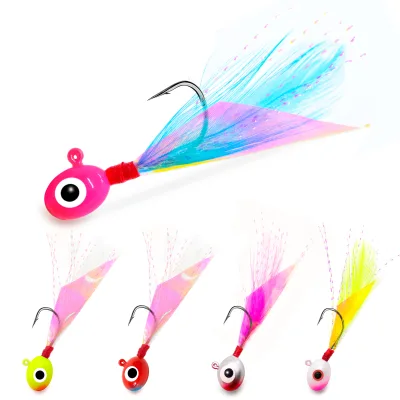
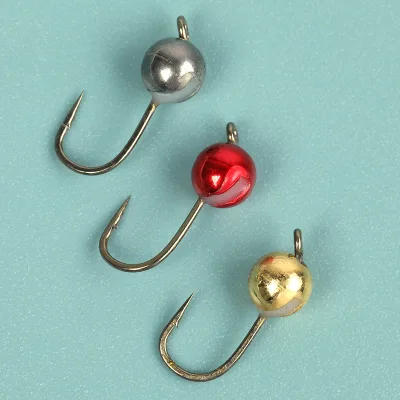
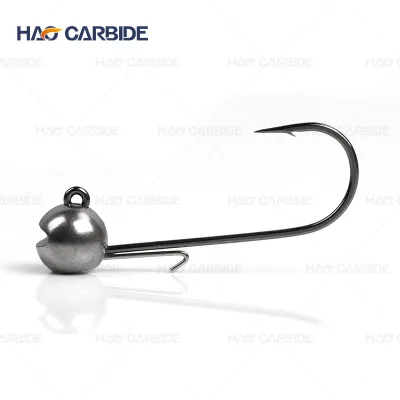
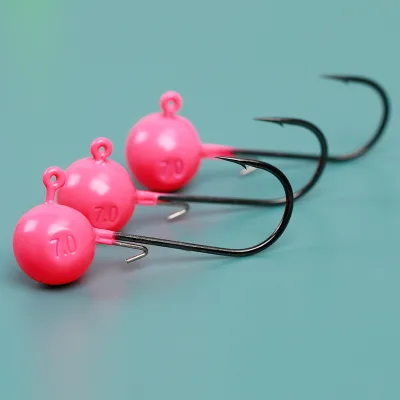
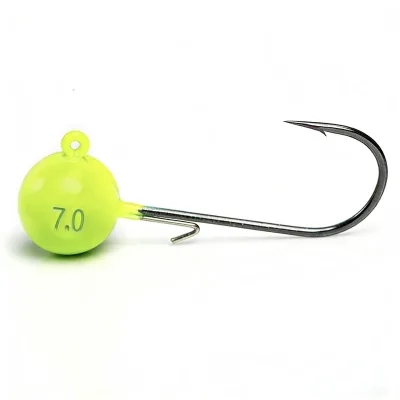
Yes, the listings on this page state customization is available. Documented weight options include 3.5g, 5g, 7g, 10g, and 14g, plus 1/16, 1/8, 1/4, and 3/8 ounce sizes. Hook options include #4 single hooks and 1/0, 2/0, and 3/0 hooks. Color options include pink, orange, black, yellow, and green-yellow combinations.
Are jig head suppliers manufacturers or trading companies?
Both types appear on this page. One Zhejiang-based supplier operates as a trading company, while a Shandong-based supplier is a manufacturer and group corporation offering OEM and ODM services. Manufacturers may offer better pricing and process control for large runs, while trading companies can consolidate multiple tackle items. Verify each company's type and capability directly.
How quickly do jig head suppliers respond to inquiries?
Average response times listed on this page are about 5 hours for the Zhejiang trading company and about 23 hours for the Shandong manufacturer. Response speed matters most during sampling and customization discussions, so send detailed specifications including weight, hook size, color, and packaging in your first inquiry to reduce back-and-forth delays.
What certifications and quality standards do jig head suppliers hold?
The Shandong manufacturer on this page lists system certifications including ISO 9001, ISO 14001, BSCI, and GMP, among others. Product listings reference standards and documented packaging such as PP bags, blister boxes, and cartons. Always request current certificates and recent test reports for hook strength and lead content, since certifications should be verified before committing.
Which jig head styles are available for saltwater and freshwater fishing?
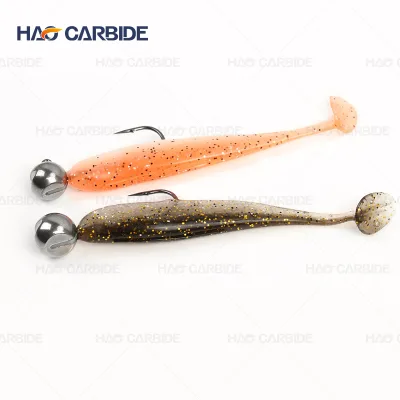
Listings on this page cover both applications. Saltwater options include hybrid and oversized 3D-eye jig heads with 1/0 to 3/0 hooks in 3.5g to 14g weights, originating from Weihai, China. Freshwater-focused options include crappie and bass jig heads in 1/16 to 3/8 ounce weights. Confirm the intended water type and target species with each supplier.