Floral Cotton Baby Romper Suppliers and Manufacturers
Source 10 verified suppliers for Floral Cotton Baby Romper products. Compare dimensions including location, lead time, MOQ, and certifications like BSCI and ISO 9001. Review sample times and pricing to identify suitable manufacturers for your specific requirements; review the available evidence before requesting comparable quotations from suitable candidates.
Suppliers List

Quanzhou Zonse Garment Co., Ltd.
- Manufacturer/Factory
- China Fujian
- Lead time30 days
- Avg. response≤ 25h
Main productsUnderwear, Boxer Briefs, Boxer Short, Hipster, Panty, T Shirt, Baby Romper, Baby Bibs, Swimwear, Lingerier
Main marketsSouth America,Eastern Europe,Mid East,North America,Southeast Asia,Eastern Asia,Oceania,Western Europe,Africa

Shijiazhuang Cool Apparel Co., Ltd.
- Verified by BV
- Combined
- China Hebei
- Lead time23 days
- Avg. response≤ 6h
Main productsBaby Cloth, Baby Romper, Baby Bib, Baby Onesie, Baby Pajamas, T-Shirts, Polo Shirts, Pajamas, Baby Sleeping Bag, Baby Hats
Main marketsSouth America,Africa,Southeast Asia/ Mideast,East Asia(Japan/ South Korea),Domestic,Europe,Australia,North America


Cotton Candy Color Baby Girls Short Bubble Sleeve Bodysuit Pajamas Infant Girl Romper
$1.70 - $1.99
MOQ: 100 pc

Shanghai Hexuan Baby Products Co., Ltd.
- Verified by SGS
- Trading Company
- China Shanghai
- Lead time15 days
- Avg. response≤ 6h
Main productsBaby Wear Baby Cloth Diaper Bibs Baby Rompers
Main marketsSouth America,Africa,Southeast Asia/ Mideast,East Asia(Japan/ South Korea),Europe,Australia,North America


Cotton Romper Clothes New Baby Newborn Clothes Boys and Girls Baby Children Rompers.
$1.50 - $11.00
MOQ: 1 Pieces


Infant Baby Girls Floral Romper Spring Summer Newborn Baby Floral Bow Jumpsuit
$1.50 - $11.00
MOQ: 1 Pieces


Suntex Import & Export Trading Co., Ltd.
- Verified by SGS
- Trading Company,Manufacturer/Factory
- China Hebei
- Lead time23 days
- Avg. response≤ 4h
Main productsBaby Diaper, Baby Blanket, Bedding Set, Baby Crib Bedding Product, Mattress Protector, Baby Muslin Swaddle, Towel, Baby Bath Product, Baby Garment, Table Cloth
Main marketsSouth America,Eastern Europe,Mid East,North America,Southeast Asia,Eastern Asia,Oceania,Western Europe,Africa

Quanzhou Yilijia International Trade Co., Ltd.
- Verified by CTI
- Trading Company,Manufacturer/Factory
- China Fujian
- Lead time45 days
- Avg. response≤ 4h
Main productsKids Clothes, Baby Clothes, Sports Shoes, Gym Clothes, Baby Accessories, Fitness Equipment, Sport Wear
Main marketsSouth America,Eastern Europe,Mid East,North America,Southeast Asia,Eastern Asia,Oceania,Western Europe,Africa


Infant Baby Girls Floral Romper Girls Long Sleeve Cotton Bodysuit Newborn Spring Autumn Rompers
$8.40 - $9.40
MOQ: 10 piece

High Quality Baby Clothing 100%Cotton Strawberry Embroidery Baby Girls Romper
$8.40 - $9.40
MOQ: 10 piece


Infant Flower Print Rompers Newborn Children Long Sleeve Beautiful Cotton Baby Girls Clothing
$7.20 - $8.10
MOQ: 10 piece

New Fashion Cotton Lace Down Collar Floral Toddler Outwear Onesie Baby Girl Long Sleeve Dress Romper
$6.30 - $7.10
MOQ: 10 piece
Shanghai Jingzhi Apparel Co., Ltd.
- Verified by Intertek
- Manufacturer, Trading Company
- Lead time35 days
- Avg. response≤ 5h
Main productsKid Clothes
Main marketsMid East(20%), Africa(15%), North America(10%)
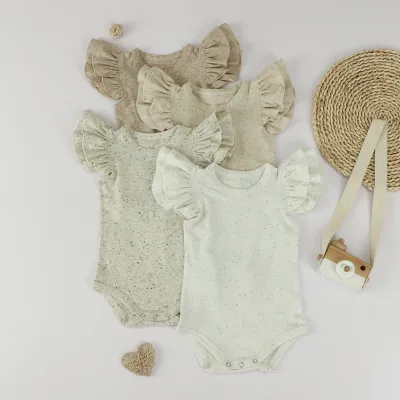
Wholesale baby ruffle sleeve romper Cotton Summer Bodysuits Baby Romper For Kids
$3.88 - $7.57
MOQ: 1 pieces
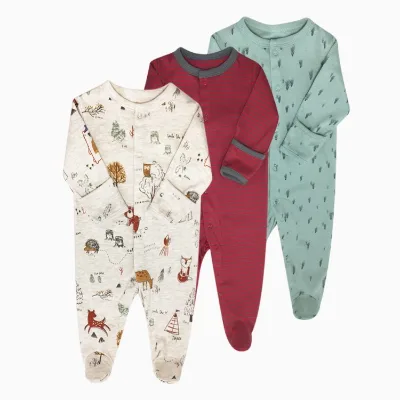
High Quality soft knitted children romper dot printed baby cotton romper for girls
$3.38 - $4.40
MOQ: 5 pieces
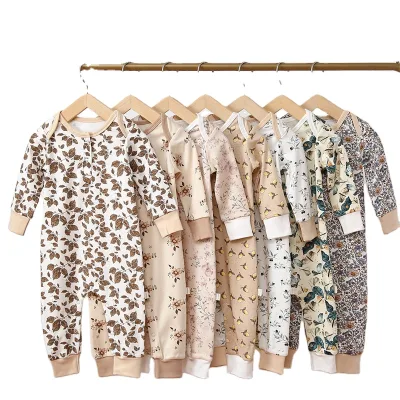

Goldely Garment Import and Export Inc.
- Verified by SGS
- Trading Company
- China Guangdong
- Lead time15 days
- Avg. response≤ 6h
Main marketsNorth America

Infant Baby Floral Romper Spring Summer Newborn Baby Floral Bow Jumpsuit Baby Romper
$4.00 - $6.00
MOQ: 100 PIECE


$4.00 - $6.00
MOQ: 100 PIECE

WEIFANG YIPPEE TEXTILE TECHNOLOGY CO., LTD.
- Trading Company
- China Shandong
- Lead time0 days
- Avg. response≤ 18h
Main productsMuslin Swaddle Blanket, Sweatpants, T-Shirt, Hoodies, Sweatshirt, Shorts, Spunlace Non Woven Fabric, Pajamas, Towels, Blanket

- Verified by SGS
- Combined
- China Sichuan
- Lead time15 days
- Avg. response≤ 2h
Main productsCashmere Sweater, Baby Sweater, Wool Sweater, Cotton T Shirt, Organic Cotton Garments, Cashmere Pants, Cashmere Scarf, Baby Knitwear, Baby Blankets, Kids Sweaters
Main marketsEast Asia(Japan/ South Korea),Domestic,Europe,Australia,North America


Summer Newborn Baby Romper Short Sleeved Knitted Cotton Baby One-Piece Jumpsuit
$10.00 - $22.00
MOQ: 2 pieces

- Verified by TUVRHEINLAND
- Combined
- China Shanghai
- Lead time15 days
- Avg. response≤ 3h
Main productsInfant Clothes, Baby Clothes, Kids Wear, Underwear, Sock, Pajama, Night Dress, Sleep Bag, Yoga Clothes, Nursing Tee
Main marketsEurope,Australia,North America

Factory Price Bamboo Customized Baby Spring and Autumn Onesie Baby Romper
$7.00 - $8.99
MOQ: 100 Pieces

Baby Summer Bamboo Solid Color Short Sleeve Crawling Suit Romper One-Piece
$3.80 - $4.37
MOQ: 300 Pieces


Comprehensive Sourcing Guide
Floral Cotton Baby Romper Supplier Concentration and Factory Types
Current search results indicate that manufacturers for floral cotton baby rompers are concentrated in specific Chinese provinces, with Fujian emerging as a primary hub for this category. Fact sheets confirm that suppliers in Fujian operate as manufacturers or factories, offering a direct production line for items like baby rompers, boxer briefs, and swimwear. This concentration suggests a localized ecosystem where raw material sourcing, particularly cotton, and specialized knitting techniques are readily available. Buyers should prioritize regions where the supplier type is explicitly listed as a manufacturer rather than a trading company, as this often correlates with better control over the floral printing process and fabric weight consistency.
In contrast, other regions such as Hebei appear in the data with a different operational profile, sometimes listed as a combined entity rather than a pure factory. When a location is not explicitly confirmed as a high-confidence manufacturing cluster in the results, buyers must verify the supplier's physical address and factory floor capabilities before assuming a concentration exists there. The distinction between a manufacturer and a combined entity is critical because the latter may source from multiple third-party factories, potentially diluting quality control over the specific floral patterns and cotton blends required. Always check the company type field to ensure the supplier has direct oversight of the production line for your specific floral cotton romper order.
How to Verify Floral Cotton Baby Romper Suppliers
Verification begins with examining the system certifications listed in the supplier profile, as these provide a baseline for operational standards. Some suppliers in the current results display BSCI and ISO 9001 certifications, which are relevant for ensuring ethical labor practices and quality management systems in the production of baby clothing. However, other entries show a certification status of NIL, indicating a need for deeper due diligence. Buyers should not assume that a lack of displayed certification means a supplier is unqualified, but rather that they must request valid certificates directly to confirm compliance with international safety standards for infant wear.
Beyond certifications, the verification process must include checking the response time and the specific product attributes listed for the floral cotton romper. A response time of 25 hours suggests a standard communication window, but buyers should test this by asking specific questions about the floral print durability and cotton sourcing. Additionally, verifying the "Business Type" field is essential; entries explicitly stating "Romper Manufacturer" or "Infant Romper Manufacturer" offer higher confidence than generic listings. Buyers should also look for third-party verification badges, such as BV verification, which appear in some profiles, to confirm that the company's identity and business license have been independently validated by a recognized agency.
What to Compare Across Floral Cotton Baby Romper Suppliers
When evaluating potential partners, the primary comparison points should include lead time, minimum order quantity (MOQ), and price ranges, as these vary significantly across the supplier pool. Current data shows lead times of 30 days for some manufacturers, while sample times for custom designs can range from 7 to 14 days. The MOQs also differ, with some suppliers requiring 500 units while others set the threshold at 1000 or even 2000 units. Buyers must align these figures with their inventory planning and cash flow, noting that lower MOQs often come with higher per-unit costs, whereas larger orders may unlock better pricing tiers.
Price and product specifications are equally critical for comparison, as the data reveals a wide range of costs and material qualities. Prices for floral cotton rompers can range from approximately $0.99 to $3.50 per unit, depending on the fabric weight, which varies from 135GSM to 180GSM. Buyers should compare the fabric weight and color fastness ratings, such as the 4-4.5 rating seen in some listings, to ensure the floral print will withstand washing without fading. Additionally, comparing the customization options is vital; some suppliers offer arbitrary size customization, while others are limited to specific size ranges like 0-12 months or 0-24 months, which directly impacts the versatility of the final product line.
Common Floral Cotton Baby Romper Sourcing Risks
One significant risk involves the inconsistency of fabric quality and print durability, which can vary even within the same category of floral cotton rompers. While some product attributes list a color fastness of 4-4.5, others may not specify this critical metric, leaving buyers vulnerable to receiving goods that fade quickly after the first wash. The risk is compounded if the supplier does not explicitly state their fabric weight or if the "Cotton" designation is vague, as blends may be used without clear disclosure. Buyers must insist on detailed fabric specifications and request physical samples to test the softness, breathability, and color retention before committing to a large production run.
Another major risk is the discrepancy between the stated business type and the actual production capability, particularly when dealing with combined entities or trading companies. Some profiles list a company type as "Combined" or lack a clear manufacturer designation, which can lead to communication gaps and quality control issues. If a supplier claims to be a manufacturer but lacks specific certifications like BSCI or ISO 9001, the risk of non-compliance with safety standards for baby clothing increases. Buyers should verify the origin of the goods and ensure that the supplier has direct control over the knitting and printing processes to avoid delays or substandard workmanship that could damage their brand reputation.
Floral Cotton Baby Romper Regional Sourcing and Logistics
Logistics planning must account for the specific geographic origins of the suppliers, as the current data highlights Fujian and Hebei as key sourcing locations in China. Suppliers in Fujian are noted for their manufacturing capabilities, which often implies established logistics networks for exporting textile goods. However, buyers should verify the specific port of loading and the shipping terms associated with each supplier, as these factors will influence the total landed cost and delivery timeline. Understanding the regional infrastructure helps in estimating transit times and potential customs delays, especially when sourcing from multiple locations within the same country.
For suppliers located in regions like Hebei, buyers need to be aware that the operational model might differ, potentially involving a combined entity structure that could affect shipping coordination. If a supplier does not explicitly state their location or if the location is ambiguous, buyers should request the full factory address to confirm the logistics route. The lead time of 30 days mentioned in some profiles includes production but excludes shipping; therefore, buyers must calculate the total time from order placement to delivery. It is crucial to confirm whether the supplier handles export documentation and if they offer FOB or CIF terms, as this determines who is responsible for freight costs and insurance during the transit from the Chinese factory to the destination market.
Floral Cotton Baby Romper Commercial Terms and Order Planning
Commercial terms for floral cotton baby rompers often include specific requirements for customization and payment security, which must be clearly defined before order placement. Many suppliers in the results indicate that customization is available, allowing for unique floral patterns and size adjustments, but this often comes with a sample time of 7 to 14 days. Buyers should plan their order timeline to accommodate this sample phase, ensuring that the final design is approved before mass production begins. Additionally, the presence of OEM and ODM capabilities suggests that suppliers can handle both private labeling and design development, but the specific terms for intellectual property and design ownership should be negotiated in writing.
Order planning must also consider the payment structure and the availability of escrow services to protect the buyer's investment. While some suppliers may offer flexible payment terms, the use of escrow is a recommended safeguard for large orders, ensuring that funds are only released once the goods meet the agreed-upon quality standards. Buyers should verify if the supplier accepts escrow payments and understand the conditions for release, such as the submission of inspection reports or photos of the finished goods. Furthermore, the packing specifications, such as OPP bags or custom requirements, should be confirmed to ensure the products arrive in good condition, minimizing the risk of damage during transit and reducing the need for costly replacements.
FAQs
What is the typical lead time for floral cotton baby rompers?
The standard lead time for these items is 30 days from order confirmation. This duration applies to manufacturers located in China Fujian who produce the requested styles. Buyers should confirm specific timelines with their chosen supplier before finalizing the purchase agreement.
What are the minimum order quantities for baby rompers?
Minimum order quantities vary by product model, ranging from 500 units to 2000 units. Some specific designs require a minimum of 1000 pieces, while others start at 500. Buyers must check the specific product details to determine the exact MOQ required for their order.
Are these baby rompers made from 100 percent cotton?
Many available options are crafted from 100 percent cotton to ensure softness and breathability. Specific listings confirm materials like 100 percent cotton with fabric weights between 135 and 180 GSM. Some suppliers also offer cotton blends or custom fabric requests depending on the design.
Do suppliers offer customization services for these rompers?
Yes, most manufacturers provide OEM and ODM services for customization. Buyers can request specific sizes, colors, and designs to match their brand requirements. Customization is available for various styles including unisex, girl, and infant rompers with different sleeve and button configurations.
What certifications do the manufacturers hold?
Selected manufacturers in China Fujian hold BSCI and ISO 9001 system certifications. These credentials indicate adherence to specific social and quality management standards. Buyers should verify the current certification status of their specific supplier to ensure compliance with their sourcing requirements.
How quickly do suppliers typically respond to inquiries?
The average response time for these suppliers is approximately 25 hours. This metric reflects the general speed of communication from the manufacturing base in China. Buyers should expect replies within this timeframe but should verify current availability for urgent requests.
What is the price range for floral cotton baby rompers?
Unit prices generally range from 0.99 to 3.50 dollars depending on the specific model and order volume. Lower prices apply to basic designs with higher minimums, while complex styles may cost more. Final pricing depends on the selected fabric weight, customization level, and total quantity ordered.