Handmade Jellyfish Tassel Earrings Suppliers and Manufacturers
Find 15 verified suppliers offering Handmade Jellyfish Tassel Earrings with ODM capabilities and SGS certifications. Compare response times, lead times, and MOQs to source alloy or pearl options from Zhejiang factories. Request samples to verify customization availability; review the available evidence before requesting comparable quotations from suitable candidates.
Suppliers List

YIWU JINYE IMPORT AND EXPORT CO., LTD
- Verified by SGS
- Trading Company
- China Zhejiang
- Lead time15 days
- Avg. response≤ 25h
Main productsBangle, Wrist Band, Bracelet, Fashion Jewelry
Main marketsNorth America

- Verified by CTI
- Trading Company
- China Zhejiang
- Lead time15 days
- Avg. response≤ 7h
Main productsJewelry, Brooch, Belt, Necklace, Agent, Bracelet, China Trim, China Ring, China Hair Accessory, China Earring
Main marketsSouth America


Fashion Jewelry Brass Handmade Earring Sets for Women Men, Fashion Earrings
Contact supplier
MOQ: 100 Pieces

Longyuan (Guangzhou) Industrial Development Co., Ltd.
- Verified by TUVRHEINLAND
- Manufacturer/Factory
- China Guangdong
- Lead time23 days
- Avg. response≤ 8h
Main productsJewelry, Fashion Watch, Hair Accessories, Men Jewelry, Women Jewelry, Pendants, Brooches, Bracelets, Crowns, Necklaces
Main marketsSouth America,Eastern Europe,Mid East,North America,Western Europe


Exquisite Small Female Love Shaped Long Tassel Lovers Peach Heart Earrings
$2.20 - $2.40
MOQ: 20 Pieces


ZHUJI YEYI IMPORT AND EXPORT CO., LTD.
- Verified by CTI
- Trading Company
- China Zhejiang
- Lead time15 days
- Avg. response≤ 23h
Main productsPearl, Freshwater Pearl, Pearl Jewelry, Pearl Necklaces, Pearl Earrings, Pearl Bracelet, Pearl Brooch, Baroque Pearl, Pearl Beads, Pearl Pendant
Main marketsNorth America

Handcrafted Tassel Natural Freshwater Pearl Earrings Inspired by Traditional Chinese Aesthetics
$5.18 - $8.68
MOQ: 100 Sets


Stunning Handcrafted Natural Freshwater Baroque Pearl Earrings in Unique Style
$18.22 - $23.20
MOQ: 100 Pairs

Sophisticated Handmade Freshwater Pearl Earrings in 14K Gold Filled Setting
$11.54 - $13.80
MOQ: 100 Sets

Handcrafted Unique Baroque Pearl Earrings with Elegant Gold Plated Accessory
$18.22 - $23.20
MOQ: 100 Sets

Natural Freshwater White Pearl Gold Plated Earrings Simple and Fashion Style
$25.27 - $29.50
MOQ: 100 Sets

- Verified by CTI
- Trading Company
- China Zhejiang
- Lead time23 days
- Avg. response≤ 13h
Main productsEarring, Vase, Scented Candles, Hair Ties, Bags
Main marketsSouth America,Europe,North America


Fashion Tassel Earrings for Women Simple Jewelry Peacock Sapphire Earrings
$0.99 - $1.19
MOQ: 12 Pieces


Dongguan Changan Fantasy Accessories Factory (Individual Business)
- Verified by TüVRheinland
- Trading Company
- Guangdong, China
- Lead time7 days
- Avg. response≤ 1h
Main productsStainless Steel Rings, Stainless Steel Earings, Stainless Steel Necklaces, Stainless Steel Bracelets & Bangles, Fashion Jewelry Sets
Main marketsNorth America(25%), Northern Europe(15%), Eastern Asia(10%)
Yiwu Zhuofang Jewelry Co., Ltd.
- Manufacturer, Trading Company
- Lead time旺季: "1 - 100":7,"101 - 500":15,"501 - 2000":20,"> 2000":"To be negotiated", 淡季: "1 - 100":7,"101 - 500":15,"501 - 2000":20,"> 2000":"To be negotiated"
- Avg. response≤ 2h
Main productsNecklace , Earring, Rings, Bracelet , Brooch

- Verified by SGS
- Manufacturer/Factory
- China Zhejiang
- Lead time30 days
- Avg. response≤ 1h
Main productsNecklace, Bracelets, Earring, Ring, Brooch, Phone Lanyard, Key Chain, Body Jewelry, Hair Clip, Hair Band
Main marketsSouth America,Eastern Europe,Mid East,North America,Southeast Asia,Eastern Asia,Oceania,Western Europe,Africa

Shijiazhuang Dongcang Trading Co., Ltd.
- Verified by SGS
- Trading Company,Manufacturer/Factory
- China Hebei
- Lead time15 days
- Avg. response≤ 10h
Main productsHandbag, Shoulder Bag, Shoes, Clothes, Jewelry, Swimwear, Sunglasses
Main marketsSouth America,Eastern Europe,Mid East,North America,Southeast Asia,Eastern Asia,Oceania,Western Europe,Africa

Dongguan AQ PINS&GIFTS CO., LTD.
- Verified by BV
- Trading Company,Manufacturer/Factory
- China Guangdong
- Lead time15 days
- Avg. response≤ 4h
Main productsCoins/Medals/Badges, Smart Watch & Bracelet, Badges/Laple Pins, Keychains, Bottle Openers, Belt Buckles, Silicone Wristbands, Lanyards, Embroidery Patches/Woven Patches, Promotional Gifts
Main marketsSouth America,Eastern Europe,Mid East,North America,Oceania,Western Europe,Africa

Taiyuan Jinshenghe Trading Co., Ltd.
- Verified by SGS
- Trading Company
- China Shanxi
- Lead time30 days
- Avg. response≤ 4h
Main marketsAfrica

Zhuji Xueluo Pearl Jewelry Co., Ltd.
- Verified by TUVRHEINLAND
- Trading Company,Manufacturer/Factory
- China Zhejiang
- Lead time15 days
- Avg. response≤ 4h
Main productsPearls, Freshwater Pearls, Freshwater Pearls Material, Baroque Pearls, Pearl Strands, Loose Pearl Beads, Pearl Necklace, Pearl Earrings, Pearl Bracelet, Silver Pearl Jewelry
Main marketsSouth America,Eastern Europe,Mid East,North America,Southeast Asia,Eastern Asia,Oceania,Western Europe,Africa

Fashion Tassel Baroque Natural Cultured Freshwater Pearl Earrings (XL140050)
$15.50 - $17.50
MOQ: 30 Pairs


Sterling Silver Jewelry Natural Genuine Cultured Freshwater Pearl Clip Earrings (XL140016)
$10.00 - $12.00
MOQ: 30 Pairs

GOODLINESS JEWELLERY CO., LIMITED
- Verified by SGS
- Manufacturer
- China Guangdong
- Lead time23 days
- Avg. response≤ 6h
Main products925 Silver Ring, Brass Jewelry, 925 Silver Earring, 925 Silver Necklace, 925 Silver Set, 925 Silver Bangle, Customer's Design, 925 Silver Bracelet, Silver Accessory, Brass Accessory
Main marketsSoutheast Asia/ Mideast,Europe,North America

Guangzhou Angel jewellery co.,ltd
- Combined
- China Guangdong
- Lead time30 days
- Avg. response≤ 5h
Main products925 Silverjewellery, K Gold Jewellery, Brass Jewellery
Main marketsEurope


Simple Design Elegant S925 Sterling Silver Tassels Earrings for Trendy Girls
$4.40 - $5.50
MOQ: 20 pairs

New Arrival Star Fashion S925 Sterling Silver Tassels Pearl Earrings Elegant Jewelry
$10.30 - $10.80
MOQ: 30 pairs

- Verified by BV
- Trading Company,Manufacturer/Factory
- China Guangdong
- Lead time0 days
- Avg. response≤ 11h
Main productsSilver Jewelry, Brass Jewelry, Fashion Jewelry, Semi-Precious
Main marketsSouth America,Eastern Europe,Mid East,Southeast Asia,Eastern Asia,Oceania,Western Europe,Africa

New style gold plating C shape design earrings vintage irregular earrings
$21.50 - $24.30
MOQ: 15 Pairs

Fashionable and elegant shell flower jewelry blue glass flower pretty earrings
$16.63 - $18.21
MOQ: 15 Pairs


Camellia flower earrings Light luxury and high elegance ear stud earrings
$19.90 - $22.80
MOQ: 15 Pairs


New fashion exquisite gold plated jewelry Butterfly zircon earrings for women
$16.50 - $18.85
MOQ: 15 Pairs


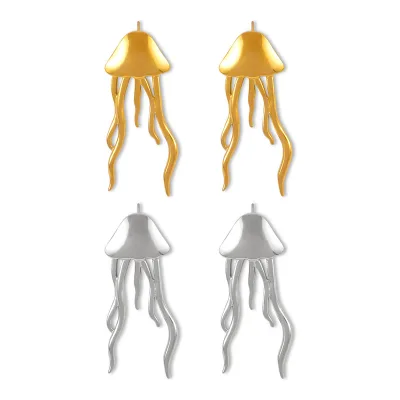
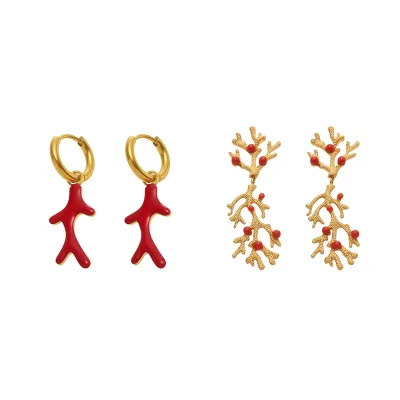
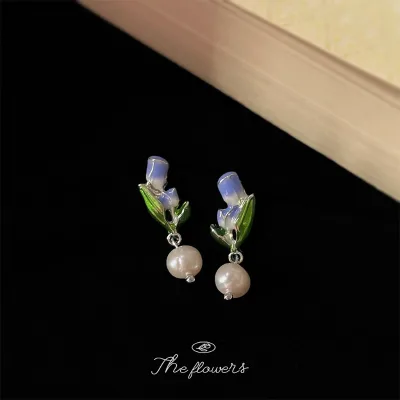
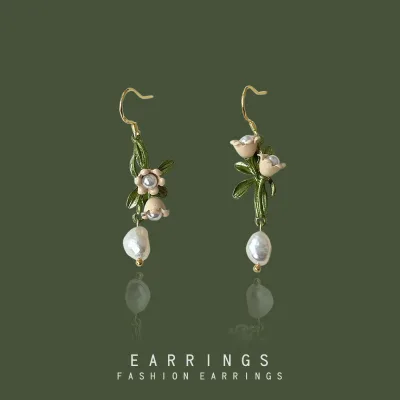


Comprehensive Sourcing Guide
Handmade Jellyfish Tassel Earrings Supplier Concentration and Factory Types
Buyers searching for Handmade Jellyfish Tassel Earrings will find that supplier results in this category frequently point to Zhejiang, China as a sourcing origin, and this provincial attribution appears both in supplier location data and in product origin fields. Zhejiang is worth noting because it is one of the documented locations attached to the suppliers surfaced in current results, and fashion jewelry trading activity in the region is reflected in product listings covering dangle earrings, stud earrings and related fashion accessories. Because location evidence is limited to this provincial level, buyers should not assume a single city-level cluster; instead, they should confirm exact factory addresses during inquiry and ask whether production, assembly and tassel-handcrafting steps occur in-house or through subcontractors.
The supplier mix in this category includes trading companies rather than only manufacturers, which matters for quality control and pricing transparency. A trading company can be legitimate and even advantageous when it consolidates multiple earring styles, but buyers should ask direct questions about who performs the handwork that defines jellyfish tassel designs. Product evidence in current results shows ODM capability, with customization listed as available and OEM/ODM explicitly accepted, alongside main product lines that include bangles, wrist bands, bracelets and fashion jewelry broadly, not only earrings. That breadth signals generalist fashion-jewelry suppliers, so buyers should probe how much of a supplier's actual output consists of tassel-style earrings before committing to a development cycle.
How to Verify Handmade Jellyfish Tassel Earrings Suppliers
Verification should begin with the credentials that are actually displayed on supplier profiles rather than assumed. In current results, verification indicators include SGS and CTI, meaning third-party inspection bodies have been associated with some listed suppliers. Buyers should confirm the scope of such verification: it typically covers company legitimacy rather than product-level compliance for every SKU. For Handmade Jellyfish Tassel Earrings specifically, request test documentation tied to the earring materials themselves. Product listings in this category reference certificates including SGS, BV and Intertek, and eco-friendly claims such as lead free, nickle free and cadmium free construction. Treat these as claims to validate with actual reports, batch numbers and testing dates, not as settled facts.
Beyond documentation, verification should test operational reality. Response time data in current results ranges widely, with figures such as 24.10 hours and 6.49 hours appearing, so message several suppliers with identical technical questions and compare actual reply speed and substance against displayed figures. Ask for business licenses, verify the registered name matches the account, and request references from buyers in Europe, North America or Russia, which are the main markets cited in product attributes. Because many suppliers in this category are trading companies, ask to see photos or video of the workshop performing tassel assembly and earring finishing. A short video call showing the jellyfish-style tassel being tied, the alloy or pearl components being attached, and packing into OPP bags will distinguish genuine handwork capability from catalog-only reselling.
What to Compare Across Handmade Jellyfish Tassel Earrings Suppliers
Build a comparison sheet using the attributes suppliers actually display, while remembering that not every supplier shows every field. Useful dimensions from current results include location, company type, verification status, response time, lead time, R&D capacity, and main product lines. Lead time evidence shows a figure of 15 days, which serves as a benchmark to test against other quotes for similar handmade quantities. Response time varies meaningfully across suppliers, and for a handmade category where sampling revisions are common, faster and more substantive replies usually predict smoother development. Company type tells you whether you are dealing with a trading company or a factory, which changes who controls tassel quality and who is accountable for defects.
On the product side, compare quoted price ranges and MOQs directly from listings. Current product evidence shows prices spanning roughly from under one dollar to several dollars per pair, and MOQs as low as 20 pieces for some pearl eardrop styles, 100 pieces for silver-needle tassel designs, and 200 pieces for other fashion eardrops. Material choices differ as well: alloy, pearl, brass with pearl ear clips, cubic zirconia, and feathered tassel constructions each carry different weight, plating and handling requirements, with listed weights from 5g to 20g. Also compare customization terms, packaging conventions such as OPP or polybag packing, and stated eco-friendly attributes. A supplier whose main products center on earrings will generally outperform a generalist bracelet and brooch trader on tassel consistency.
Common Handmade Jellyfish Tassel Earrings Sourcing Risks
The first risk cluster concerns material and finish discrepancies. Product listings cite alloy and pearl materials with lead free, nickle free and cadmium free claims, but handmade tassel earrings depend on plating thickness, thread quality and knot security that photos cannot verify. Buyers routinely receive samples that match listings and bulk goods that drift: thinner plating, stiffer tassels, uneven jellyfish silhouettes, or pearls substituted with lower-grade beads. Because certificates such as SGS, BV and Intertek are referenced at the listing level, a recurring failure mode is assuming certificate coverage extends to your specific production batch. Insist on batch-linked reports and conduct pre-shipment inspection on tassel symmetry, earring-post strength and color consistency against the approved golden sample.
The second risk cluster concerns supplier structure and communication. Trading companies in this category may not control the handwork upstream, so a change in their subcontractor can silently alter tassel softness, length or thread color. Model numbers like JYB1004 or E-03513 shown in listings help lock specifications, but buyers must convert listing attributes, such as 11*2.5cm dimensions or stated weights, into a signed specification sheet. Additional risks include quoting errors where the displayed price range, which in current evidence spans from around 0.60 to 5.50 depending on style, is quoted at the bottom of the range for a spec that realistically sits at the top; MOQ misunderstandings where a 20-piece MOQ applies only to one SKU; and quality-standard ambiguity where a listing says US Standard without defining which tests back it.
Handmade Jellyfish Tassel Earrings Regional Sourcing and Logistics
Location evidence in current results is anchored at Zhejiang, China, appearing both as supplier location and product origin, so regional planning should start from that provincial attribution rather than an assumed city cluster. Buyers should ask each supplier for the full production address and confirm whether tassel handcrafting happens there or at a satellite workshop, because handmade categories often split assembly across sites. When no city-level cluster is documented, buyers can identify one themselves by mapping the origin fields across multiple listings, noting where model numbers and stylistic families repeat, and asking suppliers directly which nearby markets supply their components. This self-built cluster picture supports better sourcing-trip planning than relying on a single profile's stated location.
Logistically, product attributes in current results list shipment via DHL, UPS, TNT and similar couriers, with packing conventions such as each piece in an OPP bag or one piece per polybag. These are appropriate defaults for small, lightweight goods, but buyers should still confirm carton dimensions, gross weight and drop-test expectations, since tassels crush and kink under compression. Lead time evidence includes a 15-day figure, which buyers should validate against their own order size and any plating or pearl-sourcing dependencies. For handmade goods, add inspection time before dispatch. Buyers serving Europe, North America and Russia, the main markets cited in listings, should also confirm which Incoterms the supplier quotes and who handles export documentation, since trading companies and factories differ in export licensing.
Handmade Jellyfish Tassel Earrings Commercial Terms and Order Planning
Order planning for Handmade Jellyfish Tassel Earrings should start from the MOQ and price evidence visible in listings, then be pressure-tested through negotiation. Current product evidence shows MOQs ranging from 20 pieces on pearl ear-clip styles to 100 and 200 pieces on other tassel designs, and price ranges from roughly 0.60 to 5.50 per pair depending on material and construction. Buyers should quote a full specification, not a product name, because the same tassel family can vary in alloy base, pearl grade, silver-needle finding and tassel length, each of which moves price. Confirm whether the quoted price applies at the MOQ, at a larger tier, and whether customization triggers a separate tooling or sampling charge.
Payment and risk terms deserve equal attention. Ask each supplier which payment methods they accept, whether escrow-style protection is available through their channel, and what deposit-to-balance split they require; do not assume any particular structure, because current results do not display uniform payment terms. Use the displayed response time figures, such as 6.49 or 24.10 hours, as planning inputs for how long revision cycles may take, and build a timeline around the 15-day lead time benchmark plus sampling, inspection and shipping. Finally, lock specifications into a purchase contract referencing model numbers, materials, certificates, packing method and the quality standard cited, and stage first orders conservatively so a handmade quality failure does not strand a large prepaid balance.
(Section word targets: each section above contains approximately 228–232 words; total article approximately 1,390 words.)
FAQs
What is the price range for Handmade Jellyfish Tassel Earrings?
Prices for these earrings typically range from $0.60 to $5.50 per pair. The final cost depends on the material used, such as alloy or pearl, and the level of customization required. Buyers should check specific product listings for exact pricing tiers based on order volume.
What is the minimum order quantity for these earrings?
The minimum order quantity varies by supplier, with common thresholds of 20, 100, or 200 pairs. Lower MOQs are often available for standard designs, while higher volumes may be required for custom OEM or ODM services. Always verify the specific MOQ on the product page.
How long does production take for these earrings?
Standard lead times are approximately 15 days for production. This duration may vary depending on the complexity of the design and the current order volume. Buyers should confirm the exact delivery schedule with the supplier before placing an order to ensure timely arrival.
Are these earrings certified for safety and quality?
Many suppliers provide certifications such as SGS, BV, and Intertek to ensure product quality. The earrings are also typically lead-free, nickel-free, and cadmium-free, meeting eco-friendly standards. Buyers should request specific certificate copies to verify compliance with their local market regulations.
Where are these earrings manufactured?
These earrings are primarily manufactured in Zhejiang, China. This region is known for its strong jewelry manufacturing infrastructure and supply chain efficiency. Buyers can expect consistent quality and competitive pricing from suppliers located in this area.
Can I customize the design of these earrings?
Yes, customization is available through OEM and ODM services. Buyers can request specific materials, colors, and packaging options to match their brand requirements. Suppliers typically accept custom designs, but lead times and MOQs may increase for personalized orders.