High Precision Auto Inspection Fixture Suppliers and Manufacturers
Explore 17 verified suppliers offering High Precision Auto Inspection Fixture solutions across China. Compare response times, lead times, certifications, and pricing to find the right partner. Contact suppliers directly to request quotes; review the available evidence before requesting comparable quotations from suitable candidates.
Suppliers List

Win Win Industrial (Shenzhen) CO., LTD.
- Verified by BV
- Combined
- China Guangdong
- Lead time23 days
- Avg. response≤ 9h
Main productsMould, Plastic Injection Mold, Plastic Molding, Prototype, Automotive Checking Fixture, Car Checking Fixture, Automotive Plastic Mold, Die Casting Mold, Large Die Casting Mold Base, Machined Plastic and Metal Parts
Main marketsDomestic,North America


China High Precision Car Checking Fixture for Automobile Interior Parts
$2000.00 - $10000.00
MOQ: 1 Pieces

High Precision Automative Checking Fixture with Standard Certificate
$2000.00 - $6000.00
MOQ: 1 Pieces


Tangshan Jiasun Import and Export Co., Ltd.
- Combined
- China Hebei
- Lead time30 days
- Avg. response≤ 9h
Main productsDie-Cutting and Creasing Machine, Inspection Machine, Folder Gluer, Flute Laminator, Packaging Machinery, Pile Turner, Bundling Machine, Cardboard Laminating, Cutting Machine, Creasing Matrix
Main marketsSouth America,Others(foreignTradeCapacity.exportBusinessCapacityMarketOther),Southeast Asia/ Mideast,East Asia(Japan/ South Korea),Europe,Australia,North America
Taizhou Aoke Machinery Co., Ltd.
- Trading Company
- Zhejiang, China
- Lead time10 days
- Avg. response≤ 2h
Main productsauto lamp,designing,mould,machinery,injection
Main marketsMid East(15.00%), Northern Europe(10.00%), Central America(10.00%), Oceania(10.00%), Western Europe(10.00%), Eastern Europe(10.00%), South America(10.00%), Southern Europe(6.00%), North America(5.00%), South Asia(5.00%), Southeast Asia(5.00%), Africa(2.00%), Eastern Asia(2.00%)

General Inspection Services Co., Ltd.
- Trading Company
- China Fujian
- Lead time15 days
- Avg. response≤ 2h
Main productsInspection Service, Product Inspection, Loading Supervision, Testing Service, Product Audit, Factory Evaluation, Trade Company Evaluation, One-Stop Purchasing Service, Full Inspection, Process Audit
Main marketsSouth America,Africa,Southeast Asia/ Mideast,Domestic,Europe,Australia,North America

Suzhou Qiantong Instrument Equipment Co., Ltd.
- Combined
- China Jiangsu
- Lead time23 days
- Avg. response≤ 2h
Main productsUniversal Testing Machine, Solar Cell Temsile Testing Machine, Melt Flow Rate Measurer, Hydraulic Testing Machine
Main marketsSoutheast Asia/ Mideast,East Asia(Japan/ South Korea),Domestic,North America

Beijing Vacuum Electronic Technology Co., Ltd.
- Verified by BV
- Combined
- China Beijing
- Lead time30 days
- Avg. response≤ 5h
Main productsX-ray Baggage Scanner, Vehicle Inspection System, Container Scanner System, Walk-Through Metal Detector
Main marketsSoutheast Asia/ Mideast,East Asia(Japan/ South Korea),Domestic,North America

Yantai Tuomax International Trade Co., Ltd
- Verified by SGS
- Combined
- China Shandong
- Lead time15 days
- Avg. response≤ 4h
Main marketsEurope

Custom Precision Automotive Checking Fixture for Car Body Parts Inspection
$0.50 - $6.00
MOQ: 1 Pieces


Zhuhai Shengwo Machinery Technology Co., Ltd.
- Verified by BV
- Combined
- China Guangdong
- Lead time30 days
- Avg. response≤ 3h
Main productsSheet Metal
Main marketsEurope


Versatile Professional Fixture for Precision Metal Fabrication Projects
$200.00 - $1000.00
MOQ: 1 Pieces

High-Precision Fixture for Superior Fabrication Accuracy and Efficiency
$200.00 - $1000.00
MOQ: 1 Pieces


Suzhou Kiande Electric Co., Ltd.
- Trading Company,Manufacturer/Factory
- China Jiangsu
- Lead time23 days
- Avg. response≤ 4h
Main productsBusbar Fabrication Machine, Busbar Assembly Machine, Busbar Inspection Machine, Busbar Riveting Machine, Busduct Manufacturing Line, Busbar Packaging Machine, Busbar Punching Machine, Busbar Joint, Busbar Insulator, Busbar Tap off Unit
Main marketsSouth America,Mid East,Southeast Asia,Africa

Advanced Automatic Inspection Machine for High Precision Industrial Use
$49800.00 - $50000.00
MOQ: 1 Pieces

Advanced Modular Automatic Inspection Machine for Precision Quality Control
$49800.00 - $50000.00
MOQ: 1 Pieces


Shaanxi Aps Machinery Equipment Co., Ltd.
- Manufacturer, Trading Company
- Lead time旺季: "1 - 1":5,"> 1":"To be negotiated", 淡季: "1 - 1":5,"> 1":"To be negotiated"
Main productsBoring Machine, Honing Machine, Grinding Machine, Milling Machine

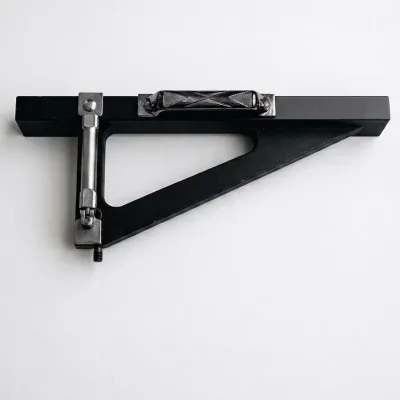
$450.00 - $550.00

Dongguan RKE Intelligent Technology Co., Ltd.
- Verified by TUVRHEINLAND
- Manufacturer
- China Guangdong
- Lead time30 days
- Avg. response≤ 6h
Main productsOptical Sorting Machine, Fastener Optical Sorting Machine, Automatic Optical Inspection Machine, Images Screener Machine, Eddy Current Screen Machine, Aoi Inspection Equipment, Screw Optical Inspection and Sorting Machine, Nut Image Inspection Machine, Automotive Fastener Optical Sorting Machine, Dimensions and Appearance Defects Inspection


Comprehensive Plastic Parts Quality Inspection Machine for Accuracy
$20000.00 - $100000.00
MOQ: 1 Sets

- Verified by SGS
- Trading Company
- China Zhejiang
- Lead time0 days
- Avg. response≤ 13h
Main productsTents, BBQ Grill, Luggage, Kids Toy, Fitness Equpments, Cookware, Kitchen Utensils and Gadgets, Yoga Mat, Bathroom Rugs, Pets Items
Main marketsSouth America,Eastern Europe,Mid East,North America,Southeast Asia,Eastern Asia,Oceania,Western Europe,Africa

Shenzhen Chuangkewei Visual Technology Co., Ltd.
- Verified by SGS
- Combined
- China Guangdong
- Lead time30 days
- Avg. response≤ 13h
Main productsAi Optical Vision Solution
Main marketsSoutheast Asia/ Mideast

Wuxi Gelanten Technology Co., Ltd.
- Verified by TUVRHEINLAND
- Manufacturer/Factory
- China Jiangsu
- Lead time23 days
- Avg. response≤ 3h
Main productsCNC Machining Parts, Custom Machining Part, OEM Parts, CNC Machining Service, Custom Machinery Part, Technology Solution Service, High Precision Customized Fixture, High Precision Shaft, Metal Injection Molding Part, Aluminum Casting Mold
Main marketsSouth America,Eastern Europe,Mid East,North America,Southeast Asia,Eastern Asia,Oceania,Western Europe,Africa

Hangzhou Changniu Technology Co., Ltd.
- Verified by SGS
- Combined
- China Zhejiang
- Lead time15 days
- Avg. response≤ 3h
Main productsDynamometer, Motor Test Bench, Motor Test System, Parameter Measuring Instrument, Motor Stator Test Equipment, Water Pump Test System, Motor Life Test System, Motor Rotor Test Equipment, Hysteresis Dynamometer, Wind Turbine Test System
Main marketsDomestic

Precision Motor Quality Inspection Instruments for Enhanced Testing Accuracy
$6000.00 - $16000.00
MOQ: 1 unit

Manufacturer's Customization Motor Quality Inspection Test Equipment for Accurate Measurements
$6000.00 - $16000.00
MOQ: 1 unit


Dongguan Weibang Instrument Equipment Co., Ltd.
- Verified by BV
- Combined
- China Guangdong
- Lead time23 days
- Avg. response≤ 16h
Main productsEnvironment Test Chamber, Rapid Temperature Change Test Chamber, Constant Temperature and Humidity Test Chambe, Thermal Shock Test Chamber, Walk-in Environmental Test Chamber, Bond Test Machine, Universal Testing Machine, Hast Highly Accelerated Stress Test Chamber, Vibration Test System
Main marketsSoutheast Asia/ Mideast

Advanced Testing Equipment with Auto Switching for Precision Measurements
$7999.00 - $40000.00
MOQ: 1 Pieces


Jumicro Intelligent Equipment (Jiangsu) Co., Ltd
- Verified by CTI
- Combined
- China Jiangsu
- Lead time23 days
- Avg. response≤ 6h
Main productsSmart Sensing Rack, Smart Sensing Mobile Cart, Smart Stencil Storage Cabinet, Smart Solder Paste Storage Cabinet, First Article Inspection (Fai) Station, Stencil Inspection Machine, X-ray Inspection System, Smart X-ray Component Counter, Dry Storage Cabinet, SMT Auto Splice Machine
Main marketsSoutheast Asia/ Mideast,Domestic


Comprehensive Sourcing Guide
High Precision Auto Inspection Fixture Supplier Concentration and Factory Types
Current data indicates a concentration of manufacturing capabilities in China, specifically within the Guangdong and Hebei provinces, alongside facilities in Zhejiang. These regions host a mix of combined manufacturing entities and trading companies that specialize in tooling, plastic injection molds, and automated inspection machinery. Suppliers in Guangdong often focus on automotive checking fixtures, die casting molds, and precision-machined parts, while Hebei-based operations frequently offer high-speed automatic inspection machines for packaging and printing applications. Zhejiang suppliers appear to bridge these gaps by offering custom-made inspection tools specifically for auto lamps and related components.
When evaluating factory types, buyers should distinguish between combined entities that handle both design and production and trading companies that may source from multiple factories. The available evidence shows that some suppliers possess ODM and OEM capacities, suggesting they can adapt designs to specific client needs. Others may operate with their own brands, indicating a level of proprietary technology or established product lines. It is critical to verify whether a supplier's primary output aligns with the specific fixture requirements, such as single-cavity versus multi-cavity mold capabilities or the integration of specific design software like UG or CAD.
How to Verify High Precision Auto Inspection Fixture Suppliers
Verification begins with checking for third-party validation badges, such as BV certification, which serves as a baseline indicator of operational legitimacy. Buyers should also scrutinize product attributes for specific certifications like ISO9001:2000, which suggests adherence to quality management standards. The presence of detailed product specifications, including steel hardness ranges, treatment processes like nitriding or heat treatment, and defined mold life cycles, provides tangible evidence of technical competence. A supplier claiming ISO certification should be able to provide documentation that matches the specific product attributes listed, such as the use of PA66+GF materials or specific runner types.
Response time and lead time data offer further insights into operational reliability. Current observations show response times ranging from two to nearly nine hours, with lead times varying significantly from ten to thirty days depending on the product complexity. A supplier with a rapid response time may indicate a streamlined communication channel, while a shorter lead time suggests efficient production scheduling. Buyers must confirm that these metrics apply to the specific order volume and customization level required. Additionally, verifying the origin of the product, such as confirming it originates from Hebei or Guangdong, ensures the supply chain matches the expected manufacturing ecosystem for high-precision automotive tooling.
What to Compare Across High Precision Auto Inspection Fixture Suppliers
Comparison should focus on the technical specifications and customization capabilities listed in product attributes. Key differentiators include the design software used, such as UG, CAD, or Solid Works, and the specific mold cavity configurations, which can be single or multi-cavity. Buyers must evaluate whether the supplier offers fixed installation or other customization options, and check the standard materials used, such as DME or LKM mold bases. The application scope is also vital; some fixtures are designed strictly for automotive applications, while others may serve electronic or general industrial purposes, affecting the precision and durability requirements.
Commercial terms and pricing structures provide another layer for comparison. Price ranges observed vary widely, from approximately two thousand dollars for basic fixtures to over one hundred thousand dollars for high-speed automatic inspection machines. Minimum order quantities (MOQ) appear to start as low as one unit for custom fixtures, but bulk orders may trigger different pricing tiers. Lead times and response speeds must be weighed against the urgency of the project. A supplier offering a lower price with a longer lead time might be suitable for non-urgent projects, whereas a higher-cost supplier with a ten-day lead time could be essential for time-sensitive automotive production lines.
Common High Precision Auto Inspection Fixture Sourcing Risks
One significant risk involves the discrepancy between advertised capabilities and actual production capacity. While some suppliers list extensive main products including die-cutting machines and folder gluers, their core competency in high-precision automotive checking fixtures may be limited. Buyers must ensure that the specific product model, such as the Checking Fixture Ww-172, is a genuine offering and not a generic listing. The risk of receiving a product that does not meet the required tolerance levels, such as the specified 0.15mm defect detection size, is high if the supplier lacks the necessary quality control infrastructure or ISO certification.
Another risk lies in the variability of payment terms and shipping logistics. Payment methods like T/T, Western Union, or Money Gram vary in security, and buyers should verify the escrow options available to protect funds until delivery. Shipping standards, such as crate or pallet packing, must be confirmed to prevent damage during transit, especially for heavy machinery like inspection stations. The origin of the product, whether from China or another region, impacts customs duties and import regulations. Without clear evidence of the supplier's ability to handle international logistics and provide proper documentation, buyers face potential delays and unexpected costs that can derail the procurement timeline.
High Precision Auto Inspection Fixture Regional Sourcing and Logistics
Sourcing from China, particularly Guangdong and Hebei, offers access to a mature ecosystem of tooling and machinery manufacturers. Guangdong is noted for its expertise in plastic injection molds and automotive checking fixtures, leveraging a dense network of component suppliers. Hebei, on the other hand, specializes in heavy machinery and inspection equipment, often producing high-speed automatic machines for industrial applications. Buyers should consider the logistical implications of these regional specializations, as shipping times and costs may vary based on the specific province of origin and the weight of the equipment.
Logistics planning must account for the specific packing requirements of the equipment. Products are typically shipped in crates or on pallets, which affects the volume and handling requirements for freight forwarders. For high-precision fixtures, the stability of the transport method is crucial to maintain calibration and prevent physical damage. Buyers should verify the supplier's experience with international shipping standards and ensure that the packaging meets the necessary protection levels for delicate measuring instruments. Understanding the regional strengths helps in selecting the right supplier for the specific type of fixture needed, whether it is a lightweight plastic mold or a heavy-duty inspection station.
High Precision Auto Inspection Fixture Commercial Terms and Order Planning
Order planning requires a clear understanding of the commercial terms, including payment methods and delivery schedules. Suppliers may accept T/T, Western Union, or Money Gram, but buyers should prioritize secure payment channels that offer protection against non-delivery. The lead time, which can range from ten to thirty days, must be factored into the production schedule to avoid bottlenecks in the automotive assembly line. Buyers should also confirm the minimum order quantity, as some suppliers may require a minimum of one unit for custom fixtures, while others might have different thresholds for standard models.
Pricing is another critical factor in order planning, with costs varying significantly based on complexity and customization. Prices for basic checking fixtures may start around two thousand dollars, while advanced inspection machines can exceed one hundred thousand dollars. Buyers should request detailed quotes that break down costs for materials, labor, and shipping. It is essential to verify that the quoted price includes all necessary certifications and standards, such as ISO or CE compliance. By carefully analyzing these commercial terms, buyers can create a realistic budget and timeline that aligns with their operational needs and ensures a smooth procurement process.
FAQs
Where are high precision auto inspection fixtures manufactured?
These fixtures are primarily manufactured in China, with specific facilities located in Guangdong, Hebei, and Zhejiang provinces. Buyers can find suppliers offering combined services or trading companies in these regions to source custom tooling and checking fixtures for automotive applications.
What is the typical lead time for these fixtures?
Lead times vary by supplier and complexity, ranging from 10 days to 30 days. Some manufacturers in Zhejiang offer faster turnaround of 10 days, while others in Hebei may require up to 30 days for production and delivery of high-precision inspection equipment.
Do suppliers offer customization for auto inspection fixtures?
Yes, customization is widely available for these fixtures. Suppliers provide options for single or multi-cavity molds, specific plastic materials like PA66+GF or PC, and various surface finishes. Buyers can request fixed installation types and specific design software integration for their unique needs.
What certifications do these fixtures typically hold?
Many high precision fixtures come with ISO certification, ensuring quality management standards are met. Specific products may also adhere to DME standards and feature ISO9001:2000 certification. Buyers should verify individual product attributes to confirm compliance with required industry standards.
What is the minimum order quantity for these fixtures?
The minimum order quantity is often as low as one unit for certain checking fixtures. This allows buyers to source single prototypes or specific inspection tools without needing to commit to large batch orders, making it suitable for initial development phases.
How fast do suppliers typically respond to inquiries?
Response times vary, with some suppliers responding within 2 hours while others take around 8 to 9 hours. Buyers seeking quick communication should prioritize suppliers with shorter response metrics to ensure efficient project management and faster resolution of technical queries.
What materials are used for the plastic components?
Common materials include PA66+GF and PC, selected for durability and precision in automotive applications. These materials are used in injection molding processes to create robust checking fixtures that can withstand repeated use while maintaining high dimensional accuracy for auto parts.