Marble Design Green Bread Tray Suppliers and Manufacturers
Source Marble Design Green Bread Tray options from 12 verified suppliers in China. Compare lead times of 15 to 45 days, MOQs from 50 to 500 units, and certifications like BSCI and CE. Review factory details and request quotes today.
Updated
Suppliers List
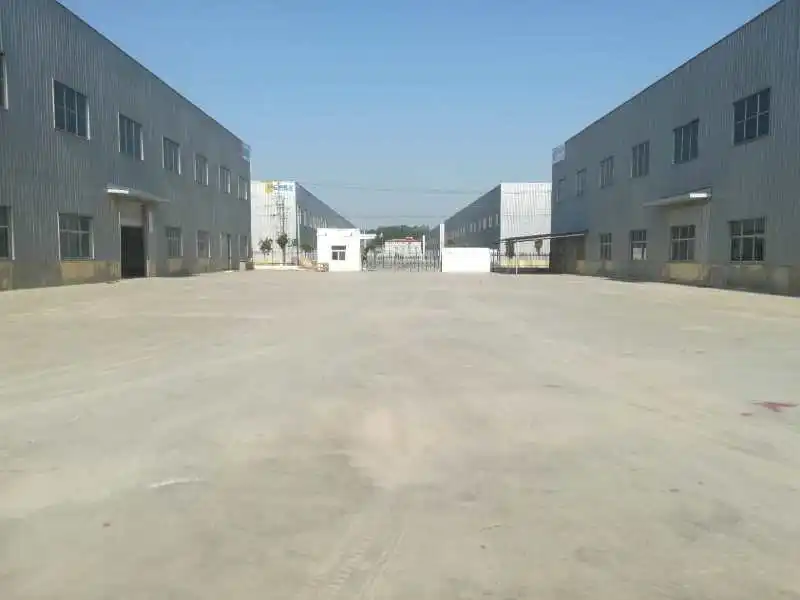
Cao County Dream Sun Furniture Co., Ltd.
- Manufacturer, Trading Company
- Shandong, China
- Lead time45 days
- Avg. response≤ 3h
Main productsWOODEN BOX,FURNITURE,WINE BARREL,Wall Storage Shelves,Kitchen&Bathroom Products
Main marketsDomestic Market(20.00%), Northern Europe(20.00%), Eastern Asia(10.00%), Mid East(10.00%), Western Europe(10.00%), Eastern Europe(10.00%), North America(5.00%), Southern Europe(5.00%), South Asia(5.00%), Central America(3.00%), South America(1.00%), Africa(1.00%)

Jiujiang Cosen Industrial Co., Ltd.
- Manufacturer, Trading Company
- Jiangxi, China
- Lead time35 days
- Avg. response≤ 6h
Main productsSlate Cheeseboard/ Slate Plate/ Marble Acacia Board/ Wood & Bamboo Cheeseboard/ Slate & Marble Cake Stand, Slate Coaster/ Marble Coaster/ Acacia Marble Coaster/ Wood & Bamboo Coaster/ Acacia Coaster, Slate Frames/ Marble Frames/ Acacia Slate Frames/ Acacia Marble Frames/ Wood & Bamboo Frames, Cheese Marker/ Cheese Knife , Slate Sign/ Slate Blackboard/ Slate Tag/ Slate Ornament
Main marketsNorth America(30.00%), Western Europe(30.00%), Southern Europe(19.00%), Southeast Asia(10.00%), Oceania(3.00%), Domestic Market(3.00%), South America(2.00%), Northern Europe(1.00%), Africa(1.00%), Mid East(1.00%)
Jiujiang Jinsheng Stone Co., Ltd.
- Verified by Intertek
- Manufacturer, Trading Company
- Lead time15 days
- Avg. response≤ 3h
Main productsSlate Coaster, Slate Plate, Slate Tray, Marble Coaster, Marble Tray
Main marketsNorth America(65%), Eastern Europe(10%), Oceania(10%)

Shuifu Huiyang Agricultural Technology Co., Ltd.
- Verified by SGS
- Trading Company
- China Yunnan
- Lead time23 days
- Avg. response≤ 3h
Main productsBamboo Products, Bamboo Crafts, Bamboo Chopsticks, Bamboo Skewers, Bamboo Weaving, Bamboo Tray, Bamboo Box, Bamboo Placemat, Bamboo Fruit Bowl, Lamp Shades
Main marketsDomestic

Chaozhou Kaifa Saimei Porcelain Factory
- Manufacturer, Trading Company
- Guangdong, China
- Lead time35 days
- Avg. response≤ 13h
Main productsCERAMIC DINNIER WARE,ceramic plate,ceramic cup,ceramic with wooden products,custom porcelain
Main marketsDomestic Market(30.00%), Southeast Asia(10.00%), Mid East(10.00%), South Asia(10.00%), Africa(5.00%), Eastern Asia(5.00%)

- Verified by SGS
- Combined
- China Fujian
- Lead time30 days
- Avg. response≤ 22h
Main productsGlass Sand Glass Cullet
Main marketsAfrica

Eagle Catering Equipment Co., Ltd.
- Manufacturer/Factory
- China Guangdong
- Lead time30 days
- Avg. response≤ 10h
Main productsTrolleys, Gastronorm Containers, Table, Shelves, Sink, Barrier Post, Cookware, Buffetware, Barware, Kitchen Utensils
Main marketsSouth America,Eastern Europe,Mid East,North America,Southeast Asia,Eastern Asia,Oceania,Western Europe,Africa

Newstar (Quanzhou) Industrial Co., Ltd.
- Verified by BV
- Manufacturer/Factory
- China Fujian
- Lead time15 days
- Avg. response≤ 3h
Main productsStone Products, Marble, Quartz, Onyx, Granite, Travertine, Slate & Quartzite, Sandstone, Benyeequartz, Glass Stone Surface
Main marketsSouth America,Eastern Europe,Mid East,North America,Southeast Asia,Eastern Asia,Oceania,Western Europe,Africa


Square Fruit Marble Tray Home Living Room Table Decoration Storage Tray
$26.50 - $32.50
MOQ: 100 Pieces

Xiamen V-seri Stone Import and Export Co., Ltd.
- Verified by SGS
- Trading Company
- China Fujian
- Lead time30 days
- Avg. response≤ 3h
Main productsGranite Tombstone, Memorials, Granite Outdoor Tables and Chairs, Granite Handicraft, Headstone, Monument, Gravestone
Main marketsEurope

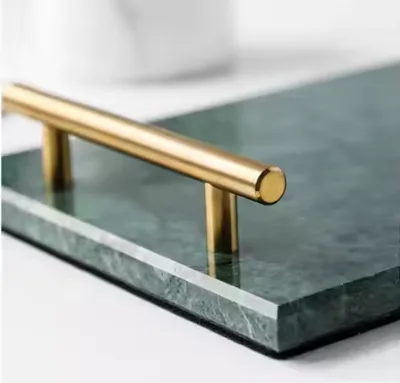
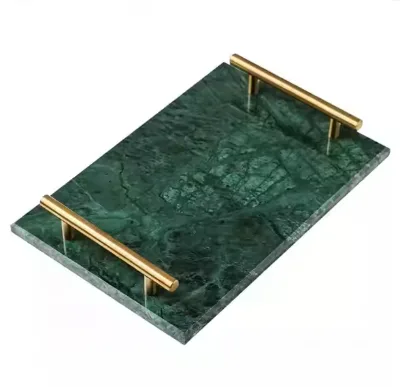
Natural Green Marble Food Serving Tray with Gold Handle for Restaurant Kitchen
$10.00 - $20.00
MOQ: 50 Pieces


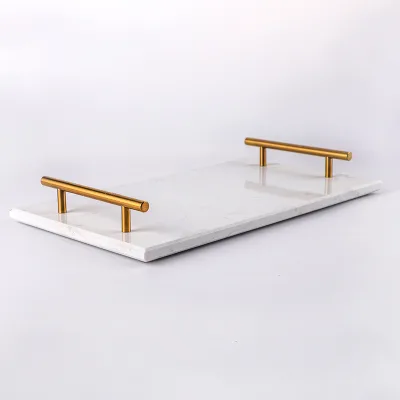
Multifunctional Decorative Rectangular Marble Serving Tray with Metal Handles for Kitchen Bathroom
$10.00 - $20.00
MOQ: 50 Pieces
Hubei Zeyu Stone Products Co., Ltd.
- Manufacturer, Trading Company
- Hubei, China
- Lead time15 days
- Avg. response≤ 5h
Main productsslate coasters,slate plates,marble coasters,marble trays,cork coasters
Main marketsMid East(20.00%), Central America(15.00%), Africa(12.00%), South America(12.00%), Western Europe(12.00%), Domestic Market(5.00%), North America(5.00%), Oceania(5.00%), Northern Europe(3.00%), Eastern Europe(3.00%), Eastern Asia(2.00%), South Asia(2.00%), Southern Europe(2.00%), Southeast Asia(2.00%)


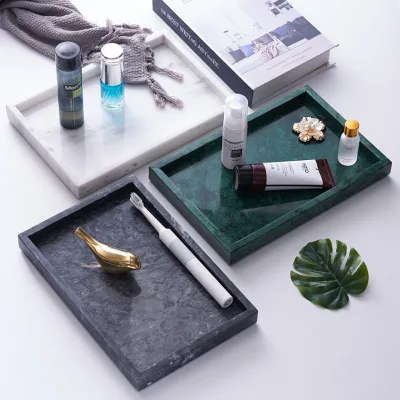
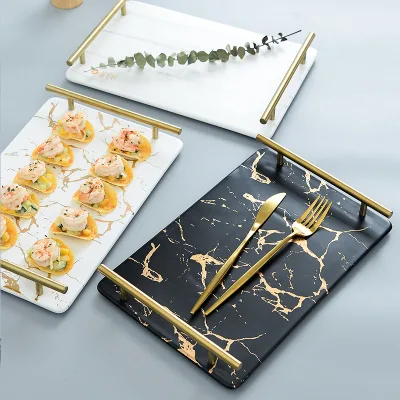
Wholesale Decor Luxury White Black Green Marble Serving Trays with Golden Handles for Home Hotels
$6.7485 - $9.6557
MOQ: 10 pieces



Shaowu City Nafu Bamboo and Wood Industry Co., Ltd.
- Manufacturer
- China Fujian
- Lead time15 days
- Avg. response≤ 15h
Main productsBamboo and Wood Cutting Board Cheese Board, Bamboo and Wood Storage Box, Bamboo and Wood Plate, Bamboo and Wood Tray, Marble Wood Cheese Board, Bamboo and Wood Table, Bamboo and Wood Bathroom Products, Bamboo and Wood Shelf, Bamboo and Wood Kitchen Utensil, Bamboo and Wood Bowl
Main marketsEast Asia(Japan/ South Korea),Domestic,Europe,Australia,North America

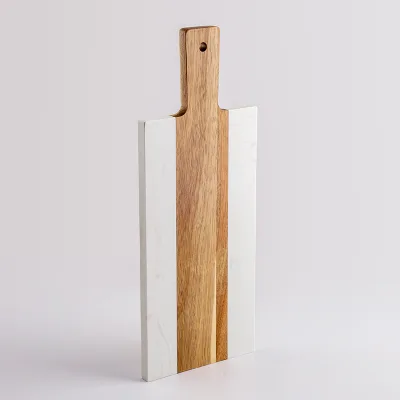
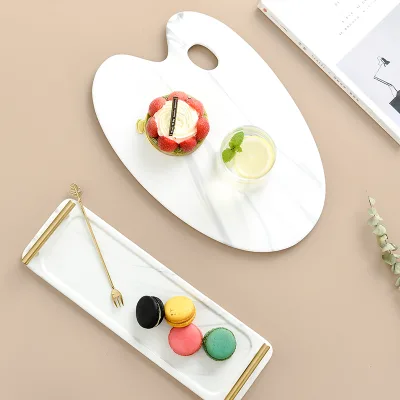
Paddle Shape Black Marble and Bamboo Serving Board Serving Tray for Cheese / Charcuterie / Bread
$3.70 - $4.70
MOQ: 300 Pieces


Xiamen Ebei Import & Export Co., Ltd.
- Verified by CTI
- Trading Company,Manufacturer/Factory
- China Fujian
- Lead time45 days
- Avg. response≤ 2h
Main productsEco-Friendly Products, Bamboo Tableware, Bamboo Furniture, Bamboo Kitchenware, Bamboo Office Supply, Bamboo Fibre Products, Biodegradable Products, Bamboo Towel, Solar Energy Products, Bamboo Garden Products
Main marketsSouth America,Eastern Europe,Mid East,North America,Southeast Asia,Eastern Asia,Oceania,Western Europe,Africa





Comprehensive Sourcing Guide
Marble Design Green Bread Tray Supplier Concentration and Factory Types
Current supplier data indicates manufacturing clusters in Shandong and Jiangxi, China, where facilities produce wooden boxes, furniture, and various storage trays alongside slate and marble serving items. These regions host both manufacturers and trading companies capable of handling the specific material requirements for marble and wood composite products. Buyers should verify if a facility's primary output includes slate cheeseboards, marble coasters, or wooden bread trays to ensure alignment with the requested Marble Design Green Bread Tray specifications. The presence of multiple product lines suggests these factories may have the necessary machinery for engraving, cutting, and finishing stone or wood materials.
When assessing factory types, note that some entities list themselves as manufacturers while others operate as trading companies. A manufacturer in Shandong might focus on wooden bread trays and kitchen storage, whereas a Jiangxi-based entity could specialize in slate and marble cheeseboards with custom engraving capabilities. It is critical to distinguish between these models because a trading company may source the marble component from a third party, potentially affecting quality control and lead times. Buyers must confirm whether the supplier directly manages the stone processing or merely aggregates products from various workshops to ensure the green marble design meets specific aesthetic and durability standards.
How to Verify Marble Design Green Bread Tray Suppliers
Verification begins by checking for specific system certifications and third-party audit results, as some suppliers in the dataset display CE certification and Intertek verification status. These credentials indicate a baseline commitment to safety and quality management systems, which is essential when sourcing stone-based kitchenware that must meet food safety standards. Buyers should request current certificates for BSCI, SEDEX, or LFGB, as these are explicitly mentioned in product attributes for similar marble serving trays. Without these documents, the risk of non-compliance with international food contact regulations increases significantly, especially for products intended for hotel or restaurant use.
Beyond certifications, buyers must validate response times and lead times to gauge operational reliability. The observed data shows response times ranging from three to six days and lead times varying between fifteen and forty-five days depending on the product complexity. A supplier claiming a fifteen-day lead time for a custom marble tray should provide a detailed production schedule to confirm feasibility. Additionally, verifying the establishment year and main product focus helps distinguish between specialized factories and general traders. If a supplier's main products are limited to wooden boxes or generic storage, they may lack the specific expertise required for high-quality Marble Design Green Bread Tray production, necessitating further due diligence before proceeding.
What to Compare Across Marble Design Green Bread Tray Suppliers
Comparative analysis should focus on minimum order quantities, pricing structures, and dimensional tolerances to ensure the product fits the buyer's operational needs. The available data reveals MOQs ranging from fifty sets to five hundred units, with prices varying from approximately $1.65 to $5.50 per unit depending on material and customization. Buyers must calculate the total cost of ownership, including shipping and potential rework costs, rather than focusing solely on the unit price. A lower MOQ might be preferable for testing the market, but a higher MOQ could offer better per-unit pricing and more stable production scheduling for larger orders.
Dimensional tolerance and material specifications are equally critical when comparing suppliers for Marble Design Green Bread Tray projects. Some product attributes list dimensional tolerances of less than plus or minus one millimeter, which is vital for ensuring a precise fit for serving items. Buyers should compare the stated material composition, such as artificial marble versus natural stone, and verify if the green color is achieved through dyeing or natural mineral variation. Additionally, comparing packaging details, such as shrink wrap versus custom boxes, helps assess the supplier's ability to protect fragile stone items during transit. These factors collectively determine the final product quality and the supplier's ability to meet specific design requirements.
Common Marble Design Green Bread Tray Sourcing Risks
One significant risk involves the discrepancy between advertised features and actual product attributes, particularly regarding material composition and finish. Some listings describe products as eco-friendly or featuring specific styles like country or minimalist, yet the actual material might be artificial marble rather than natural stone. This distinction affects durability, weight, and the perceived value of the final product. Buyers must request physical samples to verify the texture and color consistency, as digital images can be misleading regarding the "green" hue or the quality of the marble design. Relying solely on product descriptions without physical verification can lead to receiving items that do not match the intended aesthetic or functional requirements.
Another risk stems from inconsistent lead times and response speeds, which can disrupt supply chain planning. The observed data shows lead times ranging from fifteen to forty-five days, with response times varying from three to six days. A supplier with a longer lead time might struggle to meet urgent deadlines, while a slow response time could delay critical communication regarding design changes or quality issues. Furthermore, the lack of standardized packaging across different suppliers increases the risk of damage during shipping, especially for heavy marble items. Buyers should establish clear communication protocols and include penalty clauses for delays in their contracts to mitigate these operational risks effectively.
Marble Design Green Bread Tray Regional Sourcing and Logistics
Sourcing from Shandong and Jiangxi, China, offers access to established manufacturing clusters but requires careful logistics planning due to the weight and fragility of marble products. Factories in these regions often produce a mix of wooden and stone items, which can streamline production but may complicate shipping if the supplier lacks experience with heavy stone cargo. Buyers should verify the single gross weight of the product, as some marble trays weigh up to fifteen kilograms, significantly impacting freight costs and handling requirements. Understanding the specific logistics capabilities of the supplier, including their experience with international shipping and customs clearance, is essential to avoid unexpected delays or damage.
Logistics planning must also account for the specific packaging requirements of marble design green bread trays to ensure safe delivery. The data indicates packaging options ranging from simple shrink wrap to custom boxes, with some suppliers providing detailed single package sizes. Buyers should confirm that the packaging includes adequate cushioning and structural support to prevent cracking during transit. Additionally, verifying the supplier's ability to handle customs documentation and provide accurate HS codes is crucial for smooth importation. A supplier with a strong track record in exporting similar stone products will likely have established relationships with freight forwarders, reducing the risk of logistical bottlenecks and ensuring the product arrives in pristine condition.
Marble Design Green Bread Tray Commercial Terms and Order Planning
Commercial terms should explicitly address payment security, escrow usage, and clear definitions of delivery responsibilities to protect the buyer's interests. While some suppliers may offer standard payment terms, the use of escrow services provides an additional layer of security, ensuring funds are only released upon satisfactory delivery. Buyers must clarify whether the quoted price includes all costs or if additional fees for packaging, insurance, or customs duties apply. Understanding the full scope of the commercial agreement helps prevent disputes and ensures that the final cost aligns with the initial budget estimates.
Order planning requires a detailed timeline that accounts for production lead times, quality inspection periods, and shipping durations. With lead times ranging from fifteen to forty-five days, buyers should build a buffer into their schedule to accommodate potential delays or design revisions. It is also important to plan for quality control checks, especially given the variability in material quality and dimensional tolerances observed in the market. Establishing a clear communication schedule with the supplier, including regular updates on production progress, ensures that any issues are identified and resolved promptly. This proactive approach to order planning minimizes risks and facilitates a smoother procurement process for Marble Design Green Bread Tray projects.
FAQs
What is the price range for marble serving trays?
Prices for marble serving trays typically range from $1.65 to $5.50 per unit depending on material and design. Basic wooden or artificial marble options start around $1.65, while premium marble and acacia combinations can reach $5.50. Buyers should verify specific product listings for exact pricing based on quantity and customization requirements.
What is the minimum order quantity for marble trays?
Minimum order quantities vary by supplier and product type. Some manufacturers require a minimum of 50 sets for custom marble and acacia trays, while others may accept orders as low as 50 units for standard designs. Buyers should check individual product pages to confirm the specific MOQ applicable to their desired style and material.
How long does production take for marble trays?
Production lead times generally range from 15 to 45 days depending on the supplier and order complexity. Some factories offer faster turnaround times of 15 days, while others may require up to 45 days for larger or customized orders. Buyers should confirm specific lead times with suppliers before placing orders to ensure timely delivery.
Are marble serving trays eco-friendly?
Many marble and wooden serving trays are marketed as eco-friendly products. Suppliers often highlight features such as natural materials, sustainable sourcing, and environmentally friendly production processes. Buyers should verify specific product attributes and certifications to ensure the trays meet their sustainability standards and requirements for eco-conscious sourcing.
What certifications do marble tray suppliers have?
Some marble tray suppliers hold certifications such as BSCI, SEDEX, and LFGB, ensuring compliance with international standards. Additionally, certain manufacturers may have CE certification for their systems. Buyers should request relevant certification documents to verify that suppliers meet quality and safety requirements for their specific market and regulatory needs.