Microbial Air Bacteria Sampler Suppliers and Manufacturers
Compare 10 suppliers of the Microbial Air Bacteria Sampler side by side, covering verified location, factory type, system certifications, response speed, lead time, OEM and ODM capability, plus model-level specifications, pricing and MOQ. Filter the listings by your target market and request quotes from shortlisted suppliers.
Suppliers List

Suzhou HJ Clean Tech Co., Ltd.
- Verified by BV
- Combined
- China Jiangsu
- Lead time15 days
- Avg. response≤ 1h
Main productsAirborne Particle Counter, Air Sampler, Clean Room, Vhpsterilizer/Vhp  Generator, Pass Box, Sterility Test Isolator, Glove Integrity Tester, Air Flow Capture Hood, Dispensing Booth/Sampling Booth, Biological Safety Cabinet
Main marketsSouth America,Africa,Southeast Asia/ Mideast,East Asia(Japan/ South Korea),Domestic,Europe,North America


Biological Air Sampler with 2 Sampling Heads Microbiological Dust Air Sampler
$784.00 - $844.00
MOQ: 1 Pieces

Microbiological Biological Air Sampler for Cleanroom Pharmaceutical Lab Use
$784.00 - $844.00
MOQ: 1 Pieces


TRYTE TECHNOLOGY (HUNAN) DEVELOPMENT CO., LTD.
- Combined
- China Hunan
- Lead time23 days
- Avg. response≤ 20h
Main productsLab Equipment, Lab Instrument, Testing Machine, Analyzer Instrument, Coal Testing Instrument, Oil Testing Instrument, Petroleum Testint Instrument, Bomb Calorimeter, Medical Equipment, PCB Board Related Equipment
Main marketsSouth America,Africa,Southeast Asia/ Mideast,East Asia(Japan/ South Korea),Domestic,Europe,Australia,North America

Zhejiang FUXIA Medical Technology Co., Ltd.
- Verified by BV
- Combined
- China Zhejiang
- Lead time15 days
- Avg. response≤ 3h
Main productsBiosafety Cabinet, Biological Safety Cabinet, Fume Hood, Pass Box, Muffle Furnace, Air Shower, Dying Oven, Clean Bench, Laminar Flow Cabinet, Weighing Booth
Main marketsSouth America,Africa,Others(foreignTradeCapacity.exportBusinessCapacityMarketOther),Southeast Asia/ Mideast,Europe


100L/Min Planktonic Bacteria Air Sampler Microbiological Air Sampler
$1570.00 - $1730.00
MOQ: 1 Pieces


Jinan Kosemo Precision Instruments Co., Ltd.
- Trading Company
- China Shandong
- Lead time15 days
- Avg. response≤ 3h
Main productsAir Tightness Detector, Mass Flow Meter, Trace Oxygen Analyzer, Hydrogen Leak Detector, Sealing Test Bench, Aerosol Generator, Sealing Test Instrument, Microbial Air Sampler, Portable Gas Analyzer, Gas Leakage Tester
Main marketsSouth America,Eastern Europe,Mid East,North America,Southeast Asia,Eastern Asia,Oceania,Western Europe,Africa

Ksm-S Microbial Air Sampler with High Flow Rate for Scientific Studies
$2150.00 - $2500.00
MOQ: 1 Pieces


Ksm-S Microbial Air Sampler with High Flow Rate for Effective Sampling
$2150.00 - $2500.00
MOQ: 1 Pieces

Advanced Microbial Air Sampler for Accurate Environmental Monitoring
$2150.00 - $2500.00
MOQ: 1 Pieces

Portable Adjustable Volume Aluminum Alloy Microbial Air Sampler for Cleanroom Test
$2150.00 - $2500.00
MOQ: 1 Pieces

Zhejiang Fuxia Medical Technology Co., Ltd.
- Verified by SGS Group
- Manufacturer, Trading Company
- Lead time10 days
Main productsLaminar Flow Cabinet, Biological Safety Cabinet, Fume Hood, Weighing Booth, Air Sampler
Main marketsNorth America(10%), South America(10%), Eastern Europe(10%)
Prosperity Biotech (shandong) Co., Ltd.
- Verified by SGS Group
- Trading Company
- Lead time20 days
Main productsIncubator, Oven, Centrifuge, Autoclave, Fume Hood
Main marketsSouth America(15%), Eastern Europe(12%), North America(10%)

- Verified by BV
- Combined
- China Shandong
- Lead time30 days
- Avg. response≤ 4h
Main productsLaboratory Equipment, Medical Device, Biochemistry Analyzer, Autoclave, Biological Safety Cabinet, Laminar Flow Cabint, Fume Hood, Centrifuge, Oven, Incubator
Main marketsSouth America,Africa,Southeast Asia/ Mideast,East Asia(Japan/ South Korea),Europe,Australia,North America

Biobase Biological Air Sampler Automatic Microbial Air Biological Sampler
$400.00 - $950.00
MOQ: 1 unit


Faithful lnstrument (Hebei) Co., Ltd.
- Verified by BV
- Combined
- China Hebei
- Lead time15 days
- Avg. response≤ 6h
Main productsIncubator, Magnetic Stirrer, Drying Oven, Heating Mantle, Water Bath, Laminar Flow Cabinet, Stainless Steel Water Still, Disintegrator, Furnace, Vortex Mixer
Main marketsSouth America,Africa,Southeast Asia/ Mideast,Europe,Australia,North America

Beijing Zetron Technology Co., Ltd
- Verified by SGS
- Trading Company
- China Beijing
- Lead time15 days
- Avg. response≤ 4h
Main productsGas Detector, Gas Analyzer, Gas Alarm, Air Monitor, Air Analyzer, Dust Monitor, Gas Leakage Detector, Particle Counter, Methane Detector, Aerosol Photometer
Main marketsOthers(foreignTradeCapacity.exportBusinessCapacityMarketOther),Southeast Asia/ Mideast


Portable High Effective Microbial Biological Air Sampler for Laboratory
$1500.00 - $1550.00
MOQ: 1 Pieces

$1200.00 - $1250.00
MOQ: 1 Pieces

Six-Stage Biological Air Sampler/Intelligent Micro Biological Air Sampler
$1300.00 - $1500.00
MOQ: 1 Pieces

Ningbo Cbmtec Medical Equipment Co., Ltd.
- Verified by BV
- Manufacturer/Factory
- China Zhejiang
- Lead time45 days
- Avg. response≤ 4h
Main productsPatient Monitor, Ventilator, Patient Lift, Anesthesia Machine, Ultrasound Scanner, Gas Cylinder, Oxygen Concentrator, Pulse Oximeter, Oxygen Regulator
Main marketsSouth America,Eastern Europe,Mid East,North America,Southeast Asia,Eastern Asia,Oceania,Western Europe,Africa


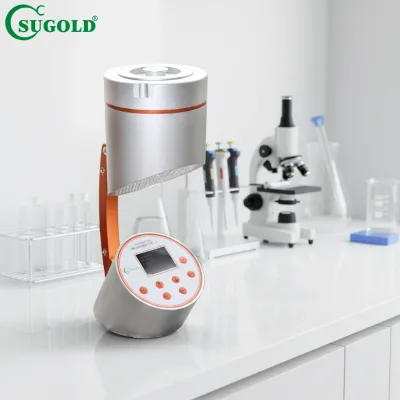


Comprehensive Sourcing Guide
Microbial Air Bacteria Sampler Supplier Concentration and Factory Types
When sourcing Microbial Air Bacteria Sampler equipment, understanding the geographic distribution of manufacturers is critical for assessing supply chain resilience. Current data indicates that suppliers are concentrated in specific industrial regions within China, including Jiangsu, Hunan, and Zhejiang provinces. These areas often host clusters of laboratory instrument manufacturers, which can facilitate easier logistics coordination and potential factory visits. However, buyers should not assume that all suppliers in these regions operate at the same scale or capability. It is essential to distinguish between integrated manufacturers who control the entire production process and trading companies that aggregate products from various factories. The distinction matters because integrated factories typically offer better customization options and more stable lead times, while trading companies may provide a wider variety of models but with less direct control over quality assurance.
Identifying the true nature of a supplier requires looking beyond their marketing claims. A combined company type, as seen in some supplier profiles, suggests a hybrid model that may include both manufacturing and trading activities. Buyers should request detailed organizational charts or factory layout plans to verify if the supplier actually owns the production lines for Microbial Air Bacteria Sampler units. Additionally, checking the main product list helps determine specialization. Suppliers listing a broad range of cleanroom equipment, such as pass boxes and sterilizers, alongside air samplers, may have deeper expertise in cleanroom environments. In contrast, suppliers focusing solely on testing instruments might have more specialized knowledge in analytical accuracy. Verifying the supplier's primary focus ensures that the Microbial Air Bacteria Sampler is a core competency rather than a secondary product line, which can impact the depth of technical support available during the procurement process.
How to Verify Microbial Air Bacteria Sampler Suppliers
Verification of Microbial Air Bacteria Sampler suppliers must go beyond basic profile checks to ensure operational legitimacy and quality consistency. Start by examining third-party verification badges, such as BV (Bureau Veritas) verification, which indicates that an independent body has audited the company’s business license and physical location. While this confirms the entity exists, it does not guarantee product quality. Therefore, buyers should request recent audit reports or factory inspection videos that show the actual assembly lines for air samplers. Pay close attention to the system certifications listed, such as ISO9001:2015 and ISO14001:2015. These standards demonstrate a commitment to quality management and environmental responsibility, but buyers must verify that the certificates are current and cover the specific product category of microbial air bacteria samplers.
Technical verification is equally important for laboratory equipment. Request sample units for pre-shipment inspection to test sampling flow rates, collection efficiency, and battery life. For example, some models specify a sampling rate of 100L/Min and a collection efficiency greater than 95%. Buyers should cross-reference these specifications with independent test results or calibration certificates. Additionally, check the response time metrics provided by the supplier. A low response time, such as 0.70 hours, suggests a responsive sales team, but it does not necessarily reflect engineering support quality. Ask for the contact details of the technical support team and request a sample technical query to gauge their expertise. If the supplier cannot provide detailed answers about calibration procedures or maintenance schedules, this is a red flag. Always verify that the supplier can provide spare parts and technical documentation in your required language.
What to Compare Across Microbial Air Bacteria Sampler Suppliers
Comparing Microbial Air Bacteria Sampler suppliers requires a structured approach that focuses on key performance indicators rather than just price. Lead time is a critical factor, with observed ranges varying from 15 to 23 days depending on the supplier and order complexity. Shorter lead times may indicate better inventory management or local production capabilities, but buyers should confirm if this applies to customized orders. Minimum Order Quantity (MOQ) also varies significantly, with some suppliers accepting orders as low as one unit, which is ideal for small laboratories or pilot projects. However, higher MOQs might be required for bulk purchases, so buyers should clarify if the MOQ applies to the entire order or per model. Response speed is another differentiator, with some suppliers responding within hours while others take days. Faster response times often correlate with better customer service and quicker resolution of technical issues.
Beyond logistics, compare the scope of customization and product attributes. Some suppliers offer customization options for microbial air bacteria samplers, allowing for specific branding or feature adjustments, while others provide only standard models. Check the product attributes such as power supply, material, and display type. For instance, some models use anodized aluminum and digital displays, which may offer better durability and readability. Also, consider the main products listed by the supplier. Suppliers who specialize in cleanroom equipment may offer better integration with other laboratory systems. Finally, evaluate the supplier’s location and its impact on logistics. Suppliers in Jiangsu or Zhejiang may have different shipping costs and times compared to those in Hunan. Use these dimensions to create a comparison matrix that highlights the strengths and weaknesses of each supplier, ensuring that the final decision is based on a holistic assessment of value, not just cost.
Common Microbial Air Bacteria Sampler Sourcing Risks
Sourcing Microbial Air Bacteria Sampler equipment carries specific risks that buyers must mitigate to avoid costly errors. One major risk is specification mismatch, where the supplied unit does not meet the technical requirements of the laboratory. This can happen if the supplier misinterprets the buyer’s needs or if the product specifications are not clearly defined in the contract. To mitigate this, buyers should provide detailed technical specifications, including sampling flow, collection efficiency, and power requirements, and request a sample for validation before mass production. Another risk is quality inconsistency, where some units in a batch may fail to meet the required standards. This is particularly concerning for laboratory equipment, where accuracy is paramount. Buyers should insist on pre-shipment inspection and request calibration certificates for each unit.
Supply chain disruptions are another significant risk, especially for suppliers located in regions with limited logistics infrastructure. Delays in shipping or customs clearance can impact project timelines, so buyers should build buffer time into their procurement schedule. Additionally, there is a risk of intellectual property infringement if the supplier uses proprietary technology without authorization. Buyers should verify that the supplier has the legal right to manufacture and sell the Microbial Air Bacteria Sampler models they are offering. Finally, communication barriers can lead to misunderstandings about order details, such as packaging requirements or delivery dates. To mitigate this, buyers should use clear, written communication and confirm all details in writing. Regular check-ins with the supplier during the production process can help identify and resolve issues early, reducing the risk of project delays or quality failures.
Microbial Air Bacteria Sampler Regional Sourcing and Logistics
Regional sourcing for Microbial Air Bacteria Sampler equipment involves understanding the logistical implications of supplier location. Suppliers in Jiangsu, Hunan, and Zhejiang are common, each with distinct advantages and challenges. Jiangsu is known for its strong manufacturing base and proximity to major ports, which can facilitate faster international shipping. Hunan, on the other hand, may offer lower labor costs but could have longer lead times due to less developed logistics infrastructure. Zhejiang is another key region, with a strong focus on high-tech manufacturing and export-oriented businesses. Buyers should consider the distance from the supplier to the nearest port and the availability of reliable freight forwarders in the region. This can impact shipping costs and transit times, especially for time-sensitive projects.
Logistics planning should also account for the nature of the product. Microbial air bacteria samplers are precision instruments that require careful packaging to prevent damage during transit. Suppliers typically use wooden cases or cartons for packaging, but buyers should specify their preferred packaging method and request photos of the packed goods before shipment. Additionally, consider the customs clearance process in the destination country. Some countries have strict regulations on laboratory equipment, requiring specific certifications or import licenses. Buyers should verify that the supplier can provide all necessary documentation, such as certificates of origin and compliance certificates, to ensure smooth customs clearance. By planning logistics carefully, buyers can minimize delays and ensure that the Microbial Air Bacteria Sampler arrives in perfect condition, ready for installation and use.
Microbial Air Bacteria Sampler Commercial Terms and Order Planning
Negotiating commercial terms for Microbial Air Bacteria Sampler purchases requires attention to payment structures, warranty conditions, and after-sales support. Payment terms vary widely, with some suppliers requiring full payment before shipment, while others offer installment payments or letter of credit options. Buyers should negotiate terms that align with their cash flow and risk tolerance. For example, a 30% deposit with 70% balance before shipment is a common structure that balances the interests of both parties. Warranty terms are also critical, as they define the supplier’s responsibility for defects or malfunctions. Buyers should request a clear warranty period, typically one to two years, and specify what is covered, such as parts and labor. Additionally, clarify the process for claiming warranty and the response time for repairs or replacements.
Order planning should include a detailed timeline that accounts for production, inspection, and shipping. Buyers should agree on a production schedule with the supplier and request regular updates on progress. Pre-shipment inspection is a crucial step to ensure that the Microbial Air Bacteria Sampler meets the agreed specifications. Buyers can hire a third-party inspection agency to conduct the inspection and provide a report. This adds an extra layer of quality assurance and reduces the risk of receiving defective units. Finally, plan for after-sales support, including technical assistance, spare parts, and training. Suppliers who offer comprehensive after-sales support can help buyers maximize the value of their investment and ensure long-term reliability of the equipment. By carefully planning commercial terms and order logistics, buyers can secure a reliable supply of high-quality microbial air bacteria samplers.
FAQs
What is the typical lead time for microbial air bacteria samplers?
Lead times for microbial air bacteria samplers typically range from 15 to 23 days depending on the supplier. This duration covers manufacturing, quality checks, and preparation for shipment. Buyers should confirm specific timelines during the inquiry phase to align with project schedules.
What is the minimum order quantity for these samplers?
The minimum order quantity for microbial air bacteria samplers is often just one unit. This low MOQ allows laboratories and facilities to test equipment before committing to larger purchases. It also supports small-scale deployments or pilot projects requiring limited instrumentation.
What certifications do suppliers of microbial air bacteria samplers hold?
Suppliers often hold ISO9001:2015 and ISO14001:2015 system certifications. Some products also feature ISO and CE certifications. These credentials indicate adherence to quality management and environmental standards. Buyers should verify specific certificates for their required compliance levels.
What is the price range for microbial air bacteria samplers?
Prices for microbial air bacteria samplers generally range from $650 to $5,000. The variation depends on model specifications, sampling volume, and features. High-volume models or those with advanced digital displays may cost more. Requesting detailed quotes helps clarify the exact pricing for specific configurations.
What are the common applications for microbial air bacteria samplers?
These samplers are used in medical, chemical, electronic, and clean room environments. They are essential for monitoring air quality in pharmaceutical labs and hospitals. The devices help ensure compliance with hygiene standards by detecting airborne bacteria and particles effectively.
Can microbial air bacteria samplers be customized?
Customization is available for many microbial air bacteria samplers. Suppliers offer OEM and ODM services to meet specific technical requirements. Buyers can request modifications to sampling flow, display types, or packaging. This flexibility ensures the equipment fits unique laboratory or industrial needs.
What is the sampling flow rate of these devices?
The sampling flow rate for many microbial air bacteria samplers is 100L/Min. This standard rate ensures consistent air volume collection for accurate microbial analysis. Some models may offer different flow rates, so buyers should verify specifications to match their testing protocols.