Multi-Level Indoor Cat Tree Suppliers and Manufacturers
Compare 11 verified suppliers offering multi level indoor cat trees with details on location, lead times, and MOQ. Review product specifications like material and dimensions to source the right pet furniture for your needs; review the available evidence before requesting comparable quotations from suitable candidates.
Suppliers List

Shandong Clearsight International Trade Co, . Ltd
- Verified by SGS
- Trading Company
- China Shandong
- Lead time15 days
- Avg. response≤ 3h
Main marketsDomestic


Multi Level Stable Cat Tree with Sisal Post for Indoor Kitten Daily Playing Resting
$27.90 - $33.90
MOQ: 100 Pieces

Sturdy Indoor Cat Tree with Multi Platform for Adult Cats Climbing and Resting
$35.90 - $41.90
MOQ: 100 Pieces

Beautiful Cat Tree with Multi Layer Structure for Indoor Cats Comfortable Life
$18.90 - $24.90
MOQ: 100 Pieces


Shengzhou Tuoke Industry and Trade Co., Ltd.
- Verified by SGS
- Trading Company
- China Zhejiang
- Lead time30 days
- Avg. response≤ 3h
Main productsDog Crate, Pet Cages, Pet Playpens, Pet Beds, Pet House, Cat Trees, Cat Scratchers, Dog Collar, Dog Leash, Dog Harness
Main marketsSouth America,Southeast Asia/ Mideast,Europe,Australia


79in Multi-Level Cat Trees Indoor Cat Tower with Sisal-Covered Scratching Posts
$8.00 - $20.00
MOQ: 200 Pieces


Hangzhou Tianyuan Pet Products Co., Ltd.
- Verified by TUVRHEINLAND
- Combined
- China Zhejiang
- Lead time30 days
- Avg. response≤ 16h
Main productsPet Beds, Cat Trees, Pet Products, Pet Accessories, Pet Supplies, Pet Collar, Pet Toy, Pet Brush, Pet Bowl, Pet Clothes
Main marketsEurope,North America

PUYANG SELFAIDING INDUSTRIAL CO., LTD.
- Verified by SGS
- Manufacturer
- China Henan
- Lead time15 days
- Avg. response≤ 3h
Main productsAdult Bib, Pet Pad, Underpad, Baby Bib, Protective Panties, Washable Sanitary Pad, Compression Stockings, Patient Care Clothing, Pet Nest, Pet Toy

FUZHOU SHOO-IN IMP & EXP CO., LTD.
- Verified by SGS
- Trading Company
- China Fujian
- Lead time15 days
- Avg. response≤ 7h
Main productsSports Wear, Promotional Gift, Lanyards, Badges, Caps, Sports Training Products, Sports Balls, Tennis Accessories, Golf Accessories, Pet Products
Main marketsEast Asia(Japan/ South Korea),North America

Rizhao Spring Trading Co., Ltd.
- Verified by CTI
- Manufacturer/Factory
- China Shandong
- Lead time15 days
- Avg. response≤ 3h
Main productsWalnut, Pet House, Peanut, Cat Litter, Pet Products, Pet Food, Cat Food, Pet Treats, Dog Food, Pet Toys
Main marketsMid East,North America,Western Europe

- Manufacturer/Factory
- China Jiangsu
- Lead time15 days
- Avg. response≤ 21h
Main productsArtificial Vertical Garden, Artificial Wall Garden, Green Hedge, Artificial Boxwood Hedge, Artificial Plant Wall, Artificial Grass, Artificial Plant Potted, Artificial Plant Framed, Preserved Product, Artificial Moss
Main marketsSouth America,Eastern Europe,Mid East,North America,Southeast Asia,Eastern Asia,Oceania,Western Europe,Africa


Multi - Level Cat Tree with Artificial Greenery, Cat Tower for Climbing & Lounging
$22.46
MOQ: 200 Pieces


NINGBO BANGZHIYOU ARTS INDUSTRY AND TRADE CO., LTD.
- Verified by BV
- Trading Company
- China Zhejiang
- Lead time30 days
- Avg. response≤ 19h
Main productsPet Supplies, Pet Foods Snacks, Pet Trainer Collar, Pet Bed, Pet Toys, Pet Clothes, Equestrian Supplies, Pet Backpack, Cat Scratcher
Main marketsSouth America,Africa,Southeast Asia/ Mideast,East Asia(Japan/ South Korea),Europe,Australia,North America

Qingdao Lodi Pet Products Co., Ltd.
- Verified by SGS
- Trading Company
- China Shandong
- Lead time23 days
- Avg. response≤ 11h
Main productsPet Food, Pet Toy, Plant Cat Litter, Disposable Cat Litter Box, Cat Tree, Pet Cage
Main marketsSoutheast Asia/ Mideast

Premium Cat Tree with Climbing Frame- Floor to Ceiling Cat Tree for Indoor Cats
$90.00 - $105.00
MOQ: 5 Pieces

- Trading Company
- Jiangsu, China
- Lead time21 days
- Avg. response≤ 16h
Main productsPet Pad,Dog Diaper,Toilet Paper,Cat Litter,Dog Leash
Main marketsSouth Asia(100.00%), Domestic Market(100.00%), Eastern Asia(25.00%), South America(15.00%), North America(15.00%), Southeast Asia(10.00%), Southern Europe(5.00%), Northern Europe(5.00%), Central America(5.00%), Western Europe(5.00%), Eastern Europe(5.00%), Mid East(5.00%), Africa(4.00%), Oceania(1.00%)
Shaoxing Senmao Pet Products Co., Ltd.
- Verified by TüVRheinland
- Manufacturer, Trading Company
- Lead time0 days
- Avg. response≤ 3h
Main productsCat Tree, Cat Scratcher, Pet Bed
Main marketsNorth America(70%), Eastern Europe(20%), Southeast Asia(10%)
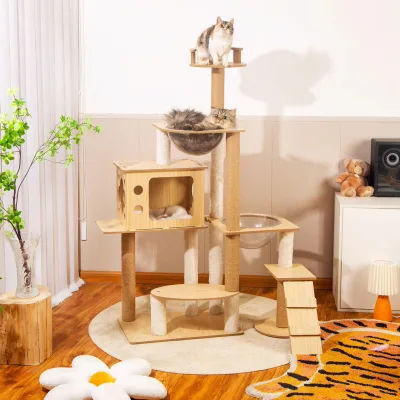
Custom Design Wholesale Wooden Pet Climbing Decorative Solid Cat Climbing Tree
$22.00 - $23.00
MOQ: 50
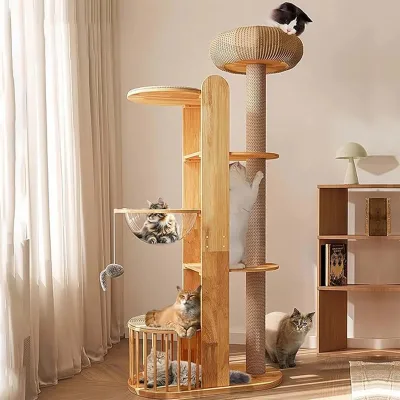
Factory Customizable Large cat Tree with cat Scratch Board Can Climb Scratch Indoors Jump
Contact supplier
MOQ: 200


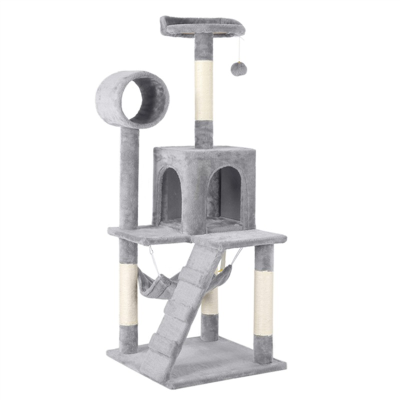
Comprehensive Sourcing Guide
Multi-Level Indoor Cat Tree Supplier Concentration and Factory Types
Current data indicates a concentration of suppliers in China, specifically within the Shandong and Zhejiang provinces, which serve as primary manufacturing hubs for this category. In Shandong, results show a mix of trading companies and manufacturers offering products like multi-level cat trees with plush and wooden materials. These suppliers often list specific product attributes such as eco-friendly features and luxury styles, suggesting a regional focus on finished pet furniture assembly. The presence of trading companies in this cluster implies a supply chain that may aggregate goods from various workshops before export, potentially affecting direct factory communication. Buyers should verify if the listed entity is the actual producer or an intermediary by checking their main product lists for manufacturing depth.
In contrast, suppliers located in Zhejiang demonstrate a different operational profile, often highlighting their own brand capabilities and broader pet product ranges including dog crates and playpens. This region's suppliers frequently list wooden cat trees with specific dimensions and customization options, indicating a capacity for tailored production runs. The distinction between a trading company and a manufacturer is critical here, as trading companies may offer faster response times but less control over the production floor. When evaluating these clusters, buyers must confirm the physical location of the factory versus the registered office, as the latter might be in a different city entirely. Understanding this geographic and structural concentration helps in planning site visits or virtual audits to ensure the claimed manufacturing capabilities align with the actual facility.
How to Verify Multi-Level Indoor Cat Tree Suppliers
Verification of supplier credibility relies heavily on third-party audit reports and specific platform verification badges rather than self-reported claims. Some suppliers in the current results display SGS verification status, which serves as a concrete indicator of a completed on-site inspection or quality audit. Buyers should prioritize suppliers with this specific credential when assessing risk, as it confirms that an independent agency has validated their business license and production capacity. However, the absence of a visible badge does not automatically disqualify a supplier; it simply means the buyer must request the latest audit report directly. Relying solely on the platform's internal rating without external validation can lead to misjudging the actual operational stability of the factory.
Beyond verification badges, buyers must scrutinize the response time and communication patterns to gauge operational readiness. Data shows response times ranging from 2.25 to 2.62 hours, which indicates a generally active sales team, but this metric varies by supplier. A fast response time suggests a dedicated sales department, yet it does not guarantee the engineering or production team can meet specific technical requirements. Buyers should test the supplier's ability to provide detailed product specifications, such as material composition and weight, which are listed in the product attributes. If a supplier cannot immediately provide the exact dimensions or material certifications for a specific model, it may indicate a lack of direct control over the product line. Always request proof of the specific model's production history before committing to a large order.
What to Compare Across Multi-Level Indoor Cat Tree Suppliers
When comparing suppliers, the primary differentiators are lead times, minimum order quantities, and price ranges, which vary significantly across the market. Lead times observed in the data span from 15 days to 45 days, with some suppliers offering a broader window of 7 to 45 days depending on order volume. This variance requires buyers to align their inventory planning with the specific supplier's capacity; a shorter lead time might come with a higher price or stricter MOQ. Minimum order quantities also differ, with some suppliers requiring 100 units while others set the bar at 200 units. Buyers must calculate the total landed cost, including the impact of these MOQs on storage and cash flow, rather than focusing solely on the unit price.
Price and product specifications form the second critical comparison layer, with unit costs ranging from approximately $8 to $42 depending on the model and material. Suppliers offering wooden cat trees with plush accents often command higher prices than those with simpler designs, reflecting the cost of raw materials and labor. It is essential to compare the exact product attributes, such as weight, dimensions, and color options, to ensure the quoted price matches the desired specification. For instance, a beige multi-level tower may have a different price point than a gray version due to dye costs or material availability. Buyers should create a standardized comparison matrix that includes these specific attributes to avoid confusion when evaluating multiple quotes from different suppliers.
Common Multi-Level Indoor Cat Tree Sourcing Risks
One significant risk in sourcing multi-level cat trees is the discrepancy between the advertised product features and the actual manufacturing output. While product listings often highlight eco-friendly features and luxury styles, the actual material composition, such as the type of plush or wood used, may vary if not strictly specified in the contract. Some suppliers list "OEM/ODM" as accepted, which implies customization, but without a detailed technical drawing or sample approval process, the final product may not meet the buyer's quality standards. This risk is heightened when dealing with trading companies that may source from multiple factories, making it difficult to enforce consistent quality control across different production batches.
Another major risk involves the reliability of delivery timelines and the potential for hidden costs in logistics. Although some suppliers state a lead time of 15 days, others indicate a range up to 45 days, creating uncertainty for supply chain planning. If a supplier fails to meet the agreed-upon delivery date, it can disrupt the buyer's sales cycle and lead to penalties from downstream customers. Additionally, the packaging dimensions and weight listed in the product attributes are crucial for calculating shipping costs, yet these figures can change if the supplier alters the packing method to save on material costs. Buyers must verify the packing details and ensure they are included in the final contract to avoid unexpected freight charges that could erode profit margins.
Multi-Level Indoor Cat Tree Regional Sourcing and Logistics
Sourcing from China, specifically the Shandong and Zhejiang regions, offers distinct logistical advantages and challenges that buyers must navigate. Suppliers in Shandong are noted for their specific product lines, while those in Zhejiang often have broader pet product portfolios, which can influence shipping consolidation opportunities. The origin of the goods is a critical factor in determining freight costs and transit times, as different ports serve these regions with varying efficiency. Buyers should confirm the specific port of loading for each supplier, as this impacts the final delivery schedule and the cost of inland transportation to the port. Understanding the regional logistics network helps in selecting suppliers that can offer the most efficient shipping routes to the destination market.
Logistics planning must also account for the physical dimensions and weight of the cat trees, which vary significantly by model. For example, some units weigh as little as 7.3kg while others exceed 19.8kg, and dimensions can range from compact 48cm widths to tall 188cm heights. These variations directly affect the number of units that can be loaded into a container, influencing the overall shipping cost per unit. Buyers should request the exact packing dimensions and gross weight for each model to optimize container utilization. Failure to accurately assess these logistics parameters can lead to underutilized shipping space or unexpected surcharges for oversized cargo. Collaborating with a freight forwarder who understands the specific requirements of pet furniture can mitigate these risks and ensure smooth transit.
Multi-Level Indoor Cat Tree Commercial Terms and Order Planning
Commercial terms regarding payment, customization, and order planning are pivotal for a successful sourcing relationship. Many suppliers in the current results accept OEM and ODM services, allowing for brand customization, but this often requires a higher minimum order quantity or a deposit structure. Buyers must clarify the payment terms, such as the percentage required upfront versus upon shipment, and whether escrow services are available to protect funds during production. The presence of specific product models and standard dimensions suggests that customization may involve tooling costs or minimum run requirements that differ from standard stock items. Understanding these commercial nuances helps in negotiating terms that balance risk and flexibility for both parties.
Order planning should be driven by the specific lead times and MOQs provided by the supplier to ensure inventory alignment. With lead times ranging from 15 to 45 days, buyers need to factor in production time plus shipping duration when placing orders to avoid stockouts. The MOQ of 100 or 200 units dictates the initial investment required, so buyers should assess their sales volume projections to determine if these quantities are feasible. Additionally, the price range of $8 to $42 per unit means that small changes in order volume can significantly impact the average cost. Buyers should plan for seasonal demand fluctuations and negotiate volume discounts where possible, ensuring that the commercial terms support a sustainable and scalable business model for the multi-level cat tree product line.
FAQs
What price range can buyers expect for multi level indoor cat trees?
Listed Multi-Level Indoor Cat Tree models on this page range from about $8 to $41.90 per unit, depending on size, materials, and features. Smaller plush towers sit at the lower end, while larger multi-level wooden or sisal designs command higher prices. Prices usually vary with order volume, so request quotes for your target quantity before comparing suppliers.
What is the typical MOQ for Multi-Level Indoor Cat Tree orders?
Minimum order quantities on this page start at 100 units for some plush multi-level models and 200 units for wooden designs. MOQs vary by model, material, and whether customization is requested. Always confirm the MOQ for the exact product variant you want, and ask whether mixed-model orders can share a single production run to reduce total volume.
How long do production and delivery take?
Lead times among listed suppliers range from about 15 days to 30 days, and one product listing cites delivery of 7 to 45 days depending on order specifics. Larger customized orders generally need more time than standard restock runs. Confirm the production schedule for your quantity and ask how peak season or holiday orders affect the quoted lead time.
Which materials are used in these cat trees?
Listed models use plush and faux fur coverings, wooden frames, jute, and sisal scratching posts. Many listings describe the products as eco-friendly and suitable for indoor use or multi-cat households. Material choice affects durability, weight, and price, so ask each supplier for material specifications, sample photos, and physical samples before committing to a bulk order.
Can suppliers provide OEM or ODM customization?
Yes, customization is available. Several listings explicitly accept OEM and ODM requests, and at least one wooden model states customization is available. Custom options may include color, size, branding, and packaging. Ask suppliers to describe their customization process, sample lead time, any additional tooling fees, and whether customized orders carry a higher MOQ than standard catalog models.
How quickly do these suppliers respond to inquiries?
Response times recorded for suppliers on this page average around 2.25 to 2.62 hours, indicating fast replies during business hours. Response speed can vary by time zone and workload, so test turnaround with a detailed inquiry covering quantity, customization, and shipping terms. Fast first replies usually signal smoother communication throughout sampling and production.
Are there verified suppliers for these products?
Yes, at least one supplier on this page holds SGS verification, giving buyers third-party confirmation of the trading company's credentials. Verification is helpful but not a substitute for your own checks. Ask for business licenses, product test reports for materials and safety, and references, then consider arranging a pre-shipment inspection before releasing final payment.
Where are these cat tree suppliers located?
Suppliers on this page are located in Shandong and Zhejiang provinces in China, both established regions for pet product manufacturing. Shandong suppliers list plush multi-level towers, while Zhejiang suppliers cover a broader pet product range including crates, cages, and scratchers. Location affects shipping port access and freight cost, so confirm the nearest departure port when requesting logistics quotes.