Remote Control LED Bulb Suppliers and Manufacturers
Source 18 verified Remote Control LED Bulb suppliers from China Zhejiang and Fujian. Compare ISO 9001 certified factories with 7-30 day lead times, 85-265V input, and CE/RoHS standards. Request quotes for OEM/ODM RGB and emergency models; review the available evidence before requesting comparable quotations from suitable candidates.
Suppliers List

Jiaxing Sinolamp Electronic Technology Co., Ltd.
- Verified by CTI
- Trading Company,Manufacturer/Factory,Group Corporation
- China Zhejiang
- Lead time23 days
- Avg. response≤ 8h
Main productsLED Bulb Light, LED Panel Light, LED Tube Light, Decorative Lamps, Rechargeable LED Bulb, Smart LED Bulb, Outdoor LED Light, Energy Saving Bulb
Main marketsSouth America,Eastern Europe,Mid East,North America,Southeast Asia,Eastern Asia,Oceania,Western Europe,Africa
Fuzhou Sansheng Industry and Trade Co., Ltd.
- Verified by CTI
- Combined
- China Fujian
- Lead time30 days
- Avg. response≤ 9h
Main productsPorcelain Lamp Holder Insulator Knife Swith, Fuse Holder Plastic Lamp Holder
Main marketsDomestic

Smart LED WiFi Remote Control Adjustable Color temperature LED Light Bulb
$0.50 - $2.00
MOQ: 1000 Pieces


Jiangmen Gepsen Lighting Electric Co., Ltd.
- Combined
- China Guangdong
- Lead time30 days
- Avg. response≤ 3h
Main productsLED Bulb, LED Panel Lamp, LED Strip Light, LED Tube, LED Flood Lamp, LED Ceiling Light, LED Filament /Candle Light, LED Down Light, Energy Saving Light
Main marketsSouth America,Africa,Southeast Asia/ Mideast
Huzhou Lindal Lighting & Electrical Co., Ltd.
- Verified by CTI
- Trading Company,Manufacturer/Factory
- China Zhejiang
- Lead time45 days
- Avg. response≤ 6h
Main productsLED Tri-Proof Light, LED Waterproof Lighting Fixture, LED Panel Light, LED Ceiling Light, LED Bulkhead, LED Emergency Light, LED Tube, LED Bulb, LED Highbay Light
Main marketsSouth America,Eastern Europe,Mid East,North America,Southeast Asia,Eastern Asia,Oceania,Western Europe,Africa

HEFEI LONG RIVER ELECTRICAL CO., LTD.
- Trading Company
- China Anhui
- Lead time23 days
- Avg. response≤ 6h
Main productsDoorbell, Alarm, LED Sensor Bulb, Cable Ties, Cable Clips, Dry Cell, School Bell, Fire Bell, LED Bulb
Main marketsSouth America,Eastern Europe,Mid East,North America,Southeast Asia,Eastern Asia,Oceania,Western Europe,Africa
Huizhou More Green Light Co., Ltd.
- Verified by BV
- Trading Company,Manufacturer/Factory
- China Guangdong
- Lead time15 days
- Avg. response≤ 2h
Main productsSolar Garden Light, LED Poultry Light, LED Tri-Proof Tube Light, LED Plug Light, LED Tri-Prof Light, LED Camping Light, LED Flashlight, LED Track Light, LED Down Light, LED Testing Equipment
Main marketsSouth America,Eastern Europe,Mid East,North America,Southeast Asia,Eastern Asia,Oceania,Western Europe,Africa
Huizhou Boy Lighting Technology Co., Limited
- Manufacturer, Trading Company
- Guangdong, China
- Lead time7 days
- Avg. response≤ 3h
Main productsLED Spotlight,LED G4 G9 Bulbs,LED E14 E12 Bulbs,LED Filament Bulbs,LED Smart Light
Main marketsWestern Europe(30.0%), North America(20.0%), Northern Europe(10.0%), South America(10.0%), Southern Europe(10.0%), Eastern Europe(10.0%), South Asia(5.0%), Mid East(5.0%)

Ningbo Haishu Kaiau Electronics Co., Ltd.
- Trading Company,Manufacturer/Factory
- China Zhejiang
- Lead time23 days
- Avg. response≤ 15h
Main productsPIR Sensor, Microwave Sensor, Photocell Sensor, LED Sensor Ceiling Light, LED Sensor Flood Light, LED Sensor Night Light, Solar LED Security Light, Sensor Lamp Holder, Remote Control Socket, LED Solar Light
Main marketsSouth America,Eastern Europe,Mid East,North America,Southeast Asia,Eastern Asia,Oceania,Western Europe,Africa

Hangzhou Sunlux Electric Co., Ltd.
- Verified by BV
- Trading Company
- China Zhejiang
- Lead time30 days
- Avg. response≤ 6h
Main productsT8 LED Tube Light, LED Emergency Bulb, LED Floodlight, LED Panel Light, LED Spotlight, Energy Saving Lamp, LED Downlight, Asphalt Shingle, LED Sofa, LED Chair
Main marketsAfrica,Southeast Asia/ Mideast,Europe,North America


Ce Aluminium and Plastic 11W 85V-265V Cool Light Remote Control Rechargeable LED Bulb Light
$0.60 - $0.75
MOQ: 1000 Pieces

Ningbo General Union Co., Ltd.
- Trading Company
- China Zhejiang
- Lead time23 days
- Avg. response≤ 14h
Main productsTable Lamp, Heat Press Machine, Home Appliance, Alarm Clock, Fans, Night Light, Solar Light, Kitchen Appliance, Pet Product, Sport Equipment
Main marketsSouth America,Eastern Europe,Mid East,North America,Southeast Asia,Eastern Asia,Oceania,Western Europe,Africa


Hot Sale Energy Efficient Color Changing Remote Control RGB LED Night Light
$4.24 - $4.81
MOQ: 150 Pieces
Shanghai Lanyou Lighting Co., Ltd.
- Verified by CTI
- Trading Company
- China Anhui
- Lead time15 days
- Avg. response≤ 5h
Main productsLED Channel Letters, Acrylic Signs, Metal Sign Letters, Wayfinding Signs, Outdoor Signage
Main marketsSouth America,Africa,Southeast Asia/ Mideast,East Asia(Japan/ South Korea),Europe,Australia,North America

Voice Control RGB Remote Control Smart LED Light Bulb 9W E27 E26 B22 A60 LED Smart Bulb
$1.39 - $1.48
MOQ: 2 Pieces

Housing Color Changing Dimmable Remote Control Smart Colorful Changeable 3W 5W LED RGB LED Bulb
$0.85 - $0.98
MOQ: 100 Pieces

- Verified by Intertek
- Trading Company
- Lead time0 days
- Avg. response≤ 5h
Main productsSolar Street Light, Solar Garden Light, LED Panel Light, LED Spot Bulb, LED Flood Light
- Verified by BV
- Combined
- China Guangdong
- Lead time23 days
- Avg. response≤ 6h
Main marketsSouth America,Africa,Southeast Asia/ Mideast,East Asia(Japan/ South Korea),Europe,Australia,North America

Jinggoal International Limited
- Verified by BV
- Manufacturer/Factory
- China Guangdong
- Lead time23 days
- Avg. response≤ 14h
Main productsGift, Pen, Wall Clock, Travel Adapters, Book Wire Binding & Machine, Lock, Table Lamp, LED, Keychain, Alarm
Main marketsSouth America,Eastern Europe,North America,Southeast Asia,Eastern Asia,Oceania,Western Europe,Africa

NINGBO YICHEN ELECTRIC CO., LTD.
- Trading Company,Manufacturer/Factory
- China Zhejiang
- Lead time0 days
- Avg. response≤ 7h
Main productsLED Flashlight, Head Lamp, Camping Lantern, Solar Flashlight, Rechargeable Flashlight, High Power Flashlight, Keychain Flashlight, LED Tweezer, Xenon Flashlight, Shopping Trolley
Heyuan Boyi Lighting Technology CO.,Limited
- Manufacturer, Trading Company
- Guangdong, China
- Lead time7 days
- Avg. response≤ 5h
Main productsLED Bulb,Decoration Light,LED E14 E12 Bulbs,LED G4 G9 Bulbs,LED Filament Bulbs
Main marketsWestern Europe(50.0%), North America(30.0%), South America(10.0%), Northern Europe(5.0%), Eastern Europe(5.0%)
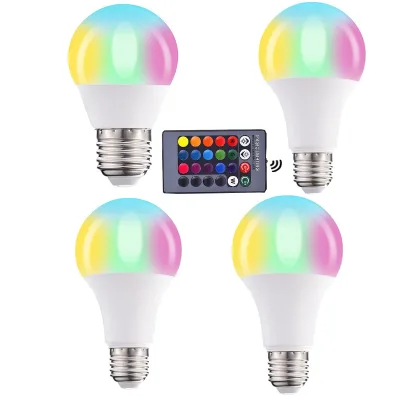
Colorful Remote Control Light Bulb A50 A60 A70 A80 Interior Decorative Lights Toy Lights
$1.70 - $2.32
MOQ: 10 Minimum
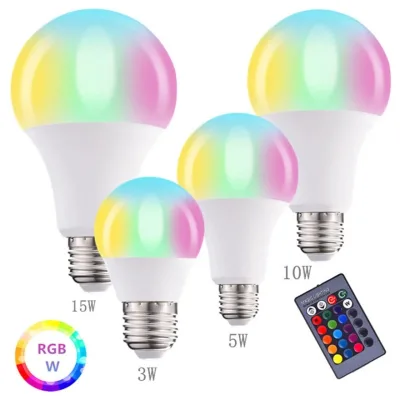
LED RGB Bulb 3W 5W 10W 15W Color Changing Seven Color Bulb
Contact supplier

- Combined
- China Guangdong
- Lead time23 days
- Avg. response≤ 3h
Main productsPromotion Gift, Toy, Flashing Item, Free Gift, Business Gift, Novelty
Main marketsAfrica,Europe,North America

Shenzhen XinYingxin Electronics Technology Co., Ltd.
- Trading Company,Manufacturer/Factory
- China Guangdong
- Lead time38 days
- Avg. response≤ 13h
Main productsElectric Fireplace APP Control Board, Fireplace&Appliance Customizing Control Board, Intelligent Home System Products, Modern Electric Fireplace, Fireplace Electronics Accessories, Wood Plastic Composite Flooring, Electric Fireplace
Main marketsSouth America,Eastern Europe,Mid East,North America,Southeast Asia,Eastern Asia,Oceania,Western Europe,Africa






Comprehensive Sourcing Guide
Remote Control LED Bulb Supplier Concentration and Factory Types
The current supplier landscape for remote control LED bulbs shows a concentration of manufacturing and trading entities primarily located in China, with specific clusters identified in Zhejiang and Fujian provinces. These regions host a mix of company types including trading companies, manufacturers, factories, and group corporations, offering buyers a diverse range of sourcing options. The presence of these varied entity types suggests that buyers can find partners capable of both direct production and supply chain management. Zhejiang appears to be a significant hub for a broad portfolio of lighting products, including smart bulbs and decorative lamps, while Fujian also demonstrates active participation in the sector with specialized components like porcelain lamp holders.
When evaluating the factory types, buyers should note that some suppliers operate as group corporations or combined entities, which may indicate larger operational scales and more complex supply chains. The data indicates that many suppliers offer OEM and ODM capabilities, allowing for customization of the remote control LED bulbs to meet specific brand requirements. This flexibility is crucial for buyers seeking unique product specifications or private labeling. However, the distinction between a pure manufacturer and a trading company remains important, as it affects the directness of communication and the potential for cost negotiation. Buyers must verify the actual production capacity of the supplier rather than relying solely on the listed company type, ensuring the partner can deliver the required volume and quality standards for Remote Control LED Bulb orders.
How to Verify Remote Control LED Bulb Suppliers
Verification of Remote Control LED Bulb suppliers requires a rigorous check of their certifications and verification status to ensure product safety and compliance. The available data highlights that some suppliers hold ISO 9001 system certification, which is a standard indicator of quality management systems in place. Additionally, specific product evidence shows certifications such as CE and RoHS, which are critical for electronic lighting products to meet international safety and environmental standards. Buyers should explicitly request proof of these certifications and verify that the specific Remote Control LED Bulb models they intend to purchase are covered under the valid certification scope. The presence of CTI verification on some supplier profiles adds another layer of credibility, suggesting that third-party testing has been conducted to validate the supplier's claims.
Beyond certifications, buyers must assess the response time and verification status of the supplier to gauge their reliability and communication efficiency. The observed response times vary, with some suppliers showing a response time of approximately 7.76 hours, while others may take longer, such as 8.57 hours. A faster response time often correlates with better customer service and a more agile supply chain, which is vital when addressing technical queries about remote control functionality or battery life. Buyers should also look for suppliers who are marked as verified, as this status often implies a higher level of scrutiny regarding their business legitimacy. It is essential to confirm that the supplier's claimed capabilities, such as their ability to handle custom orders or their specific product range, align with the verification data provided in their profile before proceeding with any significant order.
What to Compare Across Remote Control LED Bulb Suppliers
Comparing suppliers for remote control LED bulbs involves analyzing key operational metrics such as lead time, minimum order quantity (MOQ), and pricing structures to determine the best fit for the buyer's needs. The data reveals significant variations in lead times, with some suppliers offering a lead time of 23 days, while others may require up to 30 days. This difference can impact inventory planning and delivery schedules, making it a critical factor in supplier selection. Similarly, MOQs vary widely, ranging from 1,000 units for certain emergency LED bulbs to 10,000 units for standard smart bulbs. Buyers must align these MOQ requirements with their projected sales volume to avoid overstocking or facing unfulfillable orders.
Pricing is another vital dimension for comparison, with unit costs fluctuating based on product specifications and order volume. For instance, some remote control LED bulbs are priced as low as $0.55 per unit, while others with advanced features like rechargeable batteries or smart connectivity may cost upwards of $4.81. Buyers should not only look at the base price but also consider the total cost of ownership, including shipping and potential tariffs. Additionally, the warranty terms, such as the 2-year warranty observed on some products, should be factored into the comparison to assess long-term value. By systematically comparing these attributes, buyers can identify suppliers that offer the optimal balance of cost, speed, and reliability for their specific Remote Control LED Bulb sourcing requirements.
Common Remote Control LED Bulb Sourcing Risks
One of the primary risks in sourcing remote control LED bulbs is the potential mismatch between product specifications and actual performance, particularly regarding battery life and remote control range. The product evidence indicates varying battery capacities, such as 800mAh or 1800mAh lithium batteries, which directly influence the emergency time and overall usability of the bulb. Buyers must verify that the claimed emergency time, often listed as 3-4 hours, is accurate under real-world conditions. Inconsistent performance in these areas can lead to customer dissatisfaction and returns, damaging the buyer's reputation. It is crucial to request sample units for testing to validate the remote control functionality, dimming capabilities, and battery endurance before committing to a large order.
Another significant risk involves the reliability of the supply chain and the consistency of product quality across different batches. The data shows that some suppliers offer customization, which introduces the risk of production errors if the specifications are not clearly defined and communicated. Variations in materials, such as the use of PC versus aluminum for the lamp body, can affect the durability and heat dissipation of the bulb. Furthermore, the lack of standardized packaging, with options ranging from color boxes to cartons, can lead to damage during transit if not properly specified. Buyers should establish clear quality control protocols and require pre-shipment inspections to mitigate these risks, ensuring that the remote control LED bulbs meet the agreed-upon standards for safety, performance, and packaging.
Remote Control LED Bulb Regional Sourcing and Logistics
Sourcing remote control LED bulbs from China, specifically from regions like Zhejiang and Fujian, offers logistical advantages due to the established infrastructure and concentration of lighting manufacturers. These regions are known for their efficient export capabilities, which can facilitate faster shipping times and lower freight costs for international buyers. However, buyers must be aware of the specific logistics requirements associated with these regions, such as the need for proper documentation and compliance with local export regulations. The proximity of these manufacturing hubs to major ports can reduce transit times, but buyers should still plan for potential delays due to customs clearance or seasonal shipping bottlenecks.
Logistics planning also involves considering the packaging and handling requirements for remote control LED bulbs, which often contain sensitive electronic components and batteries. The product evidence indicates various packing methods, including color boxes and cartons, which must be selected based on the fragility of the items and the shipping distance. Buyers should ensure that the packaging is robust enough to prevent damage during transit, especially for products with rechargeable batteries that may be subject to specific shipping regulations. Additionally, the lead time of 23 to 30 days observed in the data should be factored into the overall logistics timeline, allowing sufficient buffer for production, quality checks, and shipping. Effective logistics management is essential to ensure that the remote control LED bulbs arrive on time and in good condition.
Remote Control LED Bulb Commercial Terms and Order Planning
Commercial terms for Remote Control LED Bulb orders must be carefully negotiated to align with the buyer's financial and operational goals. The data indicates that prices can vary significantly, from $0.55 to $4.81 per unit, depending on the product features and order volume. Buyers should leverage this price range to negotiate better terms, such as volume discounts or favorable payment schedules. It is also important to clarify the payment methods and currency to avoid any financial discrepancies. The presence of escrow services or other secure payment options can provide an additional layer of protection for the buyer, ensuring that funds are only released upon satisfactory delivery of the goods.
Order planning for remote control LED bulbs requires a strategic approach to manage inventory and cash flow effectively. Given the varying MOQs, ranging from 1,000 to 10,000 units, buyers must calculate the optimal order quantity to balance storage costs with the risk of stockouts. The lead times of 23 to 30 days should be incorporated into the production schedule to ensure timely availability of the products. Buyers should also consider the warranty terms, such as the 2-year warranty observed on some products, and factor this into their after-sales service planning. By developing a comprehensive order plan that accounts for these commercial terms and logistical constraints, buyers can minimize risks and maximize the efficiency of their Remote Control LED Bulb sourcing operations.
FAQs
What is the typical lead time for remote control LED bulbs?
The typical lead time for these products is 23 days based on current supplier data. Some suppliers in Fujian may require up to 30 days for production. Buyers should confirm specific timelines with the manufacturer before placing large orders to ensure timely delivery.
What are the minimum order quantities for smart LED bulbs?
Minimum order quantities vary significantly by product type. Some RGB smart bulbs require 10,000 units, while emergency rechargeable bulbs start at 1,000 units. Other models may have a minimum of 5,000 units. Always check the specific product listing for the exact MOQ required.
Which certifications do these LED bulbs typically hold?
Many suppliers hold ISO 9001 system certification and CTI verification status. Specific products often carry CE and RoHS certifications for safety and environmental compliance. Buyers should verify that the specific batch of bulbs matches these certification requirements before finalizing any purchase agreement.
What power options are available for rechargeable emergency bulbs?
Rechargeable emergency bulbs are available in various wattages including 7W, 9W, 12W, and 15W. These units typically feature lithium batteries with capacities ranging from 800mAh to 1800mAh. The emergency time usually lasts between 3 to 4 hours during a power outage.
Where are the manufacturers of these LED bulbs located?
Manufacturers are primarily located in Zhejiang and Fujian provinces in China. These regions host trading companies and factories specializing in LED lighting solutions. Buyers can expect products to originate from these specific Chinese locations when sourcing remote control LED bulbs from verified suppliers.
How quickly do suppliers typically respond to inquiries?
Supplier response times average around 7.76 hours for some manufacturers. Others may take up to 8.57 hours to reply to initial inquiries. Buyers should expect a response within this timeframe but should also consider time zone differences when contacting suppliers in China.
What customization options are available for LED bulb orders?
Customization is available for many Remote Control LED Bulb models. Suppliers offer OEM and ODM services to meet specific branding or technical requirements. Buyers can request custom packaging, specific wattages, or unique color temperatures depending on the manufacturer's capabilities and minimum order thresholds.