Spiral Flute Tap for Aluminum Suppliers and Manufacturers
Compare 12 verified Spiral Flute Tap for Aluminum suppliers by location, response time, and lead time. Review product specifications like material and coating before contacting factories for quotes. Check certifications and customization options to ensure the selected manufacturer meets your specific production requirements and quality standards.
Suppliers List

Zhenjiang Scharp Machinery Tools Co., Ltd.
- Manufacturer/Factory,Group Corporation,Other
- China Jiangsu
- Lead time60 days
- Avg. response≤ 12h
Main productsMetal Cutting Tools, Thread Tools, End Mills, Reamer, Milling Cutters, Machine Taps, Thread Die, Countersink, Drill Bits, Slitting Saw
Main marketsSouth America,Eastern Europe,Mid East,North America,Southeast Asia,Eastern Asia,Oceania,Western Europe,Africa


Hsse Spiral Flute Taps for Aluminum
MOQ: 50 Pieces

HSS Spiral Flute Taps for Aluminum
MOQ: 50 Pieces

Dongguan Kunming Electronics Technology Co., Ltd.
- Manufacturer/Factory
- China Guangdong
- Lead time15 days
- Avg. response≤ 7h
Main productsMilling Cutter, Screw Thread Tap, Screw Tap, End Mill, Carbide Cutter, Parts Machining, Mold Machining, Plastic Mould, Stamping Die, Stamping Mold
Main marketsSouth America,Eastern Europe,Mid East,North America,Southeast Asia,Eastern Asia,Oceania,Western Europe,Africa

Precision 2-Flute Spiral Tap: Cobalt-Containing & Colored Coated for Aluminum
$1.00 - $50.00
MOQ: 20 Pieces


Premium Customized Spiral Fluting Tap for Machine Screw Thread Applications
$1.00 - $50.00
MOQ: 20 Pieces


Zhejiang ZhengCheng lmport & Export Co.,LTD
- Verified by CTI
- Trading Company,Manufacturer/Factory
- China Zhejiang
- Lead time23 days
- Avg. response≤ 1h
Main productsHSS Steel Raw Material, Semi-Finished or Finished Cutting Tools, Martensitic Stainless Steel Raw Materials, Rotary Cutter Blade, Engineering Plastic, Steel Raw Material
Main marketsEastern Europe,Mid East,North America,Southeast Asia,Eastern Asia,Western Europe


High-Precision Straight Flute Tap - Ideal for Accurate Threading in Various Metals
$0.50 - $20.00
MOQ: 50 Pieces

Hangzhou Fanxi Tools Co., Ltd.
- Verified by CTI
- Trading Company,Manufacturer/Factory
- China Zhejiang
- Lead time23 days
- Avg. response≤ 10h
Main productsDrill Bits, Saw Blades, Tct Saw Blades, Diamond Saw Blades, Abrasive Wheel, Flap Disc, Sanding Disc, Hole Saw, Chisel, Grinding Wheel
Main marketsSouth America,Eastern Europe,Mid East,North America,Southeast Asia,Eastern Asia,Oceania,Western Europe,Africa

Xuzhou Perfect Tools Co., Ltd.
- Trading Company
- China Jiangsu
- Lead time23 days
- Avg. response≤ 18h
Main productsHSS Drill Bit, Saw Blade, Hole Saw, Screw Taps, End Mill, Drill Bits, Screwdriver, Wrench, Air Tools, Plier
Main marketsSouth America,Africa,Southeast Asia/ Mideast,East Asia(Japan/ South Korea),Europe,Australia,North America


DIN371 DIN376 Yellow Ring Spiral Flute Spiral Pointed Machine Tap for Carbon Steel Tapping
$0.50 - $20.00
MOQ: 100 Pieces


TAIZHOU KEENCUTEER CNC LATHES TOOLS CO., LTD.
- Trading Company
- China Zhejiang
- Lead time15 days
- Avg. response≤ 1h
Main productsCNC Cutting Turning Tools, U Drill, Carbide Inserts, End Mills
Main marketsDomestic

M2 Machine Screw Tap High-Speed Steel Spiral Flute Tap for Stainless Steel
$0.49 - $4.71
MOQ: 50 Pieces

Jinan Terry Cnc Tool Limited Company
- Verified by BV
- Trading Company
- China Shandong
- Lead time30 days
- Avg. response≤ 9h
Main productsCNC Cutting Tools, CNC Carbide Insert, Carbide End Mills, Drill, Tool Holder, Collect Chuck, Measuring Tools, Vern Calier
Main marketsSouth America,Europe
Shandong Denso Precision Tools Co., Ltd.
- Manufacturer, Trading Company
- Shandong, China
- Lead time10 days
- Avg. response≤ 3h
Main productsCNC Tools, CNC Milling Tool Holder, CNC Face Milling Cutter, CNC Turning Tool Holder, CNC Equipment
Main marketsDomestic Market(70.00%), Southeast Asia(8.00%), Eastern Europe(6.00%), Oceania(5.00%), North America(4.00%), South America(2.00%), Mid East(2.00%), South Asia(1.00%), Western Europe(1.00%), Northern Europe(1.00%)

Taizhou Jiaxin Metals Co., Ltd.
- Verified by SGS
- Manufacturer/Factory,Group Corporation
- China Zhejiang
- Lead time30 days
- Avg. response≤ 6h
Main productsBathtub Drain Kit, Manifold, Ball Valve, Plumbing Fitting, Check Valve, Brass Valve, Bathtub Drain Stopper, Radiator, Basin Waste, Siphon
Main marketsSouth America,Eastern Europe,Mid East,North America,Eastern Asia,Oceania,Western Europe,Africa

Taizhou Zhengshing Valve Co., Ltd.
- Verified by SGS
- Combined
- China Zhejiang
- Lead time45 days
- Avg. response≤ 4h
Main productsBasin Faucet, Shower Faucet, Bathtub Faucet, Kitchen Mixer, Valve, Sanitary Ware, Single Double Lever, Bibcock, Classic Traditional Design
Main marketsSoutheast Asia/ Mideast,Europe

Yuyao Boda Electrical Appliances Co., Ltd.
- Verified by TUVRHEINLAND
- Combined
- China Zhejiang
- Lead time30 days
- Avg. response≤ 25h
Main productsWater Dispenser Tap, Plastic Tap, Handle for Bottle, Drinking Plastic Tap, Water Tap, Water Faucet, Water Dispenser Parts, Water Pump, Cup Dispenser, Stand for Bottle
Main marketsSouth America,Africa,Southeast Asia/ Mideast,East Asia(Japan/ South Korea),Domestic,Europe,Australia,North America


Normal Plastic Water Tap with Push Handle
MOQ: 10000 Pieces

- Verified by TUVRHEINLAND
- Manufacturer/Factory
- China Zhejiang
- Lead time45 days
- Avg. response≤ 8h
Main productsBrass Ball Valve, Bronze Ball Valve, Water Meter Valve, Pipe Fittings, Radiator Valve, Brass Bibcock, PPR Fittings, Gate Valve, Check Valve, Angle Valve
Main marketsSouth America,Eastern Europe,Mid East,North America,Southeast Asia,Oceania,Western Europe




Comprehensive Sourcing Guide
Spiral Flute Tap for Aluminum Supplier Concentration and Factory Types
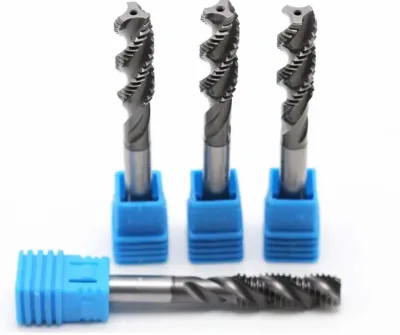
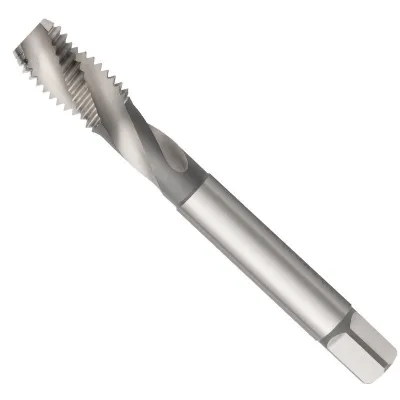
Current data indicates manufacturing activity concentrated in specific Chinese provinces, with Jiangsu and Guangdong emerging as key hubs for metal cutting tools. Suppliers in Jiangsu, such as those in Zhenjiang, list high-speed steel and alloy tool steel as primary materials for their tap inventory. These facilities often operate as manufacturers or factory groups, offering OEM capabilities and maintaining their own brand identities like STC. The presence of these entities suggests a cluster where raw material sourcing and machining capabilities are integrated, allowing for efficient production of spiral flute taps designed for aluminum applications. Buyers should look for suppliers explicitly stating their location within these provinces to ensure proximity to established supply chains for high-speed steel and cobalt alloys.
In contrast, suppliers located in Guangdong, particularly in Dongguan, demonstrate a different operational profile focused on precision machining and mold parts. These factories often hold ISO 20000 certifications, indicating a structured approach to quality management and service delivery. Their main product lists frequently include carbide cutters and milling tools alongside spiral taps, suggesting a versatile manufacturing environment capable of handling complex thread machining requirements. When evaluating potential partners, buyers must verify if the supplier is a direct manufacturer or a trading company, as this distinction impacts the ability to customize specifications for aluminum-specific tapping needs. The variation in company types, ranging from pure manufacturers to mixed trading and factory entities, requires careful scrutiny of the supplier's actual production capacity and engineering resources.
How to Verify Spiral Flute Tap for Aluminum Suppliers
Verification begins with confirming the supplier's physical location and operational history, as these factors directly influence reliability and communication efficiency. Data shows response times varying significantly, with some suppliers responding in under one hour while others take over ten hours. A rapid response time, such as the 0.93 hours observed in Zhejiang, often correlates with a more active sales team and better customer service infrastructure. Buyers should prioritize suppliers who demonstrate quick engagement, as this indicates a readiness to address technical queries regarding tap geometry, coating options, and material compatibility with aluminum alloys. Additionally, checking for third-party verification badges like CTI provides an external layer of trust regarding the supplier's business legitimacy and operational stability.
Beyond response speed, buyers must validate the supplier's certification status and product attributes to ensure they meet specific industry standards. Some suppliers in the current results hold ISO 14001 and ISO 9001 certifications, which are critical for maintaining consistent quality in mass production environments. It is essential to confirm that the supplier's stated certifications are current and relevant to the specific manufacturing processes used for spiral flute taps. Furthermore, examining the product attributes listed, such as material composition (High Speed Steel or Alloy Tool Steel) and coating availability, helps verify that the supplier possesses the technical expertise required for aluminum tapping. Buyers should request documentation or test reports to substantiate claims about material grades and coating durability before proceeding with any order.
What to Compare Across Spiral Flute Tap for Aluminum Suppliers
When comparing suppliers, lead time is a critical metric that dictates project scheduling and inventory management. The observed lead times range from 15 days to 60 days, a significant variance that can impact production timelines. Suppliers offering shorter lead times, such as the 15-day window found in Guangdong, may have higher production capacity or more streamlined logistics, making them suitable for urgent orders. Conversely, longer lead times might indicate a more customized production process or lower current capacity. Buyers must align their order urgency with the supplier's stated lead time to avoid delays, ensuring that the production schedule accommodates the specific manufacturing duration required for high-precision spiral flute taps.
Minimum Order Quantity (MOQ) and pricing structures also require careful comparison to optimize procurement costs. Current data reveals MOQs ranging from 10 pieces to 100 pieces, with prices varying based on specifications like model size and coating type. Some suppliers offer low MOQs starting at 10 units, which is advantageous for prototyping or small-batch production runs. Others may require higher volumes, such as 100 pieces, to achieve competitive pricing tiers. Buyers should evaluate their volume requirements against these thresholds to determine the most cost-effective supplier. Additionally, comparing the price points, which can range from approximately $1.00 to $50.00 depending on the product complexity, helps in budgeting and selecting a supplier that offers the best value for the specific aluminum tapping application.
Common Spiral Flute Tap for Aluminum Sourcing Risks
One significant risk involves the mismatch between supplier capabilities and specific application requirements, particularly regarding material compatibility. While many suppliers list High Speed Steel and Alloy Tool Steel, the specific grade and heat treatment required for efficient aluminum tapping can vary. Some products are explicitly marketed for stainless steel, which may not be optimal for aluminum due to differences in chip evacuation and material adhesion. Buyers must verify that the spiral flute design and coating are specifically engineered for aluminum to prevent tool breakage or poor thread quality. Relying on generic product descriptions without confirming the specific application suitability can lead to production failures and increased tooling costs.
Another risk stems from inconsistent quality control and lack of standardization across different supplier batches. Although some suppliers claim to follow standard specifications like Metric, British, or American standards, the actual tolerance levels and surface finish may differ. The absence of detailed test results or third-party inspection reports for every batch can make it difficult to ensure consistency. Buyers should be wary of suppliers who do not provide clear information on their quality assurance processes or who lack recognized certifications like ISO 9001. Without robust quality verification, there is a risk of receiving taps that do not meet the required dimensional accuracy, leading to scrap parts and rework in the manufacturing process.
Spiral Flute Tap for Aluminum Regional Sourcing and Logistics
Sourcing from Jiangsu offers advantages related to the established metalworking ecosystem, where suppliers in Zhenjiang have access to high-speed steel raw materials and specialized machining equipment. This regional concentration facilitates efficient logistics for heavy or bulk orders, as the infrastructure supports the transport of industrial tools. However, buyers must consider the distance and shipping costs associated with this location, especially if the destination is far from major ports. The response times and lead times observed in this region suggest a mature supply chain, but the longer lead times of up to 60 days may require advanced planning to ensure timely delivery for time-sensitive projects.
In contrast, suppliers in Guangdong and Zhejiang offer different logistical profiles, with some demonstrating faster response times and shorter lead times. The presence of ISO 20000 certified facilities in Guangdong indicates a focus on service quality and process efficiency, which can streamline the ordering and shipping process. Buyers sourcing from these regions may benefit from quicker turnaround times, particularly for urgent orders or custom specifications. However, the variability in response times, ranging from under an hour to over ten hours, highlights the need to verify the specific supplier's operational capacity before committing to a large order. Understanding these regional differences helps buyers select a supplier that aligns with their logistical requirements and delivery expectations.
Spiral Flute Tap for Aluminum Commercial Terms and Order Planning
Commercial terms regarding customization and packaging play a vital role in the final procurement strategy. Many suppliers indicate that customization is available, allowing buyers to specify thread sizes, flute counts, and coating types to match their aluminum machining needs. However, the extent of customization varies, with some suppliers offering non-customized standard products while others provide fully tailored solutions. Buyers must clarify the scope of customization, including any additional costs or extended lead times associated with custom orders. Additionally, packaging details, such as plastic boxes, should be confirmed to ensure the tools arrive in good condition and are ready for immediate use on the production line.
Order planning must also account for the specific product models and standards offered by the supplier. The available product models range from M0.7 to M12 for forming taps and M1 to M120 for machine taps, providing a wide selection for various applications. Buyers should verify that the supplier can supply the exact model numbers required for their specific aluminum tapping operations. Furthermore, understanding the payment terms and escrow options is essential for securing the transaction. While specific escrow details are not always visible, buyers should ensure that the platform offers secure payment methods to protect their investment. Careful planning of these commercial terms ensures a smooth transaction and minimizes the risk of disputes or delays in receiving the required spiral flute taps.
FAQs
What material is used for spiral flute taps for aluminum?
High-speed steel is the primary material used for these taps. Some products also feature cobalt content to enhance durability. Coatings are available to improve performance during drilling operations on light alloys.
What is the minimum order quantity for these taps?
Minimum order quantities vary by product type. Some listings require ten pieces, while others start at fifty or one hundred units. Buyers should check specific product pages to confirm the exact threshold for their needs.
How long does it take to receive these tools?
Lead times range from fifteen to sixty days depending on the supplier. Some manufacturers in Guangdong offer faster delivery within two weeks. Others in Jiangsu or Zhejiang may require up to two months for production and shipping.
Are customization options available for spiral flute taps?
Yes, customization is available for many models. Buyers can request specific sizes ranging from M0.7 to M30. Customized options include different flute types and coating applications tailored for specific drilling machines or manual operations.
What certifications do the suppliers hold?
Suppliers hold various certifications including ISO 9001 and ISO 14001. Some facilities also possess ISO 20000 certification for management systems. Verification by third parties like CTI is available for certain trading companies and manufacturers.
Where are these spiral flute taps manufactured?
Manufacturing locations include Jiangsu, Guangdong, and Zhejiang provinces in China. Specific origins listed for products are Zhenjiang and Dongguan. Buyers can filter results by these regions to find suppliers closest to their logistics requirements.
What is the price range for these taps?
Prices start as low as one dollar per unit for standard models. Some specialized coated taps may cost up to fifty dollars. The final price depends on the material, coating, and specific model size selected by the buyer.