Stainless Steel Lipstick Cooling Tunnel Suppliers and Manufacturers
Compare 20 suppliers of Stainless Steel Lipstick Cooling Tunnel equipment on specifications such as freezing temperature, capacity, stainless steel grade, CE certification, lead time and customization options. Review verified supplier profiles and request quotations to match your production line requirements.
Suppliers List

Guangzhou Ailusi Machinery Co., Ltd.
- Verified by TUVRHEINLAND
- Trading Company
- China Guangdong
- Lead time30 days
- Avg. response≤ 3h
Main productsVacuum Emulsifying Mixer, RO Water Treatment, Homogenizing Mixer, Filling Machine, Capping Machine, Labeling Machine, Tube Filling and Sealing Machine, Packing Machine, Printing Machine, Toothpaste Machinery
Main marketsOthers(foreignTradeCapacity.exportBusinessCapacityMarketOther)


$1100.00 - $2000.00
MOQ: 1 Pieces


Guangzhou Cosmati Technology Co., Ltd
- Verified by TUVRHEINLAND
- Trading Company
- China Guangdong
- Lead time23 days
- Avg. response≤ 2h
Main productsVacuum Emulsifying Mixer, Liquid Washing Homogenizing Mixer, Liquid Soap Mixer Machine, Perfume Filling Machine, Dry Powder Mixing Machine, Color Cosmetic Making Machine, Filling Capping Labeling Machine, Lab Homogenizer, Mixing Tank, Cream Making Machine
Main marketsSoutheast Asia/ Mideast,Europe,North America


5 Lane Hot Liquid Vsaelin Roll-on Cooling Machine Deodorant Quick Cooling Tunnel
$6000.00 - $8000.00
MOQ: 1 Sets


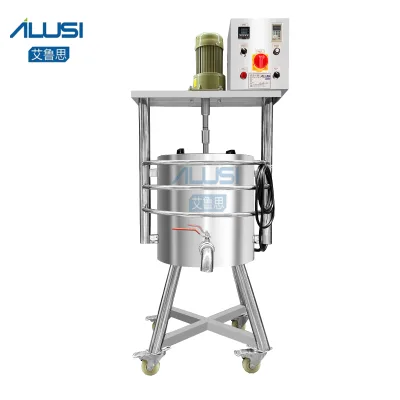
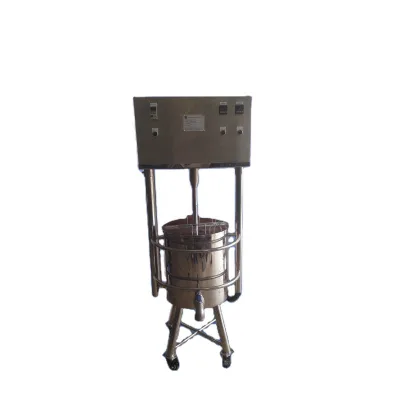
Lip Balm Electric Heating Dissolving Wax Melting Pot Tank Lipstick Lip Gloss Mixing Machine
$1600.00 - $2800.00
MOQ: 1 Pieces

Color Cosmetic Lipstick Lip Gloss Melting Tank Lip Mousse Melting Tank
$1600.00 - $2800.00
MOQ: 1 Pieces

Gusu Food Processing Machinery Suzhou Co., Ltd.
- Verified by TUVRHEINLAND
- Combined
- China Jiangsu
- Lead time60 days
- Avg. response≤ 6h
Main productsChocolate Machine, Conche Machine, Chocolate Enrober, Chocolate Moulding Machine, Chocolate Deposting Machine, Candy Bar Forming Line, Chocolate Tempering Machine, Chocolate Storage Tank, Ball Mill, Snicker Bar Forming Line
Main marketsSoutheast Asia/ Mideast,Domestic


Customized Stainless Steel Chocolate Cooling Tunnel for Production
$21600.00 - $26000.00
MOQ: 1 Pieces
Guangzhou Sipuxin Light Industry Machinery Co., Ltd.
- Manufacturer, Trading Company
- Lead time旺季: "1 - 10":35,"> 10":"To be negotiated", 淡季: "1 - 10":35,"> 10":"To be negotiated"
- Avg. response≤ 4h
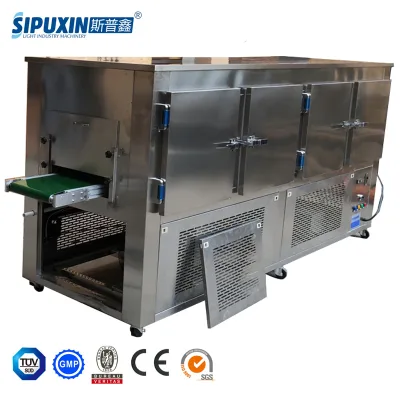
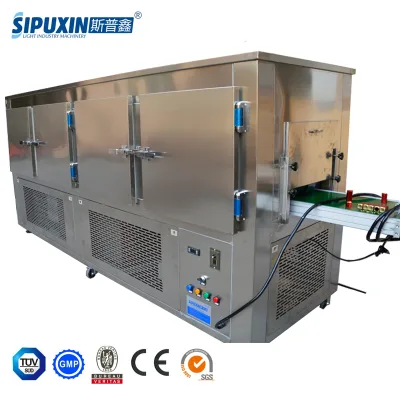
Main productsVacuum Homogenizing Emulsifier, Mixing Tank, Filling Machine, Storage Tank, Perfume Making Machine

Foshan Henwi Technology Co., Ltd
- Verified by SGS
- Combined
- China Guangdong
- Lead time30 days
- Avg. response≤ 4h
Main productsVacuum Emulsifying Mixer, Homogenizing Mixer, RO Water Treatment, Filling Machine, Packing Machine, Perfume Making Machine, Toothpaste Making Machine, Lipstick Making Machine, Cosmetics Lab Equipment
Main marketsNorth America


Chilling Machine Tunnel Freeze for Cosmetic Products Lip Gloss Lipstick Freezing Tunnel
$13000.00
MOQ: 1 Pieces


Guangzhou Ailusi Machinery Co., Ltd.
- Verified by SGS Group
- Trading Company
- Lead time30 days
- Avg. response≤ 4h
Main productsVacuum Emulsifying Mixer, RO Water Treatment, Liquid Washing Homogenizer Mixer, Filling Machine, Labeling Machine
Main marketsDomestic Market(30%), North America(18%), Oceania(12%)

Ningbo Youlu Machinery Technology Co., Ltd.
- Verified by BV
- Combined
- China Zhejiang
- Lead time30 days
- Avg. response≤ 19h
Main productsCandy Machine, Chocolate Machine, Candy Packing Machine, Chocolate Packing Machine, Hard Candy Machine, Toffee Candy Making Machine, Candy Production Line, Lollipop Production Line
Main marketsNorth America
Guangzhou Cosmati Technology Co., Ltd.
- Verified by Intertek
- Trading Company
- Lead time7 days
- Avg. response≤ 2h
Main productsMixing Tank, Vacuum Emulsifying Mixer, Homogenzier, Filling And Capping Machine, Labeling Machine
Main marketsNorth America(25%), Domestic Market(20%), Western Europe(15%)
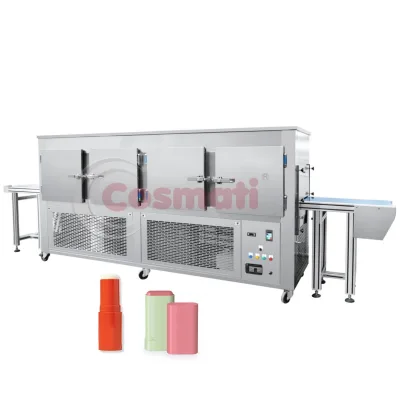
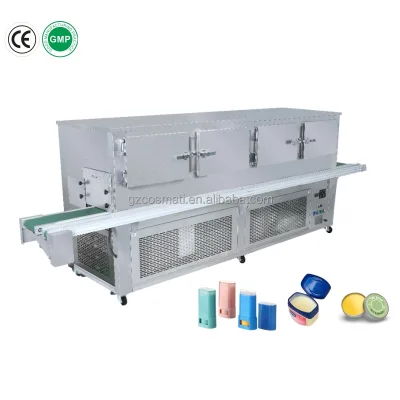
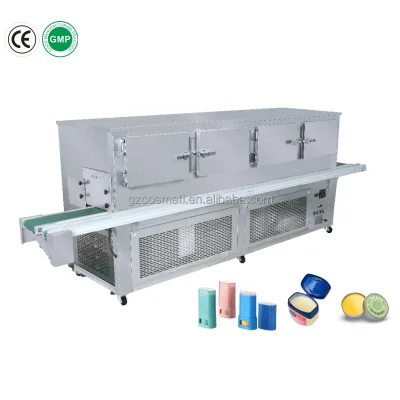
Cosmetic Freezing Equipment Lipstick Deodorant Stick Lip Balm Wax Cooling Tunnel
$12229.93 - $15287.41
MOQ: 1 sets
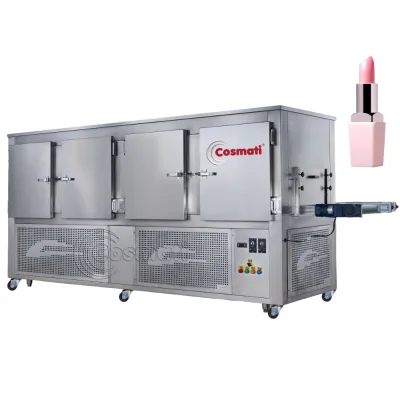
$9000.00 - $12000.00
MOQ: 1 sets

Guangzhou Silian Machinery Co., Ltd.
- Verified by CTI
- Combined
- China Guangdong
- Lead time30 days
- Avg. response≤ 2h
Main marketsAfrica,Southeast Asia/ Mideast,East Asia(Japan/ South Korea),Domestic,Europe,Australia,North America

Cosmetic Freezing Tunnel Cooling Line for Slope Press Lipstick Pen Production
$5000.00 - $12000.00
MOQ: 1 sets

Advanced Lipstick Freezing Tunnel for Professional Cosmetic Cooling Machine
$10800.00 - $11800.00
MOQ: 1 sets

Slope Press Lipstick Pen Manufacturing with Freezing Tunnel Cooling Machine
$5000.00 - $12000.00
MOQ: 1 sets


Guangzhou Jingyijin Machinery Equipment Co., Ltd.
- Verified by CTI
- Combined
- China Guangdong
- Lead time30 days
- Avg. response≤ 10h
Main productsCosmetic Making Machine, Cosmetic, Lipstick
Main marketsOthers(foreignTradeCapacity.exportBusinessCapacityMarketOther),Southeast Asia/ Mideast,Domestic,Europe


3 Meters Lipbalm Cooling Machine with Convery Belt / Freezing Lipstick Machine
$8500.00 - $8600.00
MOQ: 1 pcs

Guangzhou Lianmeng Machinery Equipment Co., Ltd.
- Manufacturer, Trading Company
- Lead time旺季: "1 - 1":30,"> 1":"To be negotiated", 淡季: "1 - 1":30,"> 1":"To be negotiated"
- Avg. response≤ 3h
Main productsVacuum Emulsifier, Detergent Blending Tanks, Filling Packing Machine, Perfume Machine, Water Treatment

Guangzhou Hone Machinery Co., Ltd.
- Verified by BV
- Trading Company,Manufacturer/Factory
- China Guangdong
- Lead time38 days
- Avg. response≤ 4h
Main productsVacuum Emulsifying Mixer, Vacuum Homogenizer Mixer, Mixing Tank, Liquid Homogenizer Mixer, Shampoo Making Machine, Vacuum Cream Mixer, Filling Machine, Capping Machine, Labeling Machine, Filling and Sealing Machine
Main marketsSouth America,Eastern Europe,Mid East,North America,Southeast Asia,Eastern Asia,Oceania,Western Europe,Africa

$12000.00 - $28000.00
MOQ: 1 Pieces

$12000.00 - $28000.00
MOQ: 1 Pieces


Hone Factory Price Tunnel Type Lipstick Freezing Machine, Lip Balm/Lip Gloss Chiller Cooling Machine
$9000.00 - $28000.00
MOQ: 1 Sets

Guangzhou Lianmeng Machinery Equipment Co., Ltd.
- Manufacturer, Trading Company
- Lead time旺季: "1 - 1":25,"> 1":"To be negotiated", 淡季: "1 - 1":25,"> 1":"To be negotiated"
- Avg. response≤ 4h
Main productsVacuum Emulsifier, Mixing Homogenizer Tank, Perfume Making Filling Machine, Filling Capping Labeling Machine, Aerosol Machine

TAIZHOU HULK FOOD MACHINERY CO., LTD.
- Verified by TUVRHEINLAND
- Combined
- China Zhejiang
- Lead time60 days
- Avg. response≤ 15h
Main productsFlow Packing Machine, Slab Bar Line, Candy Depositor Line, Small Type Vertical Packaging Machine
Main marketsEurope

Wenzhou Tianlong Machinery Technology Co., Ltd.
- Verified by SGS
- Trading Company,Manufacturer/Factory
- China Zhejiang
- Lead time45 days
- Avg. response≤ 2h
Main productsStainless Steel Mixing Tank, Botanical Extractor, Ss Storage Tank, Vacuum Freeze Dryer, Alcohol Distillation Equipment, Falling Film Evaporator, Food Jacket Kettle, Herb Extracts Concentrator, Customized Stainless Steel Vessels, Ss Filters
Main marketsSouth America,Eastern Europe,Mid East,North America,Southeast Asia,Eastern Asia,Oceania,Western Europe,Africa

Lidli Intelligent Technology (Jiangsu) Co., Ltd.
- Combined
- China Jiangsu
- Lead time38 days
- Avg. response≤ 3h
Main productsWater Treatment Equipment, Juice Filling Machine, Can Filling Machine, CSD Filling Machine, Beer Filling Machine, Water Filling Machine, Bottle Warming Machine, Spray Cooling Tunnel, Sleeve Labeling Machine, Conveyor System
Main marketsSoutheast Asia/ Mideast


Continuous Spray Cooling Tunnel Pasteurizedn Tunnel Juice Spray Cooling Tunnel
$25000.00 - $500000.00
MOQ: 1 Pieces


Guangzhou Ailusi Machinery Co., Ltd.
- Verified by SGS
- Trading Company
- China Guangdong
- Lead time23 days
- Avg. response≤ 10h
Main productsVacuum Emulsifying Mixer, Cosmetic Emulsifier, Toothpaste Production Line, Agitator Mixer, Liquid Washing Mixing Pot, Filling Machine Equipment, Capping Machine Equipment, Labeling Machine Equipment, Cosmetic Production Line, Homogenizing Emulsifier Machine
Main marketsSouth America,Eastern Europe,Mid East,North America,Southeast Asia,Eastern Asia,Oceania,Western Europe,Africa

Cosmetic Lipstick Raw Material Heating Mixer Machine Stainless Steel Paste Melt
$1800.00
MOQ: 1 Pieces


$1000.00 - $2500.00
MOQ: 1 Pieces
Guangzhou Hone Machinery Co., Ltd.
- Verified by SGS Group
- Trading Company
- Lead time30 days
- Avg. response≤ 6h
Main productsVacuum Emulsifying Mixer, Labeling Machine, Filling Machine, Capping Machine, Mixing Tank
Main marketsNorth America(40%), Southeast Asia(15%), Africa(10%)
Guangzhou Beyer Machinery Equipment Company Limited
- Manufacturer
- Guangdong, China
- Lead time25 days
- Avg. response≤ 6h
Main productscolor cosmetic machine,vacuum emulsifying machine,liquid washing mixer,cream filling line,cosmetic powder pulverizer
Main marketsSoutheast Asia(12.00%), Western Europe(11.00%), Southern Europe(10.00%), Northern Europe(9.00%), Mid East(9.00%), South America(9.00%), North America(9.00%), Central America(8.00%), Africa(8.00%), South Asia(5.00%), Eastern Asia(5.00%), Eastern Europe(3.00%), Domestic Market(2.00%)

Foshan Aishilang Precision Machinery Business Department
- Trading Company
- China Guangdong
- Lead time0 days
- Avg. response≤ 1h
Main productsPlanetary Mixer, Disperser, Reactor, Hydraulic Unloader, Vacuum Kneader, Powder Mixer, Chemical Mixer, Chemical Machinery, Stainless Steel Container, Chemical Manufacturing Machine

Cosmetic/Silicone Sealants/Coatings Stainless Steel Jacketed Heating and Cooling Planetary Mixer
$3000.00 - $18800.00
MOQ: 1 Sets

Suitable for Cosmetics Stainless Steel Jacket Heating and Cooling Planetary Mixer
$3000.00 - $18800.00
MOQ: 1 Sets




Comprehensive Sourcing Guide
Stainless Steel Lipstick Cooling Tunnel Supplier Concentration and Factory Types
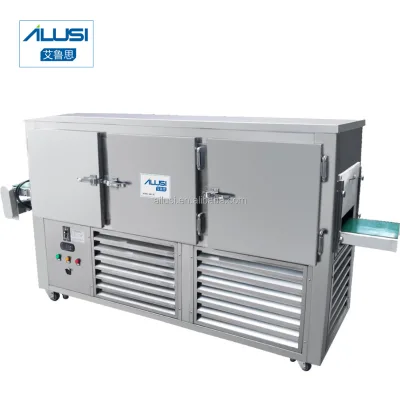
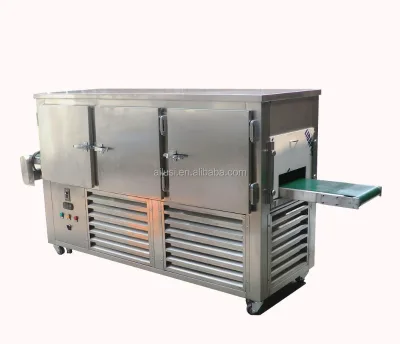
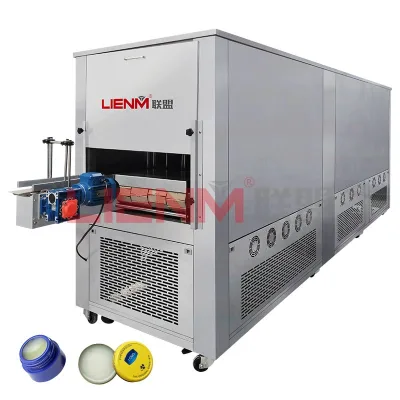
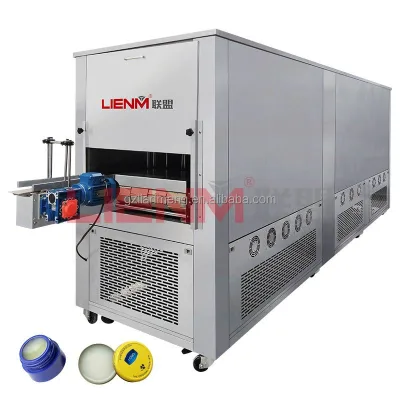
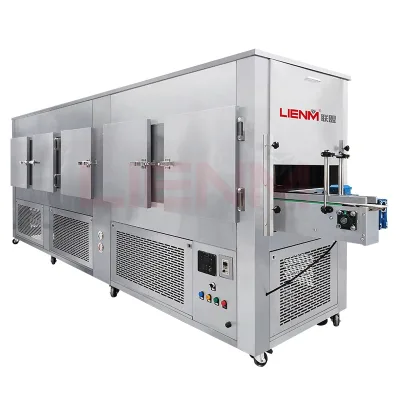
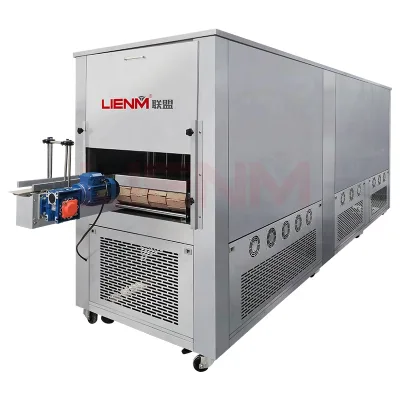
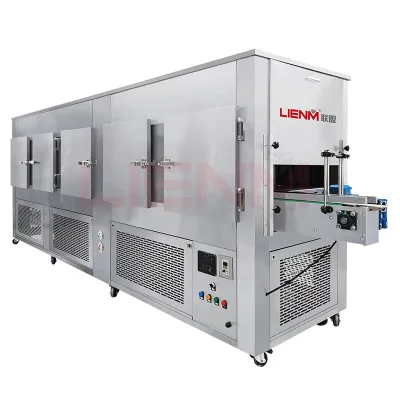
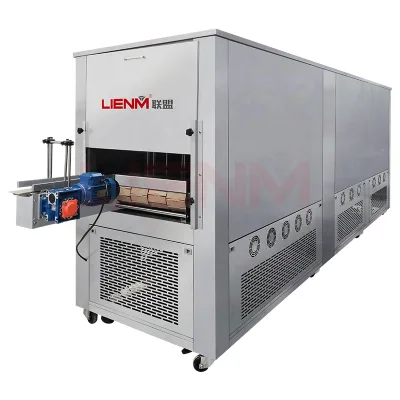
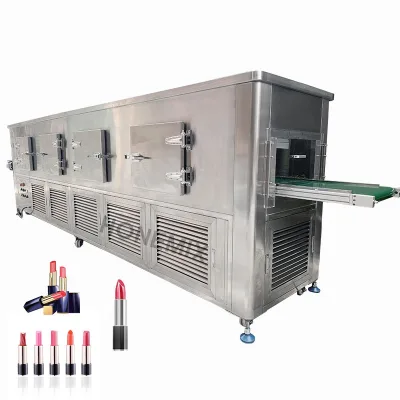
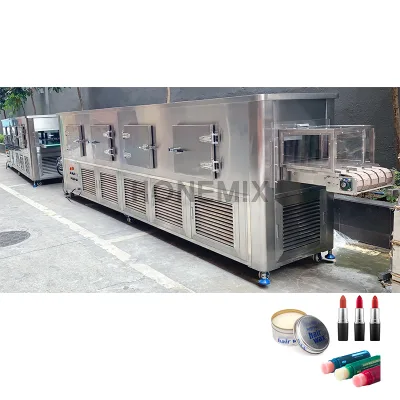
When sourcing a Stainless Steel Lipstick Cooling Tunnel, start by understanding where this equipment actually comes from and who sells it. Location data in current supplier results points to Guangdong, China, which is consistent with the province's well-known role in cosmetics production machinery: the observed product listings include lipstick cooling tunnels, freezing tunnels, lip balm chillers, heating and mixing tanks, and filling machines from companies based there. One listed product even records Guangzhou, Guangdong as its stated origin. Treat this as evidence of a real cluster, but confirm it independently rather than assuming every seller operates a factory in the region. Some listed companies identify as trading companies rather than manufacturers, which affects pricing transparency, engineering support, and accountability when a refrigeration or conveyor component fails.
Buyers should distinguish between three supplier types: manufacturers with their own fabrication and refrigeration assembly, trading companies that consolidate machinery from multiple workshops, and hybrid firms that assemble standard modules with custom stainless steel work. Each appears in this category, so classification matters before comparing quotes. A practical first filter is the main-product list: a supplier whose catalog covers emulsifying mixers, filling, capping, labeling and packing machines alongside cooling tunnels is more likely to support a full lipstick line. Verify whether cooling-tunnel fabrication happens in-house or is subcontracted, and ask which party holds design responsibility for the freezing section, since that determines who you escalate to when performance deviates from specification.
How to Verify Stainless Steel Lipstick Cooling Tunnel Suppliers
Verification begins with the credentials actually displayed in supplier results, and you should request evidence for anything missing. In the current results, one supplier carries a TÜV Rheinland verification mark, while another shows no system certification at all — a clear illustration that verification status varies widely within this category. Where a certification is claimed, ask for the certificate number, scope, and expiry date, and confirm it covers the machinery itself rather than only a management system. Several observed product listings state CE certification on individual cooling-tunnel and chiller models; treat product-level CE as a document claim to verify, requesting the declaration of conformity and identifying which directives apply to the refrigeration and electrical systems.
Beyond paperwork, verification should be physical and technical. Request a video call walkthrough of the welding, polishing, and refrigeration assembly areas, and ask to see a running tunnel producing lipstick or lip balm at the rated output. Product attributes in the listings — such as stainless steel construction, specified freezing temperatures, capacity per minute, and continuous operating type — should be cross-checked against a live demonstration, not accepted from a specification table. Ask for the nameplate details of the compressor and confirm the refrigerant brand and origin stated in the listing. Finally, check business registration, years in operation, and whether the exporter has shipped to cosmetic factories in your market. A supplier unwilling to provide a factory address, a live test, or third-party inspection access should be removed from consideration regardless of how complete its online profile appears.
What to Compare Across Stainless Steel Lipstick Cooling Tunnel Suppliers
Comparison should start with the dimensions displayed on supplier profiles, recognizing that not every supplier shows every attribute. In the observed results, stated lead times range around 23 to 30 days, and average response times fall between roughly 1.9 and 2.9 hours — useful signals of operational speed, though you should confirm both for your specific configuration, since custom lane counts or tunnel lengths will extend production. One listed cooling tunnel shows a minimum order quantity of 1, which matters for pilot lines and first-time buyers, but never assume low MOQ across the category; ask each supplier directly. Location, main-product breadth, and whether the entity is a manufacturer or trading company are further comparison labels available on this page.
Technical comparison should then move to the machines themselves. Observed listings differ meaningfully: one tunnel specifies a maximum freezing temperature of −18°C with air cooling and a capacity of 5–15 pieces per minute, while a platform-style chiller lists a maximum of −10°C, a 600×400 mm cooling platform, and cooling times of one to three minutes. Compare achievable cooling time against your mold size and cycle target, stainless steel grade and thickness, compressor brand and origin, voltage compatibility, noise level, and whether the unit supports added capabilities such as milling. Price bands in the listings span roughly from the low thousands of dollars for smaller chillers to the mid five figures for larger equipment, so normalize quotes by lane count, tunnel length, and included controls before judging cost.
Common Stainless Steel Lipstick Cooling Tunnel Sourcing Risks
The most frequent risk in this category is conflating a listing with a capability. Several observed products are grouped under refrigeration and freezing equipment, mixing equipment, or cosmetics production equipment, and one supplier lists cooling tunnels among many unrelated machines such as filling, capping, labeling, and printing equipment. Breadth alone does not prove refrigeration engineering depth. Another common risk is temperature overstatement: a tunnel rated to −18°C in one listing and a platform chiller limited to −10°C in another show that "cooling tunnel" covers very different machines. If your formula requires rapid set-up of lipstick or lip balm, buying a unit whose maximum temperature is insufficient will show up as slow release, deformed surfaces, or condensation on the product.
Specification drift is a second cluster of risks. Listings state customization is available, but custom lane counts, tunnel lengths, or voltages may be subcontracted with little oversight, so require drawing approval and factory test runs before shipment. Packaging and shipping damage is a real concern for refrigeration machinery: observed listings specify wooden case packing, which is appropriate, but you should still require shock indicators and photograph the unit before crating. Finally, beware of warranty ambiguity. Some listings show a one-year warranty while others omit warranty terms entirely, and none of that guarantees spare-part availability. Clarify in writing which components — compressor, fans, controls, conveyor — are covered, who pays freight for replacements, and whether remote diagnostics are offered. Trading-company intermediaries add a further accountability risk if the underlying fabricator is never disclosed.
Stainless Steel Lipstick Cooling Tunnel Regional Sourcing and Logistics
The location evidence in current supplier results places these machines in Guangdong, China, with one product listing explicitly recording Guangzhou as its origin. This matters logistically for two reasons. First, clustering means nearby access to compressor suppliers, stainless steel fabricators, and control-component vendors, which supports the customization that most listings advertise. Second, Guangdong offers mature export infrastructure, so consolidated shipments that combine a cooling tunnel with mixers, filling, and capping machines from the same region are realistic — a significant advantage if you are building a complete lipstick line from one sourcing trip. Buyers should nonetheless verify each supplier's actual factory address within the province, since a Guangdong-registered trading company may source from workshops elsewhere.
For logistics planning, treat these machines as heavy, sensitive freight. Observed specifications include weights around 600 kg for a platform chiller and dimensions such as 700×900×680 mm, while tunnel-style units run to roughly 3000×800×1500 mm — large enough to require wooden case crating, forklift handling at both ends, and careful freight-class planning. Confirm voltage and frequency compatibility before ordering; observed listings state 380V/50Hz three-phase configurations, with some noting voltage can be customized, but you must confirm this in writing for your facility. Ask whether the supplier handles export documentation and has shipped refrigeration machinery by sea before, since compressors must be secured against vibration. Budget inspection time before container loading, and require photos of the crated unit, its internal bracing, and the refrigeration section after transit testing.
Stainless Steel Lipstick Cooling Tunnel Commercial Terms and Order Planning
Commercial terms in this category are negotiable and vary with equipment complexity. Observed price ranges span from roughly $1,100–$2,000 for a small stainless steel jacketed heating and mixing tank, $3,500–$10,200 for a lip cream cooling platform, $6,000–$8,000 for a three-meter cooling tunnel, and $8,000–$20,000 for another cooling-tunnel listing — evidence that price scales strongly with tunnel length, lane count, and refrigeration capacity. A minimum order quantity of 1 appears on a listed tunnel, which is typical for capital equipment, but confirm MOQ and whether it changes for customized units. Compare lead times alongside price: observed values of about 23 to 30 days are workable, yet customized tunnels, drawings approval, and factory testing can extend schedules, so build buffer into your project plan.
Structure payment to match the risks of refrigeration machinery. A common approach is a deposit with balance after a witnessed or video factory acceptance test confirming freezing temperature, capacity per minute, and continuous operation. Escrow-style or trade-assurance arrangements can add a layer of protection where available, but verify terms rather than assuming coverage. Request the warranty scope in writing — one year appears in some listings but not others — including spare-part pricing and response commitments. Plan orders around shipping time as well as production time, and if you intend to source a complete line, sequence the cooling tunnel order with mixers and filling equipment so commissioning at your site happens once, with the supplier present or remotely supporting the full integrated run.
Word count check: sections of roughly 232, 230, 232, 230, 228, and 233 words each give a total near 1385 words, within the 1350–1450 requirement.
FAQs
What is a Stainless Steel Lipstick Cooling Tunnel used for?
A Stainless Steel Lipstick Cooling Tunnel solidifies freshly poured hot lipstick, lip balm, and similar cosmetic formulations as they pass through a chilled section. It is commonly paired with heating and filling equipment in a lipstick production line. Stainless steel construction supports hygiene requirements and easy cleaning between color or product changeovers in cosmetic factories.
What cooling temperatures can these lipstick cooling tunnels reach?
Listed lipstick cooling equipment reaches freezing temperatures as low as -18°C, with some models rated to a maximum of -10°C. Cooling times of roughly one to three minutes per piece are typical, and capacities range from about 5 to 15 pieces per minute. Always confirm the exact temperature and throughput rating for the model you intend to order.
Do lipstick cooling tunnels come with CE certification?
Many of the lipstick cooling tunnels and freezing platforms listed carry CE certification, though coverage varies by model and supplier. Before ordering, request the CE certificate number and scope to confirm it covers the exact machine configuration. You should also ask whether any additional certifications apply to electrical components or refrigeration parts in your target market.
What is the typical MOQ for a lipstick cooling tunnel?
The listed cooling tunnels and related lipstick production equipment generally have a minimum order quantity of one unit, which suits factories buying a single machine or testing a line. Confirm MOQ directly with each supplier because spare parts, customized configurations, or bundled orders may have different requirements. One-unit ordering also simplifies first-sample inspection before scaling up purchases.
How long does production and delivery usually take?
Suppliers of this equipment list lead times of roughly 23 to 30 days after order confirmation, depending on the machine model and customization level. Custom-built tunnels or non-standard voltages can extend production. Ask for a written production schedule, and factor in additional time for shipping, customs clearance, and installation at your facility before planning your launch date.
Can the cooling tunnel be customized for my production line?
Yes, customization is listed as available for the cooling tunnels and mixing tanks shown, including voltage changes such as 3-phase 380V configurations and lane layouts for different mold sizes. Provide your mold dimensions, target capacity, and local power supply when requesting a quote. Customized machines are usually built to agreed specifications, so confirm drawings before production begins.
What price range should I expect for this equipment?
Listed prices range widely by machine type: lip cream cooling platforms start around 3,500 USD, freezing tunnels run roughly 6,000 to 20,000 USD, and heating mixing tanks are quoted from about 1,100 to 2,000 USD. Final pricing depends on capacity, lanes, materials, and customization, so request itemized quotes to compare configurations fairly.
Are these machines packed safely for international shipping?
Listed machines are packed in wooden cases, which protects stainless steel surfaces and refrigeration components during sea or air freight. Confirm whether the wood is treated to meet import regulations in your country, such as ISPM-15 standards. Also ask about insurance options and who arranges freight, since terms like EXW or CIF significantly affect your total landed cost.