Touch Screen Operation Panel Saw Suppliers and Manufacturers
Source 14 verified suppliers for Touch Screen Operation Panel Saw units from China. Compare grounded metrics including ISO certifications, CE standards, lead times, and pricing to identify suitable partners. Review detailed specifications and request quotes directly; review the available evidence before requesting comparable quotations from suitable candidates.
Suppliers List

QINGDAO SOSN MACHINERY CO., LTD.
- Verified by CTI
- Combined
- China Shandong
- Lead time23 days
- Avg. response≤ 4h
Main productsCNC Router, Panel Saw, Edging Banding Machines, Boring Machines, Woodworking Machines Series, Dust Collectors, Sliding Table Saw
Main marketsSouth America,Africa,Southeast Asia/ Mideast,Domestic,Europe,Australia,North America

Shijiazhuang Chancsmac Machine Technology Co., Ltd.
- Verified by TUVRHEINLAND
- Trading Company,Manufacturer/Factory
- China Hebei
- Lead time30 days
- Avg. response≤ 2h
Main productsPress Machine, Hot Press, High Frequency Press, Hydraulic Press, CNC Machine, Glue Spreader, Planer, Sawing Machine, Sanding Machine, High Frequency Hot Press
Main marketsSouth America,Eastern Europe,Mid East,North America,Southeast Asia,Africa

Jinan Lingrui Cnc Machinery Co., Ltd.
- Verified by TUVRHEINLAND
- Combined
- China Shandong
- Lead time15 days
- Avg. response≤ 2h
Main productsLaser Cutting Machine, Laser Marking Machine, Laser Welding Machine, CNC Plasma Cutting Machine, CO2 Laser Engraving Machine, CNC Router, CNC Wood Lathe, CNC Wood Machine
Main marketsDomestic


$2699.00 - $4099.00
MOQ: 1 Pieces

Qingdao Yingzhuo Machinery Technology Co., Ltd.
- Verified by TUVRHEINLAND
- Combined
- China Shandong
- Lead time15 days
- Avg. response≤ 3h
Main productsWoodworking Machine, Edge Banding Machine, Sliding Table Panel Saw, CNC Router, Sanding Machine, Drilling Machine, Press Machine, Dust Collector, CNC Beam Saw, Deburring Machine
Main marketsDomestic

Tirox (Zhengzhou) Equipment Co., Ltd.
- Verified by BV
- Combined
- China Henan
- Lead time45 days
- Avg. response≤ 4h
Main productsEnvironmental Protection Equipment, Mechanical Equipment, Import and Export of Goods and Technology, Wood Crusher, Sawmill, Wood Pellet Machine, Wood Chippe, Shredder.
Main marketsEurope

Electric Saw Machine Cutting Machine Saw Machinery Automatic Panel Saw Machine
$3000.00 - $9000.00
MOQ: 1 Pieces

$3200.00 - $4400.00
MOQ: 1 Pieces

Vertical Plywood Panel Saw Woodworking Vertical Panel Saw Cutting Vertical Panel Saw
$3200.00 - $4400.00
MOQ: 1 Pieces

Qingdao Zhongding Machinery Co., Ltd.
- Combined
- China Shandong
- Lead time30 days
- Avg. response≤ 3h
Main productsCNC Machinery, Panel Saw, Edge Bander, Press Machine, Sanding Machine, Drilling Machine
Main marketsSouth America,Africa,Southeast Asia/ Mideast,East Asia(Japan/ South Korea),Europe,Australia,North America

Henan Elasn Machinery Equipment Co., Ltd.
- Verified by SGS
- Trading Company
- China Henan
- Lead time30 days
- Avg. response≤ 5h
Main productsHot Press Machine, Finger Joint Machine, Wood Block Extruder, Wood Veneer Press Machine, Wood Pallet Nailing Machine, Block Press Machine, Automatic Pallet Nailing Machine, Short Cycle Machine, Melamine Hot Press Machine, Wood Door Laminating Veneering Machine
Main marketsSouth America,Europe


Woodworking Machinery Automatic CNC Beam Saw Computer Cutting Panel Saw
$13890.00 - $15890.00
MOQ: 1 Sets


Qingdao Maonple Machinery Technology Co., Ltd.
- Verified by CTI
- Trading Company,Manufacturer/Factory
- China Shandong
- Lead time15 days
- Avg. response≤ 3h
Main productsPanel Saw, Edge Banding Machine, CNC Router, Electric Panel Saw, CNC Beam Saw, Edge Bander, Drilling Machine, Hot Press Machine
Main marketsSouth America,Eastern Europe,Mid East,Southeast Asia,Eastern Asia,Western Europe,Africa

Panel Saw for Wood Plywood Cutting Computer Controlled Beam Saw Machine
$27000.00 - $29000.00
MOQ: 1 Pieces


Qingdao Zhongding Machinery Co., Ltd.
- Verified by SGS
- Combined
- China Shandong
- Lead time30 days
- Avg. response≤ 3h
Main productswoodworking machinery
Main marketsSouth America,Africa,Southeast Asia/ Mideast,East Asia(Japan/ South Korea),Europe,Australia,North America

Qingdao Baihang Industry And Trade Co., Ltd.
- Manufacturer, Trading Company
- Shandong, China
- Lead time15 days
- Avg. response≤ 2h
Main productswoodworking machinery,edge banding machine,table saw,multi drilling machine,cnc router
Main marketsSouth America(15.00%), Eastern Asia(10.00%), North America(10.00%), Mid East(10.00%), Africa(10.00%), South Asia(10.00%), Southeast Asia(10.00%), Eastern Europe(10.00%), Oceania(5.00%), Northern Europe(5.00%), Central America(5.00%)

- Manufacturer/Factory
- China Jiangxi
- Lead time23 days
- Avg. response≤ 1h
Main productsFoil Winding Machine, Automatic Winding Machine, Vacuum Drying Machine, Vpi Vacuum Pressure Impregnation Equipment, APG Machine, Angle Punching Machine, Busbar Processing Machine, Hv Winding Machine, Transformer Winding Machine, CNC Milling Machine
Main marketsSouth America,Eastern Europe,Mid East,North America,Southeast Asia,Eastern Asia,Oceania,Western Europe,Africa
Shenzhen Keda Technology Co., Ltd.
- Manufacturer, Trading Company
- Guangdong, China
- Lead time0 days
- Avg. response≤ 5h
Main productspacking machine,sealing machine,label machine,other machines,tools
Main marketsNorth America(21.00%), Western Europe(17.00%), Oceania(10.00%), Domestic Market(8.00%), Mid East(7.00%), South America(7.00%), Africa(6.00%), Northern Europe(5.00%), Eastern Europe(4.00%), Eastern Asia(4.00%), Southeast Asia(4.00%), South Asia(3.00%), Central America(2.00%), Southern Europe(2.00%)

Qingdao Antioch Woodworking Machinery Co., Ltd.
- Verified by BV
- Trading Company
- China Shandong
- Lead time30 days
- Avg. response≤ 4h
Main productsCNC Nesting Machine, CNC Router, Edge Banding Machine, Sliiding Table Saw, Hot Press, Cold Press, Wide Belt Sander
Main marketsSoutheast Asia/ Mideast


Professional Electric Panel Saw with Sliding Table and Adjustable Blade Tilt
$3200.00 - $3500.00
MOQ: 1 Pieces

Shandong Zouping Shuanghuan Machinery Manufacturing Co., Ltd.
- Verified by TUVRHEINLAND
- Combined
- China Shandong
- Lead time15 days
- Avg. response≤ 6h
Main productsSawmill, Wood Pallet Machine, Wood Chipper Machine, Wood Circular Saw, Portable Sawmill, Vertical Band Sawmill, Horizontal Band Sawmill, Chain Saw Mill, Wood Working Machinery, Solid Floor Production Line
Main marketsNorth America






Comprehensive Sourcing Guide
Touch Screen Operation Panel Saw Supplier Concentration and Factory Types
Current data indicates that verified suppliers for touch screen operation panel saws are concentrated in specific Chinese provinces, with Shandong and Hebei emerging as primary manufacturing hubs. Fact records confirm locations in Shandong and Hebei, suggesting these regions host the majority of active factories and trading companies offering these specific woodworking machines. Buyers should prioritize engaging with suppliers located in these areas to ensure proximity to established supply chains and specialized labor pools. The presence of combined company types, including both manufacturers and trading companies, in these regions offers a diverse range of sourcing options.
When evaluating factory types, it is essential to distinguish between pure manufacturers and combined entities that may also function as trading companies. The available facts show a mix of company types, including "Combined" and "Trading Company,Manufacturer/Factory" structures. This distinction impacts the buyer's ability to negotiate directly on production costs versus relying on a middleman. Suppliers in Shandong and Hebei often list main products such as CNC routers, panel saws, and dust collectors, indicating a specialized focus on woodworking machinery. Buyers must verify if the supplier's primary business aligns with the specific Touch Screen Operation Panel Saw requirements to avoid generic resellers.
How to Verify Touch Screen Operation Panel Saw Suppliers
Verification of supplier credibility relies heavily on third-party audit reports and system certifications rather than self-declared claims. The provided facts highlight specific verification statuses such as CTI and TUVRHEINLAND, which serve as concrete evidence of a supplier's operational integrity. Buyers should request these specific audit reports to confirm that the factory meets international safety and quality standards before proceeding with any order. Additionally, system certifications like ISO9001:2015 and ISO14001:2015 are critical indicators of a supplier's commitment to quality management and environmental compliance.
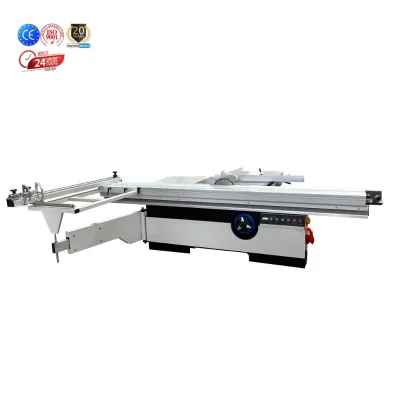
Beyond external audits, buyers must scrutinize the specific product attributes and certifications listed for the touch screen operation panel saws. Product evidence shows certifications such as CE and ISO, which are mandatory for machinery sold in many international markets. It is vital to confirm that the specific model, such as the MJ6132TAZ or CNC-32, carries the correct certification for the buyer's destination country. Furthermore, checking the response time, which varies from 1.30 to 3.66 in the data, can indicate the supplier's operational efficiency and communication reliability. A supplier with a faster response time often demonstrates better customer service readiness and logistical coordination capabilities.
What to Compare Across Touch Screen Operation Panel Saw Suppliers
Comparing suppliers requires a detailed analysis of lead times, minimum order quantities, and pricing structures to ensure alignment with project timelines and budgets. The observed data reveals significant variations in lead times, ranging from 23 to 30 days, which directly impacts production scheduling. Buyers must calculate the total time from order placement to delivery, factoring in these lead times alongside shipping durations. Minimum order quantities also vary, with some suppliers offering an MOQ of 1, while others may have different thresholds. Understanding these constraints helps buyers determine if a supplier can accommodate small batch orders or requires larger volume commitments.
Pricing and product specifications are equally critical dimensions for comparison across different Touch Screen Operation Panel Saw suppliers. The price range for these machines spans from approximately $1,000 to $35,000, depending on the automation level and cutting capacity. Buyers should compare the specific attributes of each model, such as the controlling mode, which can be hydraulic semi-automatic or fully automatic CNC. The gross weight and packing dimensions, such as wooden cases or plywood packing cases, also influence shipping costs and handling requirements. By systematically comparing these technical and commercial parameters, buyers can identify the most cost-effective and technically suitable supplier for their specific needs.
Common Touch Screen Operation Panel Saw Sourcing Risks
One significant risk in sourcing touch screen operation panel saws involves the discrepancy between advertised specifications and actual product performance. While product evidence lists attributes like high precision and specific cutting capacities, buyers must verify these claims through independent testing or detailed factory audits. The variation in controlling modes, from hydraulic semi-automatic to CNC, introduces complexity in matching the machine to the buyer's production workflow. A supplier might advertise a "Computer Panel Saw" with automatic grade, but the actual implementation of the touch screen interface may differ from expectations. Buyers should request video demonstrations or factory visits to confirm the operational reality of the touch screen interface.
Another critical risk is the potential for supply chain disruptions related to logistics and packaging standards. The data indicates different packing methods, including wooden cases and plywood packing cases, which affect the safety of the machinery during transit. If the packaging is insufficient, the high-precision components of the panel saw could be damaged, leading to costly repairs or replacements. Additionally, the origin of the product, consistently listed as China, means that international shipping delays or customs issues could arise. Buyers must ensure that the supplier has a robust logistics plan and that the product standard, such as the 1100KG or 3CBM specifications, aligns with the buyer's shipping constraints.
Touch Screen Operation Panel Saw Regional Sourcing and Logistics
Sourcing from the identified regions of Shandong and Hebei offers logistical advantages due to established industrial clusters and port access. These provinces are known for their manufacturing infrastructure, which facilitates the efficient production and export of heavy machinery like panel saws. Buyers should leverage this regional concentration to negotiate better freight rates and consolidate shipments with other machinery orders. The proximity of these factories to major shipping ports can reduce inland transportation costs and minimize the risk of delays during the initial leg of the journey. Understanding the specific location of the supplier within these provinces allows for more accurate estimation of transit times.
Logistics planning must also account for the specific dimensions and weight of the touch screen operation panel saws to ensure safe transport. Product attributes indicate gross weights ranging from 800kg to 1100kg and dimensions that require specialized handling. Buyers need to verify that the supplier's packing, whether wooden cases or plywood packing cases, meets international shipping standards to prevent damage. Furthermore, the standard dimensions provided, such as 29503150900mm, must be checked against container capacity to optimize loading efficiency. Proper logistics planning ensures that the heavy machinery arrives at the destination in pristine condition, ready for immediate installation and operation.
Touch Screen Operation Panel Saw Commercial Terms and Order Planning
Commercial terms for touch screen operation panel saws often include specific warranty periods and customization options that must be clearly defined in the contract. The available data shows warranty periods of up to 2 years, which is a standard benchmark for industrial machinery. Buyers should negotiate warranty terms that cover both parts and labor, ensuring that any defects in the touch screen interface or cutting mechanisms are addressed promptly. Additionally, the availability of customization, such as specific voltage requirements or cutting lengths, should be confirmed before finalizing the order. These terms protect the buyer's investment and ensure the machine meets the specific operational requirements of their facility.
Order planning requires careful consideration of the supplier's capacity for OEM and ODM services to ensure scalability. The facts indicate that suppliers possess RD capacity for both OEM and ODM, allowing for tailored solutions. Buyers should assess whether the supplier can handle the volume of orders required for their production scale without compromising quality. The response time, which varies between suppliers, is also a key factor in order planning, as it affects the speed of communication and issue resolution. By aligning the order timeline with the supplier's lead time and response capabilities, buyers can minimize delays and ensure a smooth procurement process from initial inquiry to final delivery.
FAQs
What is the price range for touch screen panel saws?
Prices for these machines typically range from $1,000 to $35,000 depending on automation level. Basic sliding table models start around $1,000, while fully automatic CNC versions cost between $25,000 and $35,000. Buyers should verify specific quotes based on required cutting capacity and customization options.
What certifications do these woodworking machines have?
Most listed panel saws carry CE certification, with some models also holding ISO standards. Suppliers often provide ISO9001:2015 and ISO14001:2015 system certificates. Buyers should request specific product certificates to ensure compliance with local safety and operational regulations before finalizing any purchase agreement.
What is the typical lead time for delivery?
Standard lead times generally range from 23 to 30 days after order confirmation. This duration allows for manufacturing, quality testing, and preparation of wooden case or plywood packing. Buyers should confirm exact schedules with suppliers, as rush orders or custom specifications may extend these timelines significantly.
Are these machines customizable for specific needs?
Yes, customization is widely available for power, color, and cutting dimensions. Suppliers offer OEM and ODM services to tailor machines to specific production requirements. Buyers can request custom cutting lengths, motor powers, or control interfaces to ensure the equipment fits their workshop layout and operational workflow perfectly.
What is the minimum order quantity for these saws?
The minimum order quantity is typically one unit, allowing buyers to purchase single machines for testing or small-scale operations. This low MOQ facilitates easier entry for new workshops. Buyers should verify if bulk discounts apply for larger orders, as pricing often decreases with increased volume.
Where are these panel saws manufactured?
These woodworking machines are primarily manufactured in China, specifically in regions like Shandong and Hebei. Suppliers in these areas specialize in CNC routers, panel saws, and related woodworking equipment. Buyers should verify factory locations to assess logistics costs and ensure alignment with their supply chain preferences.