Touch Memory Card PCBA Board Suppliers and Manufacturers
Source 17 verified suppliers for Touch Memory Card PCBA Board solutions. Compare grounded dimensions including ISO9001:2015 certification, BV and SGS verification, lead times from 15 to 30 days, and pricing ranges. Review product specifications and request quotes directly to evaluate fit for your project.
Suppliers List

Shenzhen Jingxin Electronic Technology Co., Ltd.
- Verified by BV
- Combined
- China Guangdong
- Lead time30 days
- Avg. response≤ 5h
Main productsPCBA, PCB, Print Circuit Board, Flexible Circuit Board, Rigid PCB Assembly, PCB Assembly, Circuit Board, FPC, HDI PCB
Main marketsEurope,Australia,North America

China Dragon Electronic Industrial Co., Limited
- Verified by BV
- Combined
- China Guangdong
- Lead time23 days
- Avg. response≤ 8h
Main productsPCB, PCBA, LED Grow Light, PCB Design, Industrial Control, Smart Home, Communications Equipment, Medical Hairdressing, Multilayer PCB
Main marketsEurope,North America


PCB Board PCBA Manufacture Customize Service PCB Circuit Board PCBA Board
$0.68 - $10.80
MOQ: 1 Pieces


Shenzhen Mingxingyuan Industrial Interconnection Co., Ltd.
- Verified by SGS
- Trading Company
- China Guangdong
- Lead time15 days
- Avg. response≤ 3h
Main marketsOthers(foreignTradeCapacity.exportBusinessCapacityMarketOther)

Shenzhen Chanzeho Technology Co., Limited
- Verified by TUVRHEINLAND
- Combined
- China Guangdong
- Lead time30 days
- Avg. response≤ 2h
Main marketsDomestic

Shenzhen Grandtop Electronics Co., Ltd.
- Trading Company,Manufacturer/Factory
- China Guangdong
- Lead time30 days
- Avg. response≤ 14h
Main productsPCB Assembly, Robotic Control PCB Assembly, Industrial Control PCBA, Medical PCBA, Financial PCBA, Contract Manufacturer, Automatic Control PCB Assembly, OEM &ODM PCBA, Turnkey Service PCBA, One Stop PCB Assembly
Main marketsSouth America,Eastern Europe,Mid East,North America,Southeast Asia,Eastern Asia,Western Europe,Africa

Mu Star (shenzhen) Industry Co., Ltd.
- Verified by BV
- Trading Company
- China Guangdong
- Lead time15 days
- Avg. response≤ 12h
Main productsPCBA, PCB Assembly, PCB PCBA, SMT, Medical PCBA, SMD, PCB Assembly Service, EMS, PCBA Assembly
Main marketsNorth America

Dongguan Access Star Co., Ltd.
- Verified by SGS
- Combined
- China Guangdong
- Lead time30 days
- Avg. response≤ 8h
Main productsWire Harness, Cable Assembly, PCB Assembly, Box Build, USB Cable, Power Cable, Charging Cable, Plastic Parts, Die Casting Parts, Stamping Parts
Main marketsOthers(foreignTradeCapacity.exportBusinessCapacityMarketOther),East Asia(Japan/ South Korea),Domestic,Europe,Australia,North America

Shenzhen New Chip international Ltd
- Verified by TUVRHEINLAND
- Combined
- China Guangdong
- Lead time30 days
- Avg. response≤ 8h
Main productsPCB, PCBA, IC
Main marketsSoutheast Asia/ Mideast


Electronic Circuit Boards PCB Assembly Clone PCBA
Contact supplier


ShenZhen Nova Semiconductor Co., Ltd.
- Verified by TUVRHEINLAND
- Trading Company
- China Guangdong
- Lead time15 days
- Avg. response≤ 4h
Main productsIC, Resistor, Capacitor, Sensor, Transistor, Diode, Triode, Passive Components, Drive IC, PCBA
Main marketsSouth America,Southeast Asia/ Mideast,East Asia(Japan/ South Korea),Europe,Australia,North America

- Trading Company,Manufacturer/Factory,Group Corporation
- China Guangdong
- Lead time15 days
- Avg. response≤ 13h
Main productsPCBA/PCB Assembly, Cable/Wire Harness Assemb, Sheet Metal Fabrication, Kiosk Machine OEM/ODM, Order Machine OEM/ODM, Product Assembly, LED Industrial Lights
Main marketsSouth America,Eastern Europe,Mid East,North America,Southeast Asia,Eastern Asia,Oceania,Western Europe,Africa

Shenzhen Okey Circuit Co., Ltd.
- Verified by TUVRHEINLAND
- Manufacturer/Factory
- China Guangdong
- Lead time23 days
- Avg. response≤ 12h
Main productsPCB, PCB Board, Circuit Board, Printed Circuit Board, PCB Assembly, PCB Manufactory, Aluminum PCB, LED PCB, LED Board, Flexible PCB
Main marketsSouth America,Eastern Europe,Mid East,North America,Southeast Asia,Eastern Asia,Oceania,Western Europe,Africa

Electronic Component Printed Circuit Board Electronics Circuit Board PCB Assembly PCBA
$0.03 - $0.41
MOQ: 1 Pieces


Shenzhen Xinjiaye Electronics Technology Co., Ltd.
- Verified by BV
- Trading Company,Manufacturer/Factory
- China Guangdong
- Lead time15 days
- Avg. response≤ 11h
Main productsPCB, PCB Board, Aluminum PCB, FPC, PCBA, LED PCB, PCB Assembly, Printed Circuit Board, Rigid PCB, MCPCB
Main marketsSouth America,Eastern Europe,Mid East,North America,Southeast Asia,Eastern Asia,Oceania,Western Europe,Africa
Shenzhen Qianbao Technology Co., Ltd.
- Trading Company
- Guangzhou, China
- Lead time7 days
- Avg. response≤ 12h
Main productsGraphic card,CPU,Motherboard,Cooling plate,Fans
Main marketsNorth America(20.0%), Northern Europe(10.0%), Domestic Market(10.0%), Eastern Europe(10.0%), Mid East(10.0%), Western Europe(8.0%), Southern Europe(8.0%), Southeast Asia(5.0%), South America(5.0%), Eastern Asia(5.0%), Central America(3.0%), Africa(2.0%), South Asia(2.0%), Oceania(2.0%)
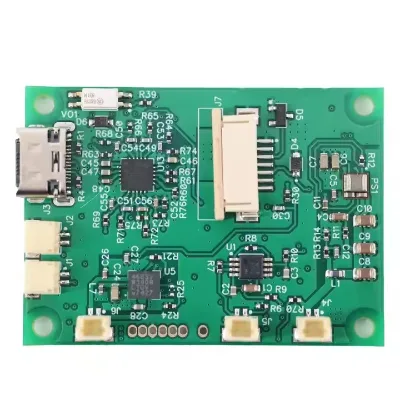
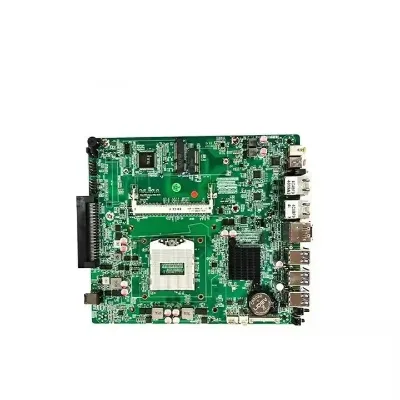
Pcb Circuit Board Manufacturing and Assembly Printed Circuit Board Pcb Layout Maker
$0.59 - $1.00
MOQ: 2 pieces

- Manufacturer/Factory
- China Guangdong
- Lead time15 days
- Avg. response≤ 9h
Main productsPCB, PCBA, Electronic Manufacturing Service, OEM Service, Circuit Board
Main marketsSouth America,Eastern Europe,Mid East,North America,Southeast Asia,Eastern Asia,Oceania,Western Europe,Africa

Shenzhen STHL Technology Co., Ltd.
- Verified by TUVRHEINLAND
- Combined
- China Guangdong
- Lead time15 days
- Avg. response≤ 11h
Main productsPCBA, PCB, PCB Board, PCB Assembly, Circuit Board, PCB Design, PCB Layout, Printed Circuit Board, LED Circuit Board, Electronic Components
Main marketsSouth America


Motherboard Assembly PCB Circuit Board Assembly Service PCBA Custom SMT PCB Board Assembly Service
$5.00 - $20.00
MOQ: 10 pcs


Electronic Component Circuit PCB Board Industrial Control Computer Parts Motherboard
$10.00 - $30.00
MOQ: 1 pcs

- Verified by TUVRHEINLAND
- Combined
- China Fujian
- Lead time30 days
- Avg. response≤ 7h
Main productsRF Remote Control, Remote Control Duplicator, RF Receiver, Gate Opener, Auto Gate Door Motor, Remote Control, Rolling Code, Motorcycle Alarm System, Sliding Gate Opener, Car Remote Alarm
Main marketsEurope,Australia,North America


DC Motherboard Main Board Control Panel PCB for DC Sliding Gate Motor
Contact supplier
MOQ: 500 Pieces

Shenzhen Core Hecheng Electronic Technology Co., Ltd.
- Verified by CTI
- Manufacturer/Factory,Group Corporation
- China Guangdong
- Lead time15 days
- Avg. response≤ 4h
Main productsPCBA Assembly, PCBA, PCB, Quick Turn PCB Assembly, Turnkey PCB Assembly, Cheap PCB Assembly, Prototype PCB Assembly, Volume PCB Assembly, Low Cost PCB
Main marketsSouth America,Eastern Europe,North America,Southeast Asia,Eastern Asia,Western Europe


Comprehensive Sourcing Guide
Touch Memory Card PCBA Board Supplier Concentration and Factory Types
The available data indicates a concentration of suppliers in China Guangdong, a region known for its dense electronics manufacturing ecosystem. This location hosts a mix of combined entities and trading companies, offering buyers a range of operational models. Combined suppliers often integrate design, manufacturing, and assembly under one roof, while trading companies may aggregate products from various factories. The presence of both types suggests a mature supply chain where buyers can access diverse capabilities, from original design manufacturing to original equipment manufacturing.
When evaluating factory types, buyers should look for specific capacity indicators such as ODM, OEM, and own brand capabilities. Some suppliers list these services alongside their main products, which include PCBA, PCB, and flexible circuit boards. The distinction between a trading company and a combined manufacturer is critical for understanding the depth of technical support available. A combined entity might offer more direct engineering collaboration, whereas a trading company might provide broader product variety. Buyers must verify the actual production capacity and whether the supplier manages the entire process or acts as an intermediary.
How to Verify Touch Memory Card PCBA Board Suppliers
Verification is a critical step when sourcing electronic components, and the current results show suppliers with BV and SGS verification statuses. These third-party validations provide a baseline of trust regarding the company's existence and operational legitimacy. Buyers should prioritize suppliers with these specific verification badges, as they indicate that an independent agency has reviewed the business credentials. However, verification status alone does not guarantee product quality or delivery reliability, so it must be part of a broader due diligence process.
Beyond basic verification, buyers should examine system certifications like ISO9001:2015 to ensure quality management systems are in place. Some product listings also reference RoHS and CCC certifications, which are essential for compliance in various international markets. It is important to confirm that these certifications are current and applicable to the specific products being ordered, such as the touch memory card PCBA boards. Buyers should request valid certificate copies directly from the supplier rather than relying solely on the platform display. Additionally, checking the response time metrics can offer insight into the supplier's operational efficiency and communication readiness.
What to Compare Across Touch Memory Card PCBA Board Suppliers
Comparing suppliers requires a focus on key operational metrics such as lead time, minimum order quantity, and response speed. The observed data shows lead times ranging from 15 to 30 days, with response times varying between 2.31 and 7.28 hours. These figures are significant for production planning, as shorter lead times may be necessary for urgent orders, while longer lead times might indicate more complex manufacturing processes. Buyers should align these timelines with their own production schedules to avoid bottlenecks in the supply chain.
Price and minimum order quantity are also vital comparison points, with observed price ranges starting as low as 0.50 and going up to 10.80, and MOQs varying from 1 to 10 units. Some suppliers offer flexible customization options, which can affect both the price and the minimum order requirements. Buyers should compare the total cost of ownership, including packaging and testing services, rather than just the unit price. The availability of services like OEM/ODM and EMS should also be weighed against the specific technical requirements of the touch memory card project.
Common Touch Memory Card PCBA Board Sourcing Risks
One significant risk involves the condition of the products, as some listings indicate "Used" items alongside "New" ones. This discrepancy can lead to confusion regarding the quality and reliability of the components received. Buyers must explicitly confirm that the products are new and unused, especially for critical applications like touch memory cards where performance is paramount. Relying on ambiguous product descriptions can result in receiving refurbished or damaged goods that fail to meet specifications.
Another risk relates to the consistency of manufacturing standards and materials. While some products specify FR-Flame Retardant properties and specific insulation materials, others may lack detailed technical specifications. Variations in base materials, such as aluminum or copper, and processing technologies like subtractive or semi-additive processes, can impact the final product's durability. Buyers should verify that the materials and processes match their design requirements to prevent functional failures. Ensuring that the supplier adheres to standards like IPC-A-610 Class 2 is essential for maintaining quality control throughout the production run.
Touch Memory Card PCBA Board Regional Sourcing and Logistics
The primary sourcing hub identified in the data is China Guangdong, a region with established logistics networks for electronic components. Suppliers in this area are accustomed to handling international shipments, which can streamline the logistics process for global buyers. However, buyers should verify the specific shipping terms and lead times associated with their location, as these can vary based on the supplier's exact position within the region. Understanding the local infrastructure helps in estimating transit times and potential customs delays.
Logistics planning should also account for packaging standards, which are listed as static, shockproof, and anti-drop in some cases. Proper packaging is crucial for protecting sensitive electronic boards during transit, especially for multilayer rigid PCBs. Buyers should confirm that the packaging meets the requirements for their specific shipping method and destination. Additionally, the origin of the products, confirmed as China in the data, should be factored into any trade compliance checks or tariff calculations. Clear communication regarding packaging and shipping expectations can mitigate risks associated with damage or loss during transit.
Touch Memory Card PCBA Board Commercial Terms and Order Planning
Commercial terms such as payment methods and escrow services play a vital role in securing transactions. While the data does not explicitly detail escrow availability for every supplier, buyers should inquire about secure payment options to protect their financial interests. Establishing clear terms for deposits, milestones, and final payments is essential for managing cash flow and ensuring supplier commitment. Buyers should also verify if the supplier offers any guarantees or warranties on the products, particularly for custom PCBA orders.
Order planning must consider the customization capabilities and production models offered by the suppliers. Many suppliers support turnkey PCBA assembly and offer customized services, which can simplify the procurement process. However, buyers need to provide detailed specifications to ensure the final product meets their needs. The production models, such as SMT or DIP, should align with the buyer's technical requirements. Planning for potential delays and having contingency strategies in place is advisable, given the variability in lead times and response speeds observed across different suppliers.
FAQs
Where are these PCBA boards manufactured?
The available PCBA boards are manufactured in China, specifically in the Guangdong region. This location supports the production of various circuit boards including rigid and flexible types for electronics applications.
What is the typical lead time for orders?
Lead times for these PCBA orders range from 15 to 30 days depending on the specific supplier and order complexity. Some suppliers offer faster turnaround times of 15 days while others may require up to 30 days for production.
What certifications do the suppliers hold?
Suppliers often hold ISO9001:2015 certificates and comply with RoHS standards. Some also carry BV or SGS verification status to ensure quality and reliability in their manufacturing processes for electronic components and circuit boards.
What is the minimum order quantity required?
Minimum order quantities vary by supplier, with some accepting orders as low as 1 unit while others require a minimum of 10 units. Buyers should check specific product listings to confirm the exact MOQ for their needs.
Are customization services available for PCBA?
Yes, customization is available for many PCBA products including custom designs and specific layer counts. Suppliers offer OEM and ODM services to tailor the boards to specific application requirements like consumer electronics or industrial control systems.
What is the price range for these boards?
Prices for PCBA boards typically range from 0.50 to 10.80 per unit depending on specifications and order volume. The cost varies based on factors like layer count, material type, and the complexity of the assembly process required.
How quickly do suppliers respond to inquiries?
Supplier response times vary, with some responding within 2.31 hours and others taking up to 7.28 hours. Buyers can expect relatively quick communication from most suppliers listed in the search results for sourcing inquiries.