Universal Compatible Soldering Iron Tips Suppliers and Manufacturers
Source 19 verified suppliers for Universal Compatible Soldering Iron Tips. Compare key dimensions including location, lead times, MOQ, response times, certifications, and pricing to identify the right partner for your production needs; review the available evidence before requesting comparable quotations from suitable candidates.
Suppliers List

Dongguan ICT Technology Co.,Ltd.
- Verified by CTI
- Combined
- China Guangdong
- Lead time23 days
- Avg. response≤ 2h
Main productsSMT, Reflow Oven, Reflow Soldering Machine, Lead Free Reflow Oven, Chip Mounter, Pick&Place Machine, Chip Shooter Machine, Juki Chip Mounter, SMT Machine, SMT Equipment
Main marketsEurope,North America

Shenzhen HQ Auto Machine Technology Co., Ltd.
- Manufacturer, Trading Company, Agent
- Guangdong, China
- Lead time10 days
- Avg. response≤ 6h
Main productssoldering machine,glue dispensing machine,lock screw machine,soldering station,Fume extactor
Main marketsSouth Asia(40.00%), Western Europe(10.00%), Mid East(10.00%), Northern Europe(5.00%), Eastern Asia(5.00%), South America(5.00%), Central America(5.00%), North America(5.00%), Southeast Asia(5.00%), Southern Europe(3.00%), Eastern Europe(3.00%), Oceania(3.00%), Africa(1.00%)
Shenzhen Chenxu Sanzhou Trade Co., Ltd.
- Verified by Intertek
- Trading Company
- Lead time15 days
Main productsHeat Press Machine, Soldering Irons, Laser Engraving Machine, Commercial Equipment
Main marketsNorth America(40%), Africa(30%), Western Europe(30%)
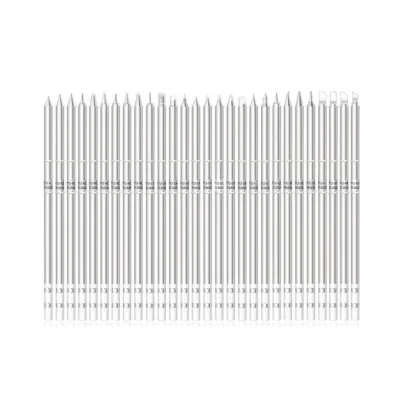
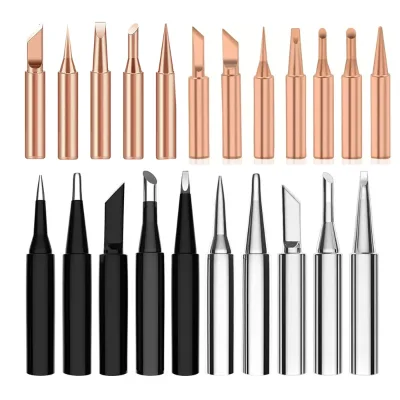
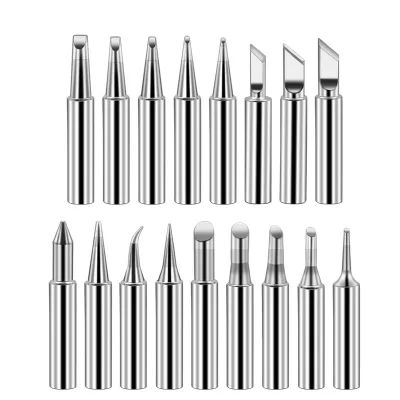
936/937 M solder iron tips Series Soldering Tips For 900 Soldering Irons Black
$0.52 - $0.69
MOQ: 100 Minimum


Shenzhen Aikeisen Technology Co., Ltd.
- Trading Company, Agent, Distributor/Wholesaler
- Guangdong, China
- Lead time10 days
- Avg. response≤ 3h
Main productsIntegrated circuit,diode,triode,MOS transistor,MCU
Main marketsNorth America(40.00%), Mid East(15.00%), Southern Europe(10.00%), Northern Europe(10.00%), Western Europe(10.00%), Eastern Europe(10.00%), Domestic Market(5.00%)

Zhuzhou Jinggong Cemented Carbide Co., Ltd.
- Verified by CTI
- Manufacturer/Factory,Other
- China Hunan
- Lead time23 days
- Avg. response≤ 20h
Main productsCarbide Saw Tips, Tungsten Carbide Tips, Carbide Inserts, Cemented Carbide Brazed Tips, Cemented Carbide, Carbide Cutting Tips, Tungsten Carbide Buttons, Tungsten Carbide Bars, Carbide Mining Tips, Tungsten Carbide Dies
Main marketsSouth America,Eastern Europe,Mid East,North America,Southeast Asia,Eastern Asia,Oceania,Western Europe,Africa
Dongguan Xinyibao Electronic Technology Co., Ltd.
- Manufacturer
- Guangdong, China
- Lead time30 days
- Avg. response≤ 2h
Main productselectronic product,Electronic tools,Soldering iron,Plastic Products,Multimeter
Main marketsWestern Europe(30.00%), Southern Europe(20.00%), North America(20.00%), Eastern Europe(20.00%), South America(20.00%)
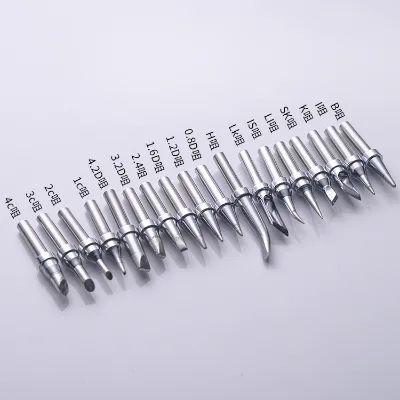


900-T-B Soldering Tip 936H Special Soldering Tip Electric Soldering Iron Accessories
$0.24 - $0.26
MOQ: 500


$2.00 - $2.39
MOQ: 100 pieces

Shenzhen Hodaxin International Trade Co., Ltd.
- Manufacturer, Trading Company
- Guangdong, China
- Lead time0 days
- Avg. response≤ 3h
Main productsPhone Polishing machine,Laser Back Glass Remove Machine,Phone Screen Polishing Machine,Bubble Remove Machine,OCA Laminating Machine
Main marketsNorth America(50.00%), Western Europe(10.00%), Mid East(10.00%), Eastern Europe(10.00%), Northern Europe(10.00%), Southern Europe(5.00%), South America(5.00%)
Dongguan Uluo Electronic Co., Ltd.
- Manufacturer, Trading Company
- Guangdong, China
- Lead time7 days
- Avg. response≤ 8h
Main productsSoldering Tips,Soldering Station,soldering robot,selective Soldering,fume extractor
Main marketsSoutheast Asia(30.00%), Eastern Asia(12.00%), South Asia(10.00%), North America(5.00%), Central America(5.00%), South America(5.00%), Mid East(5.00%)
- Manufacturer, Trading Company
- Guangdong, China
- Lead time7 days
- Avg. response≤ 5h
Main productsMobile Phone Screen, Mobile Phone Battery, Mobile Phone Accessories, Mobile Phone Charger, Repair Tools
Main marketsDomestic Market(50.00%), Southeast Asia(25.00%), Oceania(10.00%), North America(5.00%), South America(5.00%), Africa(5.00%)
Hangzhou Frankever Imp. & Exp. Co., Ltd.
- Verified by SGS Group
- Trading Company
- Lead time30 days
Main productsSoldering Iron, Smart Home Products, Multimeter, Remote control
Main marketsWestern Europe(35%), North America(30%), South America(20%)

Shenzhen Guste Technology Co., Ltd.
- Manufacturer, Agent, Distributor/Wholesaler
- Guangdong, China
- Lead time0 days
- Avg. response≤ 2h
Main productsSoldering Stations & Soldering Supplies,Hand Tools & Power Tools,Test Instruments,Packaging Machine,Cleaning Equipment
Main marketsDomestic Market(25.00%), North America(25.00%), Southeast Asia(15.00%), South America(5.00%), South Asia(5.00%), Northern Europe(5.00%), Central America(5.00%), Eastern Asia(5.00%), Mid East(5.00%), Africa(5.00%)
Shenzhen Jinliyang Technology Co., Ltd.
- Manufacturer, Trading Company
- Guangdong, China
- Lead time8 days
- Avg. response≤ 7h
Main productsSoldering Station/Hot Air Rework Station/DC Power Supply/Test Leads/Screwdriver Set
Main marketsNorth America(15.00%), Western Europe(15.00%), South America(10.00%), Eastern Asia(8.00%), Domestic Market(8.00%), Eastern Europe(7.00%), Mid East(7.00%), Southeast Asia(6.00%), South Asia(5.00%), Southern Europe(5.00%), Central America(5.00%), Northern Europe(5.00%), Oceania(2.00%), Africa(2.00%)
Shenzhen Fengjiahe Technology Co., Ltd.
- Trading Company, Agent, Distributor/Wholesaler
- Guangdong, China
- Lead time5 days
- Avg. response≤ 3h
Main productsPhone Repair Programmer,Laser Machine,LCD Separator Machine,Phone Films Cutting Machine,Microscope
Main marketsWestern Europe(25.00%), North America(20.00%), South America(20.00%), Mid East(5.00%), Oceania(5.00%), South Asia(2.00%), Southern Europe(2.00%), Northern Europe(2.00%), Central America(2.00%), Eastern Europe(2.00%), Eastern Asia(2.00%), Africa(2.00%), Southeast Asia(2.00%)

Hangzhou FrankEver Imp. & Exp. Co., Ltd.
- Verified by SGS
- Trading Company,Manufacturer/Factory
- China Zhejiang
- Lead time45 days
- Avg. response≤ 6h
Main productsSoldering Tools, Multimeter, Car Installation Accessories, Smart Home, Smart Garden, Car Cable, PCBA, Tester
Main marketsSouth America,Eastern Europe,Mid East,North America,Southeast Asia,Eastern Asia,Oceania,Western Europe,Africa

Rechargeable Electric Soldering Iron Welding Head Special Soldering Iron Tips
$0.60 - $2.50
MOQ: 500 pieces


Shenzhen Feng Chipsource Electronic Co., Ltd.
- Manufacturer, Trading Company, Distributor/Wholesaler
- Guangdong, China
- Lead time2 days
- Avg. response≤ 6h
Main productsIntegrated Circuit,Electronic Components,Development Board,Wifi module,Bluetooth module
Main marketsNorth America(20.00%), Northern Europe(16.00%), Southern Europe(10.00%), South America(10.00%), Western Europe(10.00%), Eastern Europe(10.00%), Domestic Market(3.00%), South Asia(3.00%), Oceania(3.00%), Africa(3.00%), Central America(3.00%), Southeast Asia(3.00%), Eastern Asia(3.00%), Mid East(3.00%)

DONG GUAN CITY YOSHIDA WELDING MATERIALS CO.,LTD
- Manufacturer
- China Guangdong
- Lead time15 days
- Avg. response≤ 5h
Main productsSolder Paste, Tin Wire, Tin, Red Glue, Preformed Solder Strip, Tin Ball, Brazing Paste, Welding Tools
Main marketsDomestic

- Verified by BV
- Combined
- China Jiangsu
- Lead time23 days
- Avg. response≤ 6h
Main productsHandtools, Hardware, Kitchen Tools Kitchen Ware, Garden Tools, Camping Tool, Carfts and DIY Tools, Smiletools&Smilegifts&Ldk Metal&Smilefitness, Measuring Tools, Power Tools Accessories, Candle Tools
Main marketsDomestic,Europe,North America

Adjustable Temperature Soldering Iron with Soldering Iron Tips for Electric Jobs
$7.20 - $7.40
MOQ: 300 Pieces


90W Intelligent Sleep Soldering Iron - Energy-Saving and Prolong Service Life
$3.29 - $3.49
MOQ: 500 Pieces


Zhuzhou Sanxin Cemented Carbide Manufacturing Co., Ltd.
- Verified by TUVRHEINLAND
- Combined
- China Hunan
- Lead time15 days
- Avg. response≤ 5h
Main productsTungsten Carbide, Carbide Bushing, Carbide Nozzle, Tungsten Alloy, Carbide Rings, Wolfram Carbide, Carbide Inserts, Carbide Rod, Carbide Tools, Cemented Carbide
Main marketsEurope,North America
Shenzhen Ziyueda Technology Co., Ltd.
- Trading Company, Agent, Distributor/Wholesaler
- Guangdong, China
- Lead time3 days
- Avg. response≤ 3h
Main productsComputer Accessories,Module,Integrated Circuit,Development Board,Electronic Cables
Main marketsEastern Europe(20.00%), South America(20.00%), North America(20.00%), Domestic Market(5.00%), South Asia(5.00%), Southern Europe(5.00%), Northern Europe(5.00%), Western Europe(5.00%), Eastern Asia(5.00%), Mid East(5.00%), Africa(5.00%)









Comprehensive Sourcing Guide
Universal Compatible Soldering Iron Tips Supplier Concentration and Factory Types
The current supplier landscape for Universal Compatible Soldering Iron Tips reveals a distinct concentration of manufacturing and trading entities within specific industrial hubs. Data indicates that a significant portion of these suppliers are located in China, with Guangdong province emerging as a primary cluster for this category. This geographic concentration is not accidental; it reflects the established supply chain infrastructure for electronics manufacturing equipment, including SMT machines, reflow ovens, and precision soldering tools. Buyers evaluating this market should recognize that suppliers in this region often benefit from proximity to component suppliers, allowing for faster prototyping and reduced logistics costs for raw materials like copper and ceramic heating elements. The presence of both manufacturers and trading companies in this cluster means that buyers may encounter a mix of direct factory sources and intermediaries who aggregate products from multiple smaller workshops. Understanding this dynamic is crucial for determining whether a supplier offers genuine manufacturing capabilities or simply acts as a sourcing agent. The density of suppliers in Guangdong suggests a competitive environment where price and variety are key differentiators, but it also requires buyers to perform due diligence to distinguish between true production facilities and those that merely resell goods. This regional focus provides a clear starting point for sourcing, as the infrastructure for quality control and export logistics is already mature in these areas.
Supplier types in this sector vary significantly, ranging from pure manufacturers to combined entities that handle both production and trading. Some suppliers are identified as manufacturers, trading companies, or agents, indicating a hybrid business model that may offer flexibility in order sizes and customization options. Others are classified as combined companies, suggesting they may have in-house production capabilities while also managing external supply chains. This diversity in company types affects how buyers should approach negotiations and quality assurance. For instance, a manufacturer might offer better pricing for large volumes but have higher minimum order quantities, whereas a trading company might provide lower MOQs and broader product assortments at a premium. The main products listed by these suppliers often extend beyond just soldering tips to include entire soldering stations, dispensing machines, and fume extractors, indicating that many suppliers are full-service providers for electronics assembly needs. This breadth of product offering can be advantageous for buyers looking to consolidate their supply chain, as it allows for the procurement of complementary equipment alongside replacement tips. However, it also necessitates careful verification of the supplier’s core competency to ensure they have the technical expertise required for high-quality soldering tip production. Buyers should assess whether the supplier’s primary focus aligns with their specific needs, whether they require high-volume standard tips or specialized custom solutions for automated soldering robots.
How to Verify Universal Compatible Soldering Iron Tips Suppliers
Verifying the legitimacy and capability of suppliers for Universal Compatible Soldering Iron Tips requires a multi-layered approach that goes beyond surface-level profile information. One critical step is to check for third-party verification badges, such as CTI, which indicate that an independent inspection agency has validated certain aspects of the supplier’s business. This verification provides a baseline level of trust regarding the company’s existence and basic operational status. However, buyers should not rely solely on this badge, as it does not guarantee product quality or manufacturing consistency. It is essential to cross-reference this verification with other data points, such as system certifications like ISO 9001 or CE marks, which demonstrate adherence to international quality and safety standards. While some suppliers display these certifications, others may not, requiring buyers to request documentation directly. The absence of visible certifications does not necessarily mean a supplier is unreliable, but it does increase the risk and necessitates more rigorous due diligence. Buyers should ask for copies of these certificates and verify their validity with the issuing bodies. Additionally, checking the supplier’s response time can offer insights into their operational efficiency and customer service quality. A faster response time, such as under two hours, often correlates with a more responsive and organized sales team, which is crucial for resolving issues quickly during the sourcing process.
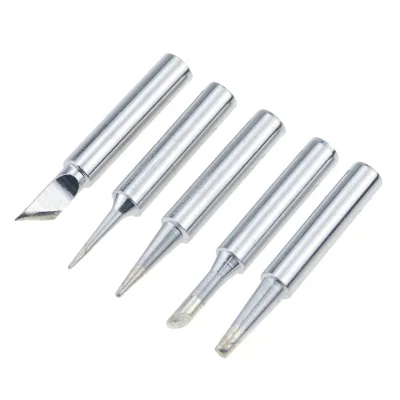
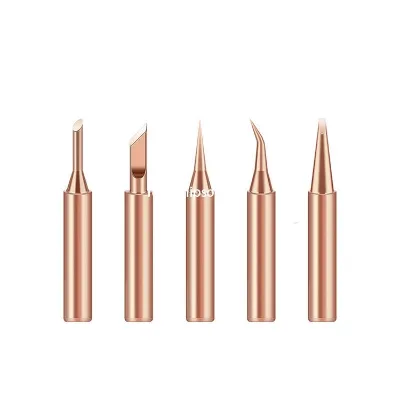
Beyond certifications and response metrics, buyers must verify the supplier’s actual product offerings and manufacturing capabilities. This involves examining the detailed product attributes provided, such as material composition, tip shape, and applicable models. For example, confirming that tips are made from oxygen-free copper or specific copper alloys is vital for ensuring proper heat transfer and durability. Buyers should also look for evidence of customization support, such as OEM or ODM services, which indicates that the supplier has the technical infrastructure to produce tailored solutions. If a supplier claims to offer custom tips, buyers should request samples or detailed technical drawings to verify their engineering capabilities. Furthermore, checking the supplier’s main products can help determine if they are specialists in soldering equipment or general traders. Suppliers whose main products include soldering machines and stations are more likely to have a deeper understanding of tip compatibility and performance. Buyers should also be cautious of suppliers who list a wide variety of unrelated products, as this may indicate a lack of focus and expertise. By combining verification of business credentials with a thorough review of product technical details, buyers can build a more accurate picture of a supplier’s reliability and suitability for their specific sourcing needs. This holistic approach minimizes the risk of partnering with suppliers who may not meet quality or delivery expectations.
What to Compare Across Universal Compatible Soldering Iron Tips Suppliers
When evaluating multiple suppliers for Universal Compatible Soldering Iron Tips, buyers must systematically compare key operational and commercial metrics to identify the best fit for their requirements. One of the most critical factors is the minimum order quantity (MOQ), which can vary significantly across suppliers. Some suppliers may offer an MOQ of just one unit, making them suitable for small-scale testing or low-volume needs, while others may require orders of 100 or 1000 units, which is more appropriate for large-scale production runs. Understanding these MOQ differences is essential for aligning supplier capabilities with the buyer’s inventory strategy and cash flow constraints. Additionally, lead times are a crucial comparison point, as they directly impact production schedules and supply chain resilience. Suppliers may have lead times ranging from a few days to several weeks, depending on their current workload and inventory levels. Buyers should prioritize suppliers with shorter and more consistent lead times, especially if they have urgent production needs. Response time is another important metric, as it reflects the supplier’s ability to communicate effectively and resolve issues promptly. A supplier with a rapid response time can provide quicker quotes and support, which is valuable during the negotiation and order placement phases.
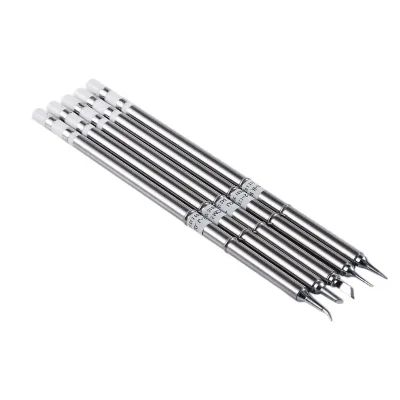
Price and payment terms are also central to the comparison process, but buyers should look beyond the unit price to consider the total cost of ownership. While some suppliers may offer lower prices for standard tips, others might provide better value through bulk discounts or favorable payment terms. It is important to compare the price ranges for specific product models, such as the 900m series or T12 series tips, to ensure that the pricing is competitive and transparent. Buyers should also consider the supplier’s capacity for customization, as this can affect both price and lead time. Suppliers that offer OEM and ODM services may charge additional fees for tooling or setup, but these costs can be amortized over larger orders. Furthermore, comparing the supplier’s main products can help determine if they offer a comprehensive range of compatible tips, which can simplify the sourcing process and reduce the need to manage multiple vendors. Buyers should also assess the supplier’s ability to provide consistent quality across different product lines, as this is crucial for maintaining production efficiency. By systematically comparing these metrics, buyers can make informed decisions that balance cost, quality, and service, ultimately selecting suppliers that best support their operational goals. This structured approach ensures that all critical factors are considered, reducing the risk of unexpected issues during the sourcing process.
Common Universal Compatible Soldering Iron Tips Sourcing Risks
Sourcing Universal Compatible Soldering Iron Tips from international suppliers involves several inherent risks that buyers must proactively manage to ensure a smooth procurement process. One significant risk is the potential for quality inconsistencies, particularly when dealing with suppliers who do not have robust quality control systems in place. Soldering tips are critical components that affect the performance of soldering stations, and variations in material composition or tip geometry can lead to poor heat transfer, premature wear, or compatibility issues with specific soldering irons. Buyers should be wary of suppliers who offer prices that seem too good to be true, as this may indicate the use of inferior materials or substandard manufacturing processes. Another risk is the discrepancy between the product samples provided and the bulk order delivered. Suppliers may send high-quality samples to secure the order but then produce lower-quality goods for the main shipment. To mitigate this risk, buyers should include strict quality specifications in their purchase agreements and consider using third-party inspection services before shipment. Additionally, buyers should be cautious of suppliers who do not provide clear information about their manufacturing processes or material sources, as this lack of transparency can make it difficult to trace and resolve quality issues.
Logistical and communication risks are also prevalent in international sourcing, particularly when dealing with suppliers in different time zones and cultural contexts. Delays in shipping, customs clearance issues, or miscommunication regarding product specifications can disrupt production schedules and increase costs. Buyers should establish clear communication channels and confirm all details, including packaging, labeling, and shipping instructions, in writing. It is also important to verify the supplier’s ability to handle export documentation and comply with international trade regulations. Another risk is the potential for intellectual property infringement, especially when sourcing custom or branded tips. Buyers should ensure that their designs and specifications are protected and that the supplier has the necessary rights to produce them. Furthermore, buyers should be aware of the risks associated with currency fluctuations and payment security, particularly when using open account terms or large upfront payments. Using secure payment methods and escrow services can help protect buyers from fraud and non-delivery. By identifying and addressing these common risks early in the sourcing process, buyers can minimize disruptions and ensure a more reliable supply of Universal Compatible Soldering Iron Tips. This proactive approach helps build a resilient supply chain that can withstand potential challenges.
Universal Compatible Soldering Iron Tips Regional Sourcing and Logistics
Regional sourcing plays a pivotal role in determining the efficiency and cost-effectiveness of procuring Universal Compatible Soldering Iron Tips. As noted in the supplier data, a significant concentration of manufacturers and trading companies is located in Guangdong, China, a region known for its advanced electronics manufacturing ecosystem. Sourcing from this region offers several logistical advantages, including well-developed infrastructure for international shipping and a high density of suppliers, which facilitates easier comparison and negotiation. Buyers should consider the proximity of these suppliers to major ports, as this can reduce inland transportation costs and lead times. Additionally, the presence of a mature supply chain in Guangdong means that raw materials, such as copper and ceramic components, are readily available, which can help stabilize production schedules and prices. However, buyers must also be aware of the potential challenges associated with sourcing from this region, such as varying levels of supplier maturity and the need for rigorous quality control. It is advisable to work with suppliers who have experience in exporting to the buyer’s target market, as they will be more familiar with international shipping requirements and documentation.
Logistics planning is crucial for ensuring that orders arrive on time and in good condition. Buyers should establish clear agreements with suppliers regarding shipping methods, insurance, and risk transfer points. For smaller orders, express courier services may be the most cost-effective option, while larger shipments might benefit from sea freight to reduce costs. Buyers should also consider the impact of seasonal fluctuations on shipping capacity and costs, particularly during peak periods such as the holiday season. It is important to build buffer time into the supply chain to account for potential delays in production or shipping. Additionally, buyers should verify that the supplier’s packaging is suitable for international transit, as improper packaging can lead to damage during handling. Working with suppliers who offer FOB or CIF terms can help clarify responsibilities for shipping and
FAQs
What materials are compatible universal soldering iron tips usually made from?
Most compatible soldering iron tips listed by suppliers are made of copper, often oxygen-free copper, with a lead-free plating option. Copper offers strong thermal conductivity for consistent heat transfer to the joint. When comparing listings, confirm the base material, whether the tip is lead-free, and the applicable model series before ordering samples.
What is the typical minimum order quantity for replacement soldering tips?
Minimum order quantities vary widely by tip type. Some replacement tips are listed with an MOQ of just 1 piece, while other series such as robot tips require 1,000 pieces, and mid-range listings often start at 100 pieces. Confirm the MOQ for the exact model you need before requesting a quotation, since customization can change it.
How long does production and delivery usually take for soldering iron tips?
Lead times in current supplier results range from about 10 to 23 days, depending on the supplier and product complexity. Simpler replacement tips generally ship faster, while customized or robot-specific tips may need the longer window. Always confirm the lead time for your quantity and ask how it is affected by customization or packaging requirements.
Which price range should buyers expect for universal compatible soldering tips?
Listed prices in the current results span roughly from 0.60 per piece for standard 900M-series tips up to about 13.00 for specialized Tsutsumi KTH4/KTH5 robot tips, with many models around 2.70 to 6.00. Price depends on tip series, material treatment, and order volume, so request quotes for your exact model and quantity.
Do suppliers offer OEM or ODM customization for soldering iron tips?
Yes, many listings explicitly support OEM, ODM, and OBM customization, and some suppliers also hold ODM, OEM, and own-brand capability. Customization typically covers tip shape, size, packaging, and model series, with shapes such as chisel, conical, bevel, knife, and round available. Confirm minimum quantities, tooling costs, and lead-time impact before placing a customized order.
Which certifications should I verify when sourcing soldering iron tips from Guangdong?
Guangdong is a common sourcing location for these tips, and some suppliers there hold ISO 9001 and CE certification, while others list no system certification. Do not assume every supplier is certified. Ask each supplier for current certificate copies, verify their scope covers your product, and consider third-party inspection before shipment for larger orders.
How quickly do soldering tip suppliers typically respond to inquiries?
Response times in the current supplier results range from roughly 1.5 to 6 hours, which affects how fast you can iterate on specifications and quotes. Response speed often reflects how the supplier handles orders overall. Send a detailed inquiry with your tip model, quantity, and target lead time to gauge both reply speed and answer quality.