Multi Color Desktop Pad Printer Suppliers and Manufacturers
Explore 13 verified options for Multi Color Desktop Pad Printer suppliers in China. Compare response times, lead times, certifications, and product specifications to find the right factory. Contact suppliers directly to request quotes; review the available evidence before requesting comparable quotations from suitable candidates.
Suppliers List

Dongguan Chang-Ho Printing Machinery Co., Ltd.
- Verified by TUVRHEINLAND
- Combined
- China Guangdong
- Lead time15 days
- Avg. response≤ 6h
Main productsScreen Printing Machine, Pad Printing Machine, Automatic Pad Printer, Automatic Screen Printer, Silk Screen Printer, Rotary Screen Printer, Flat Silk Screen Printing Machine, Round Silk Screen Printer, Scale Printing Machine, Stationery Ruler Screen Printer
Main marketsOthers(foreignTradeCapacity.exportBusinessCapacityMarketOther)

Zhangjiagang Sino-Tech Machinery Co., Ltd.
- Verified by BV
- Combined
- China Jiangsu
- Lead time30 days
- Avg. response≤ 10h
Main productsExtrusion Blow Molding Machine, PVC Pipe Bending Machine, Plastic Extrusion Machine, Plastic Pulverizer, Plastic Profile Extrusion Machine, Pet Bottle Blow Molding Machine, Plastic Sheet Production Line, Plastic Recyling Machine, Plastic Pelletizing Line, Injection Molding Machine
Main marketsAfrica,Europe,Australia

Dongguan RealTech Machinery Equipment Co., Ltd.
- Combined
- China Guangdong
- Lead time15 days
- Avg. response≤ 3h
Main productsUV Curing Machine, Automatic Screen Printing Machine
Main marketsSoutheast Asia/ Mideast,Europe,North America
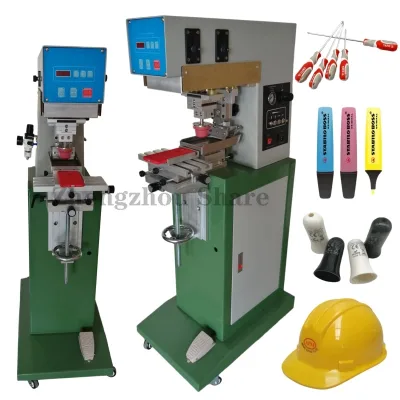
Zhengzhou Share Machinery Co., Ltd.
- Trading Company
- Henan, China
- Lead time7 days
- Avg. response≤ 3h
Main productsConstruction Machinery/Industrial Machinery/Printing Machinery
Main marketsSouth America(20.00%), North America(20.00%), Africa(10.00%), Southeast Asia(10.00%), Eastern Europe(10.00%), Oceania(7.00%), South Asia(5.00%), Southern Europe(5.00%), Central America(5.00%), Western Europe(2.00%), Eastern Asia(2.00%), Northern Europe(2.00%), Mid East(2.00%)

Henan Share M&E Equipment Co., Ltd
- Verified by TUVRHEINLAND
- Trading Company
- China Henan
- Lead time15 days
- Avg. response≤ 4h
Main productsBag Printing Machine, Brick Making Machine, Quilting Machine, Water Well Drilling Rig, Roll Forming Machine
Main marketsSouth America,Africa,Others(foreignTradeCapacity.exportBusinessCapacityMarketOther),Southeast Asia/ Mideast,East Asia(Japan/ South Korea),Domestic,Europe,Australia,North America

Xiamen Xinteyin Industry and Trade Co., Ltd.
- Verified by SGS
- Combined
- China Fujian
- Lead time30 days
- Avg. response≤ 4h
Main productsScreen Printing Machine, Pad Printing Consumables, Pad Printing Machine, Gold Stamping Machine, Heat Transfer Machine, Laser Marking Machine, Screen Printing Screen, Pad Plate, Printing Ink, Custom Printing Equipment
Main marketsSoutheast Asia/ Mideast,Europe,North America

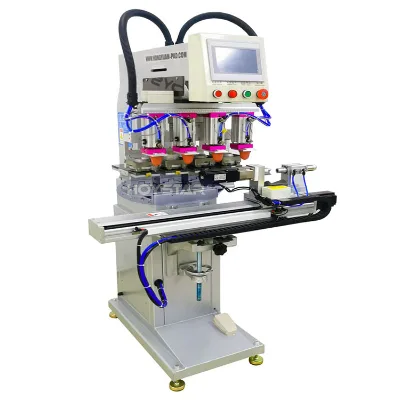
Wholesale High Precision Multifunctional 4-Color Digital Color Pad Printer
$2425.00 - $2556.00
MOQ: 1 units


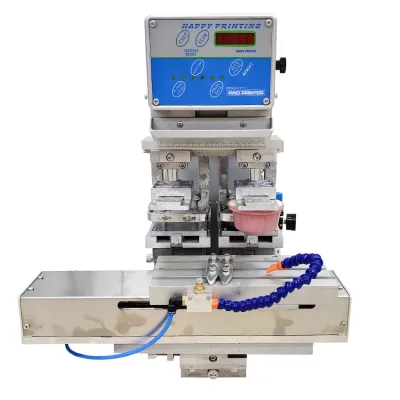
Advanced Multifunctional Two-Color Pad Printing Machine for Versatile Applications
$1150.00
MOQ: 1 Pieces

SHEN FA ENG. CO., LTD.(GUANGZHOU)
- Combined
- China Guangdong
- Lead time23 days
- Avg. response≤ 25h
Main productsFully Automatic Screen Printing Machine, Automatic Servo Screen Printer, Automatic Hot Stamping Machine, Automatic Labeling Machine, Pad Printing Machine, Tempo Printing Machine, Digital Inkjet Printing Machine, Silk Screen Printer, Screen Printing Machine for Cosmetic Packaging, Automatic Screen Printer for Plastic Bottle
Main marketsSouth America,Africa,Others(foreignTradeCapacity.exportBusinessCapacityMarketOther),Southeast Asia/ Mideast,East Asia(Japan/ South Korea),Domestic,Europe,Australia,North America


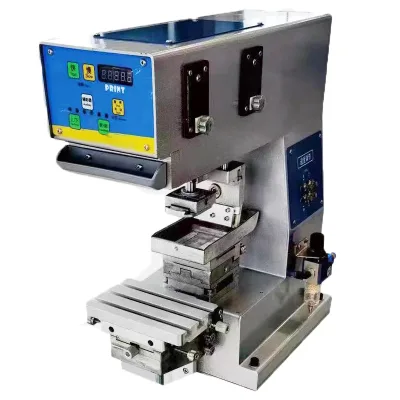
M8/C Superfine Small 8 Colors Pad Printer
MOQ: 1 Pieces
Dongguan Hoystar Machinery Co., Ltd.
- Verified by TüVRheinland
- Manufacturer, Trading Company
- Lead time20 days
- Avg. response≤ 1h
Main productsScreen Printing Machine, Pad Printing Machine
Main marketsSouth Asia(15%), Southeast Asia(10%), Oceania(10%)

Dongguan Hoystar Machinery Co., Ltd.
- Verified by SGS
- Manufacturer
- China Guangdong
- Lead time15 days
- Avg. response≤ 6h
Main productsScreen Printing Machine, Pad Printing Machine, UV Curing Machine, Infrared Drying Machine, UV Exposure Machine
Main marketsAfrica

Suzhou Paifeite Automation Technology Co., Ltd.
- Verified by TUVRHEINLAND
- Combined
- China Jiangsu
- Lead time60 days
- Avg. response≤ 5h
Main productsPen Making Machine, Pen Prooduction Line, Pen Assembly Machine
Main marketsAfrica,Southeast Asia/ Mideast,East Asia(Japan/ South Korea),Domestic,Europe,Australia

HENGXIN PRINTING TECHNOLOGY CO., LIMITED
- Manufacturer/Factory
- China Guangdong
- Lead time23 days
- Avg. response≤ 8h
Main productsDigital Printing Machine, Roller UV Label Printing Machine, UV One Pass Printer, Paper Bag Digital Printing Machine, Single Pass Printer, UV Roll to Roll Digital Printer, Roller Label Printing Machine, UV Single Pass Printer, Package Printing Machine, Plastic Cup UV One Pass Printer
Main marketsSouth America,Eastern Europe,Mid East,North America,Southeast Asia,Eastern Asia,Oceania,Western Europe,Africa

Zhejiang Dingye Machinery Co., Ltd.
- Combined
- China Zhejiang
- Lead time15 days
- Avg. response≤ 19h
Main productsPacking Machinery, Packaging Machinery, Packing Machine, Packaging Machine, Packing Material, Sealing Machine, Food Packing, Water Production, Beverage Production, Filling Machine
Main marketsOthers(foreignTradeCapacity.exportBusinessCapacityMarketOther),Southeast Asia/ Mideast
Dongguan Guantu Machinery Technology Co., Ltd
- Manufacturer, Trading Company
- Guangdong, China
- Lead time15 days
- Avg. response≤ 4h
Main productsscreen printing machine,Pad Printing Machine,gilding press,thermal transfer machine,labelling machine
Main marketsNorth America(25.00%), Mid East(15.00%), Northern Europe(5.00%), Central America(5.00%), Western Europe(5.00%), Southeast Asia(3.00%), Domestic Market(2.00%), South Asia(2.00%), Southern Europe(2.00%), Africa(2.00%), Oceania(2.00%), Eastern Europe(2.00%), Eastern Asia(2.00%), South America(2.00%)






Comprehensive Sourcing Guide
Multi Color Desktop Pad Printer Supplier Concentration and Factory Types
Sourcing activity for pad printing equipment in China concentrates heavily in Guangdong, where the supplier results on this page show a combined manufacturer-trader offering pad printers, screen printing machines, rotary printers, and stationery ruler printers. Guangdong's broader printing and packaging ecosystem explains why pad printing specialists cluster there: tube decorators, cap printers, and promotional product makers all demand compact multi-color machines, giving local factories a steady order flow and mature accessory supply chains for pads, steel plates, and ink cups. A second cluster appears in Jiangsu, where suppliers list broader plastic machinery portfolios such as extrusion blow molding machines, plastic pulverizers, and injection molding equipment alongside pad printers, positioning pad printing as an auxiliary line for plastic product producers.
Factory types matter when filtering results. Combined-type companies can manufacture and trade, which may simplify custom projects but can also mean a broker is quoting another workshop's machine. Some listings read like specialist equipment makers, with model-specific configurations such as four-color shuttle or CNC pad printers, while others present pad printers as one item in a diversified plastics catalog. Buyers should therefore weigh concentration signals: a supplier whose main products are overwhelmingly pad and screen printing equipment will usually understand plate making, ink viscosity, and pad selection better than a general machinery exporter. When no location is displayed for a listing, verify the registered address and ask whether assembly, machining, and quality testing occur in-house before assuming a genuine factory relationship.
How to Verify Multi Color Desktop Pad Printer Suppliers
Verification on B2B platforms starts with the audit badges displayed in search results. Some suppliers on this page carry third-party verification, one audited by TÜV Rheinland and another by Bureau Veritas, which typically confirms legal existence, factory inspection, and scope of business. Treat these badges as a screening layer, not proof of product quality. Next, cross-check the company profile against the product evidence: a supplier whose main products are exclusively pad and screen printing equipment, who offers ODM and OEM services, and who lists detailed machine parameters is more credible than a listing with thin specifications. Request the business license and ask whether the audit covered the factory site that will actually build your machines.
Beyond platform signals, buyers should confirm capability directly. Ask for videos of the specific four-color or multi-color model running, ideally printing your own artwork on sample parts, and request the contact details of one or two export references in your region. If a listing shows a paid sample MOQ as low as one unit, use that to evaluate build quality before committing to a volume order, even if sample pricing differs from container pricing. Distinguish factory from trader by asking process questions: which parts are machined in-house, what pneumatic and electrical component brands are used, and how warranty claims are serviced overseas. A factory engineer who answers plate size, stroke, and air supply questions fluently is a far better sign than a sales office quoting only catalog prices.
What to Compare Across Multi Color Desktop Pad Printer Suppliers
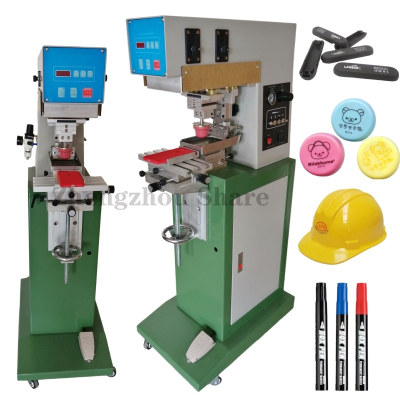
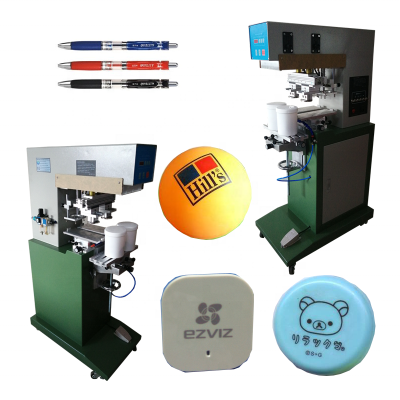
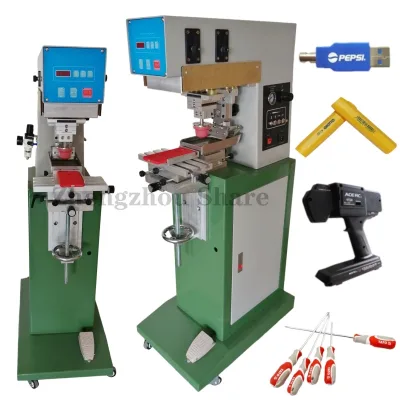
Build a comparison sheet from the attributes actually displayed on listings, without assuming every supplier shows the same fields. Machine-level dimensions worth tabulating include number of colors, automatic grade (semi-automatic desktop units versus fully automatic lines), plate size, print size, ink cup diameter, vertical and transverse strokes, machine weight, power supply, and required air supply. On this page, desktop models span from a mini single-color pneumatic tabletop unit with a 100 by 100 mm steel plate to automatic four-color shuttle and ink cup machines with print areas around 70 by 100 mm, so print format should anchor your shortlist before price does.
Supplier-level fields are equally decisive. Recorded response times in these results range roughly from about five hours to over nine hours, a meaningful gap when a production line is down. Quoted lead times differ too, with one pad printing specialist listing around fifteen days and a Jiangsu plastics-machinery supplier listing around thirty days. Compare main product focus to gauge specialization, and check whether ODM or OEM customization is offered, since several listings explicitly state customization is available. Warranty terms also vary; some four-color models advertise a one-year warranty while other listings show none, so record what is claimed and confirm it in the contract. Never compare one supplier's displayed lead time against another's unstated one; ask each shortlisted candidate to confirm the same fields in writing so the sheet reflects verified data rather than platform defaults.
Common Multi Color Desktop Pad Printer Sourcing Risks
The most frequent risk is specification drift between listing and shipment. Listings in this category carry dense parameter tables, and discrepancies easily arise: a product titled one head one color may list a double-color tone attribute, and automatic-grade labels can conflict with the transmission description. Before paying, reconcile every attribute in a proforma invoice specification sheet covering plate size, print size, color count, pneumatic requirements, power supply, and included tooling such as pads, plates, and ink. Sign off on a printed sample on your actual substrate, since tube, cap, and golf ball printing each demand different pad hardness and ink systems.
Secondary risks cluster around logistics and support. Machines here ship in plywood cases or wooden crates, and one four-color model shows gross weight around 245 kg with packing dimensions over a meter in each direction, so freight class and handling equipment at destination deserve planning. Under-specified consumable supply is another trap: steel plates, polymer plates, and pads degrade and must be reordered, so confirm availability and cost after purchase. Warranty enforcement across borders is the classic failure point; a one-year warranty stated in a listing carries little weight unless the contract names covered parts, response commitments, and whether replacement components ship free. Finally, beware of unusually wide price bands on a single listing, which often indicate quotation-by-configuration rather than a firm price; force the supplier to quote your exact configuration.
Multi Color Desktop Pad Printer Regional Sourcing and Logistics
The two locations visible in these results, Guangdong and Jiangsu, imply different logistics profiles. Guangdong shipments typically move through Pearl River Delta ports with dense container sailings and strong forwarder competition, which suits buyers consolidating pad printers with other printing or packaging equipment. Jiangsu suppliers sit within reach of Yangtze Delta ports and may favor consolidation with plastic machinery orders. Either way, a machine weighing around 150 to 245 kg crated in plywood will normally ship sea freight in a shared container rather than air, so confirm whether the wooden case meets ISPM-15 heat treatment requirements for your customs authority before dispatch.
Plan the inbound sequence in detail. Ask each supplier for the packing dimensions and gross weight of your exact model, since packing sizes differ even within one product line; one four-color listing shows packing dimensions around 1370 by 1070 by 1550 mm. Confirm incoterms early, because a machine quoted ex-works plus crating can cost more than a CIF quote once wooden-case fees and inland haulage are added. Inside the crate, expect disassembled components, so request assembly instructions, tool lists, and electrical schematics, and check whether the machine's power supply configuration matches your facility, noting that listings on this page show both AC 220V and AC 110/220V options. Air-fed machines additionally need a compressed air supply around five to seven bar, which your plant must provide before commissioning.
Multi Color Desktop Pad Printer Commercial Terms and Order Planning
Structure the first order to de-risk the relationship. Where a supplier shows a minimum order of one unit on a desktop model, a sample-machine purchase is a legitimate strategy: pay a sample price, run it in production for a defined period, then negotiate the volume order against that experience. One listing on this page displays a price range from roughly 0.1 to 1.0 units of account on the mini model, which almost certainly reflects quotation-per-configuration rather than a machine price, so never treat displayed ranges as final; demand a written quote for your exact color count, plate size, and automation level. Higher-configuration four-color machines on this page show ranges from the low thousands to the tens of thousands, confirming how sharply price scales with automation.
Payment and timeline planning should reflect the recorded data. Lead times around fifteen days appear for a specialist pad printing supplier versus around thirty days for a broader plastics-machinery exporter, so build your production calendar around each confirmed date rather than an average. Align deposit and balance milestones with pre-shipment inspection: a third-party or video inspection of the running machine before balance payment is standard for this category. Secure the one-year warranty terms in the contract where advertised, list included spare parts, and agree on a named contact for technical support. For repeat buyers, negotiate consignment stock of pads and plates, since consumable lead times often matter more than machine lead time once production starts.
Word count: approximately 1375.
FAQs
What can a Multi Color Desktop Pad Printer be used for?
A Multi Color Desktop Pad Printer applies logos, markings and decorative designs onto small three-dimensional items in several colors within one setup. Typical applications include bottle caps, tubes, golf balls, dinnerware, stationery rulers and small plastic components. Desktop formats suit workshops with limited floor space, while automatic models can support higher-volume production runs when paired with suitable fixtures and tooling.
How much does a Multi Color Desktop Pad Printer cost?
Pricing varies widely by automation level, color count and plate size. Listed machines on this page span from low-cost single-color desktop models quoted at around one hundred to a few thousand dollars, up to automatic four-color units in the several-thousand-dollar range and CNC versions above twenty thousand. Request quotes that include tooling, plates and shipping before comparing final landed costs.
What is the typical minimum order quantity for pad printers?
Many suppliers list a minimum order quantity of just one unit for pad printing machines, since these are capital equipment purchases rather than consumables. Some listings show MOQ of one on desktop models, so single-machine trials are usually possible. Always confirm the MOQ, spare-parts availability and after-sales support terms in writing before placing your first order.
Which print sizes and plate sizes should I confirm before buying?
Match the print size to your artwork and product. Listings on this page show print sizes such as 70 by 70 millimeters and 70 by 100 millimeters, with steel plate sizes from 100 by 100 up to 120 by 320 millimeters. Confirm your maximum single-color image area, ink cup or tray type, and the pad size needed for your product's curvature.
How long is the lead time for a pad printing machine from China?
Lead times differ by supplier and machine complexity. Results on this page show lead times of 15 days for a Guangdong-based printing machine supplier and 30 days for a Jiangsu-based supplier with a broader plastics equipment range. Automatic multi-color and CNC models usually take longer than simple semi-automatic desktop units, so confirm the exact production and shipping schedule before ordering.
Do these suppliers offer customization and OEM or ODM services?
Yes, several listings state customization is available, and at least one Guangdong supplier lists ODM and OEM capability among its services. Customization can cover plate size, color configuration, fixtures and machine dimensions for specific products. Provide sample products, artwork and target output when requesting a customized Multi Color Desktop Pad Printer, and ask for drawings and acceptance criteria before confirming the order.
What power and air supply do desktop pad printers require?
Most pneumatic pad printers listed here run on AC 110V or 220V power with an air supply of roughly 5 to 7 bar, so a standard industrial air compressor is needed. Machine weights range from about 150 kilograms for ink-cup models to 245 kilograms for larger four-color units packed in plywood. Verify voltage compatibility with your facility and plan adequate floor loading and space.
How can I verify a pad printer supplier before ordering?
Check third-party verification status, such as the TUV Rheinland and Bureau Veritas credentials shown on this page, and review response times, which range from about 5 to 9 hours here. Request business licenses, product videos, sample prints and references from past buyers. For payment security, ask whether the platform offers trade assurance or escrow, and confirm warranty terms, which some listings state as one year.